

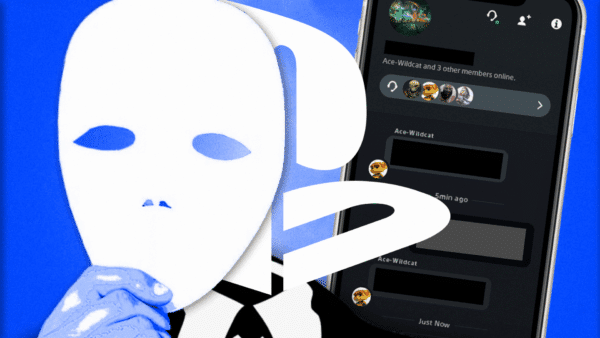
While video game companies typically file patents for new gaming technology that benefits the gamer directly, it seems Sony is looking past that in its latest filing, as it seeks to protect rather than provide a new gameplay experience.
Sony Interactive Entertainment, also known as the PlayStation division of Sony, has filed a new patent under application no. 18/314775, and this seeks to protect gamers from scammers, potential child predators and generally people with bad intentions by proactively detecting suspicious users.
This new patent application is powered by AI and essentially acts as a decoy account system.
PlayStation Looks to Catch People With Bad Intentions Using a “Pseudo Account”
The filing, which was published on August 13, 2026, aims to target potential predators, scammers, spammers, and cheaters.
A pseudo account is set up to mimic a potential victim’s demographic messaging behavior while seeming completely legitimate to an anti-social (AS) user. This can entail mimicking the messaging behavior of minors and presenting that behavior where AS users look for it. The AS account establishes communication with the pseudo account. The AS account may be flagged as suspicious, and the system can wait for the AS user to make an initial move on a legitimate account and report it before any undesirable communication takes place. The pseudo account can be controlled by a large language model (LLM) such as a generative pre-trained transformer (GPTT).
In simpler terms, think of the patent as a police sting operation, but inside an online game and controlled by AI.
The aim of this patent isn’t necessarily to punish someone just because they talked to the AI-backed account, but the system would use this interaction as one signal that an account might be dangerous, then potentially warn or protect real players when that account tries to interact with them.
In the traditional sense, game companies might have to wait for someone to report a suspicious player. This would play out, such as a player with bad intentions contacting a child, saying inappropriate things, the child reports them, and then the platform investigates.
What this patent aims to do is, using AI, when a bad player approaches, the AI detects suspicious behavior, the account then gets flagged, so when the bad actor/player approaches a real child, a warning would appear.
Basically, the system is built to analyze how the person interacts with the AI. If the person starts exhibiting suspicious behavior, the system flags it internally.
The types of suspicious behavior include:
Trying to move the conversation somewhere private
- Asking for personal information
- Attempting to contact someone who appears to be a minor
- Sending inappropriate messages
- Trying to scam the account
- Spamming
- Potentially cheating-related behavior
This system won’t ban the account immediately, but instead, it keeps watching/monitoring the account.
While the document specifically mentions minors/potential child victims, the broader system is described as applicable to spammers, scammers, game cheaters, and other anti-social users as well.
Bear in mind, as with any patent, that not everything filed becomes a real thing. Companies frequently patent ideas they never release. It simply shows that the company is exploring the idea.
In related news, we also uncovered a PlayStation patent for a new modular controller with a touchscreen interface that could be the new controller for the PS6.
In terms of something more official, the PlayStation Store “Ready, Set, Play!” sale is live now, bringing over 4,000 discounted items to gamers.
Stay connected to MP1st and the latest news by following us on Bluesky, X, Facebook, TikTok, YouTube, and Google News.
Alex Co
Father, gamer, games media vet, writer of words, killer of noobs.
