

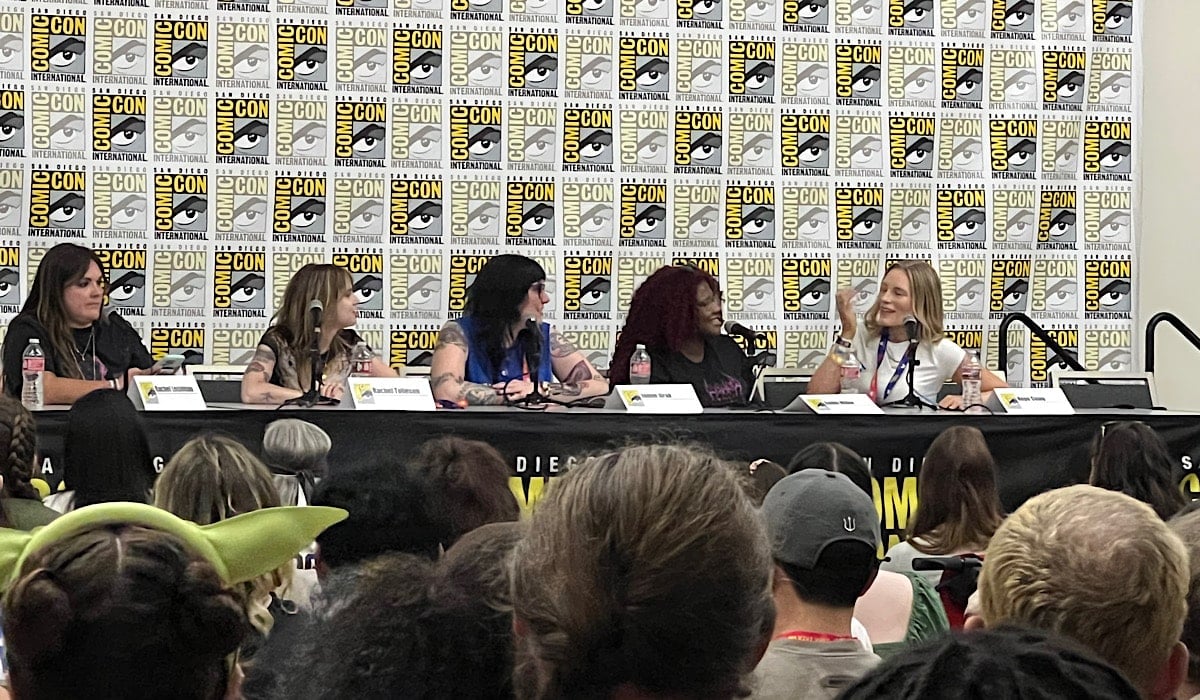

In a San Diego Comic-Con panel on Friday, fandom journalists and content creators challenged a familiar critique of their work: that being a fan disqualifies someone from fairly covering a show.
The panel, “The Pitt and Heated Rivalry: Fandom in Entertainment Journalism/Criticism: When Is It Too Much,” included The Mary Sue editor-in-chief Rachel Leishman as moderator, Rachel Tolleson (The Mary Sue), Bobbi Miller, Hope Sloop (Decider), and two guest panelists. These fandom journalists argued the opposite is true, saying fan expertise produces sharper, more informed questions than detached coverage ever could.
“I just don’t believe that,” Sloop said of the idea that fandom creates bias. “Anytime you do a review, that’s one thing you do with that show.”
Beyond that, she argued, being a fan “enables you and your outlet… to cover it more and talk about the things that the fans are talking about.”
The discussion centered on recent, buzzy titles including Interview with the Vampire and The Pitt, which have drawn an unusually wide mix of critics, influencers, and casual viewers into the same online conversation. That blending has scrambled older distinctions between “serious” criticism and fan commentary, a shift the panelists linked directly to journalism’s financial struggles.
“These publications… are struggling to keep the lights on because journalism is in a really dire state right now,” Miller said, adding that the pressure pushes newsrooms toward fandom-specific language, ship names and other buzzwords designed to drive clicks, “whether it’s positively or negatively.”
Headline and SEO pressure came up repeatedly as a structural problem. The panelists described writing full, balanced reviews only to see a single provocative line isolated for a headline or social graphic, driving readers to react to a fragment rather than the full piece, and fueling comment-section anger over context that was, in fact, addressed in the article.
On the core question of bias, the idea that fandom affiliation compromises coverage was rejected. Being a fan, several argued, is what earns access.
“They know when you’re a fan of something,” Sloop said, contrasting a generic question with one that references a specific chapter—the kind of specificity, she said, that gets a better reaction from cast and creators.
They also pushed back on the notion that fan-critics can’t be objective. Several said the opposite dynamic is more common. The most invested fans are often the toughest critics, precisely because they hold a show to a higher standard. Miller described trying to “toe the line of being congratulatory… while also being real” in order to maintain credibility, while still defending fandom as a legitimate journalistic lens rather than a liability.
Beyond the media-industry debate, the panel touched on the broader culture of fandom itself, including gatekeeping around who “counts” as a real fan, and gendered scrutiny some panelists said they face as women with visible fan tattoos and collections.
The panelists all agreed there’s no single valid way to be a fan, from casual viewers to fanfiction writers, and that fan-created work has long fed mainstream media, citing franchises that originated as fanfiction.
As Miller put it, summing up the panel’s pushback on gatekeeping: “It’s as simple as liking it. That’s what being a fan is.”
Stay tuned to The Beat for more news from SDCC ’26.
