

Marcus Chen
August 18, 2026
20 min read
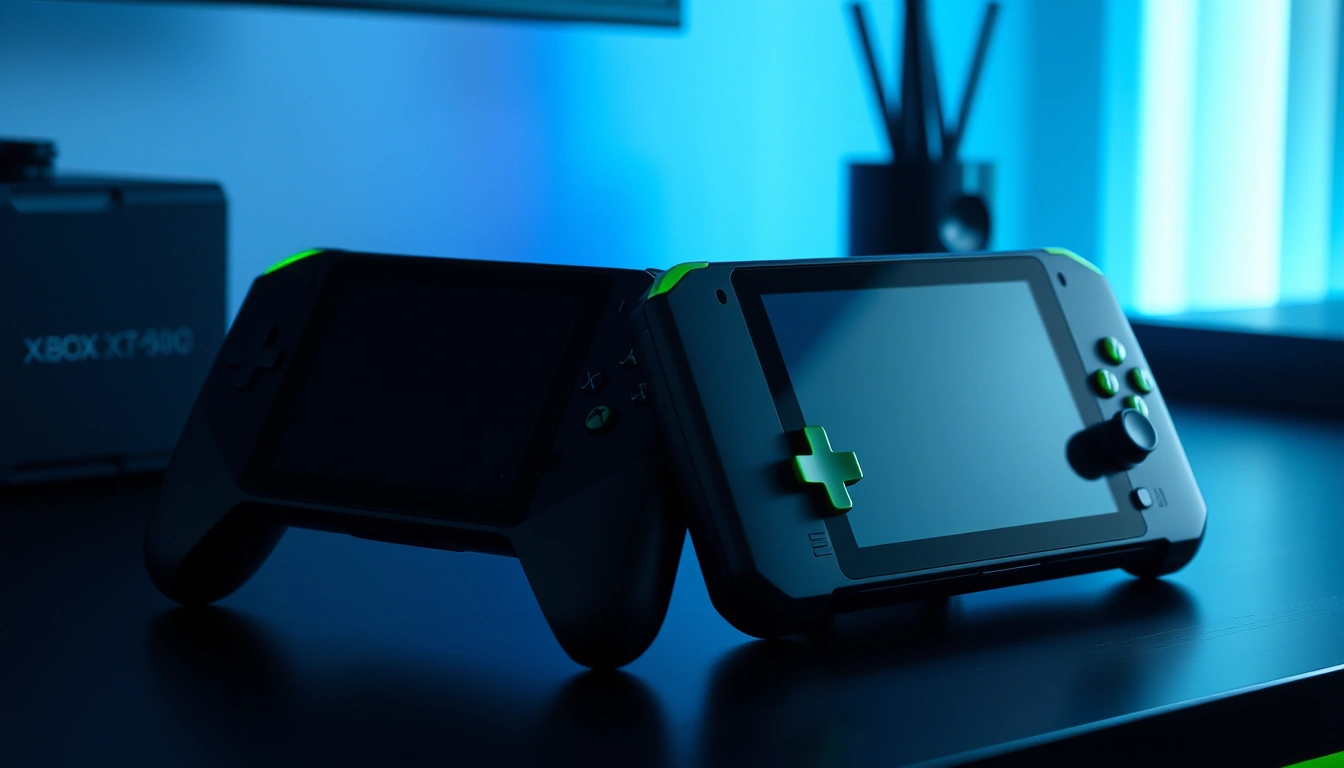
Asus and Microsoft sell two versions of the same handheld idea, and the price tag between them is bigger than most people expect. The ROG Xbox Ally starts at $599.99. The ROG Xbox Ally X costs $999.99. That’s a $400 gap for a device that looks nearly identical on a store shelf, runs the same Xbox full-screen interface, and shares the same 7-inch, 1080p, 120Hz display. Under the hood, though, the two machines diverge sharply: different chips, different core counts, different RAM speeds, and in Metro Exodus stress testing, a 47% frame-rate gap. Both launched together on October 16, 2025, and both are still on sale as of August 18, 2026, which makes this one of the more confusing “which one do I actually need” decisions in handheld gaming right now.
This comparison breaks down every meaningful difference between the base ROG Xbox Ally and the ROG Xbox Ally X: specs, real benchmark numbers from independent reviewers, battery life, pricing history through 2026, and which buyer actually needs the more expensive model. If you’re choosing between the two, or deciding whether to upgrade from either one, the numbers below should settle it.
Don’t miss new tech stories on Google
Add Tech Insider once in the Google app and our stories appear in your news suggestions.
ROG Xbox Ally vs Ally X: The Quick Verdict
The short version: the base ROG Xbox Ally runs an AMD Ryzen Z2 A chip with four Zen 2 cores and 8 RDNA 2 compute units, paired with 16GB of RAM and a 512GB SSD, for $599.99. The ROG Xbox Ally X runs the newer Ryzen AI Z2 Extreme with eight cores (a mix of Zen 5 and Zen 5c), 16 RDNA 3.5 compute units, 24GB of faster LPDDR5X-8000 memory, a 1TB SSD, and an 80Wh battery instead of 60Wh, for $999.99. In Metro Exodus benchmark testing, that hardware gap translates to 43.28 fps on the base Ally versus 63.44 fps on the Ally X, a 47% real-world performance jump.
Neither model is objectively “better” in a vacuum. The base Ally is the cheapest way into Microsoft’s Xbox-branded handheld lineup and it’s genuinely capable with indie games, older titles, and anything you’re willing to run at 720p with FSR upscaling. The Ally X is the model reviewers actually recommend if you plan to play current AAA releases at native settings. Tom’s Hardware called the Ally X’s ergonomics and Xbox-focused software “far better than using the Windows 11 desktop,” while still noting that $999.99 is a steep ask if you already own an older Ally.
Full Specs Comparison Table
Here’s every meaningful spec side by side, pulled from Asus’s official listings and cross-checked against Tom’s Hardware’s review of the base Ally and its Ally X review.
| Spec | ROG Xbox Ally | ROG Xbox Ally X |
|---|---|---|
| Price (MSRP) | $599.99 | $999.99 |
| Chip | AMD Ryzen Z2 A | AMD Ryzen AI Z2 Extreme |
| CPU cores/threads | 4 cores / 8 threads (Zen 2) | 8 cores / 16 threads (3x Zen 5 up to 5.0GHz + 5x Zen 5c up to 3.3GHz) |
| GPU | AMD RDNA 2, 8 compute units | AMD RDNA 3.5, 16 compute units |
| NPU | None | Up to 50 TOPS |
| RAM | 16GB LPDDR5X | 24GB LPDDR5X-8000 |
| Storage | 512GB M.2 SSD | 1TB M.2 2280 SSD |
| Battery | 60Wh | 80Wh |
| Display | 7-inch, 1920×1080, 120Hz IPS | 7-inch, 1920×1080, 120Hz IPS |
| Weight | 670g (1.48 lb) | 715g (1.58 lb) |
| Ports | USB-C, microSD | USB4 Type-C, USB-C 3.2 Gen 2, UHS-II microSD, audio jack |
| OS | Windows 11 with Xbox full-screen experience | Windows 11 with Xbox full-screen experience |
The display, the buttons, and the general shape are shared across both models, which is exactly why the performance gap catches people off guard. Pick either one up in a store and they feel like the same handheld. Only after loading a demanding game does the $400 price difference start making sense.
Ryzen Z2 A vs Ryzen AI Z2 Extreme: The Chip That Actually Matters
Everything else in this comparison flows from the chip. The base Ally’s Ryzen Z2 A is a four-core, eight-thread Zen 2 part with 8 RDNA 2 compute units, essentially a cost-reduced descendant of the chip that powered the original Steam Deck and ROG Ally back in 2023. It’s efficient and it’s cheap to manufacture, which is how Asus hits that $599.99 price point, but it’s two full architecture generations behind on the graphics side.
The Ally X’s Ryzen AI Z2 Extreme is a different class of silicon. It packs eight cores split across three full-power Zen 5 cores (up to 5.0GHz) and five efficiency-focused Zen 5c cores (up to 3.3GHz), doubling the compute unit count to 16 on a newer RDNA 3.5 graphics architecture, and it adds a dedicated NPU rated at up to 50 TOPS for AI-accelerated tasks like upscaling and frame generation. TechPowerUp’s gaming performance testing found this translates directly into playable settings at native 1080p in titles where the base Ally has to drop to 720p with aggressive upscaling just to stay above 30 fps.
The RAM matters almost as much as the chip itself. The base Ally’s 16GB of LPDDR5X memory is shared between system and graphics tasks, and in a handheld PC, GPU-bound games eat into that pool fast. The Ally X’s 24GB of LPDDR5X-8000 isn’t just larger, it also runs at a meaningfully higher transfer speed, which matters for an APU architecture where the GPU pulls its frame buffer directly from system memory rather than dedicated VRAM.
There’s also a generational gap hiding inside those core counts that’s easy to skim past. Zen 2, the architecture underneath the base Ally’s Ryzen Z2 A, first shipped in 2019 desktop and laptop chips. Zen 5 and Zen 5c, the mixed architecture inside the Ally X’s Ryzen AI Z2 Extreme, arrived in 2024. That’s roughly five years of instructions-per-clock improvements, power efficiency gains, and cache redesigns separating the two chips, even though both carry the “Z2” family name that makes them look like close siblings on a spec sheet. AMD’s own marketing leans into that naming similarity, and it’s arguably the single biggest reason shoppers underestimate how far apart these two handhelds actually perform.
The compute unit gap compounds the architecture gap rather than simply adding to it. Going from 8 RDNA 2 compute units to 16 RDNA 3.5 compute units is a straightforward doubling on paper, but RDNA 3.5 also improves per-CU throughput and adds better variable rate shading support, so the real-world graphics gap tends to run wider than a simple 2x multiplier would suggest in games that lean on modern rendering techniques like ray tracing or dense particle effects.
Thermal Performance and Fan Noise
More powerful silicon in a handheld chassis usually means a harder cooling problem, and that holds true here. The Ally X’s more powerful Ryzen AI Z2 Extreme pulls more sustained wattage under full load, which means its fan spins up more aggressively during demanding sessions than the base Ally’s more efficient Z2 A. Reviewers testing the Ally X under sustained 25-30W Turbo profiles have generally described the fan noise as noticeable but not distracting through headphones, with TechPowerUp’s testing praising the “excellent power efficiency and cooling” of the design relative to how much heat the chip is capable of generating.
The base Ally runs cooler and quieter almost by default, simply because its chip never has to work as hard to hit its lower frame-rate ceiling. That’s a genuine, if underrated, advantage for anyone sensitive to fan whine during quiet single-player games, or for late-night sessions where a spinning fan next to your ears becomes the dominant sound in the room. Neither device throttles aggressively in day-to-day use, but the Ally X’s higher power ceiling means its thermal management system has to work meaningfully harder to keep the chassis from getting uncomfortably warm in the hand during extended play.
Value Analysis: Cost Per Frame
Running the Metro Exodus numbers as a cost-per-frame exercise is revealing. At full $599.99 MSRP, the base Ally costs roughly $13.86 per average fps in that benchmark (43.28 fps). At $999.99, the Ally X costs roughly $15.76 per average fps (63.44 fps), meaning the more expensive machine is actually a slightly worse value on a pure dollars-per-frame basis, even though it delivers a much better absolute gaming experience. That’s a common pattern in PC hardware: the top-tier part rarely offers the best price-to-performance ratio, it offers the best performance ceiling, and buyers pay a premium for that ceiling regardless of the underlying math.
Factor in the recurring $499.99 promo price on the base Ally, though, and the calculation shifts further in its favor: $11.53 per average fps, a meaningfully better ratio than the Ally X manages even before accounting for the fact that many buyers don’t need the Ally X’s frame-rate ceiling in the first place. The practical takeaway is that raw cost-per-frame math favors the base Ally, but it ignores the qualitative jump from “technically playable” to “comfortably playable” that the Ally X delivers in the most demanding current titles, a jump that doesn’t show up cleanly in a per-frame dollar figure but matters enormously in actual play sessions.
Benchmarks: Real FPS Numbers From Independent Testing
Specs sheets only tell part of the story, so here’s what actually happened when reviewers ran games on both machines.
| Game / Test | ROG Xbox Ally | ROG Xbox Ally X | Source |
|---|---|---|---|
| Metro Exodus (stress test) | 43.28 fps | 63.44 fps (+47%) | Independent benchmark testing |
| Black Myth: Wukong (Low, FSR, Frame Gen) | Below 30 fps typical | ~60 fps, up to 77 fps at 30W Turbo | Community and press benchmarks |
| Cyberpunk 2077 (built-in benchmark) | Struggles near 720p/Low | ~44 fps native benchmark; 80+ fps at 1080p with Frame Generation | Press benchmark testing |
| Forza Horizon (900p tuned) | ~60 fps | Locked 60 fps with headroom | Windows Central, Tom’s Hardware |
| Final Fantasy XVI | Difficult to sustain 30 fps | Stable 30-40 fps range | Press benchmark testing |
The pattern holds across every outlet that has tested both machines: the base Ally is fine for older titles, indie games, and anything you’re willing to run at reduced settings, but it visibly struggles with 2024-2026 AAA releases at native resolution. The Ally X isn’t just faster in a benchmark chart, it’s the difference between a game being playable at acceptable settings and not. Tom’s Hardware’s review of the base model put it plainly, describing it as “the cheapest Windows handheld,” a phrase that reads as praise and warning at the same time.
Worth noting: neither machine is a native 4K gaming device, and nobody should buy either one expecting that. Both target 1080p on their own screens, with the Ally X better equipped to sustain 1080p at higher settings while the base Ally often needs to drop internal resolution and lean on FSR upscaling to hit the same frame-rate targets.
It’s worth separating “playable” from “good” here, because the two Ally models don’t just differ in raw frame rate, they differ in what settings you’re forced to accept to hit any given target. On the base Ally, hitting 60 fps in a demanding 2025-2026 release usually means Low presets, FSR set to Performance or Ultra Performance, and an internal render resolution well under 1080p, all of which introduces visible softness and shimmering in motion. On the Ally X, that same 60 fps target is often achievable at Medium-to-High presets with FSR set to Quality or Balanced, producing a noticeably cleaner image on the same 7-inch panel. The frame-rate number alone undersells how different the two experiences actually look during gameplay.
Battery Life: 60Wh vs 80Wh in Real Sessions
Battery capacity follows the same 33% jump as everything else on the Ally X, from 60Wh to 80Wh, but real-world runtime depends heavily on what you’re doing. PCWorld’s testing of the Ally X measured as little as 2 hours under high load, high brightness, and 120Hz refresh, stretching to as long as 19 hours 40 minutes under low load, low brightness, and 60Hz, essentially media playback conditions rather than active gaming. Tom’s Guide reported “around three hours of playtime on one charge” during actual gameplay sessions, which is the more realistic number for anyone buying this as a gaming device rather than a video player.
The base Ally’s smaller 60Wh battery has to power less demanding hardware, so the runtime gap in practice is narrower than the raw Wh numbers suggest. A lighter chip pulling less wattage on a smaller battery often lands in a similar 2-3 hour range during real gaming, though it depends heavily on which game and which power profile you’re running. Neither handheld is going to get you through a transatlantic flight running a current AAA title at max settings. Both are built around short-to-medium session play, plugged in at a desk, or docked to a TV.
Pricing in 2026: MSRP, Promos, and Regional Gaps
Official MSRP hasn’t moved since launch: $599.99 for the base Ally, $999.99 for the Ally X. But street pricing has shifted over the course of 2026, and it changes the math on which model actually makes sense.
| SKU | Launch Price (Oct 2025) | 2026 Street Price | Notes |
|---|---|---|---|
| ROG Xbox Ally (base) | $599.99 | Recurring $499.99 promo at major retailers since around April 2026 | Effectively $100 off list for much of 2026 |
| ROG Xbox Ally X | $999.99 | ~$1,000, no comparable discount reported | Some regions saw price increases, not cuts, in 2026 |
| Xbox Series X (console, for reference) | $649.99 | $799.99 after August 2026 price hike | Console pricing context, not a handheld |
That recurring $499.99 promo on the base Ally is the detail that changes the buying calculus. At full $599.99 MSRP, the base model is roughly 60% of the Ally X’s price for hardware that benchmarks 30-45% slower depending on the game. At the $499.99 promo price, the base Ally becomes exactly half the cost of the Ally X, which makes it a much easier recommendation for anyone gaming at reduced settings or sticking to older titles. Some regions, meanwhile, have reportedly seen Ally X price increases rather than discounts, including a roughly 21.5% jump in Japan around February 2026, tied to broader memory and component cost pressure that’s also driven up prices across the handheld market this year.
That component cost pressure isn’t unique to Asus. Memory and NAND flash pricing spiked across the entire PC and console industry through the first half of 2026, a shortage that also pushed up Apple’s iPad and Mac pricing and contributed to the Xbox Series X and Series S price hikes that took effect August 1, 2026. Handheld gaming PCs, which pack laptop-grade RAM and SSDs into a small chassis, are especially exposed to that kind of memory cost inflation, and it’s part of why the Ally X’s price has held firm or crept upward in some markets rather than following the base model’s discount pattern. Anyone comparing prices across retailers should check current listings directly, since promotional pricing on the base Ally has fluctuated week to week rather than holding at a fixed discount.
Design, Weight, and Ergonomics
Both handhelds share the same basic silhouette: Xbox-style controller grips wrapped around a 7-inch screen, with a D-pad, ABXY buttons, twin sticks, and shoulder triggers arranged to feel like an Xbox controller rather than a generic gamepad. The Ally X weighs 715g against the base Ally’s 670g, a 45g difference that’s noticeable in a wrist-supported grip but not dramatic during a normal play session.
Reviewers have consistently praised the Ally X’s ergonomics specifically. GSMArena noted that thanks to its “generous grips,” you “rarely feel” the extra weight, and Tom’s Guide called the “Xbox controller-inspired body” simply “oh-so comfortable.” The base Ally uses the same shell design, so most of that ergonomic praise carries over, though the added heft and slightly more substantial grip texture on the X model give it a marginally more premium in-hand feel.
Display and Controls: What’s Identical, What Isn’t
This is one area where Asus didn’t cut corners on the cheaper model. Both the ROG Xbox Ally and the Ally X use an identical 7-inch, 1920×1080, 120Hz IPS touchscreen. If you’re comparing the two side by side with the display off, you won’t find a visual difference in the panel itself. Control layout, button placement, and stick design are also shared across both SKUs, meaning muscle memory transfers perfectly if you ever upgrade from one to the other.
The practical difference shows up in what the display can actually render at a stable frame rate. A shared 120Hz panel is only useful if the hardware behind it can push frames fast enough to take advantage of it, and that’s squarely where the base Ally’s weaker GPU becomes the limiting factor in modern titles, while the Ally X’s extra compute headroom makes higher refresh rates achievable in more games.
Ports, Storage, and RAM: Where the X Model Pulls Ahead
Storage is a straightforward doubling: 512GB on the base Ally, 1TB on the Ally X, both using M.2 2280 SSDs that are user-replaceable if you want to upgrade capacity later. For anyone with a large existing PC game library, that difference matters more than it looks on paper. Modern AAA installs regularly run 80-150GB each, so a 512GB drive fills up after three or four big titles once you account for the OS footprint.
Port selection also favors the Ally X: a USB4 Type-C port alongside a separate USB-C 3.2 Gen 2 port, a UHS-II microSD card reader, and a standard audio jack. That USB4 port is significant because it supports external GPU enclosures at full bandwidth, something covered in detail in Tech Insider’s eGPU setup guide for gaming handhelds. The base Ally’s more limited port selection makes external GPU expansion a less realistic option, reinforcing its role as the budget, on-the-go pick rather than a desktop-replacement machine.
Xbox Full-Screen Experience: Same Software, Different Headroom
Both models run Windows 11 with Microsoft’s Xbox full-screen experience layered on top, a console-style interface that boots directly into a game library instead of the Windows desktop, unifying Xbox app, Game Pass, Steam, and other PC storefronts into one dashboard. Software-wise, the two Ally models are identical: same interface, same Game Pass integration, same three-month Xbox Game Pass Ultimate trial bundled at launch. For a deeper look at how this compares to Valve’s rival approach, see Tech Insider’s SteamOS vs Xbox Full Screen Experience breakdown, and for the Game Pass side specifically, Xbox Game Pass Premium’s expanded handheld access.
The catch is that identical software runs very differently depending on the silicon underneath it. Birchtree.me’s review of the Ally X was blunt about this tension, praising the “amazing performance” while calling it “the worst software I’ve ever used,” a complaint rooted in Windows 11’s ongoing rough edges as a handheld OS rather than anything specific to either Ally model. Both machines inherit those same software quirks, background update interruptions, driver prompts, and desktop-mode fallbacks that Windows-based handhelds still haven’t fully solved, even as the Xbox full-screen layer smooths over most of it for casual use.
Market Reception: How Both Models Landed in 2026
Reviewer reception has consistently favored the Ally X on pure capability while flagging its price as the sticking point. Club386’s review went as far as calling it a device that says “hail to the new handheld king,” and Windows Central centered its praise on “next-level comfort and performance.” Tom’s Guide struck a more mixed tone, describing the Ally X as “incredible, but something doesn’t add up,” a nod to the gap between the hardware’s clear quality and its $999.99 price tag sitting well above what most handheld gaming PC buyers have historically paid.
The base Ally’s reception has been more muted, generally framed as “solid for the price” rather than exciting. Tom’s Hardware’s review of the entry model leaned into that framing directly, describing it as “the cheapest Windows handheld” that “gets points for showing up” rather than a device that competes on pure performance with anything in the Ally X’s tier. Retro Handhelds’ coverage asked whether it could be “the new Steam Deck,” ultimately landing on a qualified yes for budget-conscious buyers rather than an unqualified recommendation.
At the retail level, neither model has managed to unseat Valve’s Steam Deck as the category leader. Tech Insider’s coverage of the broader ROG Xbox Ally launch found Steam Deck still holding roughly half the handheld gaming PC category by share even after the Xbox-branded lineup’s debut, a reminder that strong reviews don’t automatically translate into market dominance in a category where Valve’s software ecosystem and multi-year head start still carry significant weight with buyers.
Real-World Use Cases: 5+ Scenarios and Which Model Fits
The indie and backlog gamer. If your library leans toward smaller indie titles, 2D games, or older AAA releases from before 2022, the base ROG Xbox Ally at $499.99-$599.99 handles almost everything you’ll throw at it without breaking a sweat, and the $400-500 saved is real money.
The current-gen AAA player. Anyone planning to play 2025-2026 releases like Black Myth: Wukong or Cyberpunk 2077’s latest expansions at native 1080p settings needs the Ally X. The base model’s frame-rate ceiling makes these titles a rough experience even with aggressive upscaling.
The docked, TV-first player. Both handhelds support docking to an external display, but the Ally X’s extra GPU headroom matters more once you’re pushing a larger TV panel, since docked play typically pushes for higher output resolutions than the handheld’s own 1080p screen.
The Game Pass streamer. If most of your play time is cloud streaming or Game Pass titles rather than locally installed, demanding local hardware matters less, and the base Ally’s lower price becomes more attractive since the heavy lifting happens on Microsoft’s servers rather than the handheld’s own chip.
The multi-device household. Families or shared households buying more than one unit might mix models: an Ally X for the primary gamer, a base Ally as a secondary or kids’ device, splitting the $1,600 combined cost of two Ally X units.
The upgrader from an older ROG Ally. Owners of the original ROG Ally or ROG Ally X should think carefully before upgrading. Tom’s Hardware’s direct comparison found the newer Ryzen AI Z2 Extreme chip in the Xbox Ally X only about 12% faster in real gaming benchmarks than the chip in the older Ally X, a gap covered in detail in Tech Insider’s ROG Xbox Ally X vs ROG Ally X comparison. That’s a modest gain for a full-price upgrade unless the Xbox software integration itself is the draw.
Pros and Cons of Each Model
ROG Xbox Ally (Base Model)
Pros: Lowest entry price into the Xbox handheld ecosystem, identical 120Hz display to the pricier model, same Xbox full-screen software and Game Pass integration, lighter at 670g, frequently discounted to $499.99.
Cons: Struggles with current AAA titles at native settings, only 16GB RAM shared between system and graphics, 512GB storage fills up fast with modern game installs, no NPU for AI-accelerated upscaling, more limited port selection with no full-bandwidth eGPU support.
ROG Xbox Ally X
Pros: 47% faster in real benchmark testing, 24GB of faster RAM, 1TB of storage, 80Wh battery for longer sessions, USB4 port supports external GPU enclosures, dedicated NPU for AI upscaling tasks, reviewers consistently rate the ergonomics as best-in-class.
Cons: $999.99 price puts it in premium handheld PC territory, only about 12% faster than the older ROG Ally X despite the newer chip, heavier at 715g, no discount pattern reported through mid-2026, real gaming battery life still lands around 2-3 hours under demanding load.
Migration Guide: Upgrading From the Base Ally to the Ally X
If you already own a base ROG Xbox Ally and are considering the jump to the Ally X, the process is straightforward since both run the same Windows 11 and Xbox full-screen software stack.
- Sign in to your Microsoft account and Xbox app on the new Ally X first, so your Game Pass library, achievements, and cloud saves sync automatically.
- Reinstall Steam, and any other PC storefronts (Epic, Battle.net) and sign back into each one; local save files that used cloud sync will restore automatically, while local-only saves need manual transfer.
- Use an external drive or a fast USB-C connection to transfer large game installs directly rather than re-downloading everything, since 1TB of games can take hours over home broadband.
- Reconfigure your Armoury Crate SE performance profiles, since default TDP and fan curves differ between the Z2 A and Z2 Extreme chips.
- Recalibrate any custom button mapping or macros, as third-party mapping software occasionally resets during a full device migration.
- Sell or repurpose the base Ally rather than letting it sit idle. It remains fully capable as a secondary device, a kids’ console, or a dedicated retro and indie machine.
- Check for firmware and BIOS updates on the Ally X before your first extended play session. Asus regularly ships early firmware revisions that improve thermal and battery behavior post-launch.
Budget roughly 60-90 minutes for a full migration including software reinstalls and settings transfer, most of which is passive download time rather than active setup work. If you’re setting up a ROG Xbox Ally for the first time rather than migrating from an older device, the same core steps apply minus the transfer step: sign into your Microsoft account first, let the Xbox app populate your Game Pass library, then layer in Steam and any other storefronts you use before touching performance settings. Doing the account sign-in first avoids a common early frustration where games downloaded before sign-in don’t show up properly in the unified Xbox full-screen library view.
How the Ally Lineup Stacks Up Against Rivals
Neither Ally exists in a vacuum. Valve’s Steam Deck OLED remains the base Ally’s closest price competitor, and Tech Insider’s Steam Deck vs ROG Ally comparison covers that matchup directly, including the $789 vs $599 starting price gap. At the high end, the Ally X competes with Lenovo’s Legion Go 2, benchmarked head-to-head in ROG Xbox Ally X vs Legion Go 2, and with Valve’s own premium handheld in ROG Xbox Ally X vs Steam Deck OLED. Despite strong reviews, the ROG Xbox Ally lineup hasn’t dethroned Valve at retail; Tech Insider’s coverage of ROG Xbox Ally sales stalling against Steam Deck’s roughly 50% category share is worth reading alongside this comparison for anyone weighing brand momentum and software ecosystem, not just raw specs.
The Verdict: Which ROG Xbox Ally Should You Buy
Buy the base ROG Xbox Ally if your budget caps at $500-600, you play mostly indie titles, older AAA games, or Game Pass cloud streaming, and you’re comfortable dropping to 720p with FSR upscaling for the occasional demanding release. At its recurring $499.99 promo price, it’s half the cost of the Ally X for a genuinely usable, if compromised, handheld PC.
Buy the ROG Xbox Ally X if you play current AAA titles regularly, want native 1080p performance rather than aggressive upscaling, need the storage and RAM headroom for a large modern game library, or plan to dock it as a semi-permanent living-room machine. The 47% benchmark advantage in Metro Exodus testing, backed up by consistent margins across Black Myth: Wukong, Cyberpunk 2077, and Final Fantasy XVI, is a real, repeatable performance gap, not marketing spin.
The one group that should pause: existing ROG Ally X owners. A roughly 12% real-world gain over the previous-generation Ally X doesn’t clearly justify a full-price upgrade unless the Xbox-branded software integration itself is the deciding factor.
Put another way: this isn’t a close call decided by a handful of frames per second. It’s a $400 gap between a genuinely budget-tier gaming PC and a genuinely premium one, wrapped in the same shell and running the same software. Match your budget and your game library honestly against the benchmark numbers above, rather than assuming the shared Xbox branding and identical screen mean the two machines will feel the same once you’re actually playing something demanding.
Frequently Asked Questions
What is the price difference between the ROG Xbox Ally and Ally X?
The base ROG Xbox Ally launched at $599.99 and the ROG Xbox Ally X launched at $999.99, a $400 gap. Through 2026, the base model has frequently been discounted to $499.99 at major retailers, widening the effective gap to roughly $500.
Is the ROG Xbox Ally X worth the extra $400?
For anyone playing current AAA games at native 1080p settings, yes. Benchmarks show a consistent 30-47% performance advantage depending on the title, plus double the RAM, double the storage, and a larger 80Wh battery. For indie games, older titles, or Game Pass cloud streaming, the gap matters far less.
Can I upgrade storage on either ROG Xbox Ally model?
Both models use a user-replaceable M.2 2280 SSD, so storage can be upgraded on either device. Both also include a microSD card slot for additional expandable storage without opening the case.
Does the ROG Xbox Ally X support external GPUs?
Yes, the Ally X’s USB4 Type-C port supports full-bandwidth external GPU enclosures. The base Ally’s port selection is more limited and doesn’t offer the same eGPU bandwidth. See Tech Insider’s eGPU setup guide for gaming handhelds for the full walkthrough.
How long does the ROG Xbox Ally X battery actually last?
PCWorld measured as little as 2 hours under high load, high brightness, and 120Hz refresh, and up to nearly 20 hours under minimal load conditions like video playback. Realistic gaming sessions land closer to 3 hours, according to Tom’s Guide’s testing.
Is the base ROG Xbox Ally good enough for Xbox Game Pass?
Yes, and it’s arguably the better pick for Game Pass-heavy users. Cloud streaming and lighter Game Pass titles don’t stress the local hardware, so the base Ally’s weaker chip matters far less than it would running demanding AAA games locally.
Are the ROG Xbox Ally and Ally X the same size?
They’re very close. The base Ally weighs 670g and the Ally X weighs 715g, a 45g difference, and both use the same 7-inch, 1080p, 120Hz display in the same general shell design with identical button layouts.
Should ROG Ally X (original) owners upgrade to the Xbox Ally X?
Probably not for performance alone. Tom’s Hardware’s direct testing found only a roughly 12% real-world gaming performance gain from the newer Ryzen AI Z2 Extreme chip over the previous Ally X’s silicon, a modest jump for a full-price handheld purchase. The upgrade makes more sense for buyers specifically drawn to the Xbox full-screen software experience.
