

Nintendo has not “lost its soul” – here’s why
Nintendo has not “lost its soul” – here’s why
Posted on August 16, 2026 by Ethan in Features, General Nintendo
“Is Nintendo losing its soul?” This is a question that pops up every few years as Nintendo releases new hardware and new games. And it kind of makes sense, when you think about it – most of our most cherished gaming memories are from when we were younger, and newly-announced and upcoming games don’t share any of those nostalgic vibes or memories because they haven’t had a chance to yet.
But in 2026, gaming as a whole isn’t in a great spot. Between Sony ready to go all-digital, Microsoft laying off tons of employees, and general hardware and software prices increasing, it’s tougher and tougher to keep up with all the new releases. And while things have certainly gotten more expensive in recent years, it’s safe to say that in most respects, Nintendo has retained its “soul”. But it’d be boring to just leave the conversation at that, so let’s break down the essence of a bunch of branches of Nintendo and see how they’ve held onto themselves even in the modern day.
Lately, there’s been an admittedly quiet opinion that part of the reason Nintendo is “losing its soul” is because of the Zelda: Ocarina of Time and Star Fox 64 remakes on Switch 2. Of course, saying these two titles alone are evidence of Nintendo losing its essence doesn’t hold up at all. For one, Nintendo didn’t even develop the Star Fox remake – Velan Studios did. In the past, Velan had only worked on Mario Kart Live: Home Circuit for Nintendo, which I’d imagine most skipped. If one of Nintendo’s major in-house development teams had dropped everything to produce a Star Fox remake, sure, maybe that’s something. But in reality, Star Fox released on Nintendo Switch 2 from a different studio, so no other game or franchise was put on hold or sacrificed for its creation. Plus, it was released at a budget $50 tier – kind of a shame $50 is considered “budget” at this point, but that lower price did no doubt help sales of the game.
Star Fox went for super-realistic, super-detailed graphics for its release on Nintendo Switch 2. At the time of writing, we’ve only seen a single shot of the Zelda: Ocarina of Time remake, and no gameplay. So it’s safe to say, it’s way too early to judge – but even if its graphics wind up taking a more realistic and detailed approach, I don’t think that’s indicative of Nintendo losing its soul. I think it’s more like, they’ve got this brand new console with far superior processing power to the original Nintendo Switch that they stuck with for eight years, and they want to make games that push the console to its limit. Besides, if any Zelda game would benefit from more detailed graphics, it would be Ocarina of Time – because its original release many decades ago featured cutting-edge graphics for the time. Why not go for a similar vibe and push Nintendo Switch 2 to its limits just like Ocarina of Time pushed the Nintendo 64?
Not to mention, several of Nintendo’s recent and upcoming games do not have realistic graphics, and instead go with stylized art directions. Yoshi and the Mysterious Book, Mario Kart World, and Donkey Kong Bananza are some of the art style highlights for me on Switch 2 so far, and I’m sure a huge portion of Nintendo’s future games on the platform won’t simply chase super-realistic graphics.
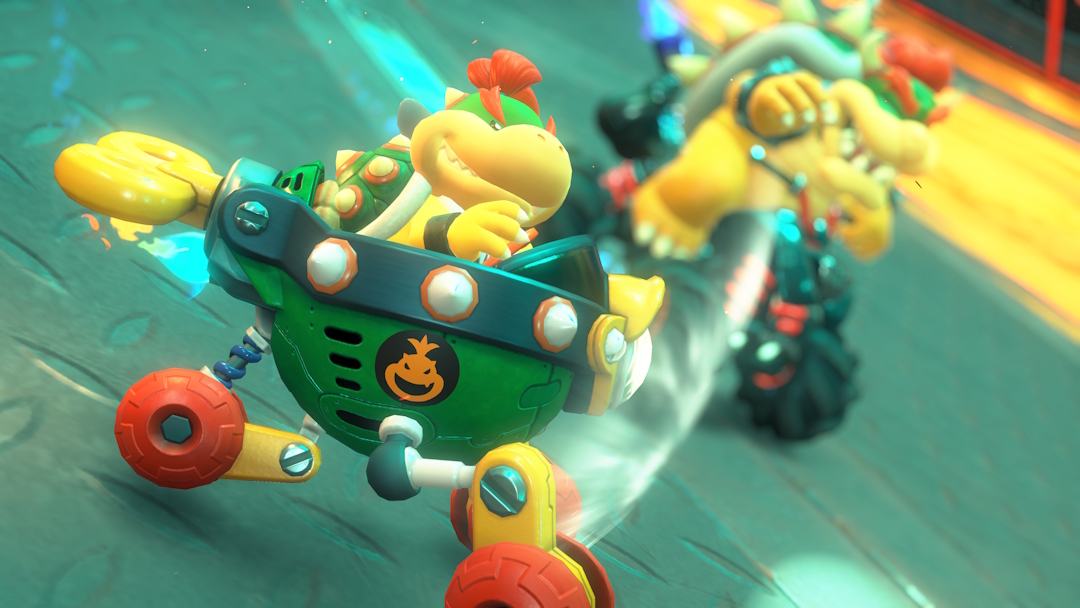
It’s also important to mention that the “Nintendo essence” is there in just about every Switch 2 exclusive. Mario Kart World, while some don’t like its big intermission routes, is absolutely bursting with charm and personality. The characters are animated beautifully and their 3D models look better than ever. The environments are detailed, stylized, and pretty to look at, which is especially impressive given it’s a kart racing game where all the background details zoom by as you’re driving. The music is absolutely incredible – with over 200 remixes and plenty of new and memorable tracks as well. Though it’s not for everyone, Mario Kart World absolutely has tons of soul within.
Similarly, Donkey Kong Bananza features a brand new design for Donkey Kong that makes him more expressive than ever. It also shares something in common with Mario Kart World: both games are simple to play, but both contain advanced techniques that make gameplay extremely satisfying if you take the time to master them.
Pokemon Pokopia is another incredible example – though it’s not developed by Nintendo, it has a ton of heart. There’s a reason why it’s one of the most popular games on the system – it combines Animal Crossing’s comfy vibes with Pokemon’s Pokedex-filling and Minecraft’s building system. It also includes an overarching story that you unlock piece by piece, and the game’s overall vibes are actually a little bit sad and melancholy to match. It’s nothing super deep, of course, but I personally really love Pokemon Pokopia and think there is a genuine case to be made that it’s the best Nintendo Switch 2 exclusive at the moment.
Nintendo’s games definitely still have soul in them, but one thing they’ve definitely dialed back is their non-game features. You can see this by going from the Wii U to Nintendo Switch. Wii U was full of cute little features like video chat, Miiverse, and interactive menu elements like Warawara Plaza. Plus, everything had its own track, which made visiting the eShop to download games feel that much more memorable. It seems Nintendo has locked in on developing games first and foremost – either because they want to move more resources to game development, keep system RAM usage low, or both. And while there may be reasons behind it, it is kind of a shame to see. Nintendo Switch 2’s menu is still pretty bland, even if it does have some neat little sound effects here and there as you navigate menus. Someday, it’d be great to see the return of themes and such – the basic user interface definitely feels like there’s something missing, but I wouldn’t go so far as to say that Nintendo has completely lost its soul.
It’s also interesting to wonder whether releasing a Nintendo Switch 2 was the right move, or if it should’ve been an all-new console. For me personally, I play in handheld mode 95 percent of the time – not the case for everyone, of course, but between that and being nearsighted, it made it tough to play on TV-only consoles like the Wii and Wii U (you could play the Wii U on the GamePad, but on a very low-quality screen and with occasional connection problems). Being able to play games in handheld is why I’m able to play them so much, and I feel like a lot of people would say the same. So if you’re going to develop a console that lets you switch between docked and handheld to follow up Nintendo Switch, you may as well make it a Switch 2. If Nintendo can somehow come up with an idea for a new console that’s better than that in the future, that’s great – but there’s no need to completely reinvent the wheel if you’ve already got a great idea. Nintendo Switch 2 does have cool new features like mouse controls and snap-on Joy-Cons, though mouse controls especially do feel kind of underutilized at the moment. But it does show that Nintendo thinks about new features even if they’re creating a “sequel console”.
One last point we’ll touch on here for now – Nintendo has always made cold, corporate moves now and then, and while almost all of their games have soul and heart, there are always a few of them throughout a console generation that don’t feel like they have much substance to them. Most of Nintendo Switch 2’s library is exempt from that, though I did feel like Drag x Drive was kind of lacking something. But if you want to talk about soulless Nintendo games, that’s not something we should be worrying about right now – but it was a big worry in 2015 and 2016. Animal Crossing: amiibo Festival, Mario Tennis: Ultra Smash, and the like – those were much stronger examples of games made as filler without any heart. There’s always a chance that Nintendo could lose its way in the future – especially if the company ever delves into AI-generated content. Fortunately, it seems that they’re very much against such things, as they should be. Now, in terms of whether the Nintendo spirit is present in their films – that’s a topic for another day.
Do you think Nintendo has “lost its soul” – whatever that actually means – or are you happy with the quality and heart of its recent titles? Let us know in the comments down below.
