


What is a game? Most players and creators would likely call it “art.” A tech megacorporation might label it a “network service.” A creator, clinging to the faded glory of a distant past, might view it as a mark of their social status. But games are surely not monuments built to flaunt the power and vanity of a single individual.
This philosophy is beautifully exemplified at the Nintendo Museum in Kyoto. I recently spent hours pouring over its exhibits and what unfolded before me was not a grand hall featuring names like Shigeru Miyamoto or Gunpei Yokoi engraved in gold letters. No, aside from discreet signatures near the entrance, there were no plaques demanding reverence from visitors. This humble approach carried through to the end of the experience, where, hung by the exit, is a calligraphy of “Originality” (Dokusou), penned by Hiroshi Yamauchi, alongside a faded flag from Nintendo’s founding days as a playing card manufacturer.
But games are surely not monuments built to flaunt the power and vanity of a single individual.
Gaming enthusiasts and industry creators might react to this with some confusing, arguing that these people are the giants who rescued the games industry from the Atari crash of the 1980s. And so, doesn’t it make sense to honour them and venerate their names, just as influential actors and directors are immortalised on the Hollywood Walk of Fame?
I don’t deny for a moment that the legacy these people left behind has had both positive and profound impacts on the world. And yet, regarding that legacy as an object of worship is precisely the antithesis of the essence of games.

Nintendo possesses an almost fanatical survival strategy, that of the toy maker, refined over more than a century. Viewing entertainment through a lens radically different than its competitors, Nintendo has avoided the trap of narcissistic self-absorption, repeatedly forging new standards that captivate everyone from niche enthusiasts to casual players.
In this story, I will unearth that unspoken “philosophy of the toy maker” that underpins an unflinching devotion to entertainment.
Virtual Boy and Gunpei Yokoi
How “Lateral Thinking with Withered Technology” Resisted the Death of Gaming
In online discourse, the Virtual Boy has long been labeled “Nintendo’s dark history” or a “legacy of failure.” However, its display at the Nintendo Museum quietly rejected that dismissal.
In the Virtual Boy exhibit area at the museum, viewing windows tailored to various heights—from adult eye level down to children’s stature—were thoughtfully installed. There are no tacky explanatory plaques making excuses. The exhibit is designed so that anyone, from senior citizens to small children, can lean forward and intuitively experience the unique red 3D space of Nintendo’s challenge to interactive 3D technology. There lies a resolute Kyoto aesthetic: neither hiding nor making excuses for past failures, but simply presenting them as an “experience.”
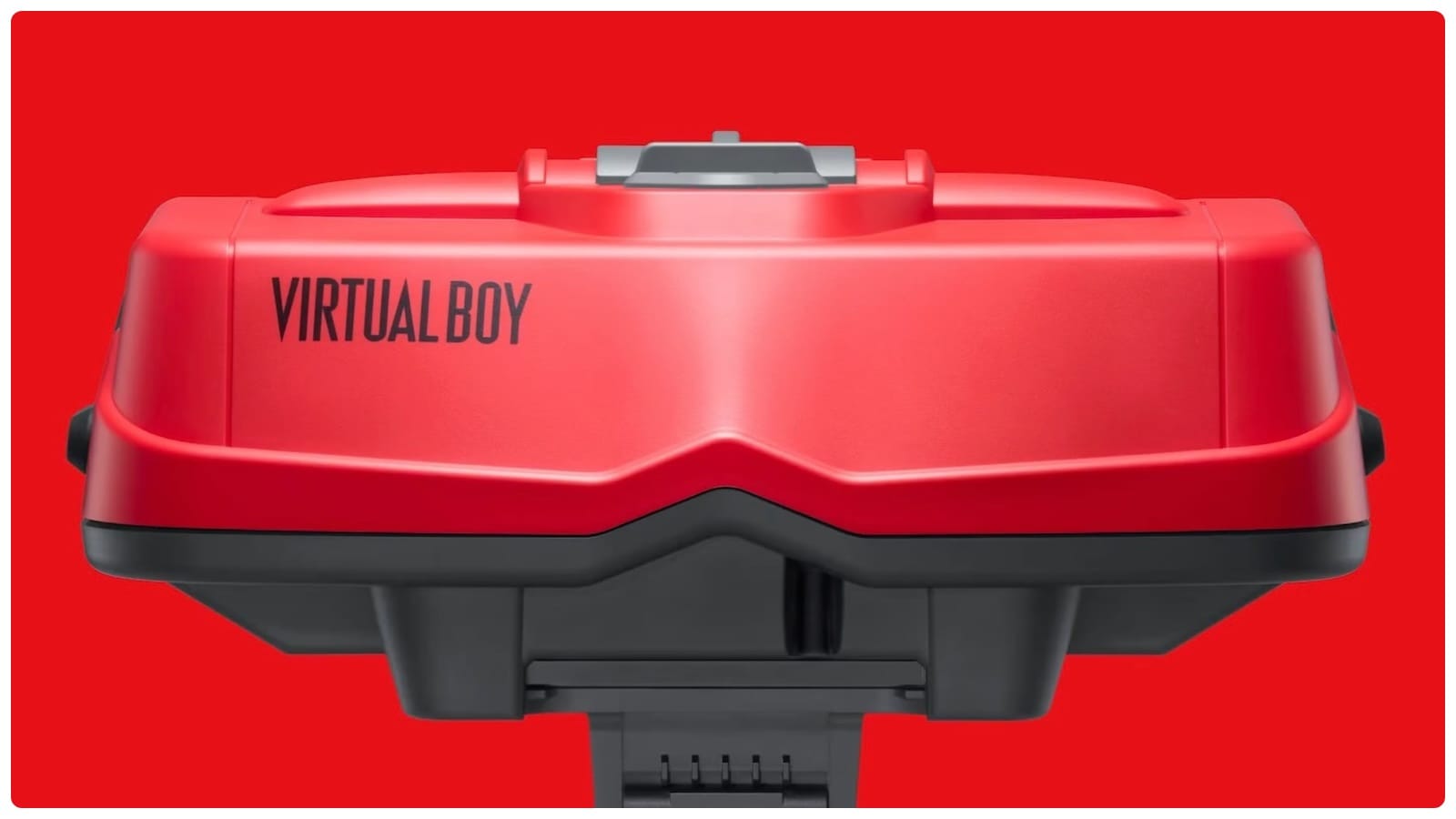
Why did Nintendo have to create the Virtual Boy in that era? At its core was a profound sense of crisis harboured by the legendary developer Gunpei Yokoi regarding “the death of games as entertainment.”
As hardware evolved from the Famicom to the Super Famicom and then to next-generation consoles, visual expression grew lavish and rules became increasingly complex. While the industry was intoxicated with “graphic evolution” represented by consoles like the PlayStation and Sega Saturn, Yokoi did not overlook the phenomenon of new and casual users walking away, declaring, “It’s too difficult to keep up.” “Convoluted masterpieces” that demand vast amounts of money and time from players might temporarily line the pockets of core fans, but they inevitably shrink the overall gaming population, eventually eating away at the market starting from its most vulnerable participants.
If spec competition continued as a mere extension of the television screen, gaming would destroy itself. Against an industry tilting toward elitist authoritarianism for hardcore fans, Yokoi offered his answer: the Virtual Boy, aimed at reclaiming the “intuitive origin of play” through stereoscopic 3D.
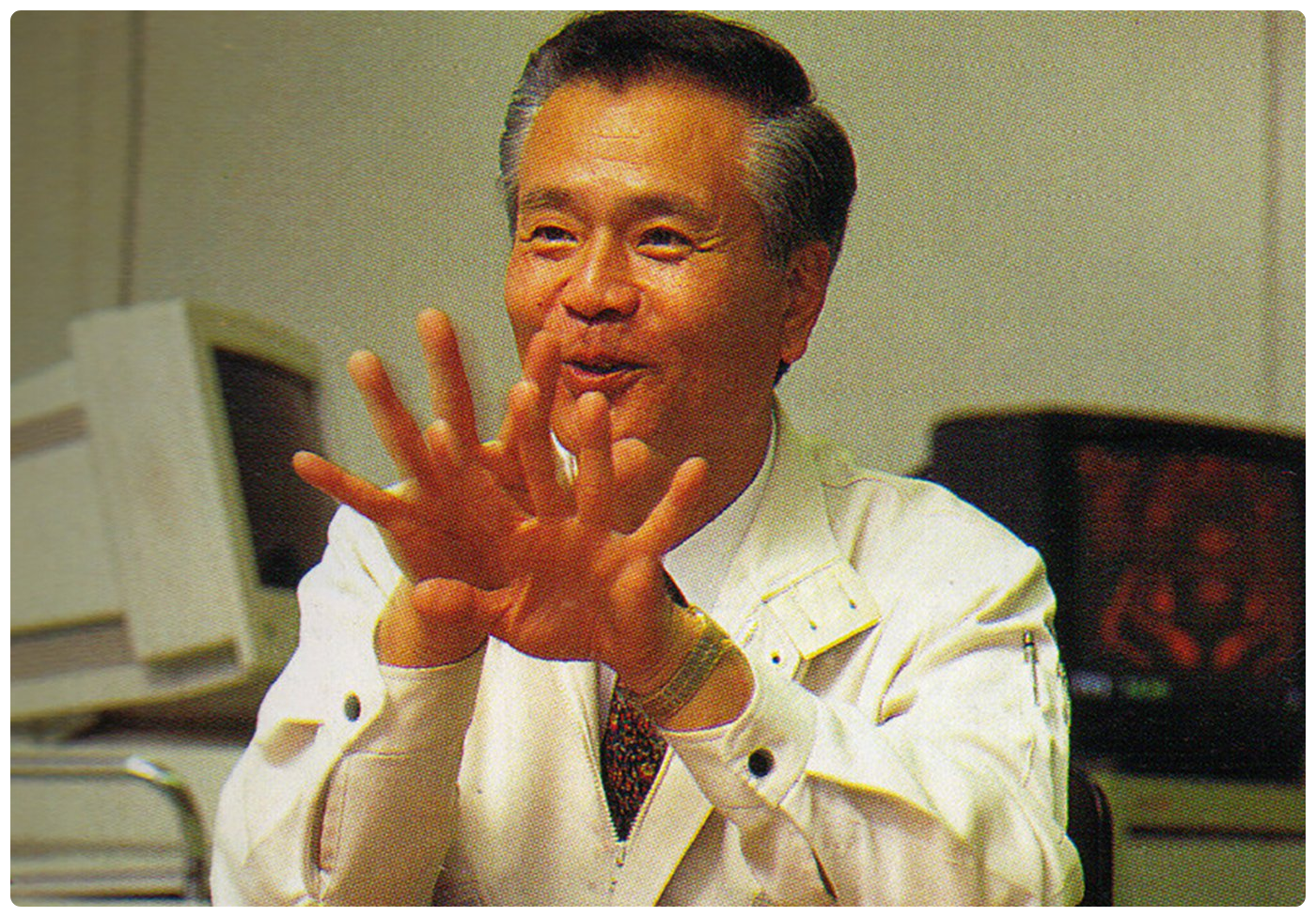
Some hardcore gamers and critics raised their eyebrows, asking, “Why make such a primitive game now?” But Yokoi’s response to these voices was a raw, unfiltered truth, devoid of excuses or flattery, tinged even with anger. In his book Gunpei Yokoi Game館 (Yokoi Gunpei Game House), Yokoi declared:
“You elitist gamers need to shut up. We aren’t targeting you. This game is aimed at middle-aged men and women, and children.”
Gunpei Yokoi
This very quote encapsulates the essence of why Nintendo remains a “rugged toy maker” rather than a “lofty artist.”
They never cared for the “massive, hyper-detailed worlds (monuments)” demanded by hardcore fans and critics. They targeted everyday men, women, and the children. Their goal was to make these audiences exclaim “Whoa!” the moment they peered inside, without requiring special knowledge or training.
As a rampart to prevent entertainment from degrading into a luxury item for a privileged elite, Yokoi wielded “Lateral Thinking with Withered Technology” to continue crafting toys for everyone. And though it remained in the conceptual stage and was never realised at the time, he was drawing a new roadmap for the future of gaming culture to expand the player base: applying “Lateral Thinking with Withered Technology” to repurpose the Virtual Boy for healthcare, a vision that directly connects to numerous later products such as Wii Fit.
Another exhibit symbolising this “gritty obsession of a toy maker” was the “Drive Game,” miraculously surviving at the museum in fully working condition.
A legendary, troubled product with an extremely intricate internal mechanism, Yokoi himself had to step onto the manufacturing line to assist with assembly during production. It was a toy that quickly went off the market due to its fragility born of complexity, with most units circulating at the time discarded and lost over the years. And here it is at the Nintendo Museum, now operating perfectly.
Nintendo is not a shallow company that proudly lines up only its hit titles to congratulate itself. Even the failure of the “Drive Game”—a challenge Yokoi fought for on the factory line before it faded away—is preserved at full scale as a footprint of their endeavour to deliver surprise to everyone.
The Virtual Boy and the Drive Game were both clumsy yet sincere Go stones placed on the board to battle the monster known as boredom. Gunpei Yokoi’s madness—deaf to elitist criticism, choosing to remain steadfast in the realm of “toys”—is nothing less than the origin of “Only Toys” that the modern gaming industry has largely forgotten.
Physicality and the Ecosystem on the Ground
The Cartridge and the Legacy of Shoshinkai
In a space referred to as the “Art Gallery” inside the Nintendo Museum, two pieces of hardware are displayed side by side, as if preserving the raw enthusiasm of Japan’s Showa era.
The “Disk Writer” and “Disk FAX” are important products symbolising Nintendo’s golden age, tasked with rewriting Family Computer Disk System software and transmitting scores for nationwide tournaments. During their heyday, these machines were leased to and operated by game shops across Japan under the strict management of Shoshinkai, Nintendo’s primary distributor network.
For decades, many Western game historians and overseas media outlets have characterized Shoshinkai as a “tool for Nintendo’s exclusive market dominance” or an “evil cartel obstructing the free market.” However, as I posited in my previous essay, The Ghost of Shoshinkai, the “Shoshinkai = evil” reading rests on an incomplete view of Japan’s physical distribution: one that overlooks the frontline forces and the broader gaming market ecosystem built over the past forty-plus years.
Shoshinkai was never an organization through which a manufacturer unilaterally wielded raw power. In the dawn of the gaming market, when rapid expansion threatened to trigger chaos, it was a framework designed for Nintendo, wholesalers, and small local game shops to manage operational risks together as partners. It prevented market collapse while ensuring that “play” was delivered reliably and stably to children. Far beyond that, it was an exceptionally healthy, symbiotic ecosystem that had functioned as the “Daiya-kai” since the era when Nintendo manufactured physical toys, long before the video game market even existed.

Games are not merely ephemeral data streamed from a distant server. They are physical entities with tactile substance — lined up on shelves in corner shops, passed from hand to hand, and carried in children’s pockets. In modern Japan, reuse game shop networks like GEO and BOOKOFF, spanning over a thousand locations nationwide, are the modern successors to the “everyday frontline accessible to all” cultivated by Shoshinkai. Children without credit cards and casual players can drop by while running errands: they can touch a game, purchase it, and upon finishing, sell it to fund their next game. The foundation sustaining this “economic circulation” and “broad market base” is neither a handful of massive electronics retailers in metropolitan centers, nor specialized hub stores in Akihabara or Osaka’s Nipponbashi, nor online stores — it is none other than the humble, real-world retail shops scattered across more than a thousand locations nationwide.
And this is precisely the fundamental reason for Nintendo’s stubborn adherence to cartridges over optical discs, even in modern, next-generation hardware. It is neither mere nostalgia nor retro sentimentality. The cartridge — a compact, robust physical medium — boasts overwhelming display efficiency within Japan’s cramped retail spaces, minimising the risk of disc scratches that render inventory unsellable. It reduces risks for frontline retailers and boosts liquidity in the used market. Furthermore, by embracing the secondhand market, Nintendo allows retailers to reap profits with zero procurement costs — a structure that incentivises brick-and-mortar stores to actively promote and sell hardware despite low profit margins. Even in the e-commerce and online markets that ultimately depend on real-world retail infrastructure, this premise remains unchanged.
Leaving aside Western readings that dismiss Shoshinkai as a mere “bad habit of the past,” Nintendo has consistently maintained an ecosystem alongside frontline retailers to deliver “tactile toys” ever since the Shoshinkai era.
The realism of the toy maker does not exist solely within publisher-run online storefronts accessed through screens. It resides continuously within every single centimetre of shelf display space, the durability of a single circuit board, and the living contact points between over a thousand retail stores nationwide and their users.
The Dilemma of the Monument Makers
Sony and the Data Stream
At the Nintendo Museum, where the company quietly presents its history and philosophy of “toys”, there was a remarkably symbolic division of exhibits. This division drew a sharp distinction between games made for dedicated consoles and entertainment made for mobile devices like smartphones. Mobile initiatives were confined to a tiny area tucked away at the edge of the exhibition space, categorised merely as “part of a service” and drew a clear, definitive line separating them from standalone, independent “toys” (games).
To be sure, Nintendo is by no means immune to the realities – including the preservation dilemmas – of the digital era. The closure of the Wii U and 3DS eShops as well as the introduction of the Game Key Card concept (where physical cartridges serve primarily as download tokens) are clear examples of this. And yet, even as Nintendo navigates these digital realities, the underlying design philosophy of its network services remains fundamentally distinct. Nintendo’s online infrastructure, epitomised by its “Nintendo Switch Online” service, is structured primarily as a user compensation for the constraints of server maintenance (incorporating features like legacy platform emulation, free downloadable content, and cloud-based save data back-ups) that support and preserve the core physical play experience.
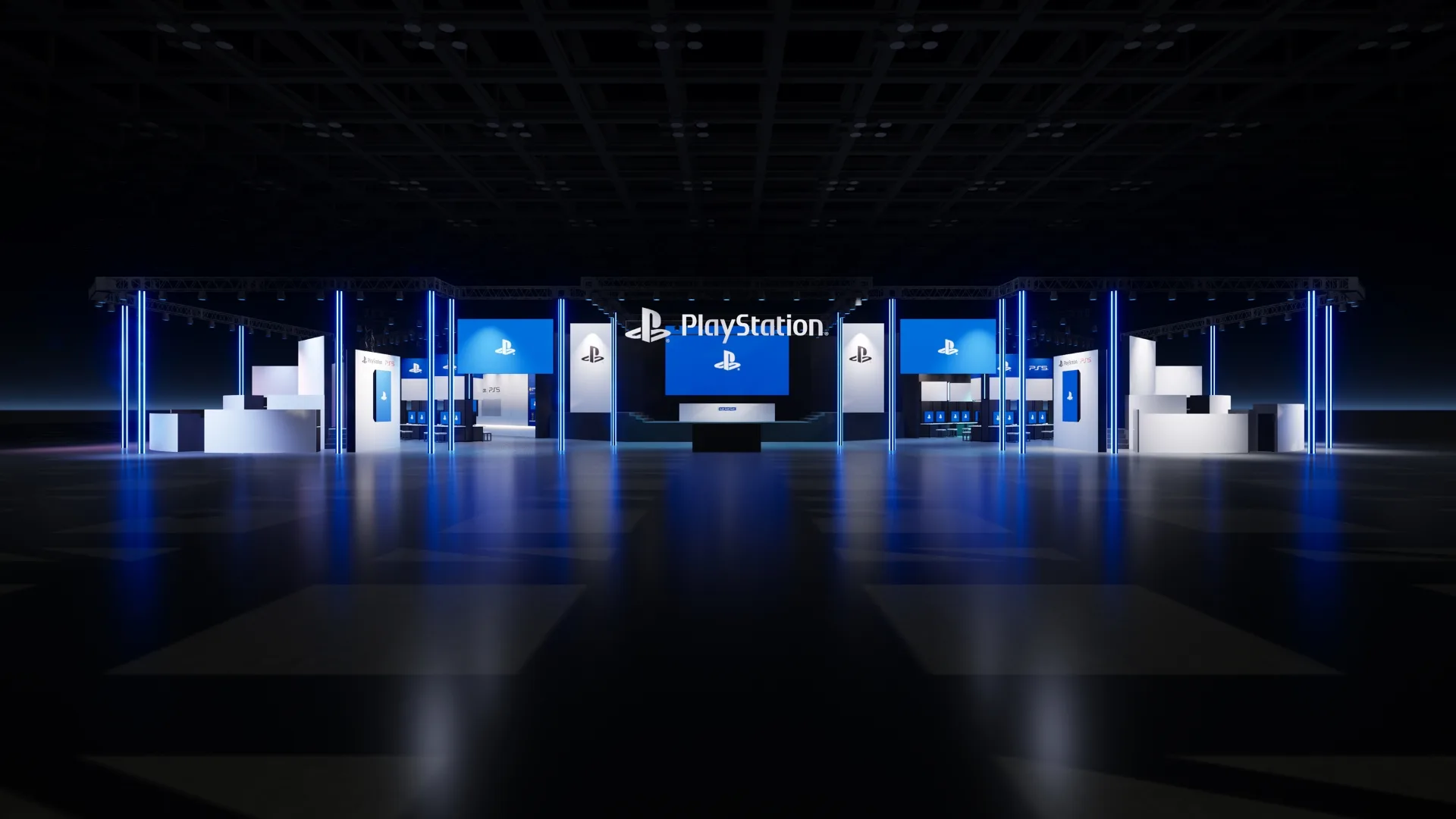
If you were to visit the PlayStation headquarters in Japan, though, you’d notice an interesting contrast in terms of how Sony presents its ecosystem. In this exhibition space, network services, PlayStation Plus subscription tiers, and digital live-service infrastructures are seamlessly integrated alongside physical media. The message is clear: digital ecosystem growth is at the core of the platform identity here.
This decisive difference in presentation speaks volumes about the profound disconnect between Nintendo and Sony’s respective philosophies on gaming.
For Sony, a game is increasingly treated less as a tactile “toy” or a self-contained act of “play”. Its corporate strategy regards games as being more akin to distributed data streams that are updated and incrementally monetised via the internet. The massive, hyper-detailed, graphics-centric experiences are expressed as lofty works of high-art. They are monuments to a kind of cutting-edge digital expression. But this view, as accurate as it may be in some respects, is also something of a facade, behind which lies a daunting economic reality: these games increasingly risk becoming high-cost containers built to maximise ongoing user engagement hours and sustain recurring online revenues which amortise ever-rising development budgets.
This pattern of ascending development costs reflects a structural shift across the industry. When interactive ideas and mechanics are overshadowed by absolute graphical fidelity, production budgets inevitably balloon. The idea that interactive entertainment strictly requires tens of billions of yen and top-tier hardware specifications represents just one production philosophy. This point is underscored by games like UNDERTALE, which captured global audiences through simple pixel art and design. Another notable example is Game Freak (creators of Pokémon), which originated as a doujin circle and continues to produce global hits.
Then there’s the strategic orientation towards a “Data Stream” – favouring direct digital sales and recurring subscriptions – which has reshaped PlayStation’s relationship with the foundational strength of Japan’s legacy gaming market: the physical retail ecosystem.
In recent years, hardware allocation and promotional focus have increasingly concentrated on high-volume urban retail partners capable of massive bulk purchasing (exemplified by metropolitan giants like Yodobashi Camera, which operates roughly 24 flagship locations nationwide). On paper, prioritising these high-density urban hubs streamlines logistics and concentrates short-term cash flow. And yet, this urban-centric distribution model stands in sharp structural contrast to Japan’s suburban and regional retail guild: specialised game and reuse chains like GEO and BOOKOFF, which span over a thousand storefronts nationwide. These neighbourhood locations – which are embedded in the daily routines of casual players, students, and local gaming communities – have historically served as the primary physical touchpoints for hardware adoption.

When physical consoles and promotional presence recede from local neighbourhood stores in favour of a concentrated footprint in two dozen metropolitan megastores, a platform’s physical visibility in everyday living spaces naturally contracts.
At the root of this retail friction lies a long historical context, including the secondhand game sales litigation of the late 1990s and early 2000s, where legal battles over used game sales created lasting tensions between console manufacturers and independent retailers.
And while PlayStation maintains dedicated retail space due to its global brand equity, the structural shift toward discless digital consoles and thin retail margins has led regional store managers to adopt a more conservative stance. In many regional chains, PlayStation display areas have gradually been repositioned away from storefront entrances: this represents a subtle footprint reduction and gradual loss of visibility to everyday shoppers. This operational strategy reflects the legacy of a consumer electronics background: the emphasis is on hardware iterations, volume distribution through major retail partners, and subscription-based service revenue.
However, interactive entertainment products operate on distinct consumer dynamics compared to regular consumer electronics. A game or platform that loses its immediate consumer appeal cannot easily rely on model revisions alone: it faces swift depreciation in competitive retail markets. Emphasising digital channels and large urban outlets while regional storefronts downsize shelf space creates a longterm trade-off between immediate distribution efficiency and grassroots market presence.
In North American and European markets, which are characterised by vast geography and high baseline e-commerce adoption, higher digital ratios along with broader retail trends. However, applying that same distribution logic to Japan’s dense, store-based retail culture creates a unique structural disconnect. A platform that reduces its physical footprint in everyday community hubs risks loosening its cultural roots in the domestic market.
Even as PlayStation shifts significant organisational focus to Western markets and global operations centred in San Mateo, the broader transition away from physical disc drives continues to spark debate among international retail partners and collectors alike.
And so, the contrast remains clear: there’s the ecosystem built on physical “toys” integrated into neighbourhood retail networks, and the model driven by high-spec hardware and the continuous “Data Stream” powered by an online-first approach.
Where does this leave us? The enormous “Monument” erected on high budgets and digital delivery now faces the ultimate test of its structural foundation: can a platform thrive when it is detached from the physical soil from which its popularity first took root?
The Horizon of Entertainment
Interpretations of Realism
Reflecting on the half-century history of the Japanese gaming industry, two opposing gravitational forces have always been at work. On one side is the pull of technocentrism and spec-driven ideology: the attempt to elevate games into an “imitation of reality” or a “Data Stream” through higher-definition graphics, ever-increasing computing power, and high-speed internet. On the other side – no matter how far technology advances – is the pull of the realism of an old-fashioned toy maker that continues to perceive the essence of games not as “graphics on the other side of the screen”, but as “the physicality and tactility of a human at play”.
The spec-driven ideology and digital-centric strategy spearheaded by Sony appeared, at first glance, progressive: the apparent pinnacle of modernisation in the global market. However, this achievement came at a significant price. The astronomical development costs inflated over time to erect massive “Monuments” that, at times, robbed creators of experimental and mental flexibility, breeding a paralysis of thought that could only focus on graphical precision. Further, the inclination toward short-term profits and direct digital sales devastated the real-world retail ecosystem across more than a thousand regional stores, erasing PlayStation’s physical and sensory presence from many communities.
Games themselves degraded into mere “containers for the Data Stream” designed primarily to squeeze out user engagement time while severing ties with frontline retail. Ironically, the higher the screen resolution, the lower the apparent passion and cultural “heat”, cooling these products into mere consumer goods.
Standing in sharp contrast, the philosophy of “Only Toys” consistently presented by Nintendo is by no means just a nostalgia play or some kind of token retro sentimentality. It is, rather, an exceptionally focused and discerning strategy that emphasises the true essence of entertainment. For Nintendo, cutting-edge technology is not an outcome to flaunt; it is actually a substrate from which to expand the experience of play. As both UNDERTALE and Game Freak – which originated from a doujin circle – have demonstrated, Nintendo knows full well that the true value of entertainment lies not in “high specs” but in “Lateral Thinking with Withered Technology”.

This is precisely why, even against the digital-specific disadvantage of charging server maintenance fees, Nintendo stubbornly builds an environment where players are not excluded from the playground (by offering powerful user compensation through Nintendo Switch Online, including ongoing DLC deliveries and emulation of legacy platforms). Also, even in the golden age of online services, Nintendo prioritises “interactive experiences” that humans can physically touch, gather around, and feel in real life (as demonstrated by their nationwide retail partnerships and the Nintendo Museum’s meticulous attention to the player experience, right down to the variable heights of its viewing windows).
The gaming industry is undoubtedly reaching a major turning point.
The ‘spec arms race’ – where development costs are endlessly inflated, user engagement time is a battleground to be vigorously contested, and about which Shigeru Miyamoto himself publicly declared in an interview that the console performance wars are over – has already reached its limit. No matter how sophisticated the “Data Stream” becomes, a “Monument” that has lost its physical touchpoints rooted in daily living spaces, and that discards the creative instincts of its developer, becomes little more than a dead weight the moment player interest drifts away.
I believe the future of the games industry will not be about the flaunting of elaborate specifications radiating from screens. It will, rather, rely on human wisdom and creativity turning constraints into advantages. And, it will, perhaps, rest upon a humble ecosystem that expands the circle of experience alongside local communities and frontline retail stores.
What the Nintendo Museum quietly presented as not merely a company’s glorious history. It was a declaration of return to the true origin of entertainment dating back to 1889: the unwavering conviction that, at the end of the day, games are toys that humans can touch and enjoy with their own hands.
At the end of the day, games are toys that humans can touch and enjoy with their own hands.
Only those who do not drown in the illusory sea of the Data Stream – but remain grounded in the tactical reality beneath their feet – will be able to continually spark passion and joy in players’ hearts in the era to come.
Epilogue: What Remains After the Power Is Cut
Culture and Memory as Physical Substance
As I concluded in the previous chapter, the games industry is now approaching the final phase of a collision between two philosophies: the “Monumental Data Stream” and the simple tactility of the “Toy”. But there’s one more perspective to be examined.
That is the idea of the preservation and inheritance of video game history and culture.
Blockbuster games created as “Monuments” with colossal development budgets and rendered on state-of-the-art high-spec hardware are undoubtedly unparalleled in terms of popularity at the moment. However, when these works become entirely dependent on digital spaces and online infrastructure, a brutal truth is laid bare: the instant servers are powered down and emphasis shifts to a new platform generation, these colossal entertainment projects become inaccessible illusions.
The tragedy of the Data Stream lies in how its artefacts vanish into the digital sea upon the announcement of service termination, leaving future generations without any accessible means to verify the sensory experience – and the associated frenzy – of the relevant era. On the other hand, the power of the toy, in part, is its ability to transcend the digital prison, to traverse era after era, encountering new generations of players at every turn.
Even ageing controllers with worn out d-pads, sun-faded cartridges, and battered physical packaging that once adorned retail shelves are not mere lumps of plastic and cardboard: they are irreplaceable cultural artefacts that radiate the passions of countless players. Their wear and tear becomes a feature rather than a bug; tangible evidence of their engagement with the real human beings who played with them.
As noted earlier, even Nintendo is not immune to the gravitational pull of the digital world. Game cartridges serving merely as download tokens (Switch 2’s Game Key Cards, for example) demonstrate that even the traditional champion of physical play must negotiate the relentless economics of the Data Stream. However, this structural tension does not weaken the philosophy of physical substance: it starkly reinforces it.
The demise of digital storefronts in particular lays bare the inherent fragility of server-dependent access, proving beyond any doubt that when online infrastructure inevitably goes dark, it is precisely those self-contained physical cartridges – with their sun-faded plastic and worn manuals – that remain as the sole surviving anchors of that era’s cultural history. When physical media collapses into a digital key, it serves not a progress, but as a warning of a culture severing its own memory.
And so, the reason Nintendo adheres to Gunpei Yokoi’s “Lateral Thinking with Withered Technology” and stubbornly insists on physical media and hardware gimmicks (tactile feel, weight, physical presence) is not just for business differentiation. It is also to avoid severing “play” from human physicality, establishing games as universal objects that can be pulled out from the back of a drawer and played at any time, even decades after release.
The reason that the Nintendo Museum moves visitors’ hearts – beyond merely being an expression of corporate publicity – is that it is a sanctuary where physical objects, which have existed in parallel to individual lives, are preserved and celebrated as cultural artefacts.
In an era where all entertainment dissolves into a sea of subscriptions and the torrent of the Data Stream threatens to swallow everything, the philosophy of “Only Toys” might just be the final defence against the culture of gaming itself evaporating into thin air. As long as there is a physical artefact to hand down from generation to generation, the history of games need not come to an end.
