

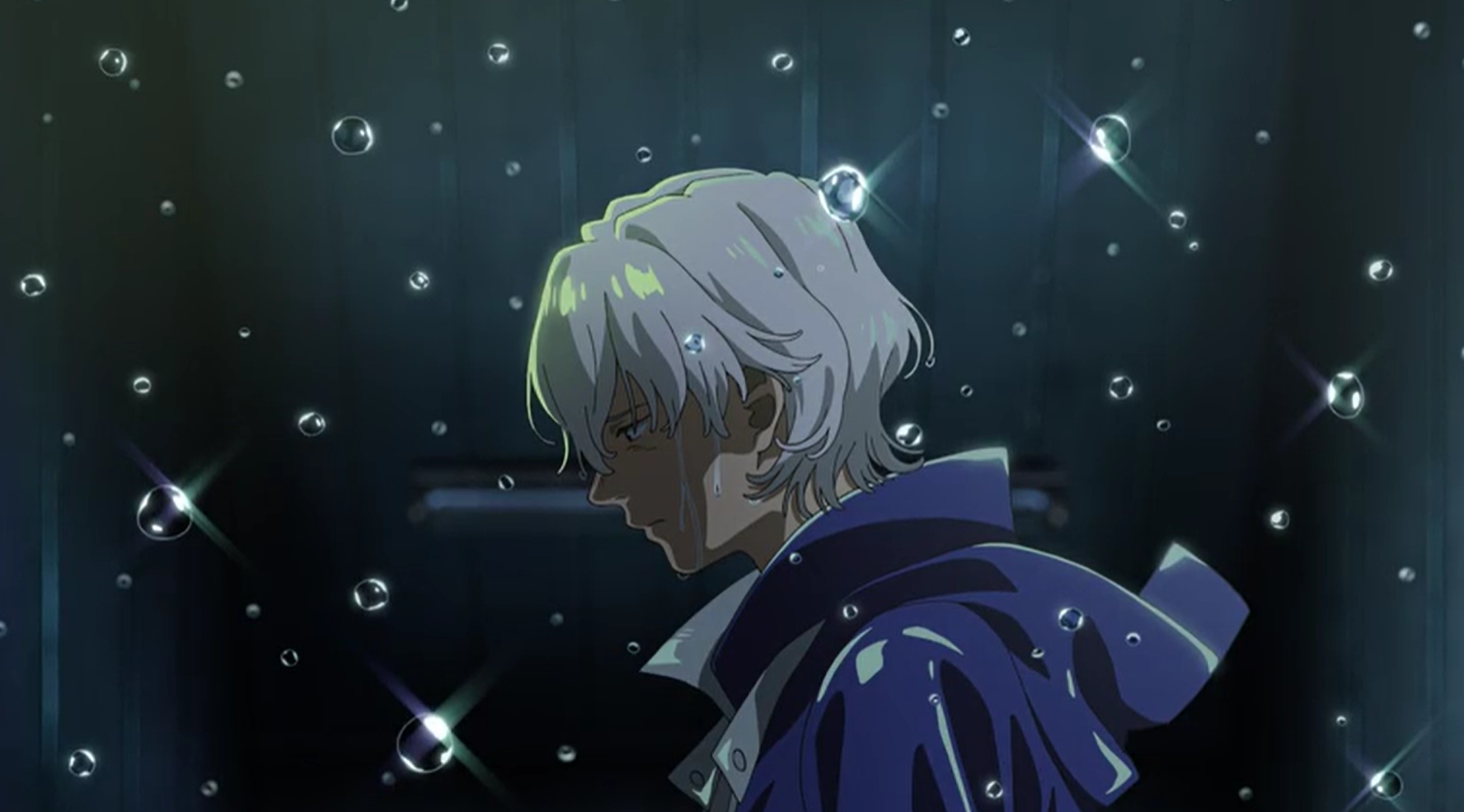
The date that Fool Night‘s most invested readers have been waiting for since Annecy is now on the calendar. Netflix <a href="https://www.animenewsnetwork.com/news/2026-08-20/fool-night-anime-teaser-reveals-more-cast-november-26-worldwide-netflix-debut/.240745″ rel=”nofollow noopener” target=”_blank”>confirmed November 26 worldwide premiere at its Anime NYC 2026 panel on August 20 — the Sunrise and SHAFT co-production, the first-ever joint anime between the two studios, will premiere worldwide on November 26, 2026, with every episode dropping as a full batch on the same day. The announcement came alongside a new English-dubbed teaser trailer and a featurette featuring series director Atsuyuki Yukawa alongside SHAFT animation producer Ryusuke Suzuki and Sunrise animation producer Yoshihiro Iwata — the first time producers from both studios have spoken publicly as a joint creative team.
Three additional cast members were also revealed at Anime NYC: Junya Enoki as Akira Yatsuka, Aya Endo as Saeko Kano, and Kiyomitsu Mizuuchi as Jin Hiragishi. They join previously confirmed leads Kōki Uchiyama as protagonist Toshiro Kamiya — best known internationally as Tomura Shigaraki in My Hero Academia — and Kotobuki as Yomiko Horai, a role that reunites her with the psychological thriller register she built in Aggretsuko. Enoki, who voices Yuji Itadori in Jujutsu Kaisen and Takemichi in Tokyo Revengers, brings a recognizable mainstream register to the ensemble that suggests Netflix is positioning this series for an audience well beyond the manga’s existing readership.
What Fool Night Is, and Why November Feels Like the Right Month for It
Fool Night is a seinen manga written and illustrated by Kasumi Yasuda, serialized in Shogakukan Big Comic Superior since November 2020 and currently spanning 12 volumes. Viz Media distributes the English edition in North America under its VIZ Signature imprint. The series ranked in Kono Manga ga Sugoi 2023 — the annual industry-professional poll of best manga for male readers — and won Best Suspense at the Japan Expo Daruma Awards the same year. It has approximately 600,000 copies in circulation worldwide, including digital editions.
The premise earns its science fiction credentials by grounding its central conceit in genuinely active areas of biological research. Fool Night is set roughly a century in the future. Thick, permanent cloud cover has sealed Earth from sunlight for 100 years. Without photosynthesis, plant life has largely died off, and atmospheric oxygen has dropped to dangerous scarcity. Humanity’s countermeasure is a government-sanctioned biotechnology called Transfloration: seeds are surgically implanted into the bodies of people near death, and over the course of approximately two years, the volunteer’s body converts — biochemically and structurally — into a plant organism called a reika, or spirit blossom.
The process is irreversible and ultimately fatal to human consciousness. As plant tissue overtakes the nervous system across that two-year window, patients gradually lose both speech and cognitive function. In exchange for undergoing the procedure, volunteers receive a one-time payment of ¥10,000,000 — approximately $63,000 USD (exchange rate as of August 21, 2026; conversions are approximate) — a figure the manga repeatedly demonstrates to be insufficient to escape the poverty that drove most participants to consent in the first place.
Protagonist Toshiro Kamiya is a young man drowning in debt while caring for his mentally ill mother. After exhausting every other option, he undergoes an illicit transfloration procedure and discovers, in the process, a unique ability: he can hear and decode the fragmented signals emitted by existing spirit blossoms — residual consciousness persisting in plant tissue. That ability draws him into a sociopolitical murder mystery centered on Ivy, a fully transflorated individual who somehow retains the capacity for independent movement.
The series’ emotional register is body horror beneath a sociopolitical thriller surface. The imagery of people you loved slowly becoming immobile flowering structures — still partially conscious, still dimly present — while the state monetizes their dying, operates at a different frequency than most dystopian anime. Matsuno Sumi, a supporting character who is a pianist, functions as the series’ thesis image: her playing set against the visual backdrop of spirit blossoms is the clearest expression of the question the show keeps asking — what remains of humanity when the body is no longer human?
When Science Actually Backs the Fiction
What distinguishes Fool Night from most sci-fi anime is that its fictional technology traces, with unusual specificity, to a real biological phenomenon researchers still cannot fully explain. The closest analog to Transfloration in nature is kleptoplasty in animal tissue — the ability of certain organisms to steal chloroplasts from algae and sustain them in functioning condition inside animal tissue.
Elysia chlorotica, a sacoglossan sea slug native to the Atlantic coast, performs a partial version of this transformation. Juvenile slugs feed on the alga Vaucheria litorea, extract its chloroplasts, and sequester those chloroplasts alive inside the cells lining their own digestive tract. The chloroplasts continue photosynthesizing inside animal tissue — producing oxygen and fixing carbon — for periods of up to ten months, far longer than in any other known multicellular animal. The sea slug becomes, at least metabolically, part plant.
The scientific puzzle is that researchers cannot fully account for how this works. Chloroplasts require proteins encoded in the host plant’s nuclear genome to sustain long-term photosynthetic function. E. chlorotica has no plant nucleus. A 2013 genome analysis published in Molecular Biology and Evolution found no evidence that the slug had incorporated algal nuclear genes into its own germline through horizontal gene transfer — the mechanism initially hypothesized to be responsible. The mechanism by which the chloroplasts sustain function in the absence of that nuclear support remains, as the researchers stated, unexplained.
In 2024, a research team at the University of Tokyo and the RIKEN Center for Sustainable Resource Science inserted chloroplasts into mammalian cells and demonstrated maintained photosynthetic activity for at least two days — a feat that had eluded researchers for over 50 years. They achieved this by modifying the host cell’s autophagy pathways — effectively preventing the animal cell from digesting the foreign chloroplast through the mechanism that normally destroys intruding organelles. The chloroplast-containing cells showed increased growth rates, suggesting the chloroplasts were supplying usable energy to the host through light-driven ATP production.
Fool Night‘s transfloration is, in essence, kleptoplasty and the 2024 Tokyo/RIKEN result engineered to operate at the scale of an entire human organism across a two-year conversion timeline. The manga’s framing of the process as imperfect, grotesque, and incompletely understood even by its practitioners happens to be the scientifically accurate framing: the real biology is also imperfect, grotesque at the cellular level, and mechanistically mysterious in ways that decades of research have not resolved.
An Oxygen Economy Built From Dying People
The most intellectually rigorous element of Fool Night‘s world-building is not the biology — it is the economics. The series introduces a state-administered oxygen tax: citizens pay a mandatory fee to the government, which redistributes the oxygen generated by spirit blossoms across population centers. Wealthier citizens maintain comfortable atmospheric access; the poor ration it, and the accumulated burden of the tax across a lifetime creates a structural incentive to volunteer for Transfloration precisely when poverty has made living difficult enough that death seems like a reasonable financial instrument.
This is commons economics inverted. In the real world, cap-and-trade systems tax the production of harmful atmospheric outputs — carbon dioxide. Fool Night‘s oxygen economy taxes the consumption of a beneficial one. The ethical machinery this creates — poverty as coercive consent to irreversible bodily sacrifice — mirrors real-world debates in bioethics around organ markets and clinical trial economics, where financial incentives for participation in experimental procedures disproportionately recruit economically desperate participants. The ¥10,000,000 (approximately $63,000 USD) payment, repeatedly shown to be insufficient against accumulated debt, is a precise crystallization of that pattern.
Kasumi Yasuda has described the manga’s central preoccupation as “how hard it is to escape poverty.” The Transfloration system is an elegant mechanism for literalizing that phrase: the sacrifice is both complete and perpetual, and the person continues to experience it.
Can a Sunless Earth Actually Run Out of Oxygen?
Fool Night‘s premise requires Earth to have been deprived of direct sunlight long enough to collapse terrestrial vegetation almost entirely. The manga does not specify the cause of the cloud cover, which turns out to be the scientifically honest choice.
TTAPS nuclear winter theory, developed rigorously by Carl Sagan, Richard Turco, and colleagues, proposes that sufficient stratospheric soot injection could block most surface sunlight for months to years. A 2021 study published in Communications Earth & Environment showed that the Toba supervolcanic eruption (roughly 74,000 years ago) severely inhibited oxygen photolysis and suppressed ozone formation in the tropics for over a year. Extrapolating those mechanisms across a century requires either a self-sustaining feedback loop or an ongoing particulate source — no single natural event produces a hundred-year shield.
The oxygen premise is more specific than it first appears. Earth’s atmospheric oxygen reservoir is enormous — the product of approximately 2.7 billion years of photosynthetic activity — and would not deplete to dangerous levels quickly under normal consumption rates. What Fool Night appears to be depicting is not atmospheric depletion but a production and distribution crisis: the oxygen generated by spirit blossoms is channeled into enclosed city-scale life-support infrastructure, with the wealthy able to afford adequate supply and the poor rationing it. That interpretation is more scientifically coherent, and it aligns precisely with the series’ sustained emphasis on economic inequality as the story’s central moral machinery.
What Toshiro hears when he perceives the signals of spirit blossoms is not plant consciousness in any neuroscientific sense. Plants do not have neurons, but they do process electrical signals through plasmodesmata — cell-to-cell channels — and generate action potentials in response to stimuli. Suzanne Simard’s foundational 1997 research at the University of British Columbia demonstrated that trees actively distribute resources through fungal networks, transferring carbon, water, and chemical distress signals across ecosystems. None of this constitutes consciousness. The manga’s most defensible reading is that what Toshiro perceives is residual human neural activity persisting within a plant substrate — a slowly degrading signal from a nervous system that has not yet fully converted, not a new form of plant intelligence.
Why the Two-Studio Split Makes Visual Sense
The production arrangement for Fool Night is historically unusual. Sunrise and SHAFT have operated as two of Japan’s most influential animation studios for over 50 years with near-opposite creative identities. Sunrise, a subsidiary of Bandai Namco Filmworks since 1972, built its reputation on kinetic, franchise-scale productions — Mobile Suit Gundam, Cowboy Bebop, Code Geass — characterized by external storytelling, meticulous mechanical design, and large-scale civilizational conflict rendered as physical action.
SHAFT, founded in 1975 and artistically defined through its longtime collaboration with director Akiyuki Shinbo, developed a near-opposite visual language: introspective, architecturally abstract, dialogue-dense, and radically fragmented in its editing. The signature style — extreme perspective shifts, typography integrated into frames, sudden cuts to negative space, the expressionist still-frame sequences of the Monogatari series and Puella Magi Madoka Magica — prioritizes interior psychological states over external action.
Fool Night‘s premise has a binary visual structure that maps almost precisely onto each studio’s specific strengths. The external world — industrial cities lit by neon against permanent darkness, Transfloration clinics, the kinetic political conflict over who controls the oxygen supply — is Sunrise territory. The interior world — Toshiro’s psychological deterioration as plant tissue begins its work, the ethical weight of carrying dozens of Soulflora voices, the slow dissolution of identity across two years — is SHAFT territory.
The creative staff assembled for the project reinforces the ambition. Director Atsuyuki Yukawa, who served as a unit director on Makoto Shinkai’s Suzume (2022), has spoken about the manga’s exceptional capacity to portray the passage of time and his intention to trust the audience rather than over-explain the story. Jin Tanaka, whose credits include Oshi no Ko, handles screenplay. Tatsuya Katō (Dr. STONE) composes the score, and sound director Yota Tsuruoka — whose A Silent Voice work established his range in emotionally precise sonic design — oversees a production in which silence, ambient environmental sound, and the absence of human speech are among the central expressive materials.
When Does Fool Night Premiere on Netflix?
Fool Night will premiere worldwide on Netflix on November 26, 2026. Netflix has confirmed a full-batch release: every episode will be available on the same day. No episode count for the series has been confirmed as of publication.
For North American viewers, Thanksgiving falls on November 27, 2026 — making the November 26 premiere date a built-in long-weekend binge window, likely intentional positioning. The English-dubbed version, confirmed with a new trailer at Anime NYC 2026, will be available at launch. Netflix confirmed the series is a worldwide exclusive; it will not be available on Crunchyroll or any other streaming platform.
The manga currently stands at 12 volumes and is available in English through VIZ Media’s VIZ Signature imprint. Netflix’s anime viewership reached 1.5 billion anime views 2025 across the platform in 2025, with over half of its subscribers regularly watching anime content.
Frequently Asked Questions
When does Fool Night come out on Netflix?
Fool Night will premiere worldwide on Netflix on November 26, 2026, with all episodes releasing on the same day. Netflix confirmed the date at its Anime NYC 2026 panel on August 20. The prior announcement from Annecy in June 2026 had only confirmed a general 2026 window without a specific date.
What is transfloration in Fool Night, and does real science support it?
Transfloration is the series’ central fictional biotechnology: seeds are surgically implanted into a dying person, and over approximately two years, human tissue converts irreversibly into a photosynthesizing plant organism. The premise maps onto real biology more closely than most science fiction. The closest real-world analog is Elysia chlorotica, a sea slug that sequesters live chloroplasts from algae and sustains photosynthesis in animal tissue for up to ten months. In 2024, researchers at the University of Tokyo and RIKEN demonstrated maintained chloroplast photosynthesis inside mammalian cells for two days — the first successful instance in over 50 years of attempts. The barriers to human-scale transfloration remain substantial — the immune system would attack foreign plant tissue — but the series’ framing of the process as grotesque, imperfect, and only partially understood by its practitioners reflects the scientific reality accurately.
Who voices Toshiro Kamiya in the Fool Night anime, and who else is in the cast?
Kōki Uchiyama voices Toshiro Kamiya — he is best known internationally as Tomura Shigaraki in My Hero Academia and Meruem in Hunter x Hunter. Minako Kotobuki voices Yomiko Horai. Three additional cast members were revealed at Anime NYC 2026: Junya Enoki (Yuji Itadori in Jujutsu Kaisen, Takemichi in Tokyo Revengers) as Akira Yatsuka; Aya Endo (Midnight in My Hero Academia) as Saeko Kano; and Kiyomitsu Mizuuchi as Jin Hiragishi. The series is directed by Atsuyuki Yukawa, with screenplay by Jin Tanaka, score by Tatsuya Katō, and sound direction by Yota Tsuruoka.
What does the oxygen economy in Fool Night reveal about the series’ real subject?
Fool Night uses a mandatory oxygen tax — citizens pay the state for access to the oxygen that spirit blossoms produce — as the mechanism that makes poverty structurally coercive rather than merely difficult. The ¥10,000,000 (approximately $63,000 USD) Transfloration payment is deliberately set at a level that covers accumulated debt but does not enable escape from the conditions that generated the debt. In that sense, the oxygen economy is less a speculative premise than a formalization of something real: the bodies of economically desperate people as the infrastructure that wealthier populations consume without acknowledging. Kasumi Yasuda has said the manga’s central subject is how hard it is to escape poverty. The transfloration system is the fictional machine that makes that difficulty permanent and literal.
ⓒ 2026 TECHTIMES.com All rights reserved. Do not reproduce without permission.
