

Every decade of television is predominantly shaped by its heroes — but the 2020s might be the first to be defined by its villains. So far, this has been the decade when shows have largely stopped hand-wringing over antiheroes and started asking audiences to immerse themselves in true evil. We’ve moved past the morally conflicted mobster and the socially conscious serial killer — now, a show can confront you with a straight-up stalker and murderer and trust you’ll watch him narrate his growing body count.
Beyond villainous protagonists, the decade has given us a variety of compellingly vile antagonists that reflect its cultural anxieties. The waning dominance of superhero stories has given rise to the “Evil Supermen” trope; institutional distrust has inspired fictional political tyrants and violent bureaucrats; meanwhile, a desire for radical change has similarly granted empathy to deadly revolutionaries who lose their way. Chillingly, the vast majority of this list would claim to be united by a single, twisted motivation: love.
15. Nate Jacobs (Euphoria)
Though its later episodes proved divisive, “Euphoria” once looked like a potential new flagship series for HBO. It reached the peak of its popularity and acclaim when Season 2 aired in 2022 — which, most importantly for the purposes of our list, also cemented Jacob Elordi’s Nate Jacobs as the most hated TV teenager since King Joffrey.
Early fans were already aware. Season 1 saw Nate terrorize and blackmail Jules (Hunter Schafer), violently abuse his girlfriend, Maddy (Alexa Demie), and force Tyler (Lukas Gage) to take the fall for said abuse. And while Season 2 attempts to humanize Nate through revelations about his father’s past, it also turns him into a quieter, colder villain whose behavior becomes increasingly disturbing. The prime example of this turn is “A Thousand Little Trees of Blood,” in which he breaks into Maddy’s house with a gun and traumatizes her by “jokingly” playing Russian roulette with her. We’d rank him higher if his storyline in the final season wasn’t so disappointing.
14. Rupert Mannion (Ted Lasso)
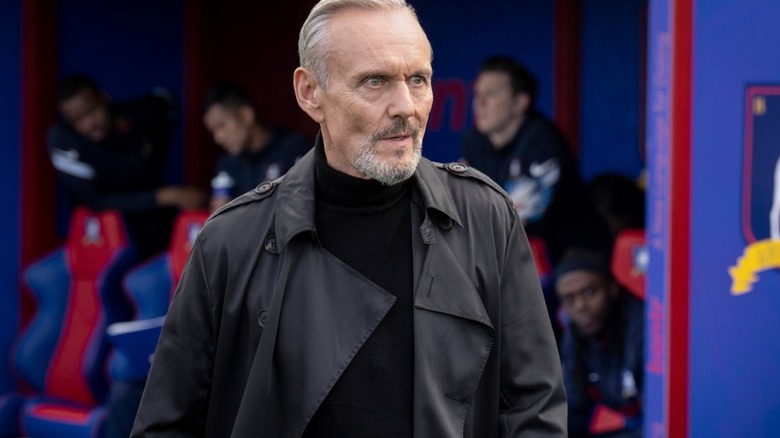
Great, truly menacing TV comedy villains are rare. The late Anthony Head and “Ted Lasso” gave us the decade’s best example so far in the loathsome Rupert Mannion.
The former owner of AFC Richmond and adulterous, narcissistic ex-husband of current owner Rebecca (Hannah Waddingham) is the one person everyone on the show can’t stop hating. Impressively, he’s still as three-dimensional as the rest of the supporting ensemble — he genuinely loves Richmond even when he’s no longer the owner, and his reaction alongside the club’s fans at the end of Season 1 reveals another side of him. He also has enough of a soul to be moved by Rebecca’s speech at the prospective Super League dinner, their shared laughter in the aftermath being one of Season 3’s most cathartic moments.
But those high points are only rich because we know how awful he’s been. The peak of his cruelty (and one of Head’s favorite scenes) comes toward the end of Season 1 in “All Apologies,” when he seemingly revels in telling Rebecca that he’s suddenly decided to have a child with his new wife. For a sitcom bad guy, that’s about as evil as you can get.
13. Harmony Cobel (Severance)
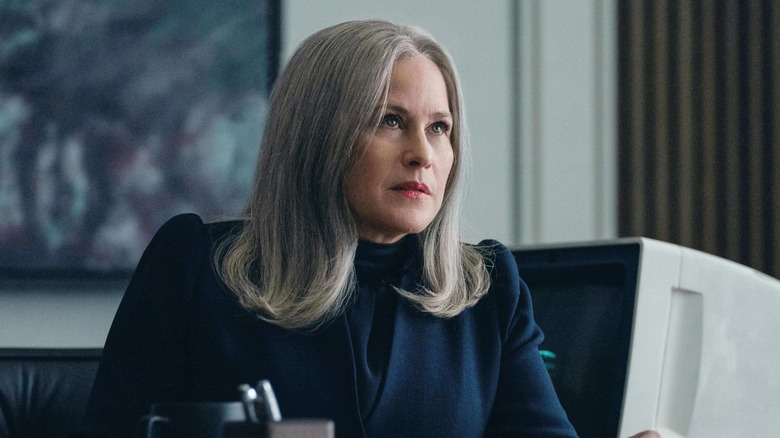
“Severance” has no shortage of unsettling antagonists. Tramell Tillman’s Seth Milchick, Britt Lower’s Helena Eagan, and even Michael Siberry’s as-yet-under-seen Jame Eagan will undoubtedly be among the most memorable villains of the decade. Choosing just one, however, the clear choice was Patricia Arquette’s Harmony Cobel.
Especially in the first season of the acclaimed Apple TV sci-fi thriller, Cobel is the most terrifying threat in the series. We see her operate both inside Lumon, where she oversees the severed floor, and outside as Mark’s (Adam Scott) seemingly innocent next-door neighbor, “Mrs. Selvig.” Cobel is far too committed to the latter persona, which seemingly only exists to steal more of Mark’s freedom and privacy.
She’s only this far down on the list because, great as she is, she takes somewhat of a back seat in Season 2. Her arc even leans toward an alliance with Mark (with “Sweet Vitriol” teasing out her complicated backstory). It feels too early and uncertain to place her any higher.
12. Nolan Grayson / Omni-Man (Invincible)
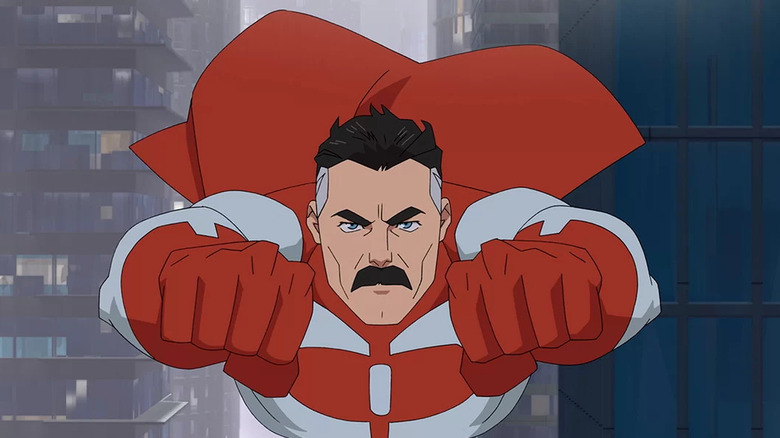
Nolan Grayson is a deceptively easy inclusion on this list. Without question, J.K. Simmons’ super-bad super-dad was an extraordinarily noteworthy TV villain at one point in the 2020s and will surely be remembered as one of the most popular superheroes on television. The combination might make him a lock for the Top 5 in the minds of some of our readers — but, realistically, Nolan was only a true villain in “Invincible” Season 1.
His beautifully challenging redemption arc over subsequent seasons keeps him surprisingly low on this list, though that won’t stop us from taking another opportunity to praise his shocking turn in the pilot episode. “Invincible” is merely an above-average comic book show up until Nolan’s massacre of the Guardians of the Globe. It recontextualizes every seeming act of heroism Omni-Man commits afterward, particularly his assault on the Flaxan homeworld in “Here Goes Nothing.” The “showdown” (read: vicious beating) between him and his own son, Mark (Steven Yeun), in the Season 1 finale is enough on its own to earn him a spot on this list.
11. Ishido Kazunari (Shōgun)
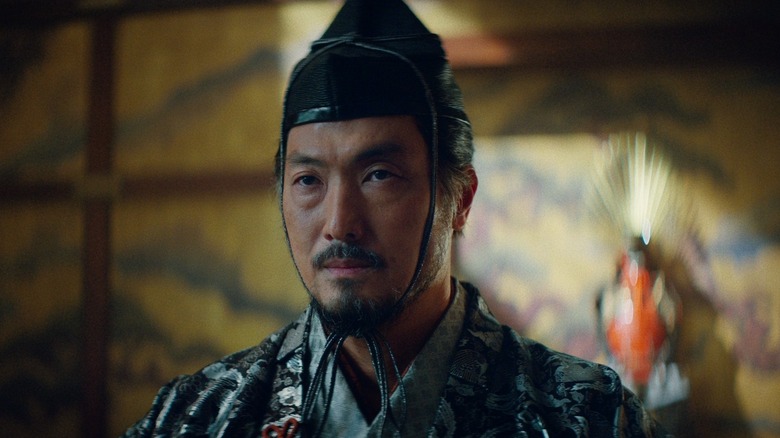
Similarly, it was hard to place “Shōgun” villain Ishido Kazunari — not because he wasn’t sufficiently villainous for his tenure on the lauded FX show, but because he ultimately isn’t as threatening as he appears to be for most of the story. He’s by far the most outplayed antagonist on this list.
For the uninitiated, Ishido is the de facto leader of the Council of Regents steering Japan until a young heir comes of age. His greatest political rival is Toranaga (Hiroyuki Sanada), another regent whose ambitions threaten Ishido’s influence. Until the full breadth of Toranaga’s planning is revealed, Ishido feels like a ruthless and inescapably oppressive force. Poetically, it’s that same, total ruthlessness that creates the climate for his inevitable downfall.
We aren’t ranking this list in terms of strict competence or success. That said, Ishido’s impact is blunted once you’ve seen the series in its entirety.
10. Benjamin Poindexter / Bullseye (Daredevil: Born Again)
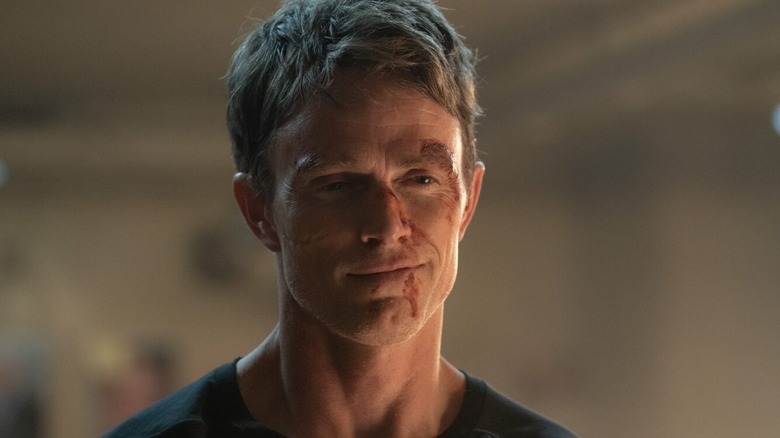
For fans of both the “Daredevil” comics and the 2010s Netflix TV show, Disney+’s “Born Again” revival was worth it just to give Wilson Bethel another chance to nail his portrayal of Bullseye. Boy, does he hit the mark in the first episode.
The character is used relatively conservatively throughout Season 1, most notably killing poor Foggy Nelson (Elden Henson) in the premiere. Season 2 dives deeper into his twisted psychology, allowing “Born Again” to flex one of its strongest muscles — Bethel’s performance. Like Vincent D’Onofrio’s Kingpin before him, Bethel’s committed, strikingly empathetic, yet unyieldingly crazed portrayal of Bullseye is what makes him exceptional, especially compared to other Marvel Cinematic Universe villains. It’s this quality that makes his vigilante turn believable, as Bethel makes his “heroic” acts (like the slaughter of the AVTF officers in “Gloves Off”) feel dangerous rather than fully redemptive. We can’t wait to see what he does in the third and final season.
9. Hwang In-ho / The Front Man (Squid Game)
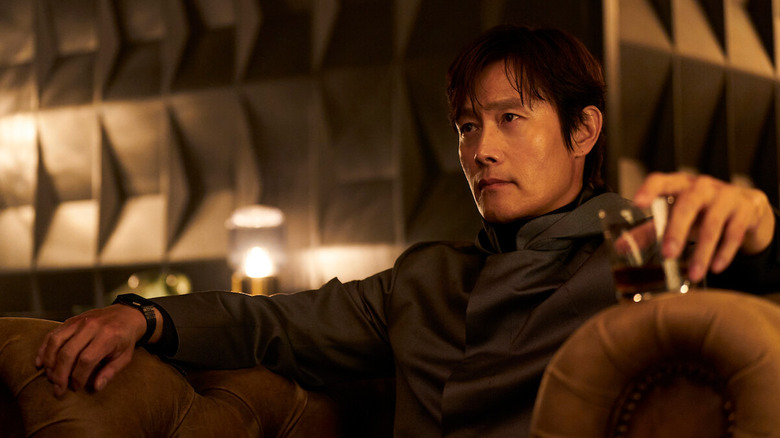
As the primary antagonist of arguably the most internationally popular television series of the 2020s, the Front Man deserves a spot in the top 10. Lee Byung-hun’s “Squid Game” character is a mysterious, looming presence throughout Season 1 — until the season’s best twist in “Front Man” unmasks him as Hwang In-ho, the lost brother of the cop (Wi Ha-joon’s Hwang Jun-ho) we’d been following outside the games. It’s a brain-breaking moment in a season full of them, even before In-ho shoots Jun-ho off a cliff.
The final two seasons of “Squid Game” don’t reach the same heights. In fact, one of the few moments in which they come close is when In-ho decides to put himself in the game as Player 001, adding a fresh thrill to the otherwise repetitive follow-up. Lee’s duplicitous performance further cements him as the series’ standout actor. As the show that in large part defined the early 2020s struggled to maintain its greatness, the Front Man remained the character who kept us watching.
8. Henry Creel / Vecna (Stranger Things)
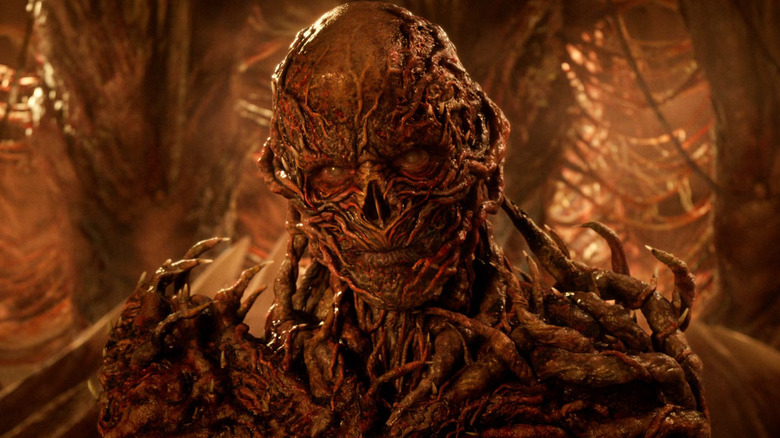
Jamie Campbell Bower’s Henry Creel didn’t show up in “Stranger Things” until the penultimate season, but he made an immediate impact by giving the beloved Netflix series what it desperately needed — a singular, existentially threatening villain for an inevitable final showdown. From the moment Vecna kills poor Chrissy Cunningham (Grace Van Dien) in the Season 4 premiere, it’s clear the stakes have risen past the point of no return. His frightening dominance is further cemented in “Dear Billy,” a fan-favorite episode that overshadows one of Vecna’s best scenes with an all-timer needle drop.
He’s the greatest horror TV villain of the decade so far. Bower’s performances as both Vecna and the psychopathic Henry Creel are bone-chilling, aided by some gnarly creature design that looks like an unholy union between Freddy Krueger and the Swamp Thing. He might have the best costume of any character on this list, though that depends on whether or not you prefer practical creature effects over a super suit.
7. Silco (Arcane)
Years from now, “Arcane” will be cited as one of the major shows that revived video game adaptations as a creative prospect. Ask anyone what made it so impossibly great and they’ll point to the animation, the action set pieces, and the characters — one of the best being Jason Spisak’s richly nuanced villain Silco.
Like all great villains, Silco’s backstory and goals are developed with so much complexity that you come to see his point of view. He has genuinely been oppressed, scorned, and betrayed, giving him understandable motivations for violently pursuing independence for the Undercity. The tension at the heart of this character that makes him so compelling is that you often can’t tell whether he’s driven by a desire to seize power or to protect his people. The key lies with Ella Purnell’s Jinx.
Their final scene in “The Monster You Created” is heartbreaking and inevitable — the due cost of a revolution fought without honor. And yet, in his last moments, Silco shows flashes of the man that might well have made a fine, caring ruler, through his undying love for his adopted daughter.
6. Joe Goldberg (You)
Throughout the first three seasons of “You,” Penn Badgley’s Joe Goldberg emerges as a contender for one of television’s most compelling antiheroes. He is, in many ways, even a prime deconstruction of the 21st century’s favorite character archetype, more so than “Barry” or the revivals of “Dexter.” “You” completes this transformation in its divisive final season, using the narrative structure itself to turn Joe into the villain of his own story.
5. Larry Hall (Black Bird)
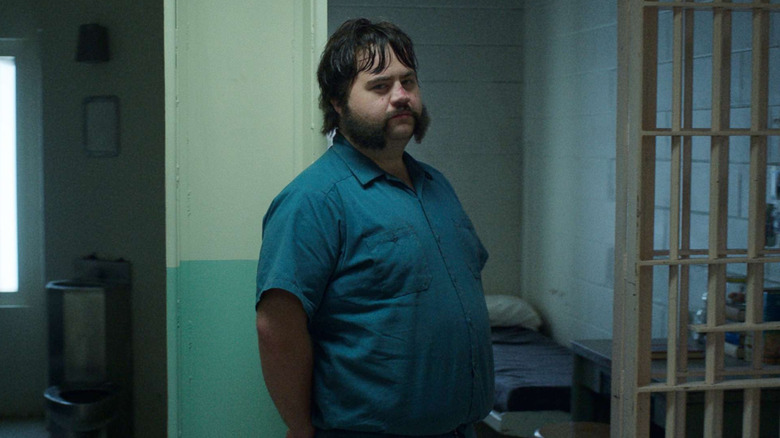
Our Top 5 choices were decided by looking at which villains had perfect arcs and perfect performances. As such, the first spot is earned by Paul Walter Hauser’s criminally under-seen portrayal of real-life criminal Larry Hall in “Black Bird.”
The actor, largely known for supporting or comedic roles, is nightmarish in the Apple TV miniseries. Hall was convicted of kidnapping in the 1990s and has long been suspected of committing multiple murders. Hauser disappears into this horrifying role, adopting Hall’s timid mannerisms and distinct, almost melodic tone of voice. Taron Egerton plays Jimmy Keene, a convicted drug dealer who agrees to befriend Hall in prison as part of a deal with federal authorities. The series depicts Hall confessing a revolting murder to Jimmy — Hauser lays out every detail with disturbing ease, casually recalling it as though he were sharing a childhood story that was only somewhat memorable or significant. That doesn’t mean he doesn’t find some sickening thrill in pulling the details together — or that Jimmy isn’t absolutely disgusted by having to hear it.
Hauser’s portrayal of Larry Hall is arguably the best true-crime performance of the decade. It’s also the hardest to watch.
4. Dedra Meero (Andor)
The “Star Wars” universe is already full of iconic villains that fans have spent decades deifying — likely to the point that no new character could ever meet their standards. In “Andor,” Dedra Meero comes darn close.
Denise Gough’s ISB officer follows in a grand tradition of banal and bureaucratically evil Imperial “Star Wars” villains stretching back to Peter Cushing’s Grand Moff Tarkin in the 1977 film. What makes them especially vile is that — while characters like Vader, Palpatine, and Maul are driven by the influence of dark magic and their individual, operatic quests for ultimate power — these middle managers commit acts of mass murder for cynical political victories. Dedra makes her mark in the episode “Who Are You?”, in which “Andor” transforms the long-discussed Ghorman Massacre into a devastating turning point in the rebellion against the Empire.
This is all thanks to Dedra, whose Machiavellian scheming makes the event cruelly unforgettable. Under her direction, the Ghorman Massacre is partially a false-flag attack where she sacrifices her own soldiers to create an excuse to slaughter peaceful protesters. It’s easily one of the darkest moments in the “Star Wars” canon, perpetrated by a villain who, rather impressively, ranks among the few Disney “Star Wars” characters to earn widespread praise from fans.
3. Logan Roy (Succession)
“Succession” is perhaps the defining prestige drama of the late 2010s and early 2020s. Thus, Logan Roy is naturally one of the best TV villains in two separate decades.
Even if you only consider the impact of Brian Cox’s character in the latter two seasons, the ranking holds. The father who wields love more intentionally and dangerously than any other “well-meaning” villain on this list spends Season 3 playing his own children against themselves until he can finally take them all down with a single phone call. The show is frequently referred to as Shakespearean with varying levels of credibility, but Logan’s speech at the climax of “All the Bells Say” (“You come for me with love?”) deserves favorable comparisons to the Bard. Logan is as cunning as Iago, as tragic as Macbeth, and as wickedly, irresistibly brilliant as Richard III.
As for Season 4, his shockingly early exit just makes the case for his inclusion stronger. Only a character with the absolute power of Logan Roy could loom as large in his own absence. To describe him as a specter would be an understatement — every scene after his death is carried by his poisonous legacy.
2. Lalo Salamanca (Better Call Saul)
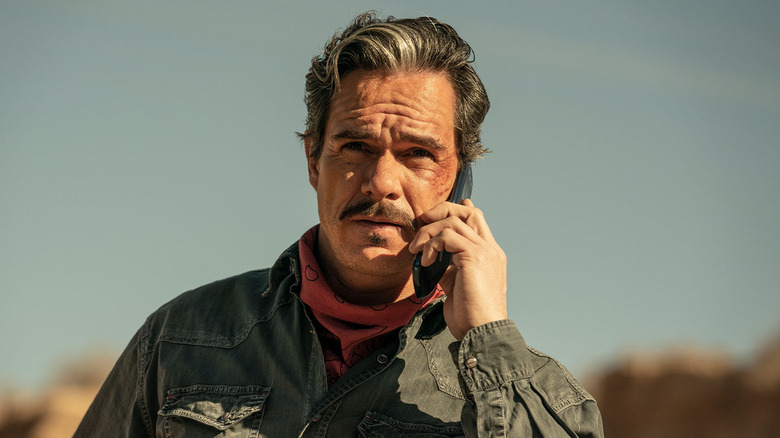
When audiences first met Saul Goodman in a Season 2 episode of “Breaking Bad,” Lalo was merely a name spat into the desert haphazardly to save a lawyer’s life. Now, he’s one of the franchise’s best characters.
Like Vecna, Lalo Salamanca (played by the terrifyingly amiable Tony Dalton) finally gives “Better Call Saul” an ultimate antagonist to carry the series through its last storylines. “Breaking Bad” and “Better Call Saul” have been compared to “No Country for Old Men” in the past, but Lalo is the first character to feel so epic and almost supernaturally evil that he matches the chilling design of Cormac McCarthy’s enduring villains. There is little to no moral complexity in Lalo’s characterization — his heart is black as the devil’s, and his tongue is every bit as sharp.
In any other show — including “Breaking Bad” — this level of villainy might come off as underwhelming compared to the likes of Giancarlo Esposito’s Gus Fring. In “Better Call Saul,” Lalo is an elegant embodiment of pure evil that serves the series’ overarching exploration of moral decay. He’s the apex predator whose ruthlessness ultimately destroys the comparatively upstanding Howard Hamlin (Patrick Fabian). Their shared burial site becomes a powerful symbol of the show’s exploration of moral decay.
1. Homelander (The Boys)
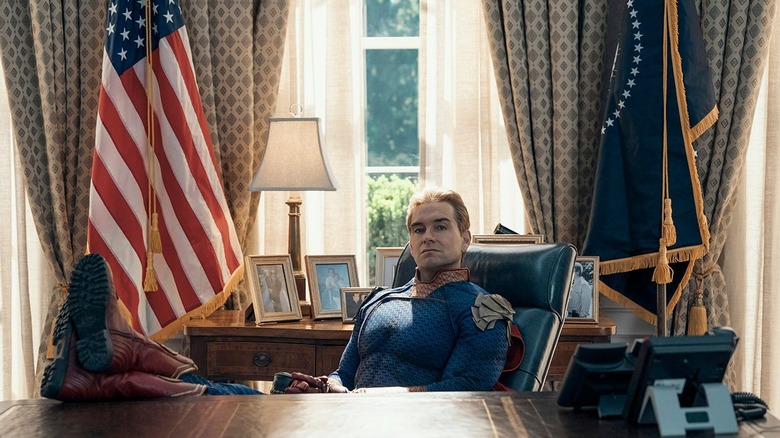
In terms of cultural impact, acclaim (for both writing and performance), and the sheer evilness he displays on-screen throughout all five seasons of “The Boys,” Antony Starr’s Homelander is by far the greatest villain of the 2020s. The character is simultaneously an over-the-top satire of contemporary American politics and a one-man deconstruction of an idea that has dominated entertainment at large for over two decades. At the same time, he’s far more than a simple stand-in for Donald Trump or Superman.
What ultimately makes Homelander captivating to watch is his unique psychological development, which is pretty much the only series-long storyline that ends as strong as it starts. His desperation for love escalates in unexpected ways each season, usually because he actually succeeds in getting what he wanted — only to realize it wasn’t enough. By the end of the series, his plan for world domination feels less like an earnest power grab and more like a means of proving that he matters as much as he thinks he does. It’s what makes his humiliating death as poignant as it is hilarious and cathartic.
Every other placement on this list is certainly subject to change in the next few years. But it would take a generational new villain to knock Homelander off the top spot.
