

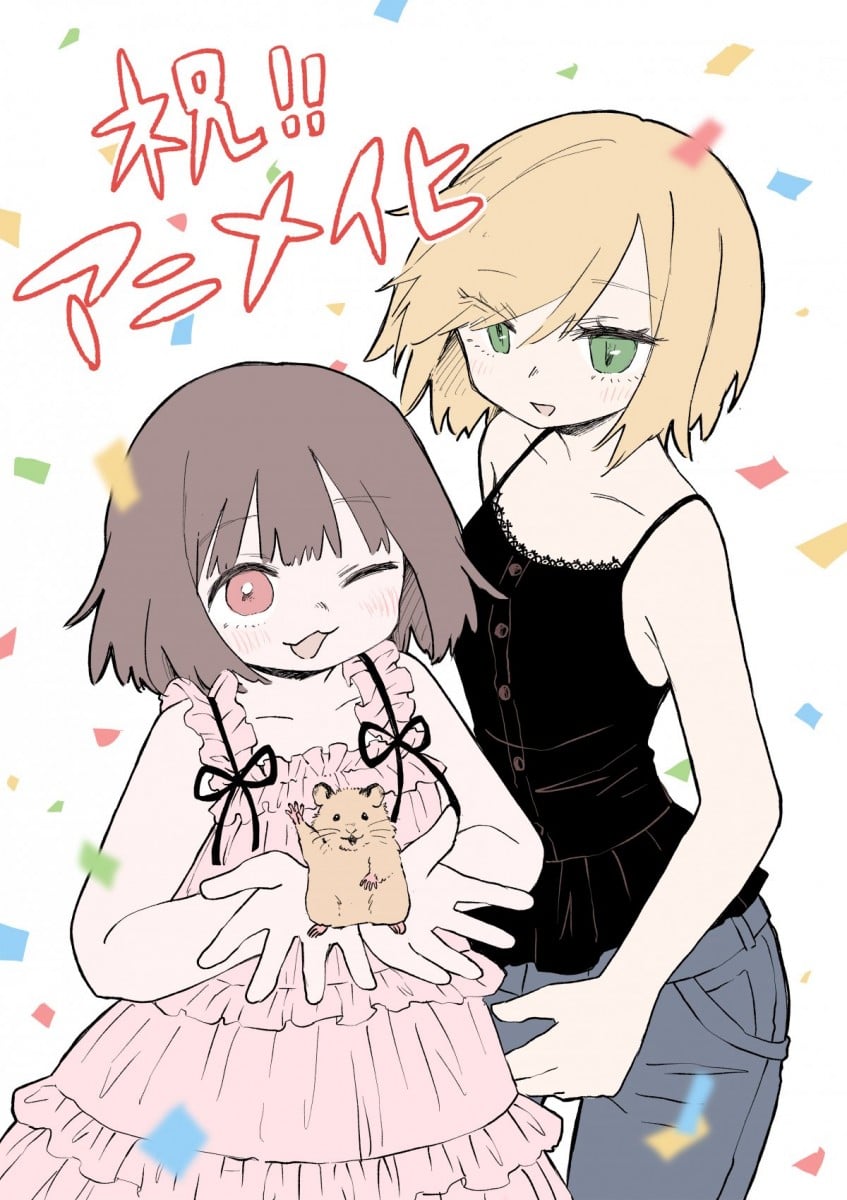
On August 20, New Inclusion Japan Association, Inc. published an opinion statement regarding the anime adaptation of the manga Mii-chan and Miss Yamada, also known as MiiYama. The statement does not oppose the anime adaptation itself. Rather, it raises concerns about turning portrayals associated with people with intellectual disabilities into entertainment and asks the production side to provide a detailed explanation.
The unusual statement has prompted a wide range of reactions online.
The organization began its statement by explaining its mission:
“We, New Inclusion Japan Association, Inc., seek to create communities where people can live with peace of mind under appropriate support and rights advocacy suited to each stage of life, regardless of the nature or degree of their disabilities. We work toward the realization of the ‘inclusive society’ set forth in Japan’s Basic Act for Persons with Disabilities.”
On August 20, New Inclusion Japan Association, Inc. published an opinion statement regarding the anime adaptation of the manga Mii-chan and Miss Yamada, also known as MiiYama. The statement does not oppose the anime adaptation itself. Rather, it raises concerns about turning portrayals associated with people with intellectual disabilities into entertainment and asks the production side to provide a detailed explanation.
The unusual statement has prompted a wide range of reactions online.
The organization began its statement by explaining its mission:
“We, New Inclusion Japan Association, Inc., seek to create communities where people can live with peace of mind under appropriate support and rights advocacy suited to each stage of life, regardless of the nature or degree of their disabilities. We work toward the realization of the ‘inclusive society’ set forth in Japan’s Basic Act for Persons with Disabilities.”
It continued:
“Following reports that the manga Mii-chan and Miss Yamada would be adapted into an anime, our organization carefully examined the relevant facts.”
Regarding the reasons for issuing the statement, the organization explained:
“In the work, Mii-chan, who is presented as a protagonist, has not been formally assessed as having an intellectual disability, and therefore cannot explicitly be described as a person with an intellectual disability. However, the portrayal in the work strongly suggests a condition corresponding to mild intellectual disability or borderline intellectual functioning.”
The statement also referred to comments by creator Nene Azuki:
“The author, Nene Azuki, has stated that Mii-chan was modeled on a woman who had a mild intellectual disability and possessed a disability certificate, which we presume to have been a Ryoiku Techo, known in Tokyo as an Ai no Techo. Based on these confirmed circumstances, our organization hereby expresses the following views.”
Mii-chan and Miss Yamada was serialized on Kodansha’s official manga app Magazine Pocket, commonly known as Magapoke, from September 2024 through August 16, 2026.
Set in Shinjuku’s Kabukicho district in 2012, the story follows Yamada, who works as a hostess in the nightlife district, and Mii-chan, a new employee who always seems to fall just a little short no matter what she does. The manga depicts twelve months in the nightlife world surrounding these awkward yet endearing young women.
Mii-chan is energetic and eager to work, but she cannot read kanji or read the room. People around her ridicule her and label her as “pitiful.” Even so, as Mii-chan continues working earnestly, Yamada gradually finds herself drawn to her.
Despite its charming visual style, the story portrays in uncompromisingly realistic terms the loneliness of people who have nowhere to turn and the unforgiving realities they face.
Mii-chan and Miss Yamada Has Drawn Extraordinary Attention
The manga has become extremely popular, particularly on social media. With only six volumes released, the series has surpassed 3 million copies in circulation.
For comparison, when the anime adaptation of Demon Slayer: Kimetsu no Yaiba was announced on June 4, 2018, the manga had 2.5 million copies in circulation across eleven volumes. The comparison illustrates just how substantial a fan base Mii-chan and Miss Yamada has already built.
The manga also ranked fourth in the men’s edition of Kono Manga ga Sugoi! 2026. Related videos on YouTube and TikTok have accumulated more than 100 million views, while the title has repeatedly entered Japan’s top 10 domestic trends whenever a new chapter was released.
The anime adaptation was announced on July 26 and is scheduled for 2027, generating significant attention. The seventh and final manga volume will be released in both standard and special editions on September 9.
Online Reactions to the Opinion Statement
Following the publication of the statement by the intellectual disability advocacy organization, social media users expressed a variety of views.
One person wrote:
“I was honestly surprised that the statement was released much sooner than I expected. I think it was very carefully considered. I hope we can have a world where freedom of expression is protected while the rights of people with disabilities are also protected.”
Another commented:
“It clearly lays out concerns backed by sources, including past comments from the editor and the author’s previous works and statements. Then, instead of saying ‘Do not make the anime,’ it acknowledges freedom of expression and concludes by saying, ‘At least think carefully about the rating.’ It really feels like a properly constructed protest statement rather than simply an emotional reaction.”
Other responses included:
“If they are going to do it, I hope they make careful adjustments to the screenplay. Even then, it will probably still be difficult to watch.”
And:
“I appreciate that they explicitly say they do not intend to enter the territory of restricting expression, while still presenting concerns and questions from a specialist perspective.”
Full Text of the Opinion Statement
1. Basic Position
Our organization places advocacy for the rights of people with intellectual disabilities at the center of its activities, and these views are expressed from that standpoint.
At the same time, compliance with laws and regulations is important. In particular, freedom of expression is a right guaranteed by the Constitution. Taking this into consideration, our organization does not take the position of categorically opposing adaptation into visual media.
However, as outlined below, we have confirmed circumstances that inevitably cause concern from our standpoint. We strongly hope that these concerns will be resolved.
2. Conduct and Statements by the Creators
Within the scope of what our organization has been able to confirm, we identified the following statements and conduct that cause concern.
1. Conduct and Statements by the Author
Among material currently published by the author, or material that was previously published and remains verifiable, there is a work concerning a person with a stutter who experiences difficulties in social life because of that characteristic. The situation is portrayed in the form of the person being mocked by a store employee because they are unable to place an order smoothly.
The author has also described a state in which cognitive and intellectual functions have declined as “becoming like Mii-chan.”
In addition, works published under the name “Diana,” which the author has explicitly identified as a former pen name, have been confirmed to portray special classes, now referred to as special needs education classes, in a negative manner.
2. Conduct and Statements by the Publisher
In a video that was previously publicly available, a member of the editorial department at Kodansha, the publisher of this work, was confirmed to have made comments including:
“Stories about other people’s misfortune are incredibly entertaining.”
“I want to see someone go through something unfortunate.”
“You can read about other people’s misfortune in a light, pop way without feeling guilty.”
Such statements are difficult to regard as demonstrating respect for the dignity and individuality of Mii-chan, a character who strongly evokes intellectual disability, or of people with disabilities more broadly.
We are deeply concerned that people with disabilities may be treated as something amusing and converted into entertainment, or that such treatment may be considered acceptable.
3. Actual Cases of “Mii-chan” Being Used as a Derogatory Term
Our investigation has found multiple reported cases in which “Mii-chan” is already being used in society as a term to mock or insult women with intellectual disabilities or developmental characteristics.
We have not confirmed any evidence that the production side has intentionally encouraged the spread of this usage.
However, from the standpoint of our organization, this remains a matter of concern. It is also relevant to the issue of ratings discussed below.
4. Comments From the Production Committee
Regarding this matter, the Mii-chan and Miss Yamada Production Committee, in which Kodansha participates, has released a statement.
Our organization’s views regarding that statement are as follows.
1. The Significance of Expressing the Work Through Animation
The production committee’s statement says that it determined there was “significance in expressing the original work through animation.”
However, our investigation confirmed the circumstances described in Sections 2.1 and 2.2 above.
Considering these circumstances, we believe an explanation is necessary regarding what exactly is meant by this “significance.”
2. Advice From Experts
The production committee’s statement says that it will seek “advice from experts and others” in order to avoid reinforcing prejudice or misunderstanding.
Unfortunately, however, it does not explain what type of experts are envisioned or what exactly is meant by such advice.
There is no need to disclose individual names. At the very least, however, we believe an explanation should be provided regarding the positions or fields of the experts involved and the nature of the advice they provide.
3. Ratings
The production committee’s statement says that measures will be taken including the display of “appropriate ratings and warnings.”
Explicitly establishing a rating, generally understood as a recommended viewer age, would appear to indicate that the anime will at least not be broadcast on terrestrial television.
Our organization does not consider an environment in which minors can easily view the work to be desirable.
We request that an appropriate rating be established.
We hereby make our organization’s views public.
We respectfully ask all members of the Mii-chan and Miss Yamada Production Committee to read this statement.
- ANIME
- trouble
