

We may receive a commission on purchases made from links.
If you did a lot of gaming during the ’90s, you either played on the Super Nintendo Entertainment System (SNES) or the Sega Genesis (Sega Mega Drive in Europe) — at least until the legendary Sony PlayStation was born. However, deciding between the SNES and the Genesis was no easy task since nobody could parse which was the more powerful console. And that’s ultimately because the answer isn’t cut and dry.
The belief that the Sega Genesis outclassed the Super Nintendo primarily stemmed from Sega’s advertising campaigns. People at Sega used the term “blast processing” to help market the Genesis and cement the idea that the console was more powerful than the SNES. Well, that and the phrase “Sega does what Nintendon’t.” However, when you examine the internal hardware, you will notice that each had their own strengths. The CPU of the SNES ran at 3.58 MHz and the console had 128 KB of RAM, whereas the Genesis’ CPU could process at a much faster 7.67 MHz but worked with a comparatively scant 64 KB of RAM. As a result, games on the Genesis processed faster, but only slightly so.
Ironically, despite heavily leaning on the concept of “blast processing” for marketing, the Sega Genesis didn’t actually use the technology. Yes, blast processing was an actual process that would have let the internal hardware change the color of every pixel individually. The technology was there, but implementation was almost impossible, at least on standard cartridge-based games. Games that utilized the Sega CD add-on could have used blast processing to fuel their graphics, but none of them ever did. So even though the Sega Genesis was perhaps an iota faster than the SNES, blast processing played no part in that feat.
The Genesis had the more powerful processor, but the SNES had the specs edge elsewhere

On paper, the Sega Genesis sounds like the more powerful console. However, much like asking if the Xbox Series X is more powerful than the PlayStation 5, the potential power of the processing units is only part of the equation. You need to ensure games don’t squander that potential, and sadly, the Genesis lagged behind in this regard.
When it came to graphical output, the SNES reigned supreme, at least when compared to the Genesis. While Sega’s console could pull from a total of 512 colors and display up to 64 at a time, the SNES possessed a library of 32,768 colors and could put 256 of them on screen at once. Moreover, the SNES could handle higher graphical resolutions and stick more game sprites on the screen at once — 512 by 448 pixels and 128 sprites, compared to the Genesis’ 320 by 224 pixels and 80 sprites. As a result, SNES games were (and still are) more vibrant and graphically intense. But don’t take our word for it — just look at games like the original “Star Fox.”
The SNES also outpaced the Genesis in the audio department. While the Genesis only had 8 KB of audio RAM and six audio channels (passageways for specific signals or pieces of audio data), Nintendo’s engineers crammed 64 KB of RAM into the SNES’ sound chip and provided eight sound channels. Granted, the Genesis sound chip included a synthesizer, and many developers used this feature to pen iconic soundtracks. If you compared games that released on both consoles, sound effects were more natural and impactful on the SNES versions, and soundtracks were also more orchestral (when it fit the mood, at least) on Nintendo’s offering.
To each their own
The SNES and Sega Genesis each had their own advantages. The Genesis had a slight edge in processing power, while the SNES boasted superior graphics and visuals. But in the end, audiences were less concerned with how their games sounded, looked, and played, and more concerned with what they could play.
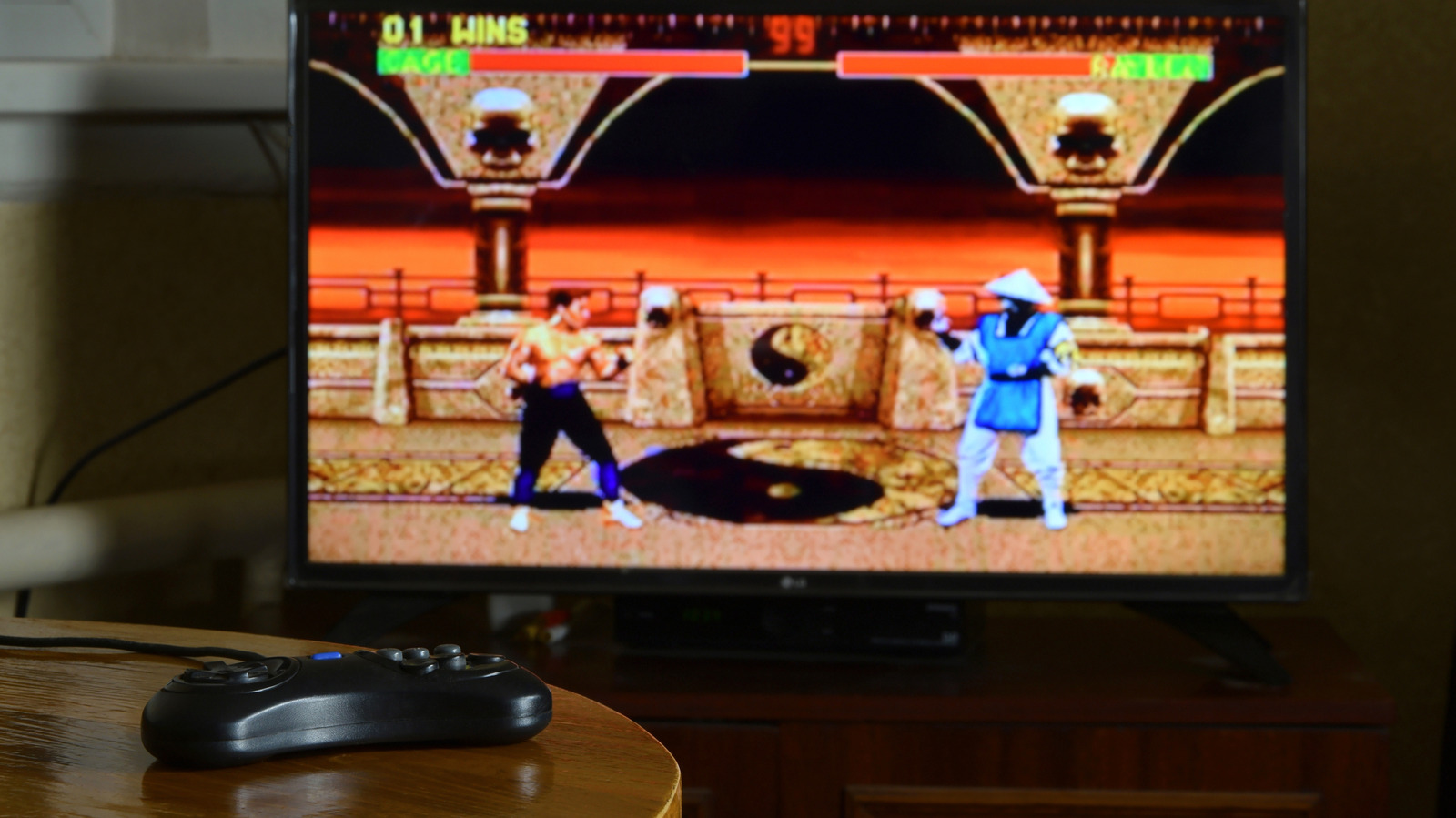
While the SNES and Genesis libraries had some overlap, each console specialized in different genres. If you wanted sports games, you bought a Genesis — but if you were more of a JRPG fan, the SNES would scratch your turn-based itch. And while the SNES had its fair share of bloody, adult-oriented titles, such as a port of “DOOM,” the Genesis solidified its position as the more edgy and mature console, partially due to its “Mortal Kombat” port — the Genesis retained the blood and fatalities, while the SNES toned those way down. That isn’t to say any consoles lacked certain genres (many gamers still fondly remember the “Phantasy Star” series), but each had their own “killer apps,” for lack of a better term.
At the end of the day, asking which console was more powerful is like asking if apples taste better than oranges. They’re completely different experiences that attract different palettes, but each has their fanbases. If you want to know which was more popular, that’s easy: The SNES. Sega only sold roughly 30 million Genesis units worldwide, while SNES sales surpassed 49 million units. If you want to see what made the SNES and Genesis so popular, there are retro consoles you can buy for less than $150 each. Just make sure to have a working CRT TV to see the games as developers intended.
