

Image: Courtesy Livewell Comics
, David Suskind, MD, loved turning the pages of comic books. He followed along on the adventures of everyone: Archie and Groo, Superman and Spiderman. “For me, it was a way of escaping,” he remembers.
Now a pediatric gastroenterologist at Seattle Children’s Hospital, he treats children with intestinal issues like inflammatory bowel disease (IBD). While talking to a patient with Crohn’s disease—a type of IBD—who he’d been treating for more than six months, Dr. Suskind realized the patient didn’t know what IBD was.
That led him to a superhero-level idea to help his patients, one inspired by his youth: comic books about medical conditions.
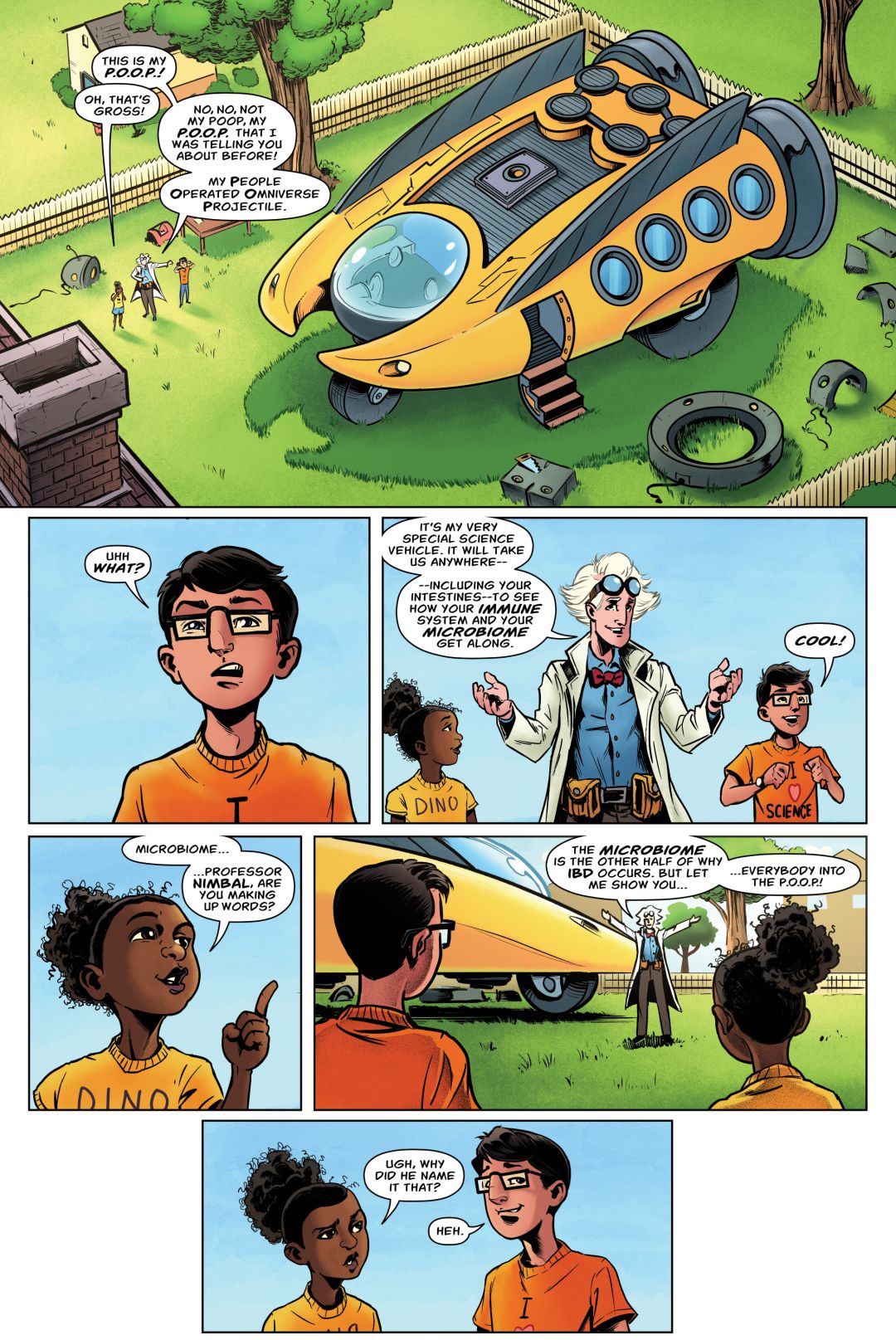
Image: Courtesy Livewell Comics
“I have a tendency to talk excessively,” says Dr. Suskind. He realized that sometimes when he talked, the patients weren’t able to take in or understand everything he said. “The comics were a way of bridging that gap to make sure the children and parents knew what the concerns were and what was going on, hopefully in a fun, enjoyable way,” he says.
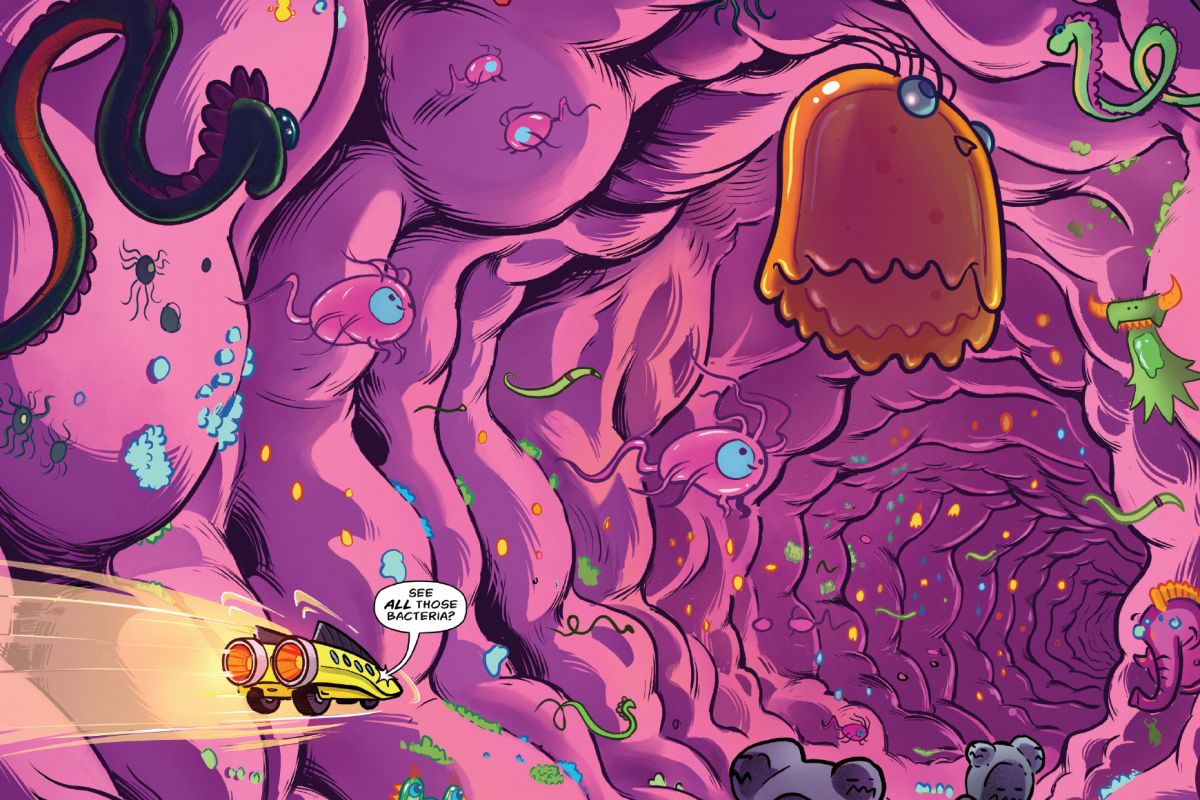
After looking at the portfolios of about a thousand illustrators, Dr. Suskind found artist Jason Piperberg. They teamed up in 2018 to create the first comic book, starring a character named Professor Nimbal. In it, he takes kids on a People Operated Omniverse Projectile—P.O.O.P. for short—to journey inside the large intestine and learn exactly what’s happening in there for those with IBD.

Image: Courtesy David Suskind, MD and Courtesy Jason Piperberg
“I wanted people to understand not only the condition itself but the fact that it’s not uncommon,” Dr. Suskind says. He points out that many prominent people have had IBD, from former president Dwight D. Eisenhower to YouTube star MrBeast and Seattle rock royalty Mike McCready from Pearl Jam. “People share a community, and that was one of the other aspects of the comic, not only to teach them about the disease but also to understand this is something treatable, individuals do well on the right therapy, and that it’s not uncommon.”
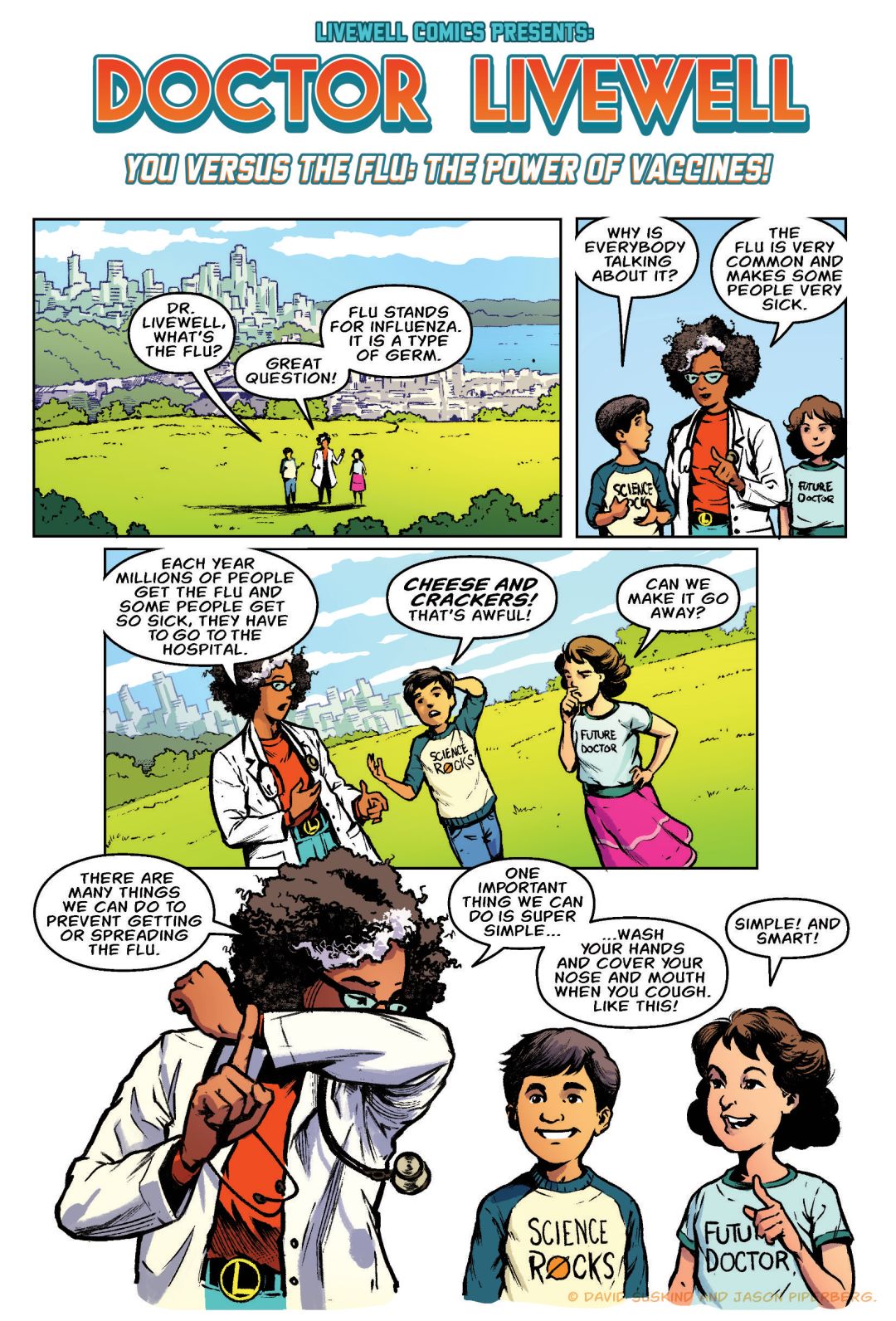
That IBD comic has been translated into 15 languages besides English, thanks to some of Dr. Suskind’s colleagues all over the world. Since the first one was published, they’ve created eight others, on subjects such as celiac disease, functional abdominal pain, rumination syndrome, and the flu. In a few months, they’ll have one available on constipation. (“It’s a hard topic,” Dr. Suskind says before catching himself.)
The Magic School Bus-esque comics are available for free at livewellcomics.com, and the reaction has been heartwarming—recently, a patient’s mom asked Dr. Suskind if she could give him a hug after reading one. As discussions heat up around health literacy and how experts can better communicate with a lay audience, Dr. Suskind hopes his comics—known as graphic medicine by some—add something positive to the conversation.
“It allows for maybe a little bit of that breakdown between the old-school doctor/patient relationship,” he says. “It’s more of a conversation and more of a team approach to healthcare, which I think is important.” In every comic, he tries to make it a point to have his professor character say “good question!” to encourage readers to not be afraid to ask about what they don’t understand.
In his own office, he sees a difference. “There are a lot of questions that probably wouldn’t come up unless they read it and were giving thought to what was going on,” Dr. Suskind says. “It’s opened a wonderful dialogue between myself and the children and parents.”
For someone who loves the resilience of children and calls his work as a pediatrician one of the greatest joys in his life, being able to make an impact outside of just his own patient population is a dream.
Superman saved Metropolis, Batman saved Gotham City, and Dr. Suskind is saving kids from confusion and suffering—no doubt making him a worthy comic book hero himself.
