

The panel is codenamed Plano. Steam Frame Hub found it on October 14 in deckard-linux, a public GitHub mirror of the Linux kernel that runs SteamOS on the Frame. Road to VR picked it up this morning. Most coverage stopped at the resolution. The driver says more than that, mostly in its own comments.
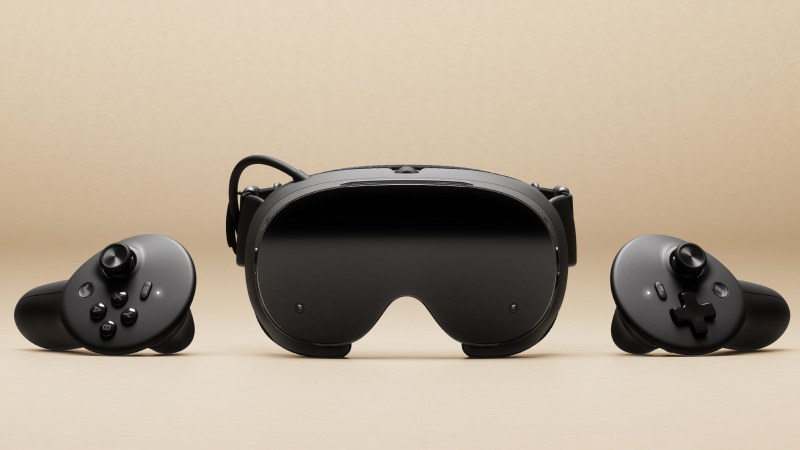
One mode on, and it is the small one
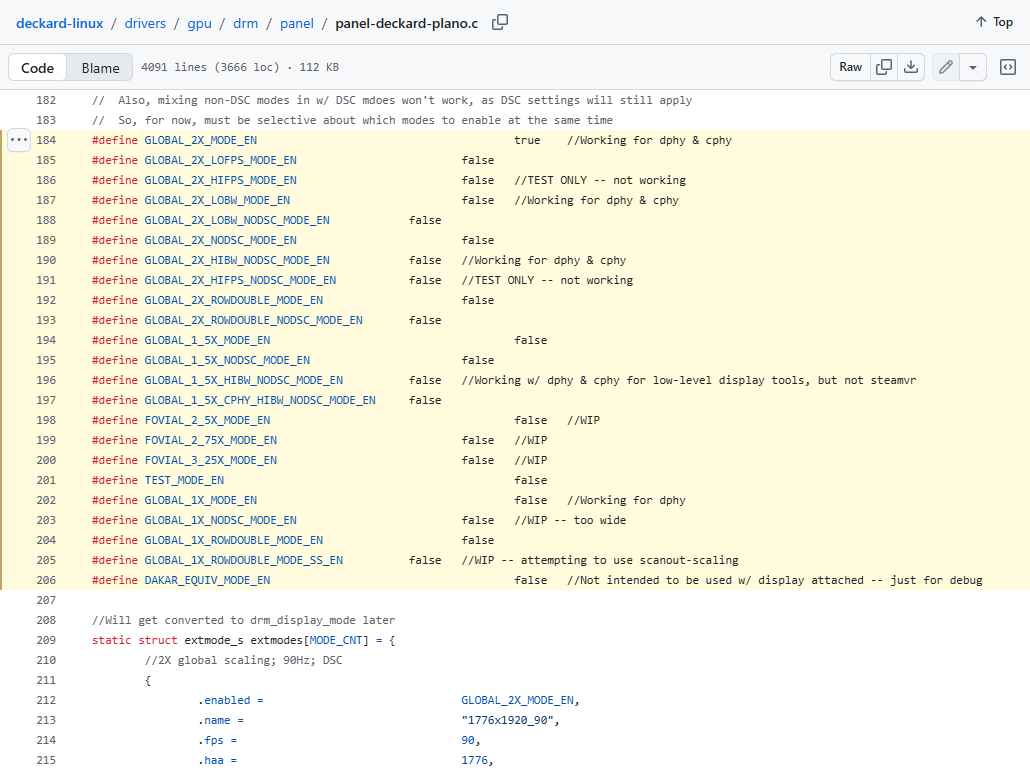
Plano’s driver lives in panel-deckard-plano.c, and it calls itself the “Plano DSI Panel Driver.” Two constants define the glass: 3552 across, 3840 down. Below them sits a list of display modes, each with its own on or off switch. The newest copy sits on a work-in-progress branch updated at the start of October.
One group is on. Valve calls it Global 2x. The headset sends 1,776 by 1,920 pixels per eye at 72, 80 or 90Hz, and a chip on the panel scales the image up by two in each direction to fill it. The comment beside the switch reads “Working for dphy & cphy,” the two kinds of display link Valve has tried.
Now the Frame on sale today. Its LCD panels take 2,160 by 2,160 per eye, about 4.7 million pixels. Plano’s working mode takes about 3.4 million. That is 27 percent less image per eye, going into the newer panel.
Each OLED pixel is smaller, and there are far more of them, 13.6 million per eye. The picture is still built from the 3.4 million that arrive.
Everything above that is flagged
The other switches are off. Most carry a note.
High refresh at the 2x size covers entries for 100, 110 and 120Hz. Each is marked “TEST ONLY” and “not working.” The Frame on sale today runs up to 120Hz, with 144Hz labelled experimental.
A 1.5x mode, 2,368 by 2,560 per eye, is “Working w/ dphy & cphy for low-level display tools, but not steamvr.” A July 20 commit describes what happens under SteamVR. It “only displays left eye and system bogs down.”
Full resolution is “Working for dphy.” The same commit adds the condition: “requires MIPI overclocking.” MIPI DSI is the link that carries pixels from the processor to the panel. Running it past its rated speed works on a bench. Products do not normally ship that way.
Last come three foveated transport modes, all marked “WIP.” They appear to pack a sharp patch for wherever the eye is looking and a low-resolution background into one frame, and leave the panel to put the two together. The Frame already has eye tracking, which it uses for foveated streaming from a PC. The plumbing to send a patch like that to the panel is not done.
The wire is the bottleneck
Plano’s device tree files are built for SM8650, Qualcomm’s part number for the Snapdragon 8 Gen 3 inside the current Frame. Same chip, same display outputs. Full resolution on both eyes at 90Hz is about 2.5 billion pixels a second. The LCD Frame at 90Hz moves about 840 million. Roughly three times the traffic.
