

- Written by
July 16, 2026, 8:13 PM
Twitch Streamers Face Scrutiny Over Alleged Viewbotting and Revenue Claims
Kick CEO Eddie Craven’s claims of viewbotting by StableRonaldo and Lacy have triggered a rare public disclosure of streamer revenues. The controversy highlights ongoing tensions over audience authenticity and platform policies.
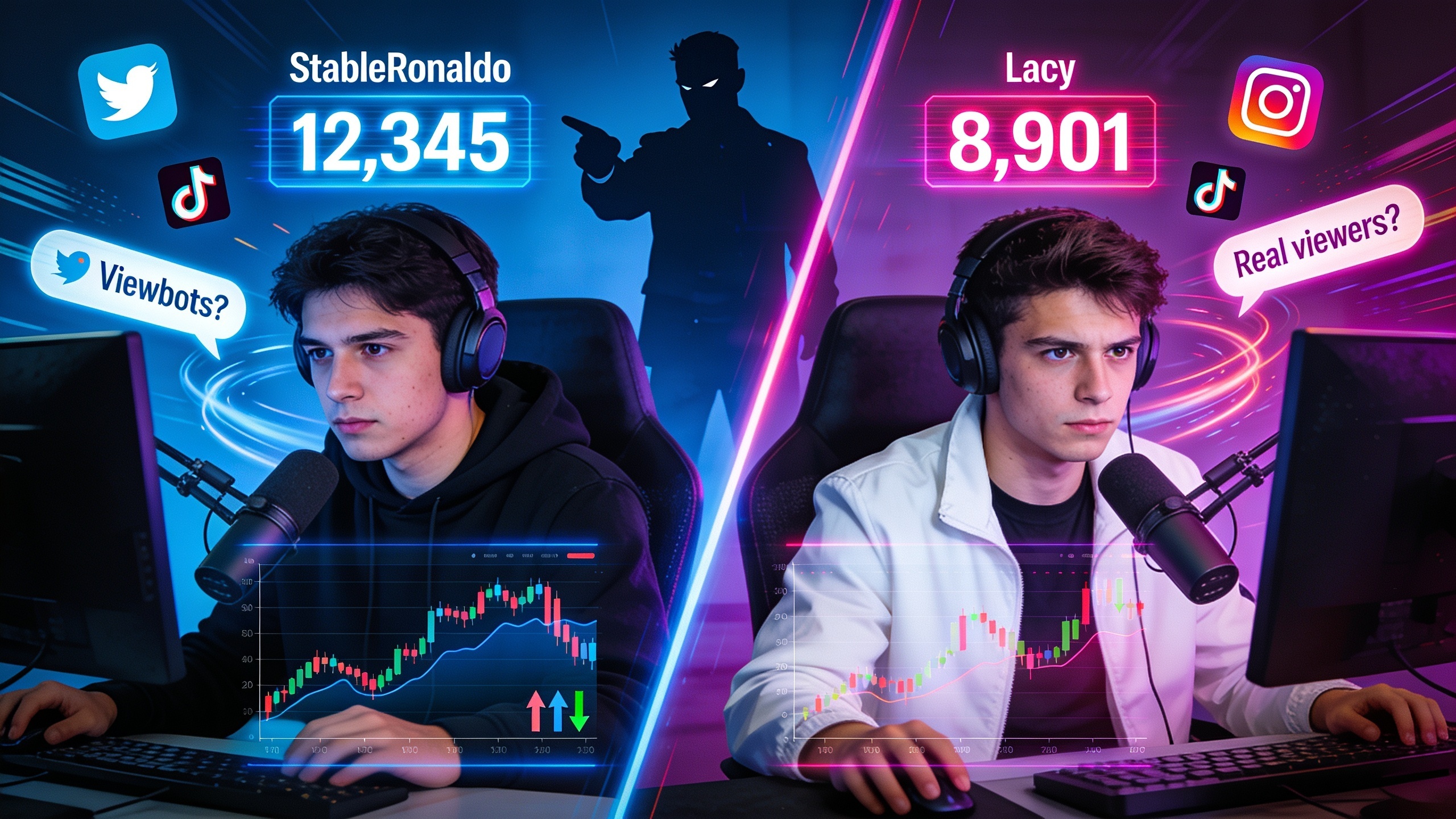
Two of Twitch’s most prominent streamers, Rani “StableRonaldo” Netz and Nick “Lacy” Fosco, have become central figures in a heated dispute over the authenticity of their audiences. The conflict erupted after Kick CEO Eddie Craven publicly accused both of artificially inflating their live viewer counts with bots, a practice known as viewbotting. The allegations, voiced during Episode 76 of Kick Talk and reported by Dot Esports, suggested that up to 90 percent of their viewership could be fake. This claim quickly spread across Twitch, X, and TikTok, fueling debate within the streaming community and raising questions about the reliability of audience metrics.
Craven’s remarks were not limited to general industry concerns. He specifically named StableRonaldo and Lacy, both former FaZe Clan members, as examples of “huge viewbotters.” According to Dot Esports, Craven contrasted Lacy’s reported average of 100 real viewers on Kick with the thousands he attracts on Twitch, using this as evidence of suspicious activity. The CEO also referenced Kick’s policy of withholding payouts for views flagged as artificial, underscoring the financial stakes involved for streamers accused of manipulating their numbers.
In response, StableRonaldo took the unusual step of broadcasting his Twitch revenue dashboard live, aiming to counter the accusations with transparency. He revealed earnings of approximately $266,000 for January, as reported by Win.gg, and highlighted a surge of around 1,000 subscribers on a single day. StableRonaldo argued that such figures are inconsistent with typical viewbotting patterns, which often result in lower subscriber conversion rates. He also questioned why Kick had previously offered him a lucrative contract if his audience was considered inauthentic, referencing past negotiations and management discussions cited by Dot Esports.
Lacy, facing similar scrutiny, published his own performance data. He shared screenshots of communications with Kick, indicating he had been asked to stream non-gambling content as part of a deal that ultimately fell through, according to Win.gg. Lacy pointed to a single-day payout of roughly $5,000 on Kick, far exceeding the typical earnings for channels with 100 viewers. He also mentioned a $5 million annual offer from Kick, challenging the logic of such proposals if his audience was believed to be largely bots.
Despite these public disclosures, the controversy remains unresolved. Win.gg notes that revenue figures alone do not provide definitive proof of genuine viewership, as factors like ad load can distort earnings. For example, streamer Matthew “Mizkif” Rinaudo has alleged that StableRonaldo runs up to 20 minutes of ads per hour, potentially boosting revenue even if some viewers are not authentic. Detection systems on platforms like Kick are reportedly more effective at confirming legitimate traffic than at conclusively identifying viewbotting, making it difficult to settle disputes based solely on available data.
The debate over viewbotting is unfolding alongside separate tensions involving StableRonaldo and the FaZe community. Clips circulating on X and TikTok show StableRonaldo criticizing what he perceives as double standards in how online controversies are judged, particularly between the Poggers community and FaZe members. His comments, including a controversial remark about ADHD and the use of ableist language, have sparked additional backlash and renewed discussions about streamer accountability, as reported by the Times of India.
Allegations of viewbotting carry significant risks for streamers, potentially undermining sponsorships, damaging reputations, and casting doubt on every spike in viewership. As of now, neither Eddie Craven nor Kick has issued a public response to the evidence presented by StableRonaldo and Lacy. The situation highlights the ongoing challenges platforms face in verifying audience authenticity and maintaining trust among creators and viewers alike.
For context, viewbotting remains a persistent issue across major streaming platforms, including Twitch and Kick. Automated fake accounts can artificially boost a channel’s popularity, attracting real viewers and increasing potential earnings. While both platforms employ detection systems to filter out non-organic traffic, the effectiveness of these measures is limited, and accusations continue to surface. The public nature of this dispute, with streamers revealing sensitive financial information, underscores the high stakes and the evolving landscape of digital content creation. As the industry grows, the pressure to demonstrate genuine engagement is likely to intensify, with implications for streamers, platforms, and advertisers worldwide.
