

Will Wright has not released another major simulation since Spore shipped in 2008. His return, through Gallium Studios, is not a city builder or a household sim. It is a mobile social simulation that uses your own memories as its raw material to build a game world.
The game is called MyMems, and Gallium is targeting a live community release in 2027.
Your Life, Rendered as a Playable World
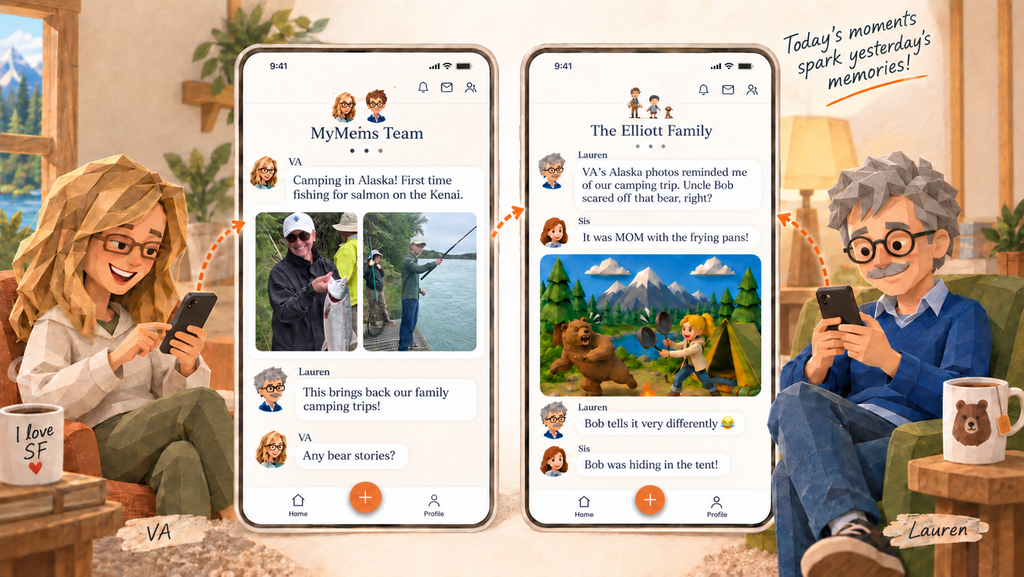
Players supply memories and the game converts them into characters, locations, and self-contained themed zones.
Here is what the announced design asks of you: provide memories, potentially through short spoken stories, and the game transforms them into digital characters, locations, objects, monuments, and self-contained thematic areas. Memory-derived characters can then be assembled into teams to solve puzzles and challenges inside the game world.
Wright has described possible themes drawn from memories as ranging from sports and vacations to injuries and death
The Technology Powering the Characters
Gallium has partnered with Artificial Agency and is building its own behavioral model alongside that foundation.
Gallium has selected Artificial Agency’s Behavior Engine as the foundational AI technology for MyMems. The studio is also developing a proprietary system called the memDNA Personal Behavior Model. It is designed to work alongside the Behavior Engine, shaping character behavior and how worlds respond to player input.
Why Wright Turned the Simulation Inward
Earlier simulations could approximate realistic-looking behavior but could not capture what makes a person distinctive.
Earlier simulations could approximate realistic-looking behavior. What they could not do was capture anything specific about the people being modeled, details like sibling rivalry or claustrophobia that conventional procedural systems could not readily represent.
Wright’s proposed solution, as is to use your autobiography as the content layer rather than a fictional external setting
Shared Worlds Raise a Harder Question
When your memories include other people, their consent becomes a design problem the studio has not yet addressed publicly.
Worlds in MyMems can be built from memories involving friends, relatives, and co-workers. Collective memory-based worlds, built with other players, are also part of the announced concept
Depending on the final design and consent controls, people who never agreed to be represented inside a game could end up as characters in someone else’s world. How the studio plans to handle that possibility has not been established in the available announcement materials.
What the Announcement Does Not Explain
Data storage, deletion, and training use remain open reporting questions rather than settled policies.
Several significant privacy details are unresolved in the materials reviewed. It is not yet clear how memory data is stored, how players can delete it, or whether Gallium uses submitted memories to train its AI models. Whether memories are processed locally on the player’s device or sent to remote servers is also not disclosed in the announcement materials reviewed. These unresolved questions echo broader concerns about apps secretly tracking users without clear disclosure.
Whether players can inspect, correct, or remove generated representations of real people in their worlds is an equally important question. None of those policies is described in the available announcement materials.
Ambitious Design, Open Timeline
A 2027 target leaves substantial room for the design and its privacy architecture to evolve before launch.
MyMems represents an unusually ambitious experiment in autobiographical play. The 2027 community release target means features, platform availability, monetization, and memory-management tools can still change considerably before launch.
Whether the execution earns the intimacy it is asking for depends on answers that Gallium has not yet provided publicly.
