

The landscape of online gaming journalism has changed dramatically over the past decade. Between esteemed publications being shut down or absorbed into content mill portfolios, it’s tempting to conclude that serious, in-depth game criticism is going extinct. In written form, at least at scale, it largely is. On YouTube, though, things look different.
There, independent content creators likeNoah Caldwell-Gervais,Jacob Geller,Matthewmatosis, and others reach millions with video essays analyzing design decisions and articulating their experience as players. To many consumers, these videos—many of them multiple hours in length—carry as much if not more weight than IGN reviews or Metacritic scores. But what, if anything, can they offer developers?
To find out, I asked more than 50 game developers if they A) felt that video essays about games have had a meaningful impact on how they think and go about their work; and B) considered this impact to be distinct from other forms of feedback, like standard reviews or playtests. The responses I received suggest that while video essays rarely translate into immediate, actionable advice, they still provide valuable
Most developers I contacted said they watch video essays on a regular basis. Among others, Nels Anderson, a lead designer onFirewatch, listedSteve Lee, a developer with 18 years of indie and AAA experience who specializes on level design, including environmental storytelling.
Evan Hill, a lead designer onThe Last of Us: Part II, subscribes to dozens of channels, all for different reasons. “Jacob Geller connects so many external concepts to games,” he told Game Developer, while Ralph Panebianco ofSkill Up“almost like a bloodhound identifies the best parts of a game. He’s convinced me to play what turned out to be some of my favorite games of all time, likeWarframeandNier Automata.”
One creator mentioned repeatedly was Mark Brown ofGame Maker’s Toolkit, whose award-winning output ranges from puzzle design to open-world navigation and—through the production of his own gameMind over Magnet, released on Steam in 2024—the development process itself.
Unlike most other creators, Brown specifically targets developers—”especially young / indie / student ones,” he told Game Developer. This seems to be reflected in his channel’s web traffic: GTMK’s most-watched video to-date, with 6.9 million views, is titled “The Unity Tutorial for Complete Beginners.“
How-tos, analysis, criticism, and much more
The value videos like these provide to developers is obvious. While YouTube is full of Unity tutorials, Brown’s succinct writing, snappy editing, and extensive use of infographics make this otherwise intimidating subject more accessible, providing a solid foundation from which to move on to other, more advanced courses, online or offline.
There are, roughly speaking, two kinds of game-related video essays. Creators like GMTK and Steve Lee approach games from the perspective of a developer. Their videos function as the bite-sized equivalent of a dev log or GDC talk, distilling direct experience with or extensive research on development into a more digestible, curated format.
Creators like Geller and Caldwell-Gervais, by contrast, mostly approach games as consumers. Their goal, as Caldwell-Gervais tells Game Developer, is not to explain how a particular mechanic works under the hood, but illustrate its effect on the player: “to articulate how something made them feel and understand why.”
For many developers, one type of content is just as useful as the other. “A big reason I make anything,” Graham Gettel, an engineer at Schell Games, told Game Developer, “is to invoke a feeling in the player. If the intended feeling is not invoked, I appreciate knowing so that I can alter course.”
Brown expresses a similar point while also noting what sets video essays apart from playtesting, which serves a similar purpose: “Watching critiques can be useful as you’ll gain insight into how certain mechanics make players feel. We can all do that ourselves (i.e. play Dark Souls and then consider how its design lead to feelings of challenge and empowerment), but a seasoned critic like Noah may be able to explain it better than we can ourselves.”
Of course, the advantage of playtesting is that you can do it before finishing your game, while video essays often don’t appear until weeks, months, or even years after a particular game has been released and the creator has had ample time to digest it. Still, developers working on a particular game can benefit from watching video essays on previous games they worked on or relevant examples from the same genre.
Despite the overlap, video essays also differ from—and therefore provide value distinct from—standard reviews. While critics at publications are just as capable of assessing the effectiveness of particular design decisions, they typically have much less space to do so. Due to editorial deadlines, they often have no choice but to play games early and fast, disconnected from broader discussions and often at the risk of missing content.
Most importantly perhaps, critics at publications are—as Tanya Short of Kitfox Games points out—forced to treat games as “consumer products, when what I really crave and need in my diet as a designer is thoughtful engagement with game design separate from commercial concerns.”
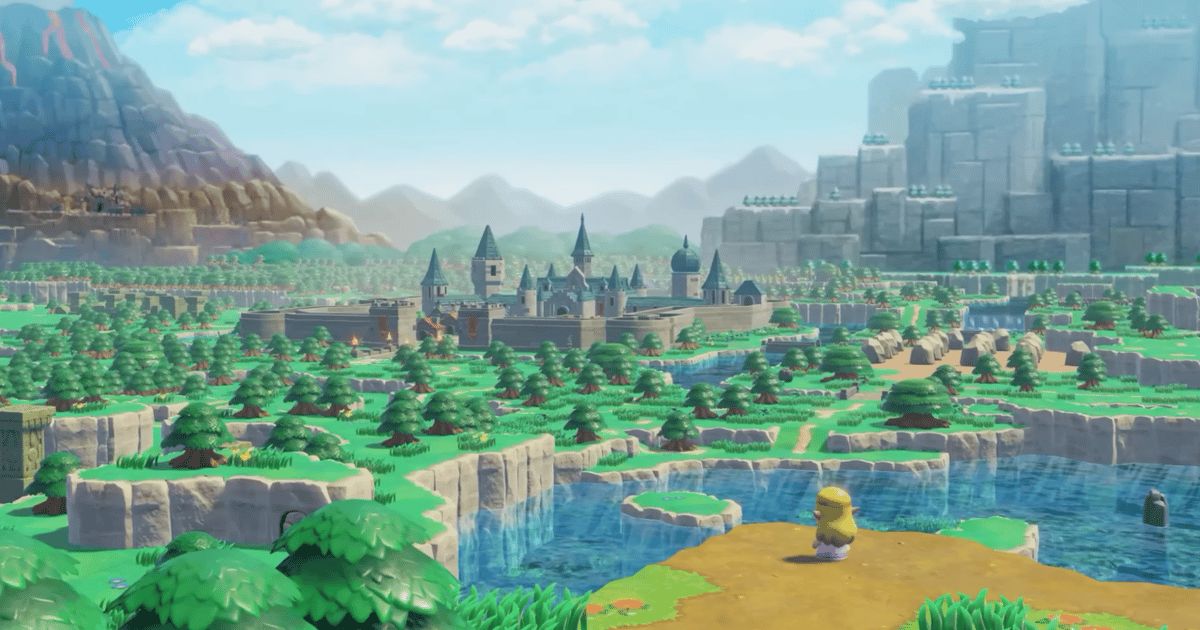
Independent content creators don’t have to consider a game in its entirety, but can zoom on in a particular aspect. Essays with a technical focus (like thisGMTK video on TheLegend of Zelda: Echoes of Time’s UI) can provide solutions to specific problems, while more conceptual ones (likeIzzzyzzz’s video on the misogyny of “cozy games”) can help developers understand how a particular game relates to a broader trend.
This ability to zoom in or out can be of great help to developers, as patterns that are clearly visible on one level of analysis may be imperceptible at another.
Where standard reviews must answer the question of whether a game is worth buying and playing, video essays are able to consider a game beyond its commercial and entertainment value.
“As a designer,” says Short, “I’m less interested in whether a game is ‘bad’ or ’good,’ but what’s interesting or notable about that experience.” Her philosophy is reflected in the work of YouTubers likeNitro Rad, who specializes in revisiting B-tier platformers that—despite their many flaws—still manage to capture what makes the genre fun.
Independent content creators can engage with games that were never officially released or aren’t easily available for purchase. Nicolas Oueijan, founder of Strafe Studios, points to streamer and essayistMemoria‘s videos where she “plays the bottom 90% of the Steam catalogue,” noting the value of seeing not just successful games, but “bad, unpolished, or unfinished” ones as well.
While I encountered some instances of video essays shaping particular design decisions—Brown says the creators ofThe Case of the Golden Idoltold him they were directly inspired by one of his videos on detective games—most developers described their influence as indirect and holistic.
Hill said he turned to video essays to better understand whyThe Last of Us: Part II’s bifurcated narrative and pacing landed with some players while turning off others.
Patrick Rosander, a concept artist at Remedy Entertainment, told Game Developer that a video onSplinter Cell: Blacklistfrom YouTube channelAI and Gamesabout “AI and enemy design affected how I think about art direction.”
Tyler Devogel, a senior tech artist at Schell Games, said a “line from a Ben Croshaw review ofRemnantoften echoes in my mind: ‘There are two kinds of games, those that make you feel, and those that make you numb.’ Am I making a numbing game? Our company has a ‘Make the World a Better Place’ principle, and this lens has helped me check direction.”
Usually, Short concludes, “each game is already so far into becoming itself that feedback or fresh design realizations can often only shape minor direction changes, rather than make significant impact in the moment.” Instead, “it’s more like those insights get added to my ‘design nest’, which I’ll return to when I start building up my next game idea, in which some folks call the discovery phase, when the concept is solidifying.”
