

Mike Flanagan’s “Carrie” brings Stephen King’s blood-drenched first novel to life in live-action for the fourth time. But Carrie White (Summer H. Howell) wasn’t the only telekinetic girl to return to the screen this year. “Spider-Man: Brand New Day” introduced a new Jean Grey, played by Sadie Sink.
You’d think Jean, one of the most famous Marvel heroes, would be on Spider-Man’s (Tom Holland) side during the movie. But “Brand New Day” swerves: Jean, who grew up without Professor X’s guidance in this universe, is the film’s primary villain. She’s still massively sympathetic, only trying to save her sister Sara (Olivia Booth-Ford) after she was abducted by the government. The third act of “Brand New Day” is Peter Parker talking Jean down from letting her powers loose on Manhattan after she learns Sara’s already dead.
Jean going bad is nothing new, though. Her most famous story arc, 1980’s “The Dark Phoenix Saga” by Chris Claremont and John Byrne, is all about her being consumed by her growing psychic power. By the story’s end, she’s gone on a horrible rampage and chooses death over losing herself to the Dark Phoenix again. “Dark Phoenix” is a tale that reminds you of a certain teen girl who goes berserk after her classmates dropped a bucket of pigs’ blood on her, just with more BDSM clubs and space opera.
Now, to my knowledge, Claremont and Byrne have never cited “Carrie” as an influence on “The Dark Phoenix Saga.” But “Carrie” the novel and the 1976 “Carrie” film by Brian De Palma were zeitgeist-capturing pop culture. It’s not a stretch to imagine they had some influence on other people writing a tragedy about a telekinetic young woman. Critics and academics have also long highlighted Jean and Carrie as parallel characters.
Carrie White, meet Jean Grey
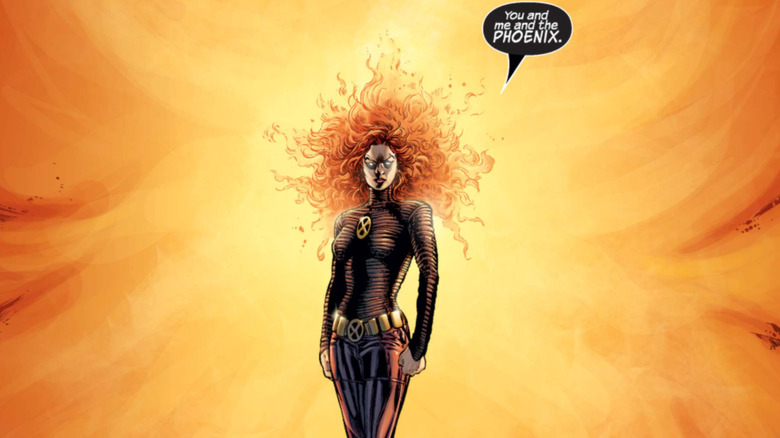
Jean Grey predates Carrie by more than a decade, debuting in 1963’s “X-Men” #1. In those early “X-Men” stories, Jean — known as Marvel Girl — was rather fragile and powerless. In the revamped “X-Men” comics of the 1970s, Chris Claremont birthed Jean anew as the Phoenix. Part of that change was a feminist statement.
“At the time, women weren’t regarded as credible, and oftentimes people found it scary how professional and competent they could be. There’s some of that,” Claremont explained in a 2019 interview with the Portland Mercury. As for Jean losing control (which can be read as undermining the message) — faced with the power of a god, any mortal would buckle, Claremont said.
While Jean has 60+ years of stories to her name, “Dark Phoenix” remains synonymous with her. Both Famke Janssen and Sophie Turner’s Jeans starred in movie adaptations of it, and it’s easy to imagine Sadie Sink will get a shot at “Dark Phoenix,” too, since “Brand New Day” reimagines Jean to be darker from the start. Sometimes, Jean is downright cruel to Peter, such as when she takes telepathic control of MJ (Zendaya) and makes her jump off a building.
The “Carrie” TV series, running eight episodes, gives Carrie a few new moments of testing her power as well, like when she holds Chris’ (Alison Thornton) head in place and gives her a nosebleed. The series even gives Carrie a devil on her shoulder with Emaline (Thalia Dudek), who’s ultimately revealed to be another psychic girl with nebulous goals. That invention adds a parallel to “The Dark Phoenix Saga,” where Jean is corrupted by illusion-casting mutant Jason Wyngarde/Mastermind. The whole group of psychics that desires Carrie’s power evokes the X-Men or, more sinisterly, the Hellfire Club.
Mike Flanagan’s Carrie needed less ‘X-Men,’ more horror
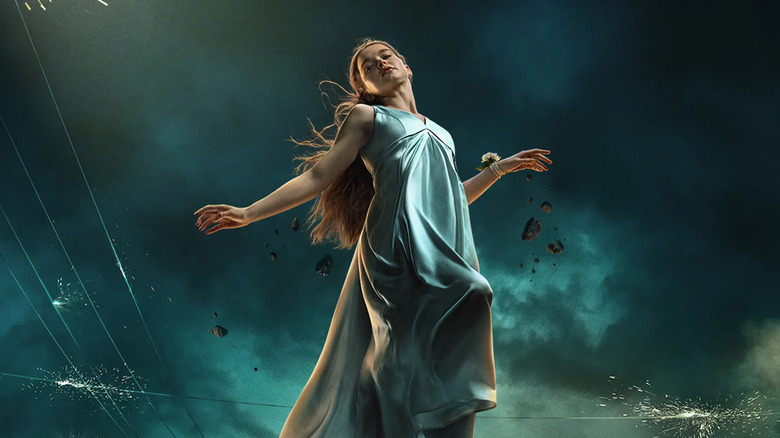
And therein lies the flaw of the “Carrie” show for me, which leans so hard on the superpower angle that it starts to actually feel like a Marvel story. Now, some of that overlap is endemic to Stephen King. Indeed, the horror maestro is a comic fan who has even written some Marvel comics.
“Carrie” doesn’t stand alone, either. King’s “Firestarter” feels like a spiritual “X-Men” story, too. (In turn, Liz Sherman from the “Hellboy” and “B.P.R.D.” comics echoes Charlie from “Firestarter.”) A love for comic books is another thing that King and Mike Flanagan share. Flanagan is the one who first pitched DC Studios’ upcoming “Clayface,” and in Flanagan’s “The Haunting of Hill House,” Theo Crain (Kate Siegel) wears gloves to block off her touch-activated telepathy powers, à la Rogue from “X-Men.” In an interview with Entertainment Weekly, Flanagan said the chance to explore Carrie as just one among many telepaths was part of his show’s pitch:
“Stephen King also talks about the ‘TK gene’ [for telekinesis] and the science behind Carrie’s abilities. Something that the De Palma adaptation ignored was Carrie’s place in the larger universe, that she’s part of a sorority of very gifted women and just doesn’t know it. The book absolutely points at that, but that was something we could pick up and run with.”
I can say from personal experience that “X-Men” fans can read “Carrie” and humorously think how well it works as the origin story for a mutant super-villain. If Magneto showed up on Carrie’s doorstep, she’d probably fit right in among the Brotherhood of Evil Mutants. Unfortunately, I’d say that Mike Flanagan’s “Carrie” takes that sort of joke too literally.
“Carrie” is streaming on Prime Video.

2 Comments
Pingback: NYCC '26: Marvel announces Brick and Renown collected edition lines - Comic Vibe
Pingback: GTA 6 Leaker Returns With 24 Minutes of New Gameplay - Comic Vibe