

- Suns Features
Revisiting Suns fandom through 1990s basketball card design
A childhood love of basketball cards turned into an offseason design project built on nostalgia.
Every fan has an origin story. Yours is unique and sacred. You hold it close because you lived it, and nobody else experienced it in quite the same way. How you became a fan of the Phoenix Suns is personal. It belongs to you. It is built from memories, people, moments, heartbreak, and whatever strange cosmic accident led you to care this deeply about five men wearing the same colors.
That emotional connection can overpower logic in an instant. The old saying, “Emotions make smart people look stupid,” might as well have been invented to describe sports fandom. We know better. We understand how ridiculous it all is. Then the ball goes up, the blood starts moving, and all rational thought is tossed directly into traffic.
Today, I’m going to share a little of my story, along with what the maniacal nature of fandom has led me to create during the long, empty recess known as the offseason. So come along for the ride, provided this is the kind of madness you feel like reading about.
I can pinpoint the beginning of my sports fandom to 1988. I was five years old, going on six, and completely dazzled by the games unfolding in front of me. At that age, sports felt enormous. The players were giants. The arenas felt like distant temples. The teams you loved became part of your identity before you were old enough to understand what an identity was.
I loved my teams, and I wanted anything that made me feel connected to their world. I wanted a tangible piece of the ecosystem, something I could hold in my hand and claim as my own. One of the easiest ways to find that feeling was through cards.
Whenever we went to Target, my mom would let me get a pack. Those trips remain buried in the warmest corners of my memory, for they were quests. There was the anticipation of choosing the pack. The quiet belief that something incredible might be hiding inside. The chemical rush of tearing through the wrapper and searching for one of your favorite players. It was the hunt. The seek and find. A small lottery ticket purchased with hope and childhood optimism. There was always a chance that the next card would be the one.
In the late 1980s and early 1990s, some of those cards were genuine works of art. What Topps helped begin eventually expanded into an entire industry of companies battling for your attention, your allowance, and whatever money your parents were willing to surrender near the checkout aisle. Upper Deck. Fleer. Donruss. Then there was SkyBox.
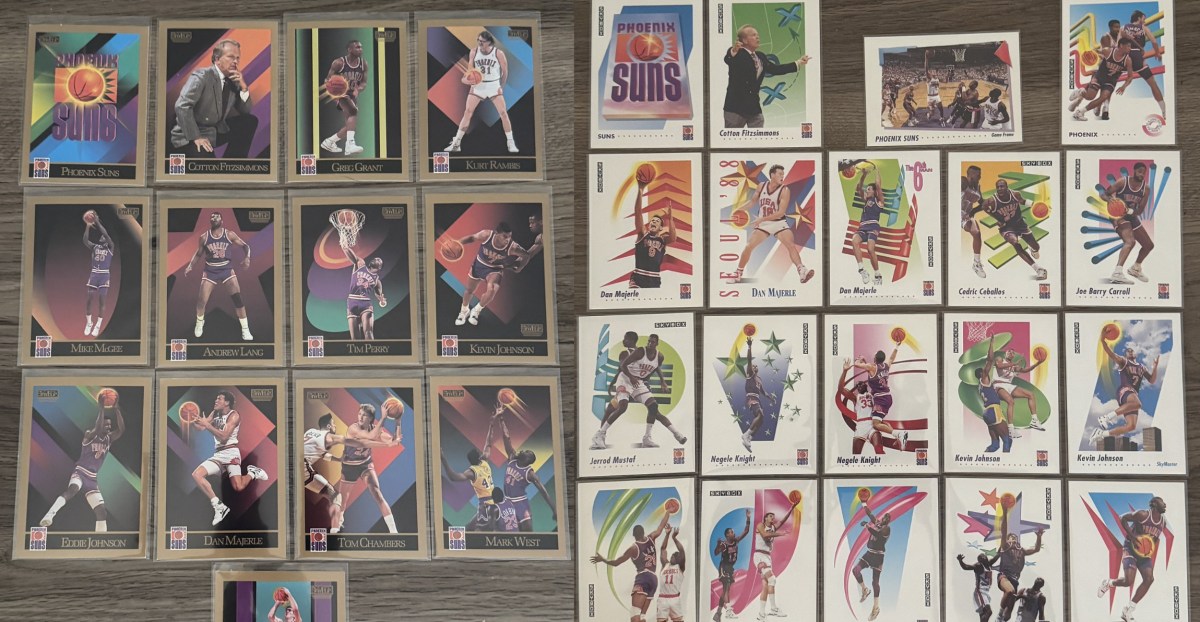
In 1990 and 1991, you would have been hard-pressed to find basketball cards that looked more beautiful, futuristic, or completely out of their minds than what SkyBox was producing. The 1990 set featured gold borders and geometric gradients exploding against black backgrounds. Legendary players seemed to leap off the cards. Streaks fired from the basketball, creating movement you could practically feel.
Then SkyBox followed it in 1991 with an avant-garde collection of geometric, computer-generated imagery. The backgrounds were white, the gradients were bold, and the designs once again leaned heavily into motion. Every card looked like it had been designed inside a neon-soaked laboratory by people who believed the future would involve flying cars, laser beams, and Charles Barkley grabbing 18 rebounds a night. The players did not appear trapped inside a photograph. They looked like they were bursting through it.
SkyBox was ahead of its time. Today, those effects could be recreated with advanced photo editing software and graphic design programs. Back then, this was cutting-edge material. It felt experimental and futuristic. It felt like somebody had opened a portal into the next century and printed basketball cards on the other side.
As a kid holding those cards in my hands, I was amazed. Decades later, apparently, I still am.
It’s something I found myself still being impressed by a few weeks ago while aimlessly doomscrolling on eBay. Because yes, that is one of the hobbies I have discovered in my 40s: chasing down basketball cards I could never quite get my hands on when I was younger. PSA graded cards, raw cards, cards I stared at in Beckett magazines like they were forbidden treasure, cards I wanted to pull as a kid and never did. You can find damn near anything on eBay now. It is a digital flea market for the hopelessly nostalgic, and I say that as one of its frequent customers.
As I was scrolling, I came across a 1990 SkyBox card of Suns legend Coach Cotton Fitzsimmons. I stopped and stared at it for a second, and thought to myself, “Damn, that’s a beautiful card.” It was not one I had in my collection, so naturally I added it.
Then the idea hit me.
It is summer in Arizona. Which means the outside world feels like a punishment. There are no games to watch, no podcast prep to bury myself in. Nothing on the schedule except heat, boredom, and the slow psychological unraveling that comes with the NBA offseason. So I figured, why not spend those long, empty hours redesigning the old 1990 and 1991 SkyBox cards with the 2026 27 Phoenix Suns roster? Why? Because I thought it would look cool. Sometimes that is all the motivation you need when your brain is running on nostalgia, obsession, and too much indoor time.
So that’s what I did.
It is a lot more doable now than it would have been back then. I use a program called Affinity, which Canva recently acquired. It blends a lot of what Adobe Photoshop and Adobe Illustrator do, which is perfect for me because those are programs I have been using since the late 1990s. Affinity works well for this kind of project, and it let me dive headfirst into my own little design laboratory.
So I started building. Gradients against black backgrounds. Noise filters to recreate that 1990 SkyBox texture. Researching photos of the current Suns roster. Filtering those images until they had that bright, punchy early 90s pop. Then it became a rhythm. One player after another, one card after another. Wash, rinse, repeat, like some sun-baked graphic design lunatic trapped in a homemade card factory, determined to recreate a piece of childhood one layer at a time.
And eventually, after enough compulsive tinkering, I built out the whole set. Here is how it turned out.
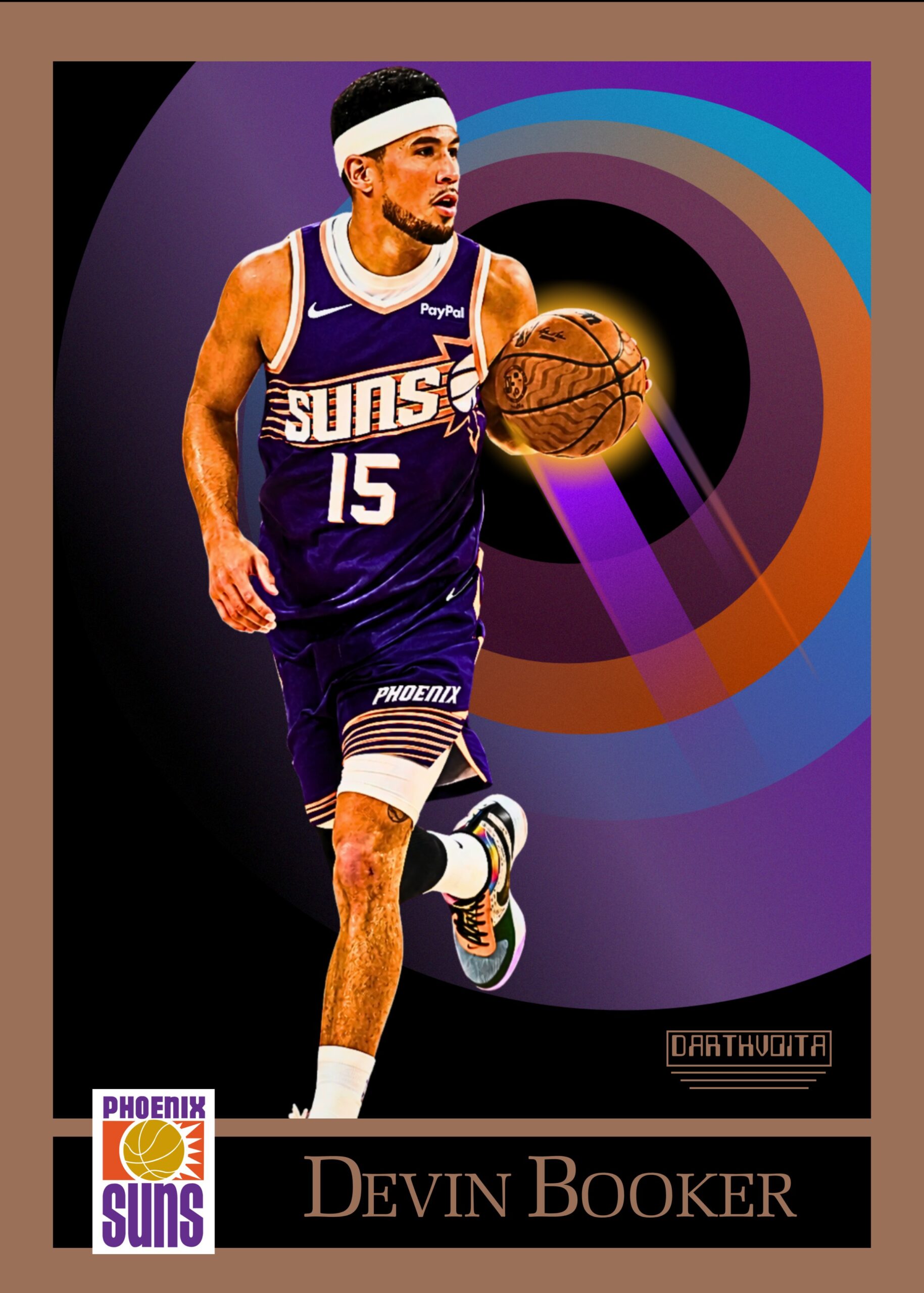
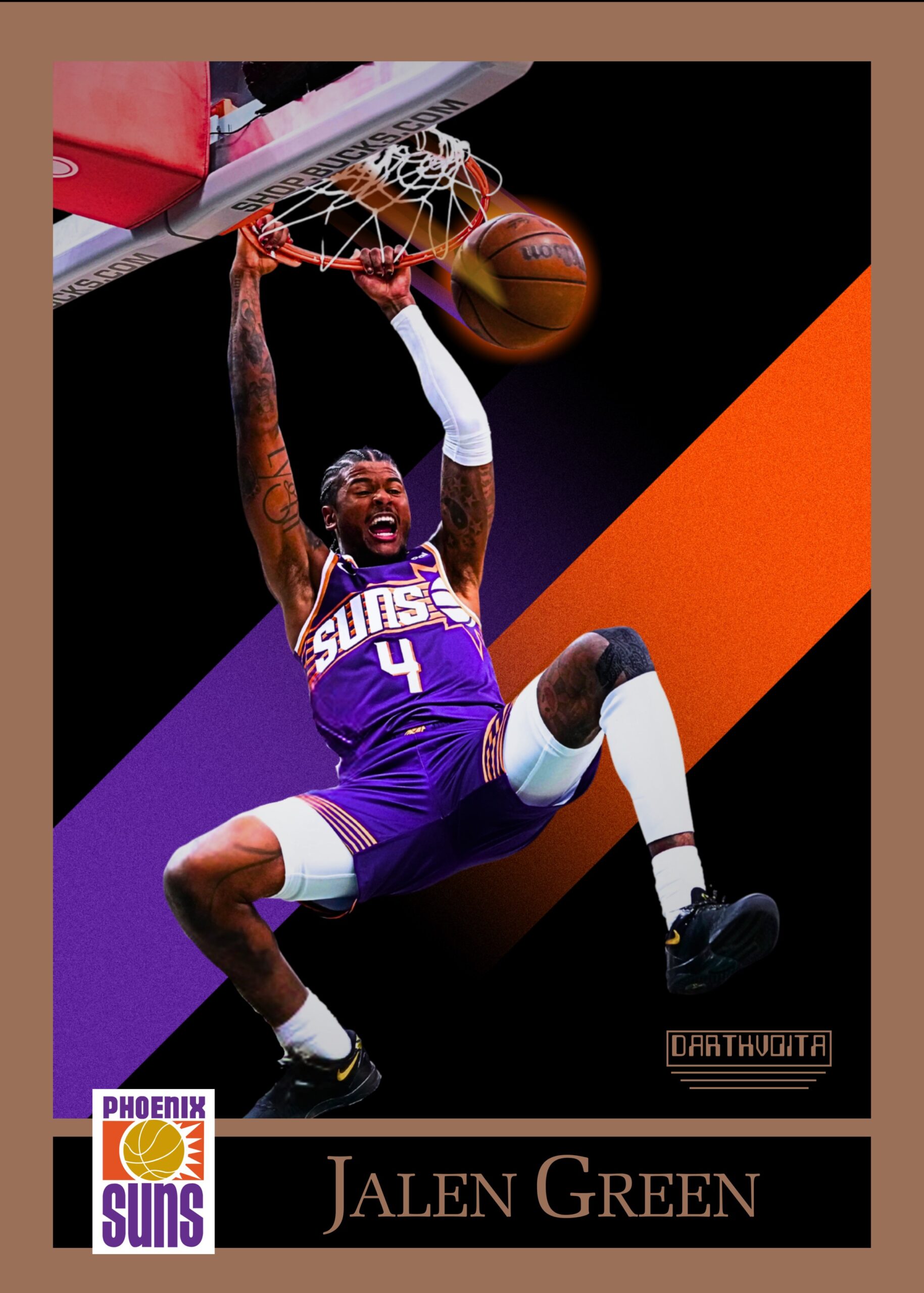
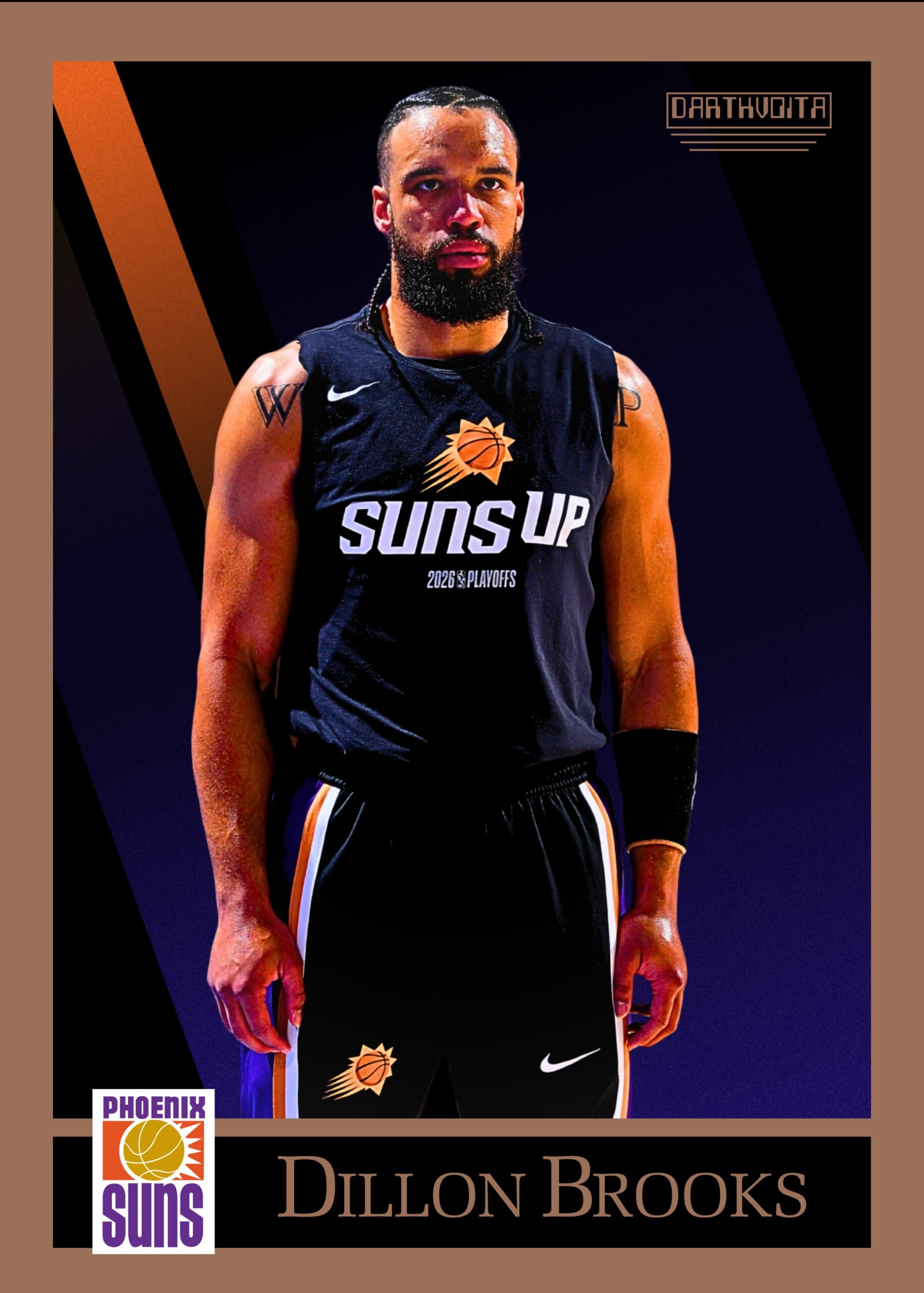
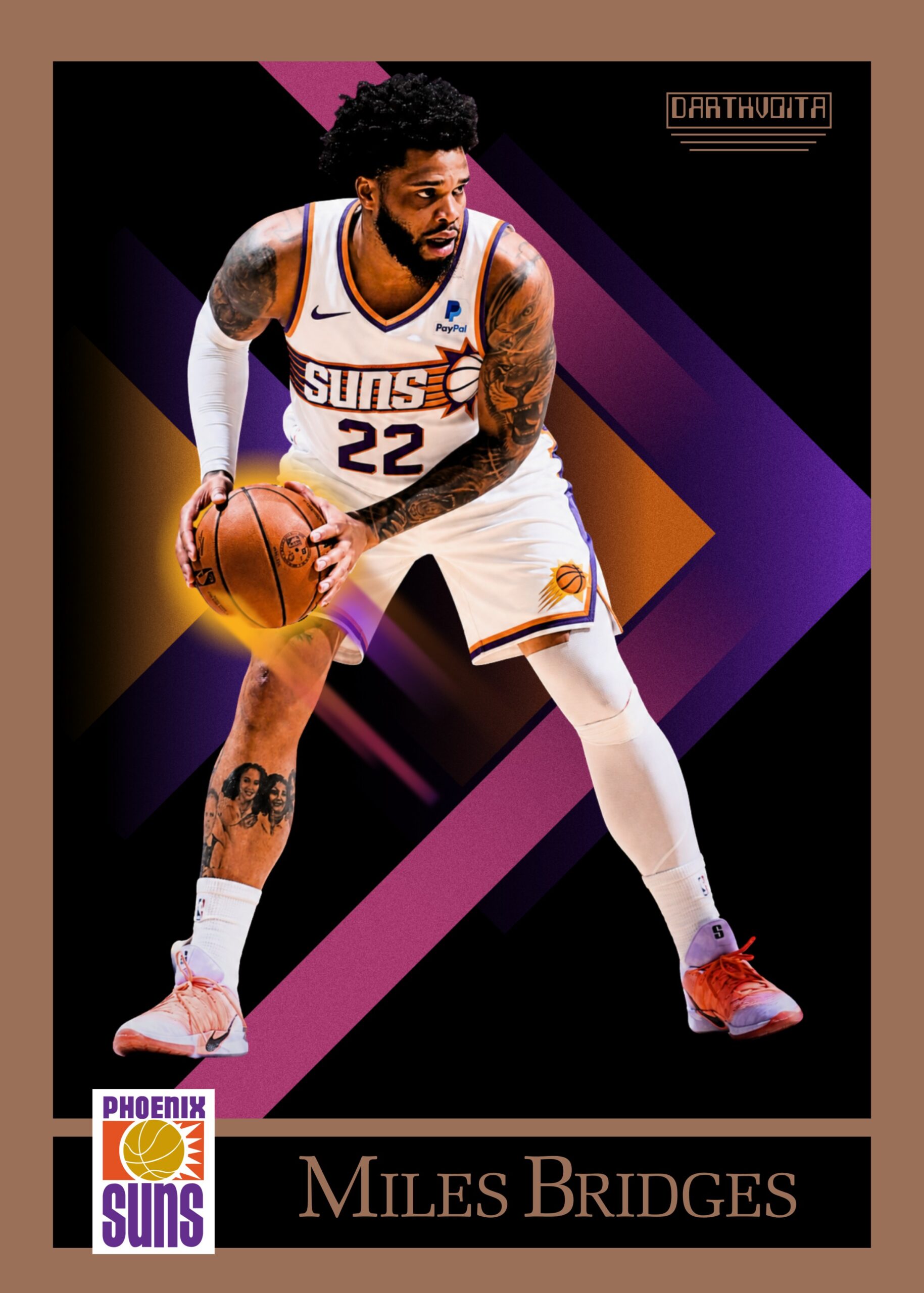
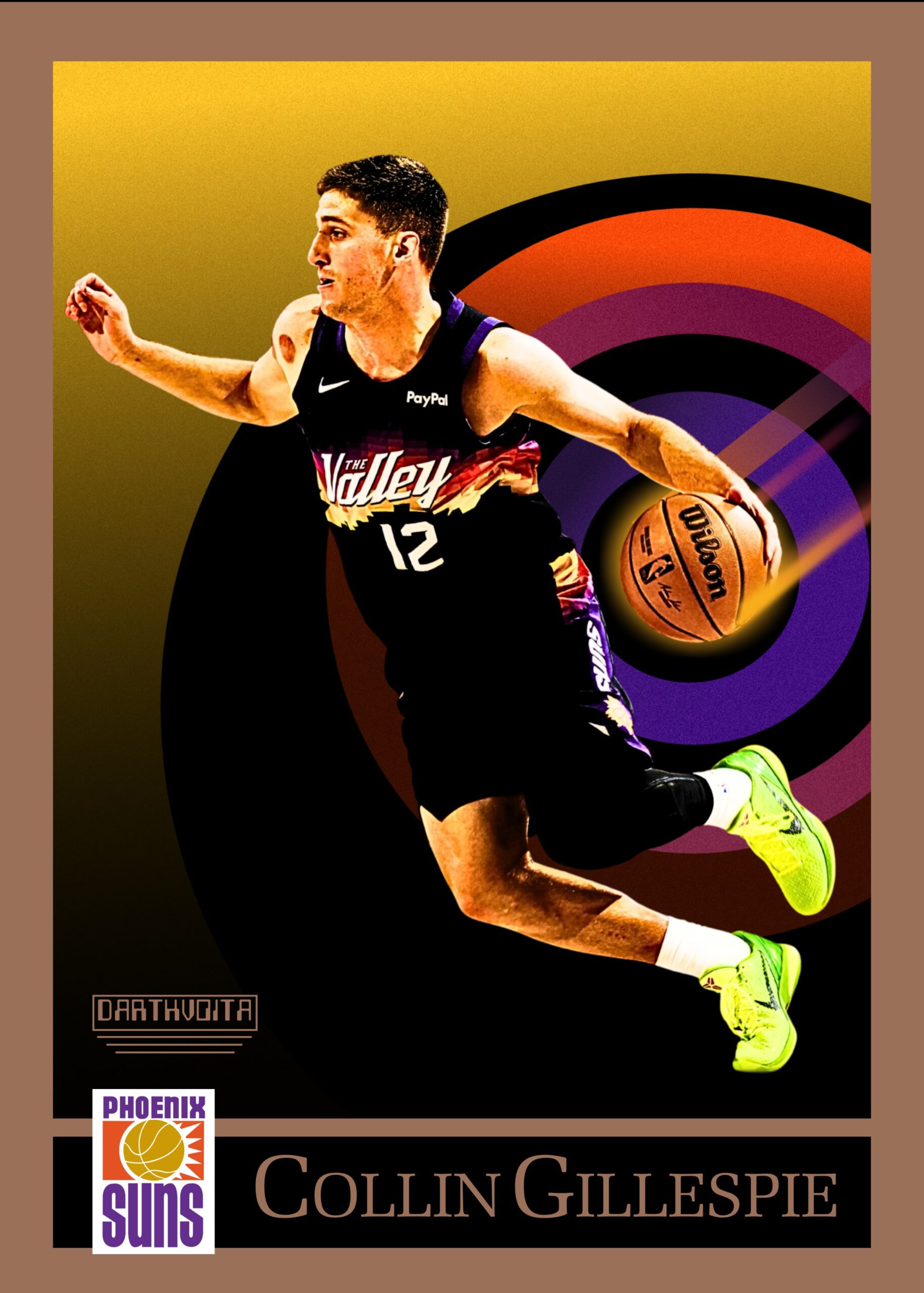
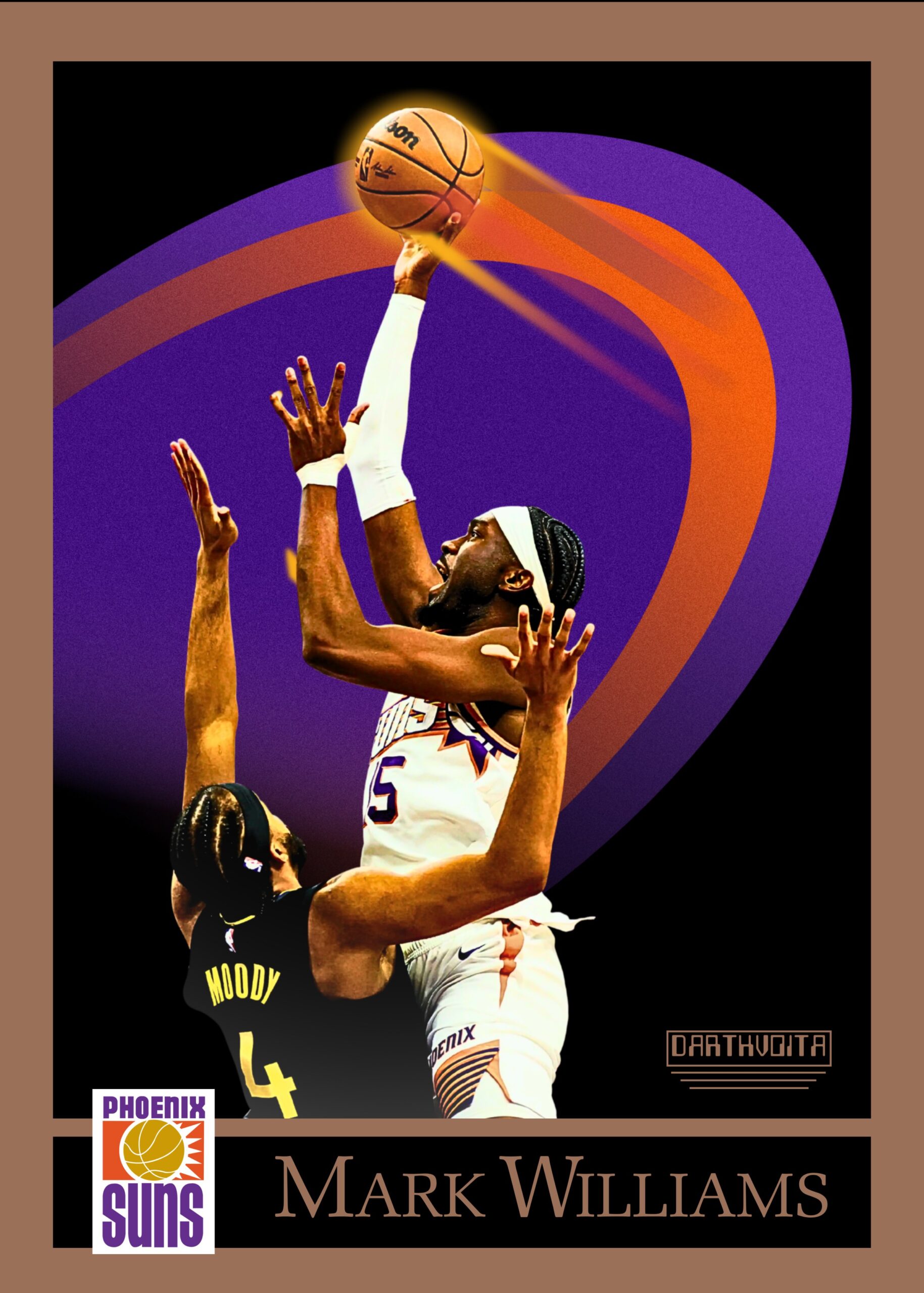
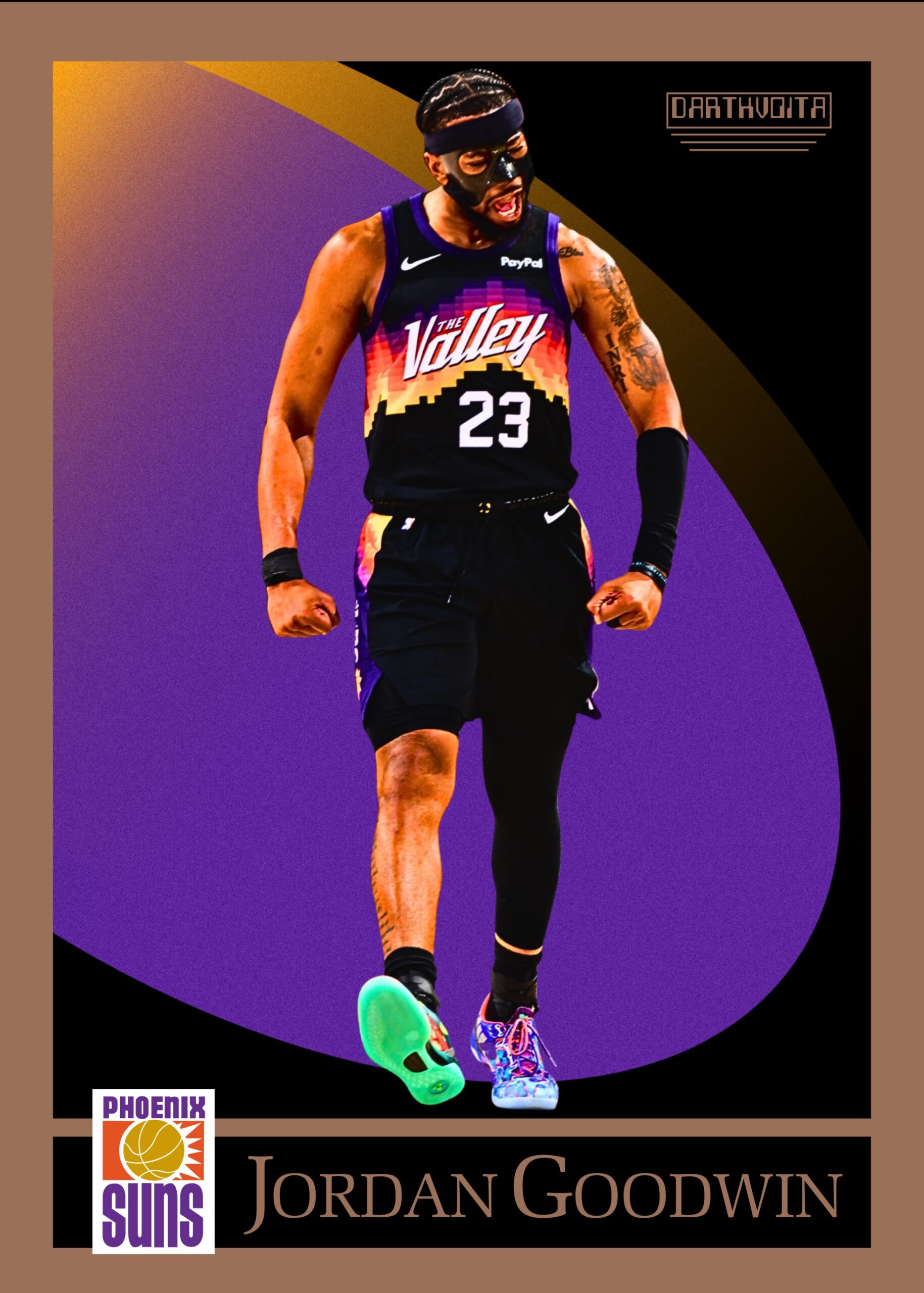
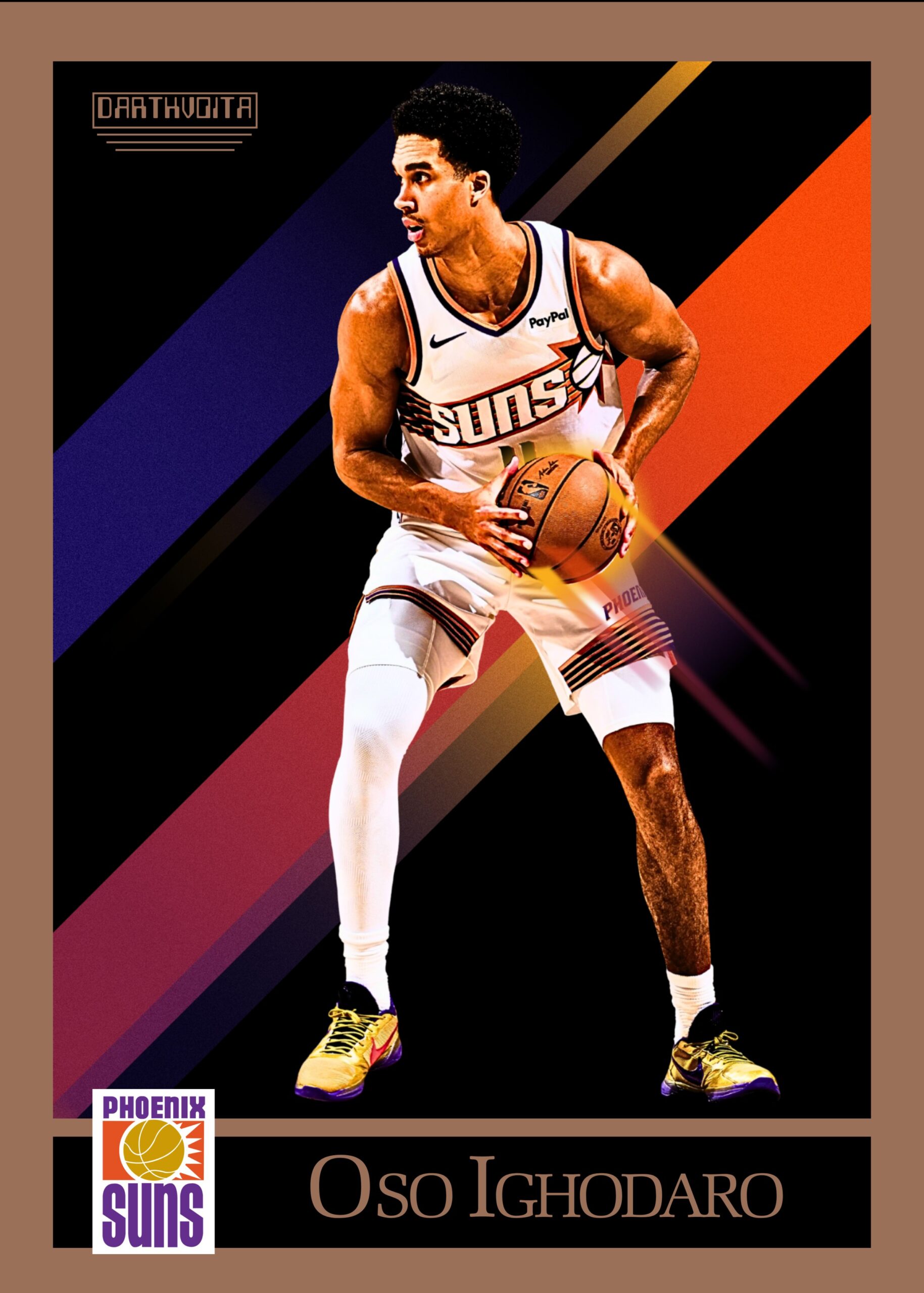
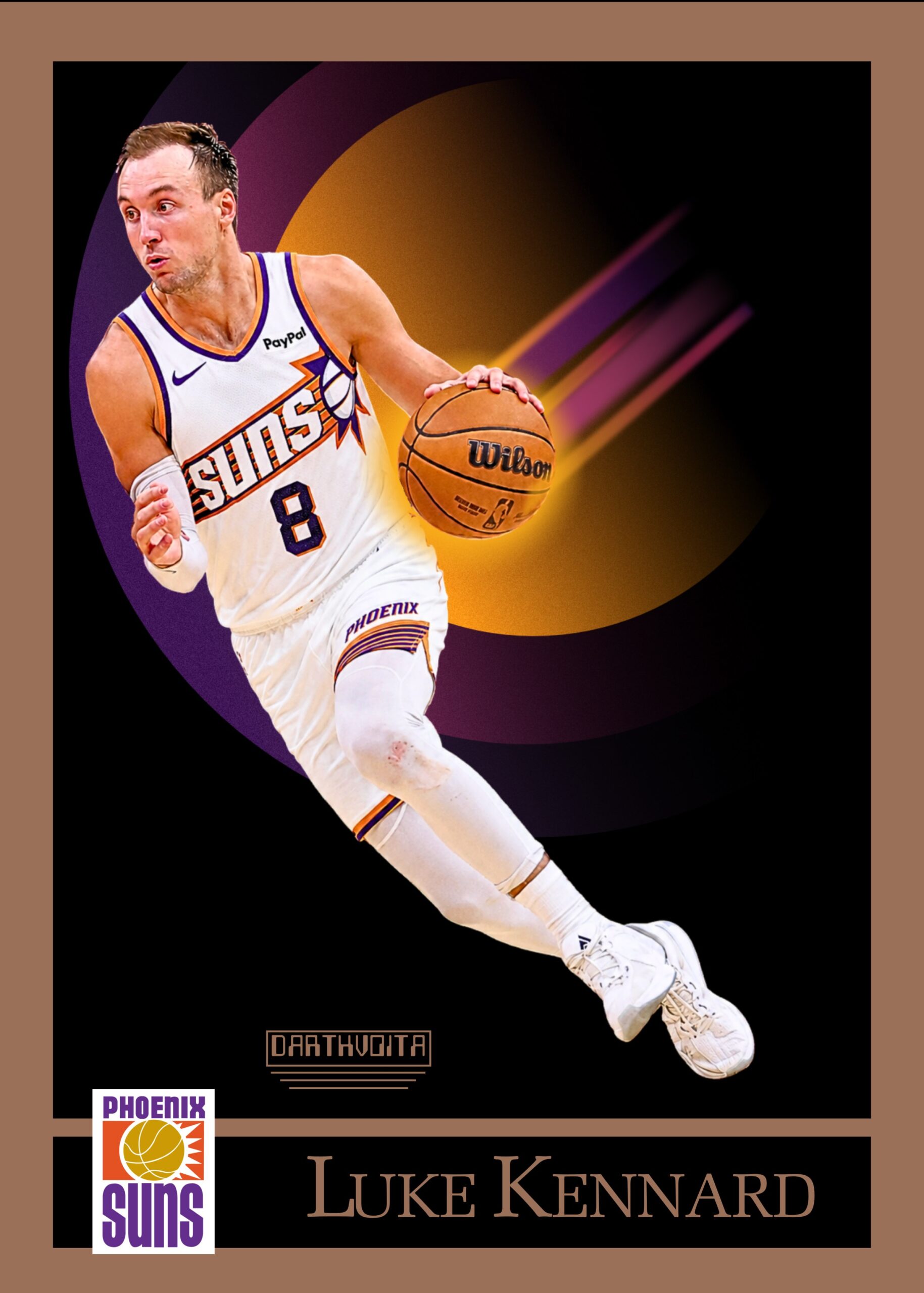
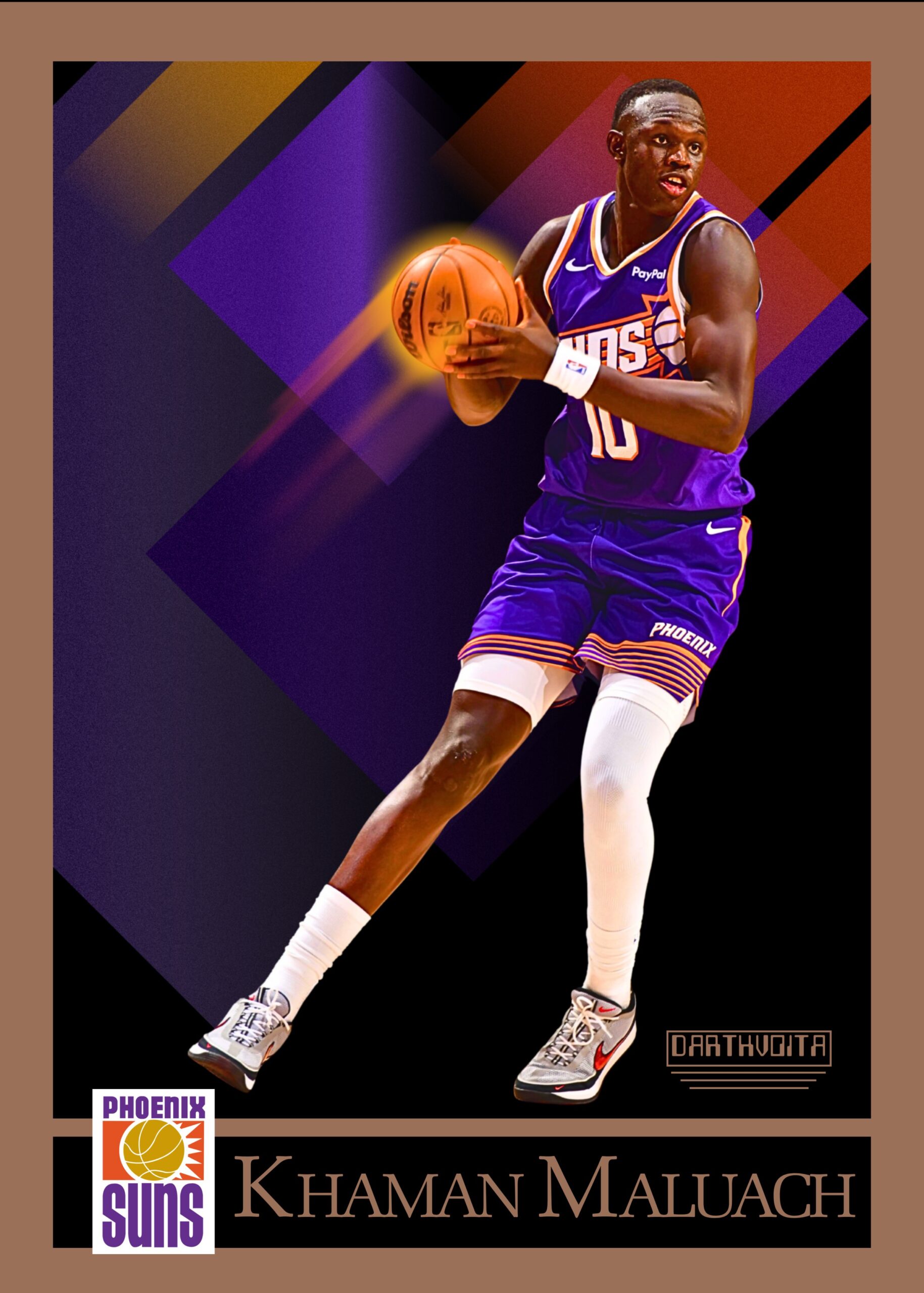
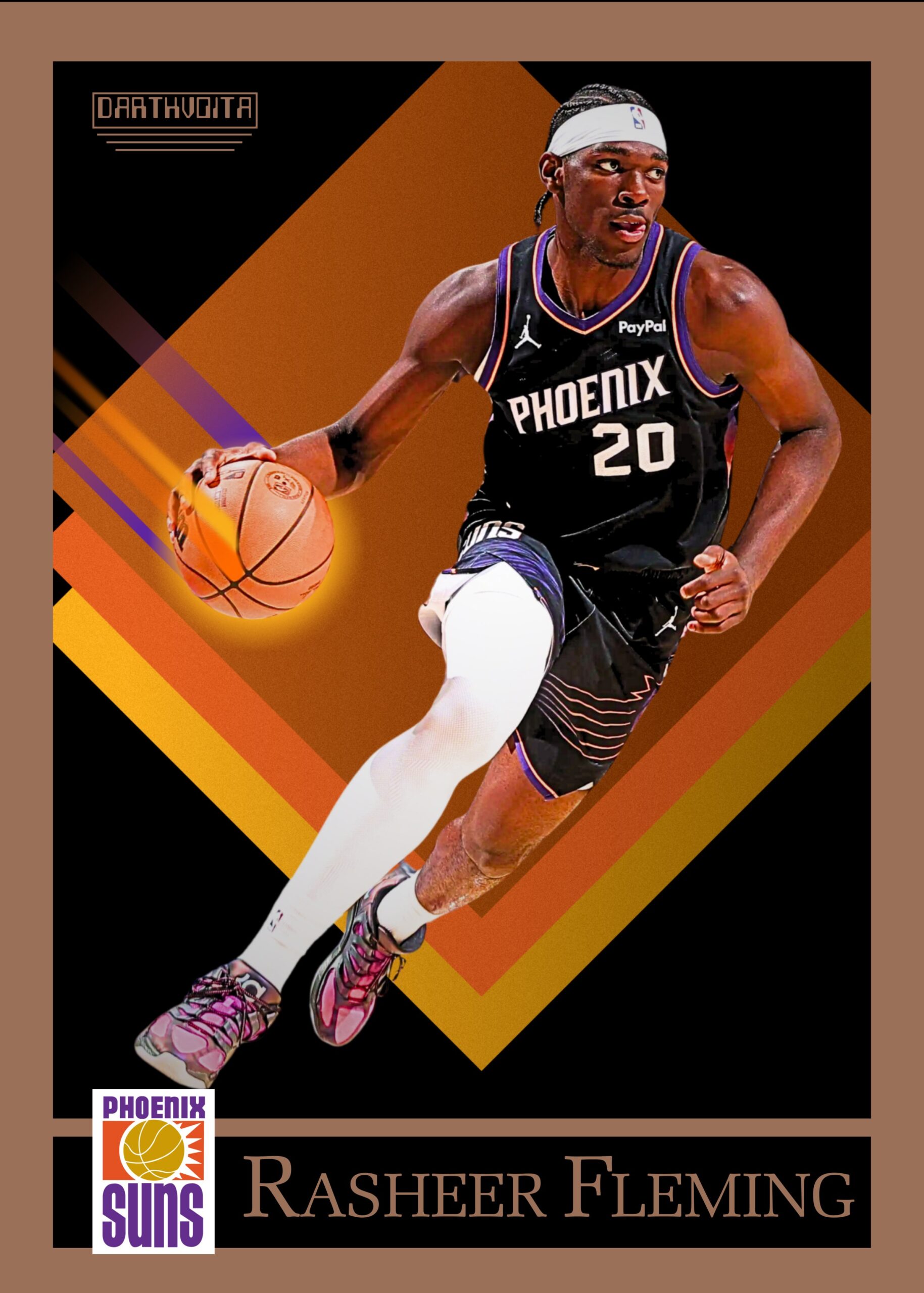
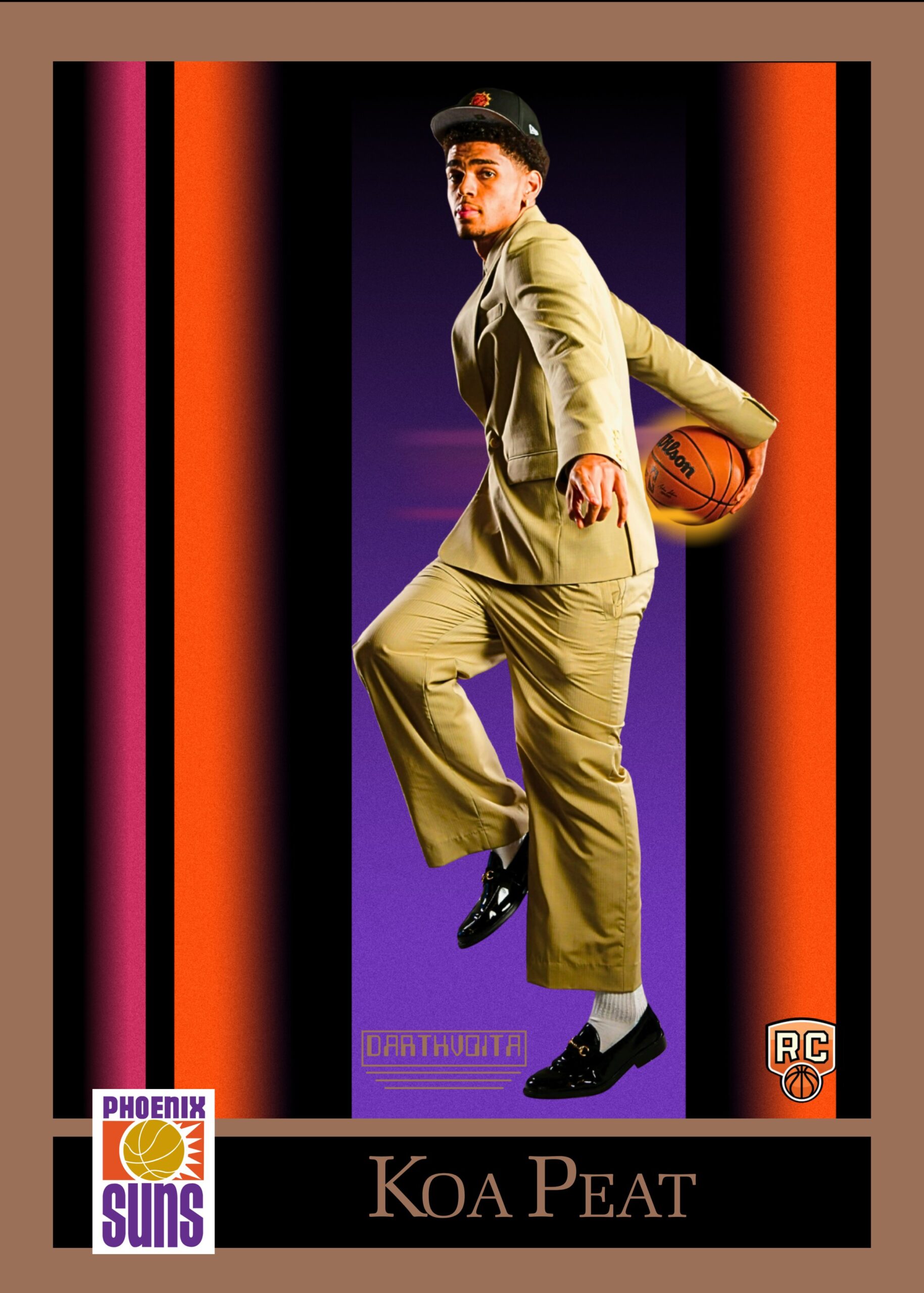
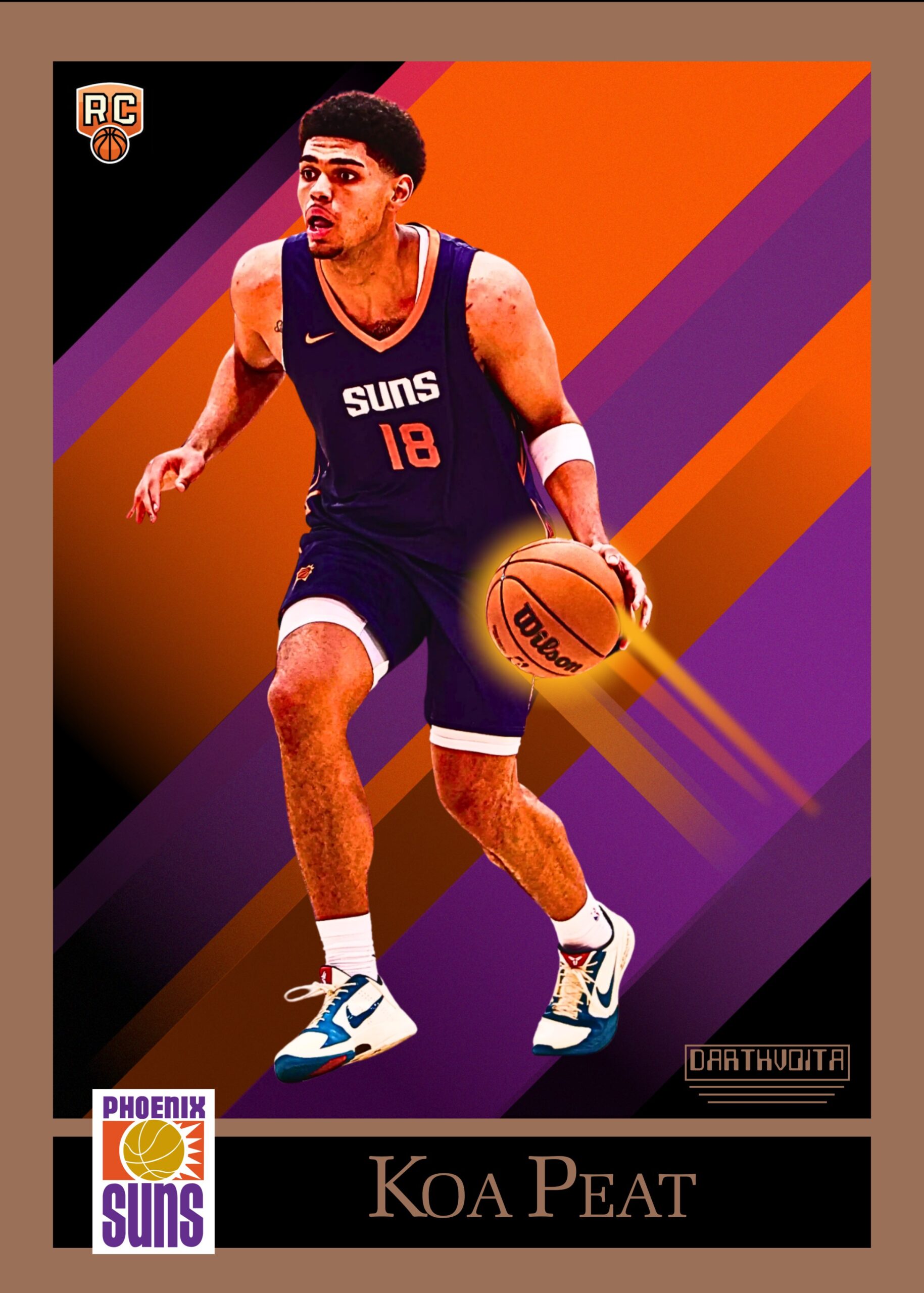
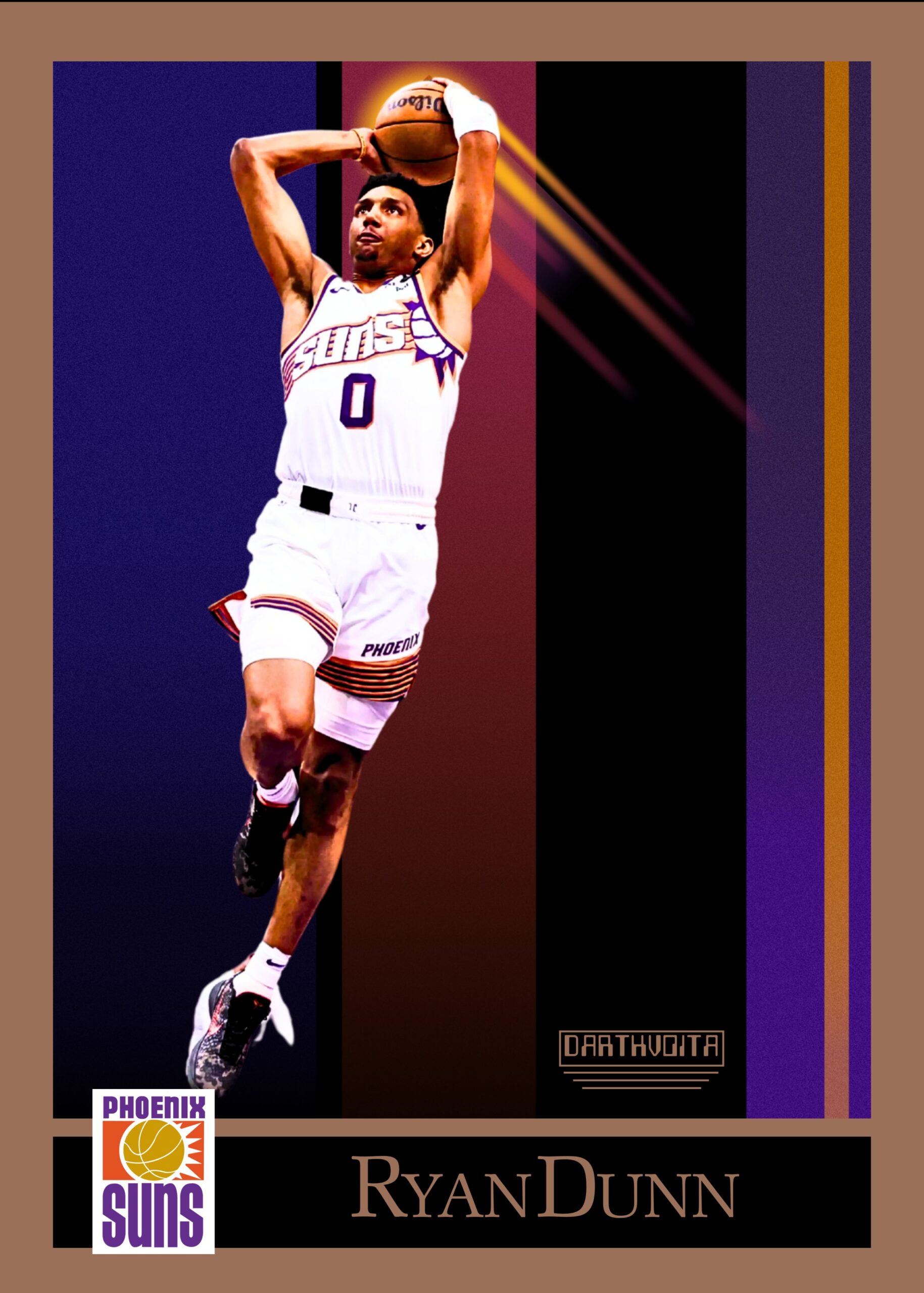
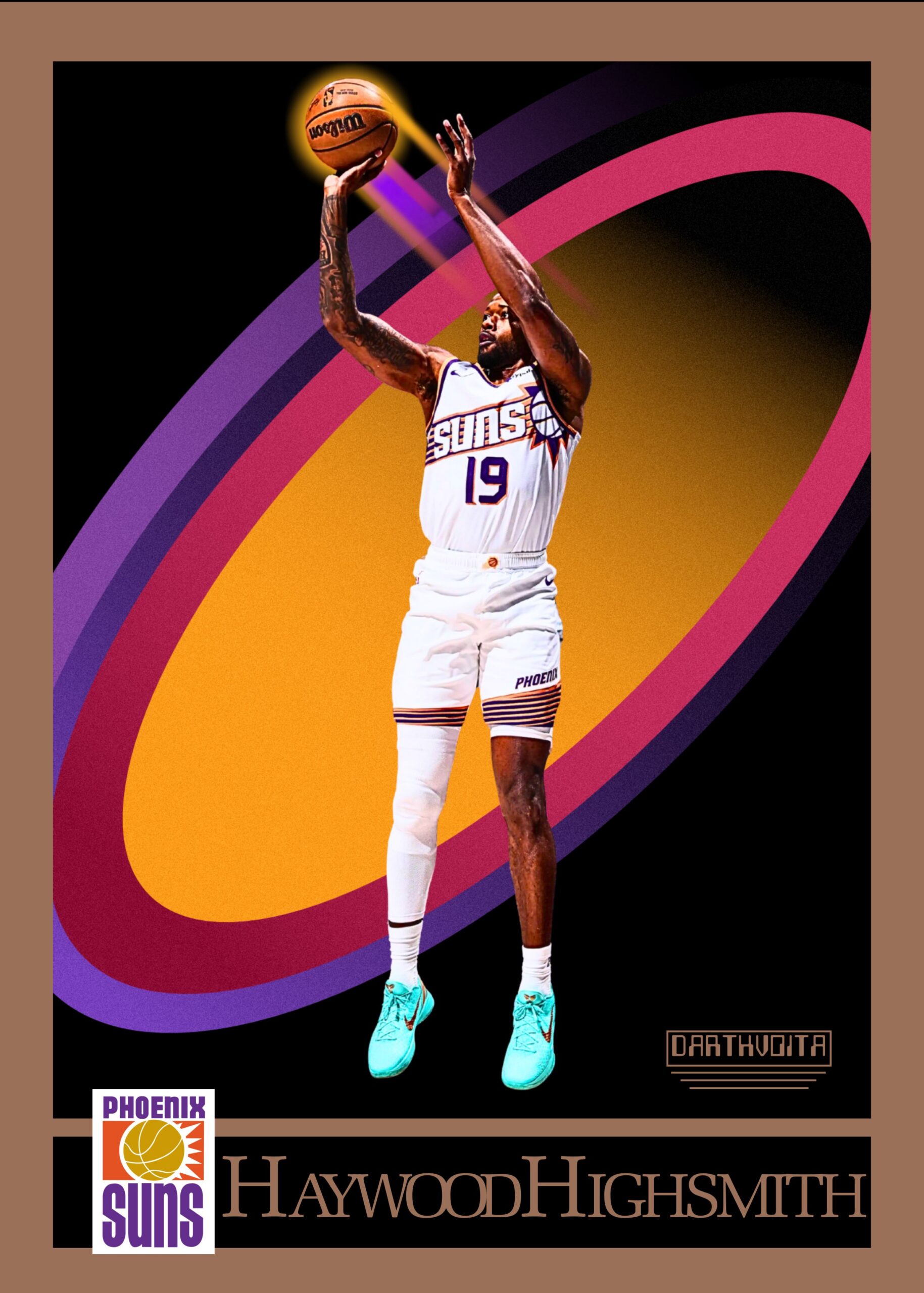


But while I was on this journey to fill those heat-soaked hours, I was back on eBay and came across the 1991 SkyBox Michael Jordan card, which is a masterpiece in its own right. It had that same effect on me. That sent me deeper down the rabbit hole. I started researching the old Phoenix Suns cards from that era, and somewhere in the middle of that spiral I thought, “Hell, maybe I should build that set out too, only with modern players.”
So once again, I disappeared into the Affinity lab. I started playing with shapes and colors, dialing in gradients, adding curved motion and action lines around a glowing basketball, trying to mimic the energy of the 1991 set. That set was a blast to work on because the colors had more life to them. They were brighter, looser, a little more unhinged. The whole design felt like it had broken out of the lab and started doing donuts in the parking lot.
And there I was, making my own art, inspired by the work of designers from 25 years earlier, chasing that same weird visual electricity that grabbed hold of me as a kid and apparently never let go.


My hope is that I did them justice. That the designers who created those cards would look at what I made and appreciate the fact that their work still resonates all these years later. Because these cards are more than pieces of cardboard with a player’s picture slapped on the front. They are art. They captured a specific time, a specific style, and a specific feeling. Decades later, the designs still hold up. They still stop you in your tracks and still make a grown man scrolling through eBay think, “That is beautiful.”
I also discovered that you can buy complete Phoenix Suns team sets from both the 1990 and 1991 SkyBox collections on eBay for around $20, which is dangerous information for somebody with a nostalgic streak, an internet connection, and very little impulse control. So yeah, I did that too.
I am not collecting these cards because I believe they will eventually become valuable enough to pay off my mortgage, buy another house, or put a new car in the driveway. There is no grand investment strategy here, no carefully constructed financial portfolio built around Cotton Fitzsimmons and Tom Chambers. It is much simpler than that. These cards fulfill a childhood itch that never completely went away. They let me reach backward through time and finally grab hold of something I wanted when I was five or six years old. Something small, something unnecessary, something that still manages to mean quite a bit.
Recreating those old designs with new players felt therapeutic in a way. Maybe that is what fandom ultimately becomes as we get older. We spend years collecting moments, then find new ways to return to them. Sometimes it is through an old game, a familiar voice, or a piece of cardboard purchased for $20 on eBay. Sometimes it is through creating something new from the things that first made us care. The cards changed. The players changed. I changed. The feeling never really did.
- Suns Features
