


Suppression order lifted over 66-year-old, who also goes by Ralph Carnovale-Carr, after he was found guilty of two counts of rape and one of sexual assault
-
Follow our Australia news live blog for latest updates
-
Get our breaking news email, free app or daily news podcast
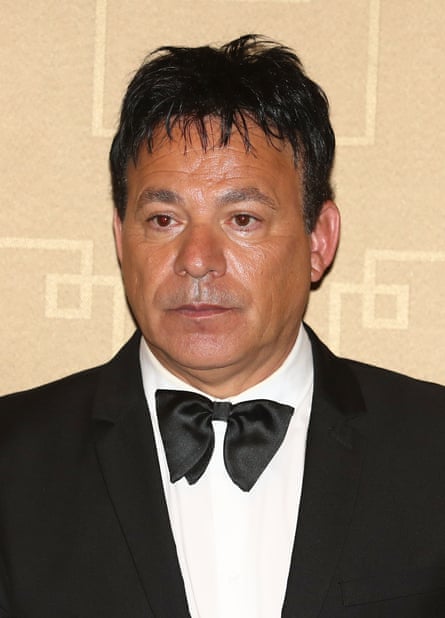
Entertainment industry and AFL figure Ralph Carr can be revealed as the well-connected Melbourne man found guilty of raping a former employee, after a court order preventing him from being publicly identified was lifted.
Carr, who also goes by the name Ralph Carnovale-Carr, faced two counts of rape and one count of sexual assault in the county court of Victoria, and pleaded not guilty.
After a three-week trial the jury found him guilty of all charges last week.
Carr, 66, immediately had his bail revoked and was taken into custody, but will be sentenced at a later date.
The assault occurred in March 2023, after the woman said she spent an evening drinking and taking cocaine with Carr, while listening to music and watching football at his friend’s home.
Both the prosecution and defence argued the most important witness was the alleged victim, who gave evidence over more than four days before a closed court. The man did not give evidence during the trial.
Carr’s identity was suppressed within days of him being charged because multiple courts found he was at risk of harming himself because of the allegations. The order was lifted on Monday.
The granting of suppression orders on mental health grounds in Victoria had come under scrutiny after another county court rape case involving an AFL identity, Tom Silvagni.
It can also be revealed that police are investigating another allegation involving Carr, after a second woman came forward to Melbourne detectives claiming she was sexually assaulted in 2005. A police spokesperson confirmed he was arrested last August in relation to the report, but was released pending further inquiries.
Carr has represented some of the biggest names in Australian pop music since the 1990s, including Vanessa Amorosi, Kate Ceberano and Tina Arena, who he married while she was signed to him. Carr and Arena divorced in 1999.
At its peak, his company Ralph Carr Management had a record label, a publishing company and a promotions/touring arm, with a client list including entertainment reporter Richard Wilkins and Neighbours star and singer Bonnie Anderson.
In 2018, the federal court ordered RCM Touring to be wound up due to insolvency, after being accused of failing to pay $120,000 to another touring company. In recent years Carr lost a number of his high-profile clients, but continued to manage a small number of AFL players, most notably former star Richmond midfielder Dustin Martin.
He co-owns a portfolio of real estate with Martin, with one commercial property recently listed in inner Melbourne.
Martin has been contacted for comment. In a statement, he said: “I was shocked to learn of the outcome of the court proceedings.”
“I had no knowledge whatsoever of the conduct that led to these convictions. My thoughts are with those affected,” Martin said.
“Effective immediately, I have ended my professional relationship with my former manager. As this is a legal matter, I will not be making any further comment.”
On Monday afternoon, lawyers for Carr were expected to argue for the suppression order in the case to remain. But Dermot Dann KC, for Carr, said his client would drop the application, but would apply for a stay on his sentence as he maintained his innocence.
“A substantial miscarriage of justice has occurred where no jury acting reasonably or rationally could have delivered a guilty verdict,” Dann told the county court.
“I’ve never made an application of this nature in 35 years … but we are so deeply disturbed by the verdicts.”
The suppression order in Carr’s case was made because it was “necessary to protect the safety of any person”.
That person was Carr.
The material he relied upon came from psychiatrist Dr Jacqueline Rakov – who also provided evidence to support the suppression order granted to Tom Silvagni in his county court rape case in 2025. That order prompted a push for government reform, particularly in relation to suppressions based on mental health grounds.
In Carr’s matter, Rakov told the court in 2024 that the accused had a number of inpatient admissions related to the mental distress caused by being charged, and the prospect of him being identified in the media.
He had previously attempted suicide, she said, though these attempts were reported by him and not directly linked to the charges.
She said he suffered from post-traumatic stress disorder and anxiety, and had a low mood, a loss of interest in previous enjoyable activities, poor concentration and low self-confidence.
Rakov said Carr was largely staying at home, not going to work or socialising, and panicked about being outside.
His distress also increased after media coverage of an earlier court appearance, which led to him being identified by members of the public, she said.
“They clearly bend the rules to sell their papers,” Rakov said.
“He’s said, ‘If I’m guilty, put it on the front page.’”
She said that even though Carr’s identity had been suppressed he was not “flourishing” and “that’s before the vultures in the media have had a chance to descend in any substantive way”.
Dann argued that media coverage was “a significant trigger factor” that “could push him over the edge” into self-harm.
The order was amended in late 2024 to allow reporting on the case – so long as it did not reveal the man’s identity.
It meant media organisations could report that a high-profile or well-connected man had been committed to stand trial, and on the trial itself, without naming Carr or giving any further detail about him or his work.
In the early days of the trial, Dann signalled that Carr would be applying for the suppression order to remain – regardless of the verdict.
The prosecutor, Matthew Fisher, said in his closing address to the jury that some of the inconsistencies in the woman’s evidence had proved her credibility, as it showed she had not made it up.
But Dermot Dann KC, representing Carr, described that as a “desperate submission”. He said the prosecution had asked the jury to swallow a “horrible mixture of lies, fabrications, inconsistencies [and] evidence that has been shown to be demonstrably untrue”.
Contact us about this story
Show
The best public interest journalism relies on first-hand accounts from people in the know.
If you have something to share on this subject, you can contact us confidentially using the following methods.
Secure Messaging in the Guardian app
The Guardian app has a tool to send tips about stories. Messages are end to end encrypted and concealed within the routine activity that every Guardian mobile app performs. This prevents an observer from knowing that you are communicating with us at all, let alone what is being said.
If you don’t already have the Guardian app, download it (iOS/Android) and go to the menu. Select ‘Secure Messaging’.
SecureDrop, instant messengers, email, telephone and post
If you can safely use the Tor network without being observed or monitored, you can send messages and documents to the Guardian
Finally, our guide at theguardian.com/tips lists several ways to contact us securely, and discusses the pros and cons of each.
Illustration: Guardian Design / Rich Cousins
The judge in Carr’s case, Frank Gucciardo, told the jury in his final remarks before they retired to consider their verdict that the case was not about consent as the defence case was that no sexual contact had occurred.
At the start of the trial, Fisher said the offences had taken place when the woman was at Carr’s house, where he tried to kiss her and sexually assaulted her.
She pushed his hands away and told him “I don’t want this”, Fisher told the court, to which he responded with comments like “You’re so sexy”, “I can’t sleep, help me” and “I need this”.
The woman said Carr raped her twice, Fisher said.
“She turned around to face him, and at that point she punched him with her fist to his face, to his nose,” Fisher told the court.
“He grabbed his face and said words to the effect of ‘you’ve broken my nose’.
“She got out of bed and said to him: ‘You’re a fucking rapist.’”
The woman went to another room and started taking notes of what happened on her phone, before texting her mother. Her mother called the police despite her daughter’s reluctance to involve them, the court heard.
The police arrived at Carr’s property at about 3am on 24 March 2023.
Police then spoke to the woman, with the exchange recorded on a body-worn camera. The footage of that 35-minute conversation was shown to the jury.
The trial heard the woman worked for Carr for several months during 2022, and the pair had resumed contact to discuss other employment opportunities when he invited her to his property.
Dann told the court that none of the offences had occurred. He said it defied logic that the woman continued to stay in the house after the alleged offences, telling her mother she felt safe there.
Dann said her credibility was also damaged by the fact she gave evidence she was reluctant to contact authorities because of a prior allegation involving police, but that allegation had been found unproven.
He also questioned why she had raised the issue of “recompense” with her mother while she was still at Carr’s house.
The court also heard evidence from two of Carr’s friends, who saw him and the woman in the hours before the offences, along with another former employee and a friend of the alleged victim.
Marcus Clarke, a barrister who met Carr in 2007 when he served on the board of the Carlton football club, and former RCM employee Adrian Marchesani both gave character evidence on Carr’s behalf during the trial.
Clarke said he had never known Carr to act inappropriately towards women.
“He’s respectful to everyone, he’s just very decent, very honest.”
At an earlier court hearing, Dann asked the informant in the case, Det Sen Const Joshua Guy, about emails he had sent to the victim after Carr was charged.
This included an email regarding Carr’s application for a suppression order, in which Guy strongly opposed an order being “gifted” to someone whose offending was related to his “arrogance” and “personal status”.
Asked by Dann why he described Carr in the email as “an entertainment mogul who manages pseudo-celebrities and rubs shoulders with entertainers”, Guy responded “that’s my opinion on what he does for a living”.
Carr’s case will return to court later this month.
-
Do you know more? Contact Steph Harmon steph.harmon@theguardian.com and Nino Bucci nino.bucci@theguardian.com
Explore more on these topicsShare
Reuse this content
