

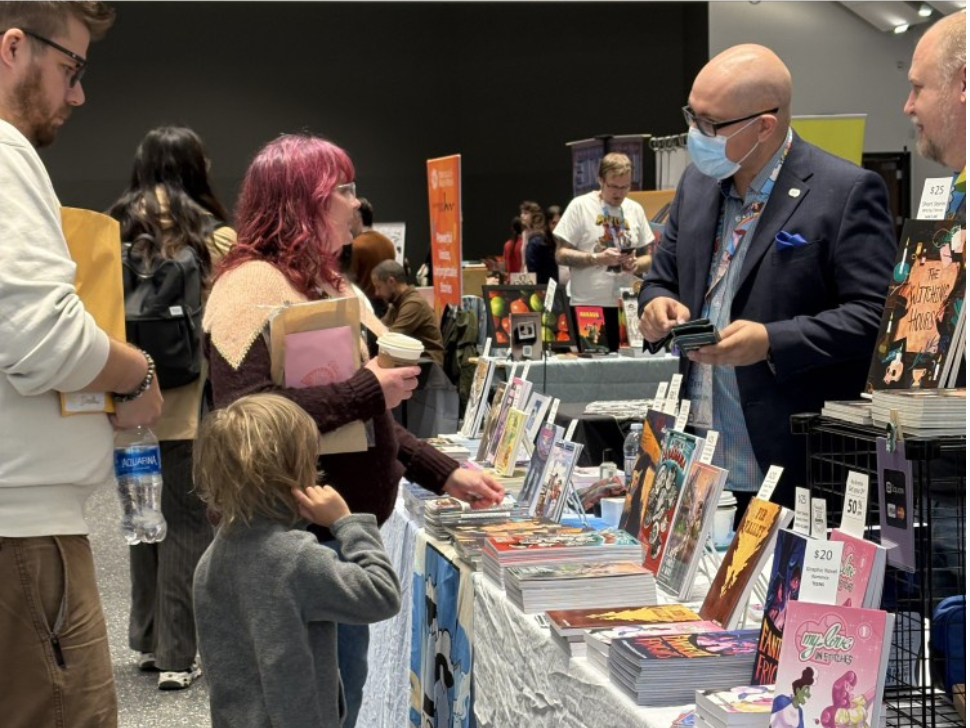
The Prairie Comics Festival returns to Winnipeg this weekend for its 10th anniversary, bringing 115 independent comic artists from Canada and the United States to the Manitoba Museum.
The free festival runs Saturday, Sept. 5, from 10 a.m. to 6 p.m., and Sunday, Sept. 6, from noon to 5 p.m. Along with artist exhibitors, the weekend features panels, workshops, and opportunities for creators and audiences to connect.
While many people associate comics with superhero characters such as Batman, Archie, or the Fantastic Four, the medium has grown far beyond those traditional stories.
Comics, graphic novels, and zines are used to explore personal experiences, social issues, identity, mental health, and other complex ideas.
For artist, fantasy author, and festival co-founder Sam Beiko, that broader understanding of comics is at the heart of the event.
From a small gathering to a 10-year festival
The Prairie Comics Festival began in 2016, when a group of comics enthusiasts decided Winnipeg needed an event focused on independent creators rather than the large-scale superhero conventions familiar to many fans.
“So we started in 2016 as just a group of kind of ragtag people who loved comics and the folks who were making their own comics separate from what people relate to comics today, like separate from the superhero stuff,” Beiko said.
The goal was to celebrate artists who were “exploring autobiography and making up their own stories.”
Beiko had previously attended the Toronto Comic Arts Festival and returned to Winnipeg wondering why the city did not have a similar event.
“And when I came back to Winnipeg, I was like, why don’t we have that here? And so a bunch of us got together and said, yeah, let’s do it ourselves.”
The first festival lasted just four hours and featured 20 exhibitors packed into the Carol Shields Auditorium at the Millennium Library.
The response showed there was an audience for an event centred on independent comics.
“There seemed to be other people like our ragtag crew who said, why not more of this?” Beiko said.
Over the years, the festival expanded beyond its annual weekend gathering. Workshops were introduced, with festival artists becoming facilitators and sharing their experience with aspiring creators.
“And then, wow, yeah, it’s been 10 years,” Beiko said.
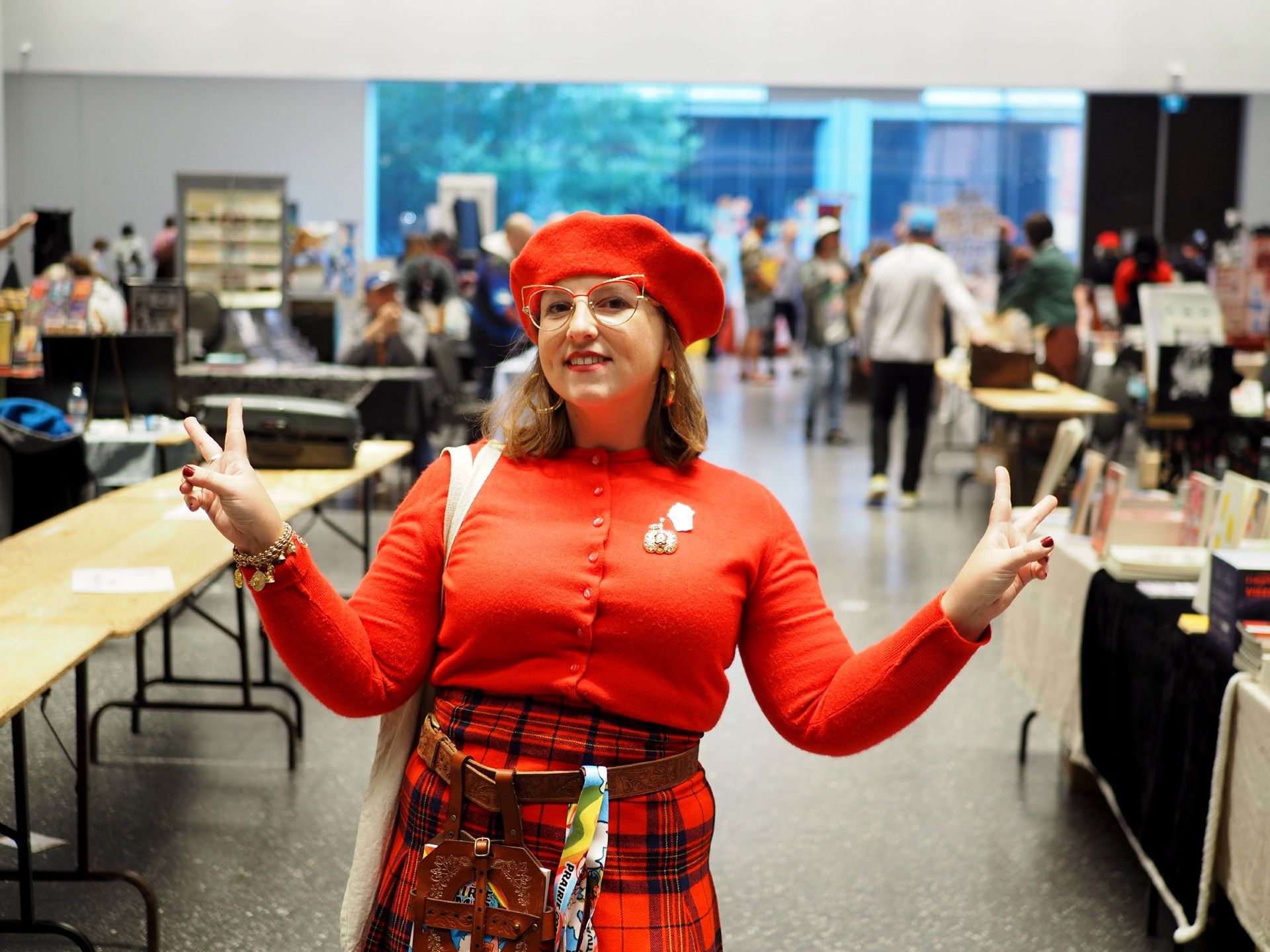
Beiko at the festival
Building an accessible creative community
Accessibility remains one of the festival’s defining principles.
The event is designed for established professionals and dedicated comics fans, but also for people who are simply curious about the medium or interested in learning how to create their own stories.
“There’s no gatekeeping,” Beiko said. “There’s no you have to be, you know, a professional artist with a big training background. You can just kind of come if you’re interested in comics.”
That philosophy extends to young people, with workshops aimed at youth and teens who want to learn how to combine words and pictures to tell stories.
The festival’s community also continues throughout the year through the Comic Coven, a weekly gathering at the organization’s studio at 70 Arthur St. in Winnipeg’s Exchange District.
Artists can bring works in progress, use supplied materials, and spend time with other creators, including people with experience exhibiting at conventions or pitching projects to publishers.
“It’s just a nice way to keep community connected throughout the year,” Beiko said.
The festival also keeps exhibitor costs relatively low. Artists who bring their own table pay $50, while those who rent one pay $75.
Beiko said that compares with major conventions, where a table can cost hundreds of dollars before an independent artist considers travel and accommodation.
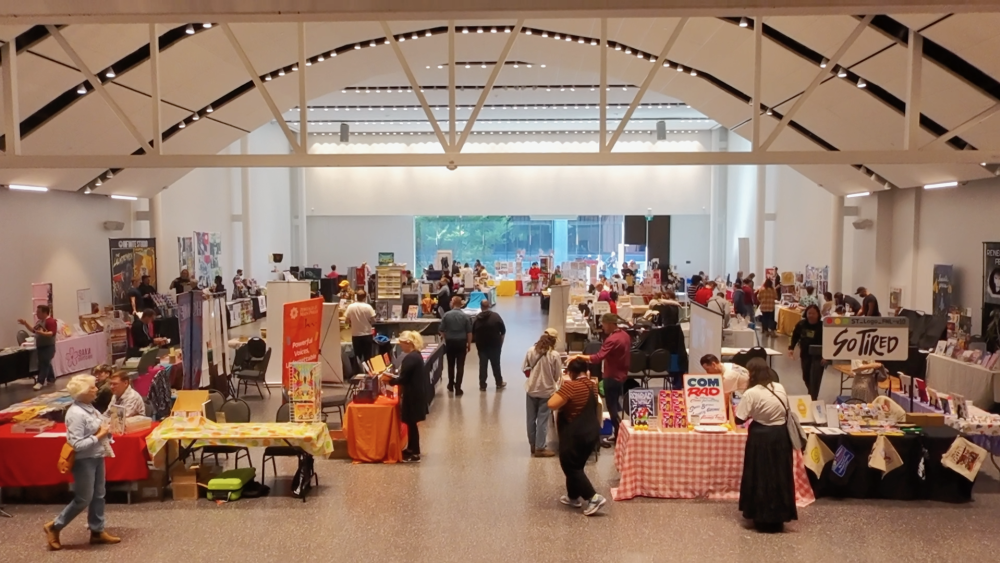
Prairie Comics Festival
From frogs and blobs to unexpected stories
Visitors to the festival will find a wide range of styles, subjects, and artistic approaches.
Trends emerge from year to year, sometimes in surprising ways.
“It’s usually some kind of animal,” Beiko said. “One year shrimp were really in and now it’s like frogs are really in. And I think capybaras are coming up.”
Cute demons, mythology, and folklore also cycle through the independent comics scene.
For Beiko, though, some of the most compelling work is the material that defies expectations.
“I think I find the best comics are just ones that are just totally unexpected and people connect with them,” she said.
“Someone will have a zine that will just be the main character will be a BLOB and they will go like gangbusters because people are like, I relate to this BLOB.”
That unpredictability is part of the appeal of independent comics.
Without the commercial expectations surrounding major publishing franchises, creators can experiment with characters, formats, and subjects that might not receive the same opportunity elsewhere.
Exploring difficult subjects through comics
This year’s festival programming reflects the breadth of the medium.
Panels will explore comics and social change, Indigenous comics, body diversity, healing through comics, queering comics, and the relationship between Manitoba and comics.
Beiko said one panel will focus on editorial comics, while another will bring together Indigenous comic creators to discuss their work and what makes an Indigenous comic.
Other programming will look at representation, including different body types and experiences that are often absent from traditional superhero imagery.
The festival will also examine how comics can be used to explore grief and trauma.
The artist becomes the director
For Beiko, part of the appeal of comics is the number of creative decisions involved in producing even a relatively simple-looking page.
“When I was little, I was raised sort of socio-culturally on Disney, on anime,” she said. “I really loved these broad, sweeping, engaging storylines told in two-dimensional drawings.”
Comics provide a similar creative satisfaction, but allow the artist to take on multiple roles.
“You as the artist, are the writer, the storyteller, you’re also the director.”
Every panel requires decisions about facial expressions, camera angles, words, and silence. Artists must determine how a story unfolds sequentially and how much information can be communicated visually.
As Beiko puts it, “It’s called sequential art.”
Even after years of creating comics, Beiko said fellow artists continue to inspire new ideas.
“People are always doing really surprising, interesting things with how they’re telling stories in comics,” she said. “I’ll read it and I’ll just get so excited and I’ll say to myself, I’d like to try that or I never expected that.”
The Prairie Comics Festival hopes to pass that spirit of discovery on to its audience.
“I hope people walk in and see, yes, art is still alive,” Beiko said. “It is still something to be valued. It is something to be pursued.”
For young artists in particular, Beiko hopes the festival demonstrates that a creative career does not have to follow a conventional path.
The artists exhibiting at the festival have built their careers themselves, creating opportunities because they believed in their work.
“There’s no comic police coming around the corner to say, stop making that,” Beiko said.
Ten years after a small group of comics enthusiasts decided to create their own festival, that independent spirit remains at its centre.
With its 10th anniversary underway, thePrairie Comics Festival is giving Winnipeg a chance to discover just how much the world of comics has to offer. Running this weekend at the Manitoba Museum, the festival brings together 115 artists, along with panels, workshops, and plenty of opportunities to meet the people behind the pages.Best of all, admission is completely free, making it an easy opportunity for longtime comics fans, curious newcomers, and aspiring artists alike to walk through the doors, explore, and find a story that speaks to them.

1 Comment
Pingback: One of VIZ Media's parent companies, Shogakukan, committed "human rights violation" by secretly rehiring sex offender, according to independent third - Comic Vibe