

Nintendo reported a 9.5% decrease in first-quarter net sales, but operating profit rose 150.5% due to higher software revenue and $300 million in US tariff refunds.
The platform holder clarified that the tariff refunds “were primarily borne by the company rather than passed on to consumers through product prices.”
Recently, Nintendo moved to dismiss a class action lawsuit alleging it did not pass these refunds to consumers.
Lawyers representing Nintendo clarified that the firm “imposed modest and selective price adjustments, and it chose to bear the costs of tariffs on some of its most popular products of 2025, including its flagship console, the Switch 2.”
The numbers
For the three months ending June 30, 2026
- Net sales: ¥517.8 billion ($3.2 billion), down 9.5%
- Operating profit: ¥142.5 billion ($902.7 million), up 150.5%
- Ordinary profit: ¥206.1 billion ($1.3 billion), up 115.1%
- Net profit: ¥147.4 billion ($925 million), up 53.3%
The highlights
Nintendo’s dedicated video platform sales fell 13.3% to ¥483 billion ($3 billion), primarily due to lower hardware sales.
However, digital sales rose 90% to ¥132.7 billion ($840 million), driven by higher sales of downloadable packaged software.
Despite maintaining a “strong sales momentum,” Switch 2 unit sales totalled 3.82 million, a 34.4% decrease from 5.82 million in the same period last year.
Nintendo noted that despite this decline, “many consumers continued to adopt the system, encouraged by the release of new titles and other factors.”
First quarter sell-in of the console surpassed that of the original Switch in its second year, reaching 23.68 million total units shipped to date.
“For a hardware system in its second year, sales compare favourably to the adoption trajectory of Nintendo Switch. In the Japanese market, where a price revision took effect on May 25, hardware sell-through has also remained solid,” the firm added.
Original Switch hardware sales were 0.66 million units, down 31.8% from 0.98 million in Q1 2025.
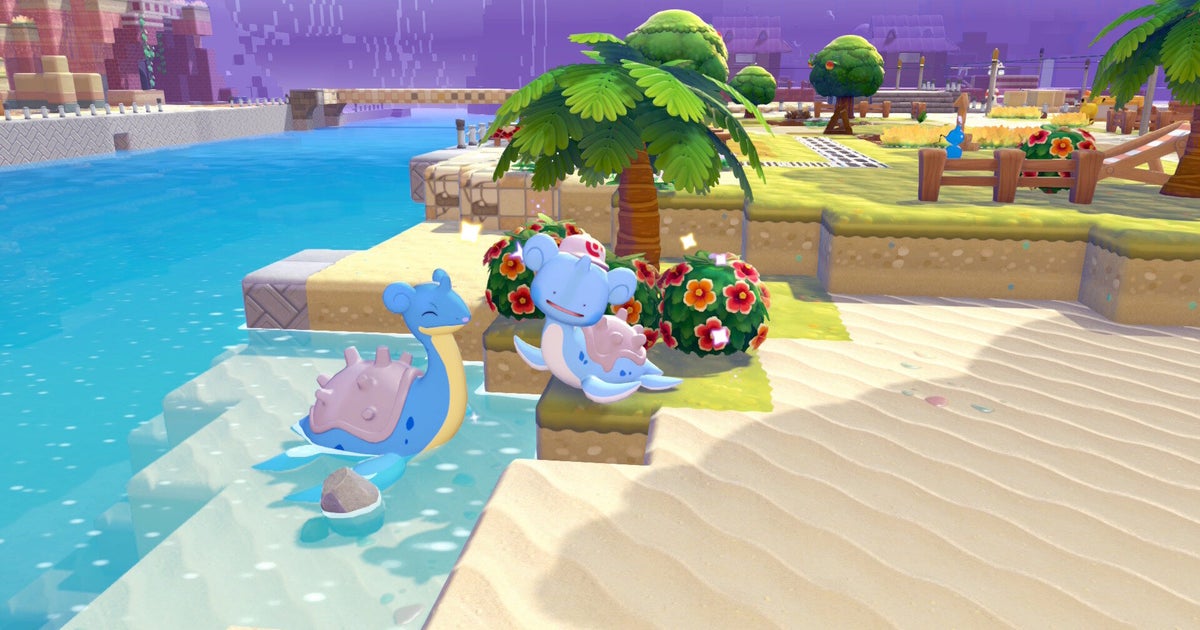
Switch 2 software sales reached 9.46 million units, up 9.2% year-on-year. Recent releases Yoshi and the Mysterious Book and Star Fox “performed steadily,” while Pokémon Pokopia has sold nearly four million units since its March release.
Original Switch software sales rose 38.6% in Q1 to 33.81 million units, driven by Tomodachi Life: Living the Dream, which sold 7.94 million units since its April launch.
Nintendo also noted that Switch titles “released in past fiscal years have also shown stable sales,” given that players can play titles for both consoles on the Switch 2.
Nintendo’s IP segment sales reached ¥34.8 billion ($220 million), a 107.4% year-on-year increase, driven by a “high level of audience engagement” with The Super Mario Galaxy Movie, which has surpassed $1 billion at the global box office.
