

▲
▲
1 hr ago
Robin Barnes, affectionately known as the “Songbird of New Orleans,” is an award-winning vocalist, songwriter and Louisiana State Music Ambassador whose work celebrates the traditions and sounds of her hometown. Raised in New Orleans’ Lower 9th Ward in a family of musicians, she grew up surrounded by gospel, jazz, funk, R&B, second-line traditions and Creole culture.
After a health scare, Barnes wanted to leave her family’s oral tradition for her daughter, so she spent three years doing the research for that as she made “Louisiana Love,” her debut full-length album.
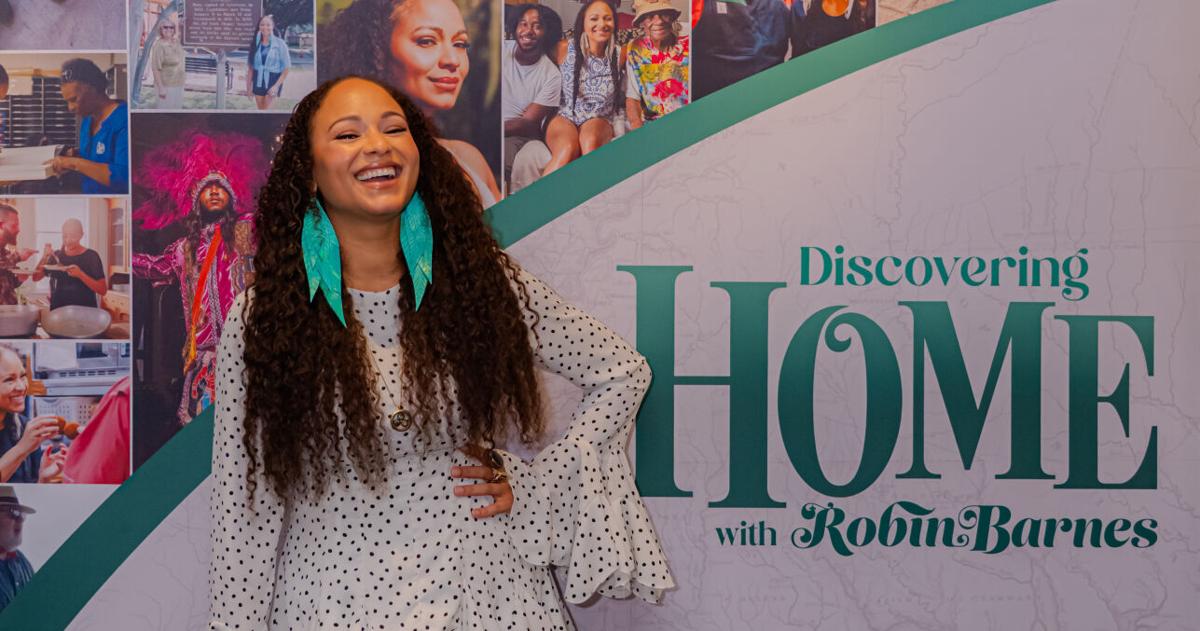
Her latest project takes her from the stage to being in front of the camera. Inspired by working on her album, Barnes brought her cultural discovery to a television docuseries, “Discovering Home with Robin Barnes,” airing in three installments on WLAE on Oct. 4, 11 and 18.
This interview has been edited for length and clarity.
▲
What inspired you to to go on this journey of “Discovering Home?”Tell me a little bit about your show and what it means to you.
I couldn’t have come up with a better title because it really is discovering home.
It’s for my daughter. I need to leave her more than just music. I needed to create a visual for her, and honestly, for all of us. So I decided to learn more about the places that I know as home and discover more of Louisiana and more of the culture completely.
And so I dove in. I’m a self-funding little artist. I’ve got three cities: Lafayette, Lake Charles and New Orleans.
It was such a humbling experience because to take such a major feat — all I know is music, and now I am creating a TV show.
▲
How did you find the people to talk to and know where to go?
I would never have the audacity to just learn from Google. I’m going to learn from the elders. … I spent three years researching the people that I wanted on the album, and I say that because I wanted the culture bearers to bless this album. Those are the people I leaned on because those were the right people to teach me about our culture.
So every single episode, I was so lucky I was able to call on some of the artists that I performed with on the album. The people did not know me, so I’m like this girl from New Orleans going, “Hi. I want to do this project, and it means a lot to me. I want to learn everything right. Can you teach me?” That’s why you really see the love on the show and the music.
The warmth and the love that our culture really has is so humbling. I went to these different cities where people don’t know who I am, but literally now I can call them all my cousins because we all bonded on what we care about. We care about the people. We care about the food. We care about the music. But more importantly, we care about life. We care about celebrating life to the fullest.
What were some other moments that surprised you during filming?
I’m from New Orleans, and I think I know so much. Going into Acadiana, I had no idea about the history and storytelling of the Black Creole cowboy, and I get to go into a sea of hundreds of them riding horses. I’m in the thick of it.
Then I get to learn how to cook gravy and rice with Jourdan Thibodeaux.
In the last episode, everyone gets to find out a little bit about more of the women that inspired me — the eldest daughters in my family. Because we have everything through oral tradition, we’ve never found one of those particular ancestors.
The last episode was insane to find this ancestor. It was a miracle how it happened.
Since this was your first visual media project, how did filming go?
We spent a year and a half filming, and throughout it all, I was thinking I had cancer. The idea of mortality is the reason why the people see the drive in me to make all this happen. Because in my mind, I didn’t know if I had enough time. And it’s something powerful to think about we’re gonna be someone’s ancestor one day.
That’s why I feel this charge about being a part of the generation that’s about preserving the culture, but more importantly, I really feel this stewardship to be a part of bridging of our culture.
Can you elaborate on that idea of “bridging our culture?”
Bridging New Orleans to Louisiana because it’s been so separate. I feel like every single person you could pick them up and put them in New Orleans, or you could pick someone up from New Orleans and put them in Lake Charles, and it would be the same feeling, the same warmth, the same laugh, the same food. I really want to be part of creating this beautiful tapestry of who and what our culture is.
What is inspiring you now?
As a native daughter of Louisiana, I am grateful that my family passed everything down through eldest daughters. But it was very warm to me to find so many of our culture bearers were excited about women. “Big Chief” Monk Boudreaux has one song on my album called “Hands Up.” I listen to it every morning because it is so hard to do all this on my own as an independent artist. He says something in the beginning of this song like, “Get yourself together and bring this to the world. Show people who you are, and where you come from, and believe me, you are the one.” To have a native daughter be told that means a lot.
How did you actually get a crew together? What was the process of getting it to air?
The first person I worked with, Brandon Guichard, asked who I was making it for, and I told him it’s for my family and the world. He said yes.
And then my friend Drake LeBlanc, who is a Black Creole cowboy and a filmmaker, said he wanted to help. It was the three of us.
I’ve been a state music ambassador for New Orleans and Louisiana for a minute. I get to travel the world and talk about our city and our state. They trusted me enough to support the idea, and the seasoning Slap Ya Mama and Visit Lake Charles also partnered with us.
How can readers watch if they are not in New Orleans?
My YouTube page, Robin Barnes, will have it streaming. I wanted to make it accessible to everyone. It’s just a joy to share.
Email Joy Holden at joy.holden@theadvocate.com.
