


- Home
- Article Authors
- Rahaf Jambi
- How Saudi Arabia is creating its own anime industry
How Saudi Arabia is creating its own anime industry
30 Aug 2026 01:08:25 GMT9
30 Aug 2026 01:08:25 GMT9
- Manga Productions leading drive to develop local talent
RIYADH: For decades the anime market in Saudi Arabia has been driven by dubbed imports from Japan. But all that is changing, thanks to a new breed of creators and producers.
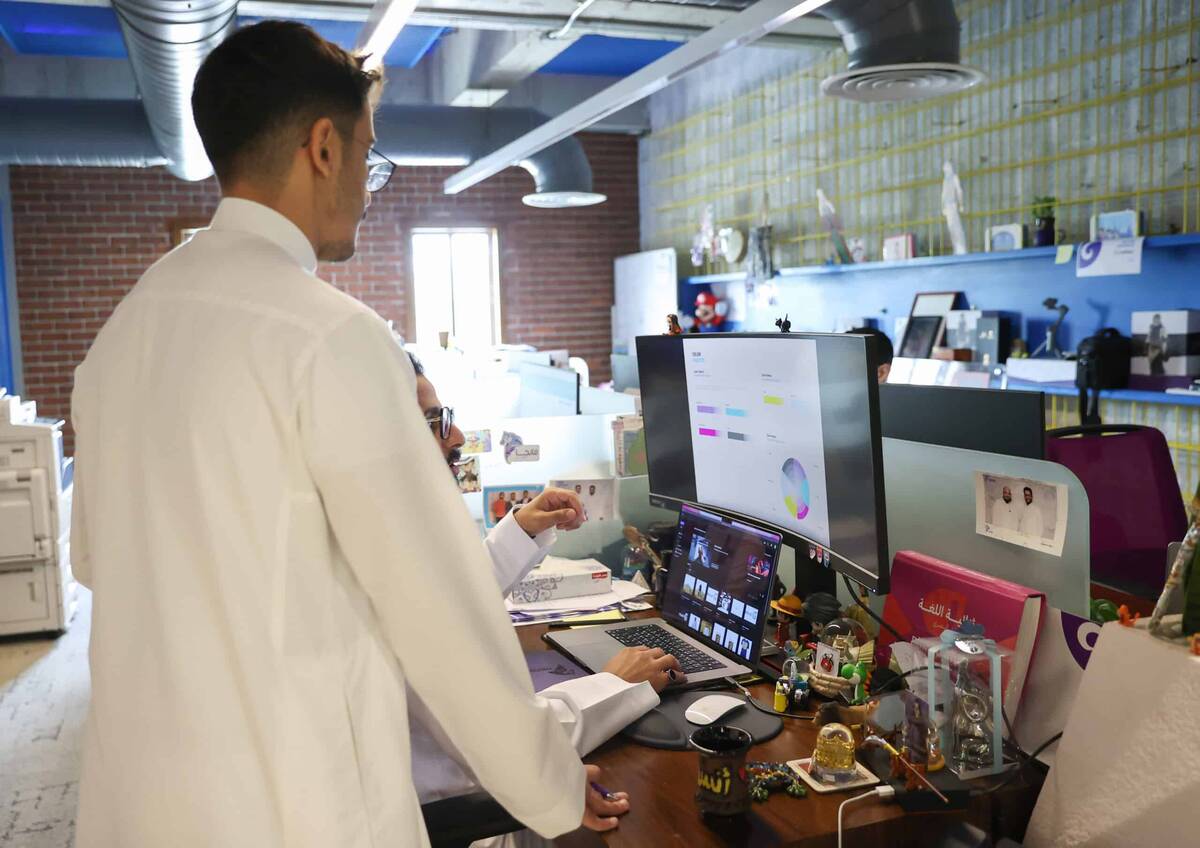
At the center of the shift is Manga Productions, a subsidiary of the Mohammed bin Salman Foundation Misk, which is focused on nurturing local talent, producing original material and working with Japanese studios to build expertise.
The ambition is not to make animation that looks Japanese but rather to create high quality content filled with Saudi culture, history and identity.
For Lamees Alsantely, a producer at Manga, the move reflects both the emergence of a new generation of creatives and a growing appetite among local audiences.
“Saudi Arabia already has a strong audience for anime and animation, but much of what we consume reflects other cultures and perspectives,” she told Arab News.
“I think this is the right time to move from being consumers of that content to creating stories that represent our own culture and experiences.”
That transition has taken time.

Faced with a shortage of local talent and good quality content, Manga responded by investing in training and international partnerships, including sending Saudi creatives to Japan for internships and working alongside experienced Japanese production teams.
“Working with Japanese studios gives us a valuable understanding of how production works in a more mature and established industry,” Alsantely said.
“It exposes us to different approaches, standards and workflows, while also helping us identify what we need to develop locally.”
But not all of the established methods were suited to Saudi Arabia and the process of testing, adapting and sometimes rejecting approaches was all part of developing a local production model, she said.
One of the clearest examples of the strategy was “The Journey,” an animated feature developed through a Saudi-Japanese collaboration with Toei Animation.
Manga CEO Essam Bukhary said the project was “made in Saudi with Japan,” reflecting a model based on knowledge transfer rather than simply outsourcing production.
Saudi creatives reviewed the film cut by cut and sent 1,300 retakes to the Japanese studio. They also worked closely on character and background design, while the Saudi team supplied 50 videos demonstrating Arab body language. The design of the Kaaba, Bukhary said, was completed entirely in Saudi Arabia.
The relationship is now evolving.
Bukhary said that for the second season of “Future Folktales” a number of episodes were being directed by Saudis, while Manga was becoming increasingly involved in pre-production and production. The goal being to gradually transfer expertise and localize more of the industry in Saudi Arabia.
That shift from assisting international teams to leading creative work could prove crucial. A sustainable animation industry requires more than individual productions. It needs directors, writers, animators, voice actors and producers who can develop projects independently.
Alsantely said that the limited availability of local expertise was still one of the industry’s biggest challenges.
“The Saudi animation industry is still young compared to more established markets, so building a deeper bench of specialized local talent will take time and effort, which is exactly what we’re working on,” she said.
More than 500 people have been trained through Manga Productions’ programs, and more than 80 percent of the company’s talent are graduates of them. More than half of the staff at its Tokyo office are also Saudi.
Some graduates have even gone on to work at other Saudi creative studios, suggesting that the local talent pipeline is really starting to grow.
Manga also runs a teaching initiative for younger people, developed in collaboration with the Ministry of Education and Ministry of Culture, which has reached more than 3 million students.
For Alsantely, developing talent requires patience and investment.
“Government support plays an important role in strengthening a sustainable creative industry as the sector continues to grow,” she said.
That support was particularly important while the industry was still developing, allowing emerging animators and studios to train and experiment without the pressure of immediate commercial returns, she said.
The result is beginning to appear in the stories themselves.
“Future Folktales” follows a Saudi family living in a futuristic Riyadh, with a grandmother passing stories from the past to younger generations. Its second season moves the family to Neom.
Another, “Al-Oja,” aims to explore Saudi history through manga and animation, while a planned “Future Folktales” mobile game points toward a wider cross-media approach to storytelling.
The ambition is increasingly international.
“The Woodcutter’s Treasure” became the first Saudi and Arab anime short film to be broadcast on seven Japanese television channels. “Future Folktales” reached Chinese platforms, including Tencent, where Bukhary said it recorded more than 100 million views.
“The Journey” was distributed across Saudi Arabia and 10 other Arab countries, with distribution secured in six European countries and North America, alongside a deal with Crunchyroll and agreements covering Asian markets.
“When we produce, we no longer think of the audience as purely domestic,” Alsantely said.
“In today’s connected world, content reaches global audiences everywhere. We work to stay true to our Saudi identity while reaching that global audience.”
Manga Productions is also using established franchises to deepen Saudi participation in the global anime industry.
Its Project G collaboration with Japanese partners connected to “Grendizer” included a global competition inviting fans to design new “Saucer Beasts,” with the winning designs set to be included in an upcoming project.
But the bigger test will be whether these projects can develop into a sustainable ecosystem rather than remaining a collection of high-profile productions.
Saudi Arabia already has the audience, investment and a growing pool of creative talent. The next challenge is building enough local expertise and infrastructure to sustain production, develop original material and create careers beyond individual projects.
For Alsantely, the ultimate measure of success is self-sufficiency.
“For me, success would mean achieving self-sufficiency in production, with the talent and capabilities to develop and produce our own work,” she said.
But producing locally is only part of the ambition. The bigger goal is to create stories that can travel.
“I would also like to see self-sufficiency in content. Saudi animation becoming a strong representation of our values and culture, while creating stories that can travel beyond Saudi Arabia and resonate with audiences around the world,” she said.
If that vision succeeds, Saudi Arabia may no longer be simply one of anime’s biggest audiences in the region. It could become one of the places where the next generation of Arab anime is made.
topics
Latest on ArabNews
Killing of Palestinian children and…
Israel army says struck Hamas comma…
Two Palestinians injured in new set…
UAE central bank to examine transac…
Potential revision of Japan’s trave…
What Trump’s ‘historic dawn of a ne…
Japan, UN affirm commitment to impr…
Ambassador Magoshi highlights impor…
Saudi authorities convict 23 in mil…
China and Russia imagine a world wi…
Saudi Crown Prince briefs cabinet o…
The French village where Ayatollah …
RSIFF 2025: Akio Fujimoto’s ‘Lost L…
AI training for 334,000 Saudi citiz…
‘We played for Gaza’: How Palestine…
Most Popular

Israel PM vows to act ‘with force’ after deadly violence in West Bank

Japan to test rare-earth mining 6 km underwater

Yemeni air force hit Houthi missile, drone launch sites after Saudi-led Coalition forces strike targets

Kozo Okamoto, Japanese Red Army member who carried out the Lod Airport attack in Israel, dies at age 78

Japan records fifth ‘cruelly hot day’

2 Comments
Pingback: Taylor Swift Donates $50K to Injured Mom Hit By Car During Selfless Act - Comic Vibe
Pingback: Xbox CEO: the next console needs to tackle the AI - Comic Vibe