

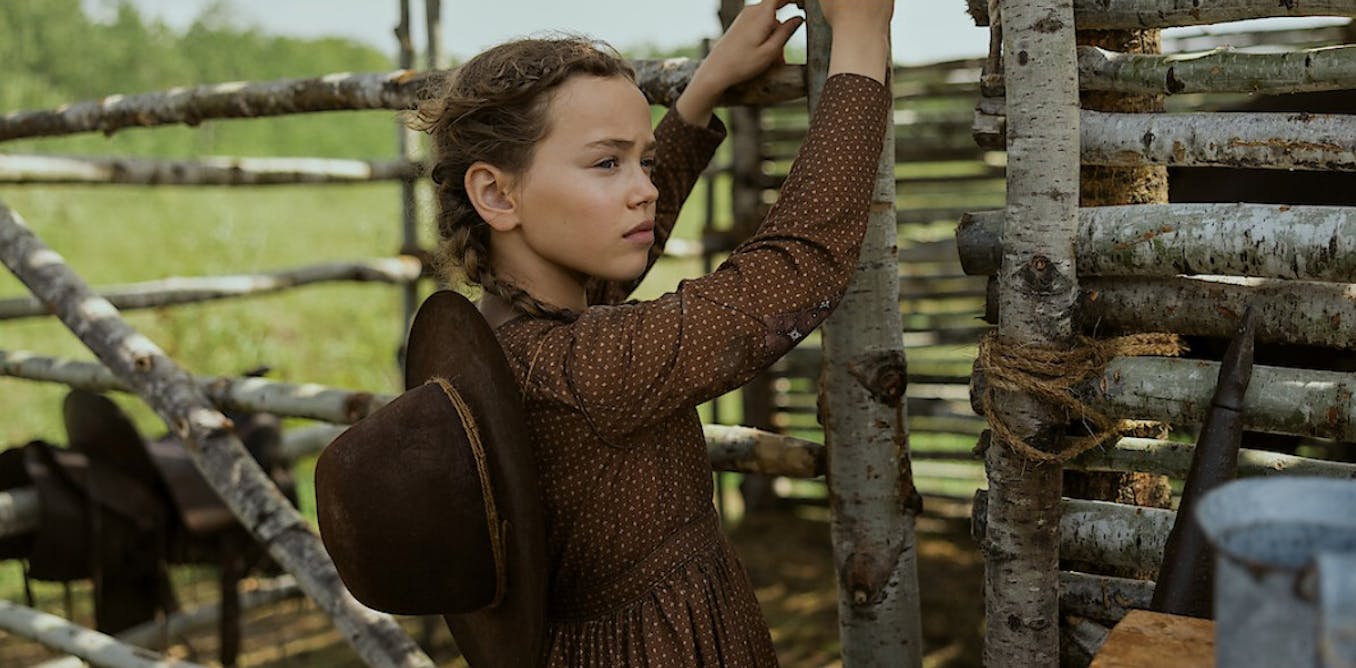
(Eric Zachanowich/Netflix)
This article contains spoilers for the Netflix series ‘Little House on the Prairie’ and references to racist historical depictions of Indigenous people and African Americans.
Netflix recently released Season 1 of Little House on the Prairie. Seen by many to be a reboot of the NBC TV series (1974-83), today’s series offers a more accurate retelling of Laura Ingalls Wilder’s book series.
Although the Little House books are primarily fiction, Wilder drew on her childhood experiences, family stories and historical materials. With her daughter, Rose Wilder Lane, working as her editor, Wilder began publishing the series in 1932.
In a 1937 book fair speech, Wilder said: “Every story in this novel, all the circumstances, each incident are true. All I have told is true but it is not the whole truth.”
Committed to recreating Wilder’s fictional world, the Netflix showrunners relied on Wilder’s autobiographical material and additional historical research.
winning biography Prairie Fires: The American Dreams of Laura Ingalls Wilder (2017) and Osage consultants
This broader context widens and diversifies Wilder’s fictional world, specifically how she represented the Osage and Dr. George Tann (1835-1909) in her books. Tann, a historical figure, was an African American doctor who practised eclectic medicine in Kansas territory.
Osage language, perspectives
The third novel in the book series (Little House on the Prairie, following Little House in the Big Woods and Farmer Boy) focuses on the Ingalls’ move from Wisconsin to Kansas territory, where, Wilder writes, “there were no settlers.” Seven-year-old Laura, from whose perspective the novels are told, is excited to encounter Indigenous people, repeatedly asking when they will see “Indians.”
As showrunner Rebecca Sonnenshine notes, Wilder’s novel is “all about the Osage,” but the Osage never speak. In contrast, Netflix includes the perspectives of Osage characters.
(Eric Zachanowich/Netflix)
In Chapter 11 of Little House on the Prairie, “Indians in the House,” two Osage men enter the Ingalls home while Charles is hunting, and this scene appears in Netflix’s Episode 3.
The novel casts the Osage as invaders. Wilder describes them using stereotypical language that reflects racist settler colonial perceptions of Indigenous men as uncivilized. Laura and her older sister Mary are frightened and express fear for their safety, Ma’s and Baby Carrie’s. While their fear is understandable — two men have entered their home uninvited — Wilder doesn’t include the men’s viewpoint.
In both versions, the men eat the family’s cornbread and take Pa’s tobacco, but Netflix’s rendering is significantly different. The men still enter the Ingalls home uninvited, but they are dressed in more historically accurate clothing, wearing long-sleeved shirts, breeches and moccasins. They speak to each other in Osage, which is subtitled, allowing viewers who don’t speak Osage to follow their conversation.
As the men go through the family’s things, Caroline (Crosby Fitzgerald), says: “Take whatever you want and go.” One of the men (Corvin Mack) begins putting items into a satchel, and the other man (Xander Cole), whom viewers later learn is called Little Puma, says: “You’re being greedy.”
His companion replies: “These people moved into our land, built a house with our trees, offered us jam made from our blackberries. You call it greedy. I call it fair.”
This exchange provides much-needed historical context. The Osage men don’t see themselves as thieves; rather, the Ingalls and all settlers are the thieves. This reframing shows that the Osage are justified in their anger and that Caroline’s fear is also valid.
Dr. George Tann
(Eric Zachanowich/Netflix)
Netflix also expands upon Dr. George Tann, a character based on a real historical figure. His name spelled “Tan” in the Prairie novel, and there, the doctor’s only purpose is to treat the Ingalls for what is now assumed to be malaria. Tann (Jocko Simms) remains integral to the Ingalls’ story in the new series, as he advises Charles and cares for Caroline, but he has a story arc of his own.
The doctor appears in a single chapter of the Little House on the Prairie book. In her depictions, Wilder uses racist and stereotypical language to characterize him, drawing on tropes popularized in minstrelsy shows and 19th-century fiction. The depiction dehumanizes the physician, othering him from the white settlers.
In the book, Wilder also reveals Tann is the first Black person Laura has met and writes: “She would have been afraid of him if she hadn’t liked him so much.” One reason is attributed to his laugh. Like the Osage, Dr. Tann is only seen through Laura’s viewpoint. In fact, he only speaks once, telling Laura, “‘Drink this, little girl.‘”
In the Netflix series, the character of Tann is more developed. As the show’s executive producer discusses, the writers wanted to include a Black settler experience in the American Prairies, consulting archival materials to do so.
Episode 6 reveals some details from the historical physician’s life. From Philadelphia, he served in the Union Army. After the war, he moved to Kansas with his parents (leaving his wife and children behind). In the episode, he says: “I knew I didn’t belong out east. I wanted to be where I was needed.” By sharing his motivation for moving, the series makes Tann a three-dimensional character.
The show’s representation of Tann’s role in Carrie’s birth also diverges from the book and the historical record. In the Prairie novel, Baby Carrie is a toddler. In the Netflix series, Caroline gives birth to Carrie with only Charles present. In reality, as Fraser writes in her Wilder biography, Caroline, “tended by Dr. Tann,” gave birth to Carrie on Aug. 3, 1870.
Settler squatting
Both Wilder and the Netflix series take creative liberties with their representation of Charles Ingalls and his decision to illegally squat on the Osage Diminished Reserve while still trying to make him a sympathetic character.
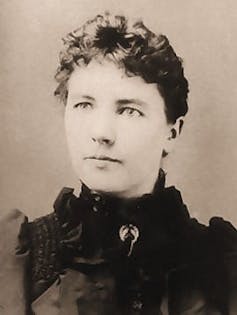
(Wikimedia)
Wilder’s Pa is heroic, but historically, he was a dreamer who spent much of his life undertaking failed business ventures.
In a 1937 letter, Wilder told her daughter Pa was “a hunter and trapper, a musician and a poet.” In a letter the next year, she said what he did was wrong, revealing that he was “a squatter” with “no title whatever” to the land in Kansas.
Perhaps inspired by Wilder’s descriptions of her father, Netflix’s Charles is a dreamer, hoping for “the best possible outcome” for his family. He is naive, believing in the railroad’s propaganda of free land. As in the novel, the Ingalls ultimately leave Kansas, but they aren’t held accountable for squatting on Osage land. Netflix’s Charles does feel remorse, telling Laura in the last episode: “I wish I’d done everything differently.”
The Netflix showrunners understand the complexities of the
