

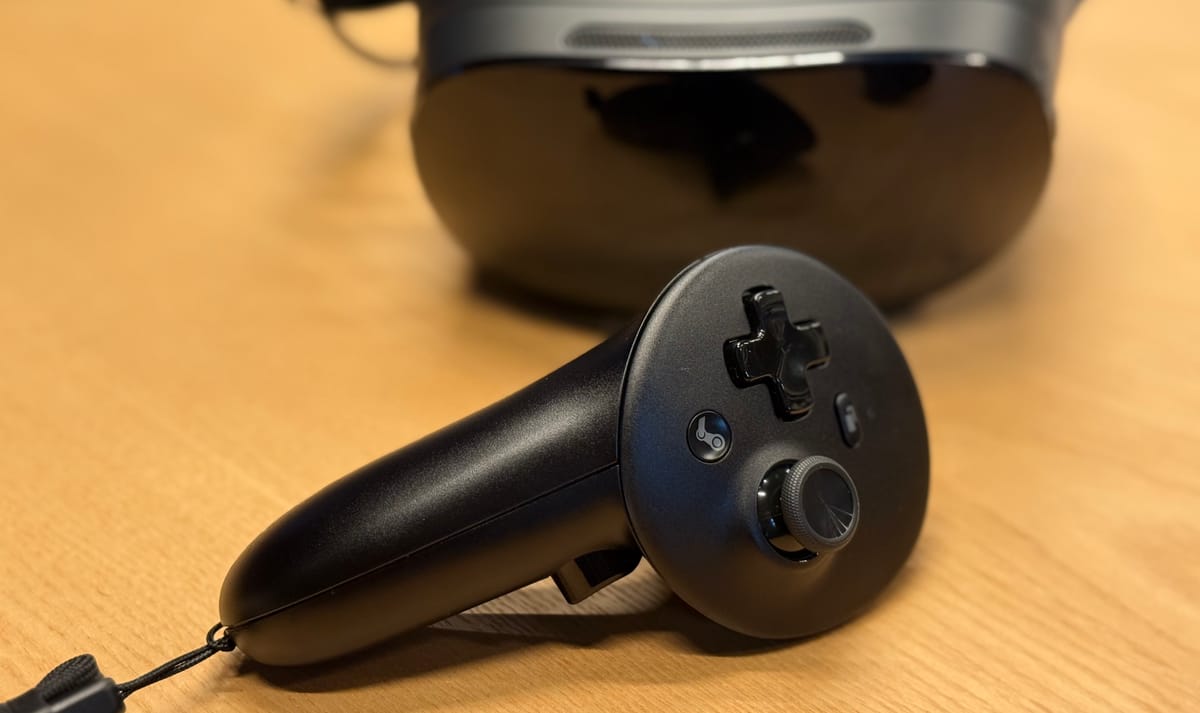
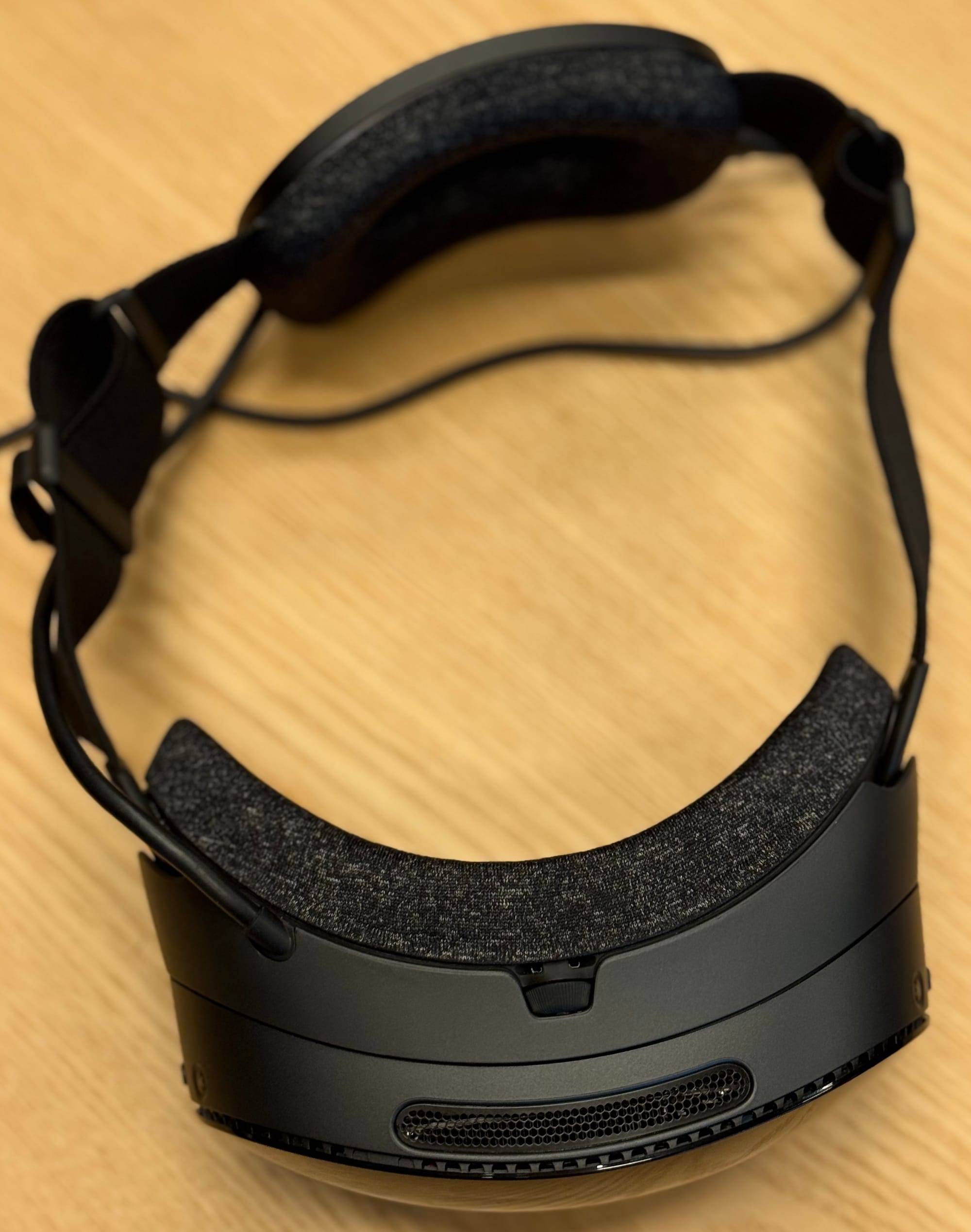
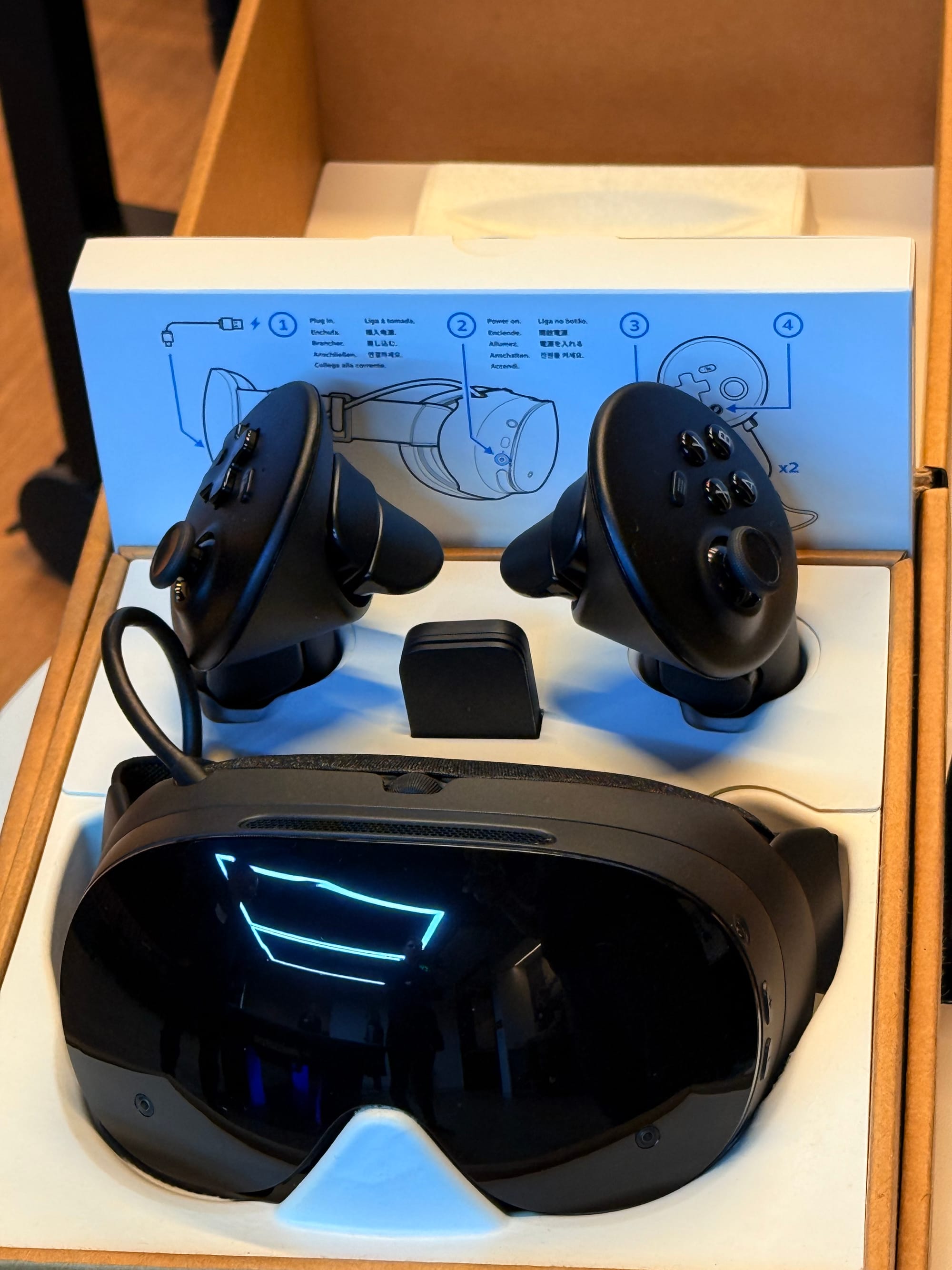
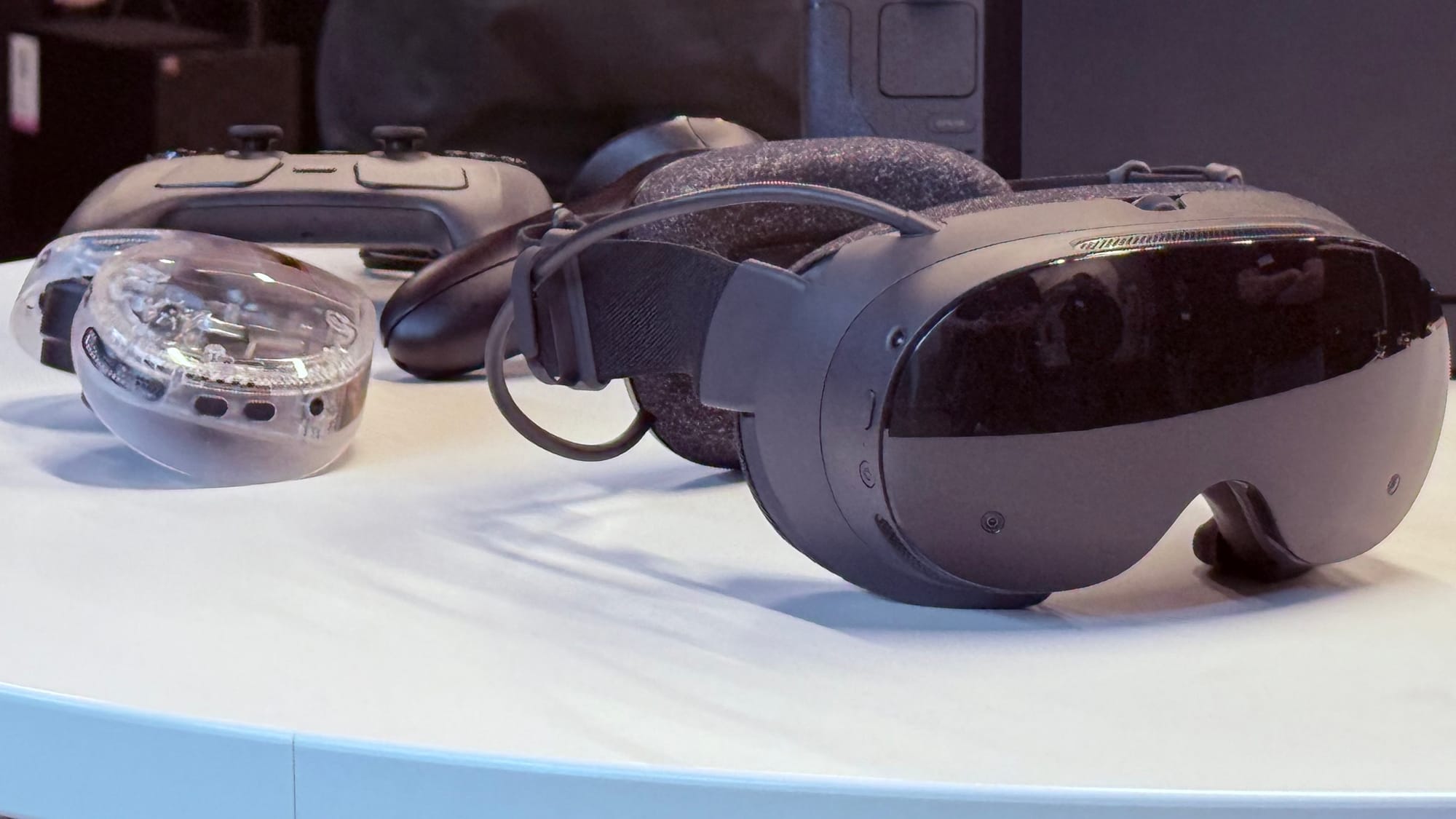
The last moments I spent last year at Valve headquarters for the Steam Frame announcement were spent taking the photos that are scattered throughout this article.
Just before that, I was so overwhelmed with the desire to get more out of Valve’s upcoming headset that I asked their engineers one last question.
Can you explain the difference between Flatpaks and APKs to “idiots who don’t understand how the internet works”?
A Valve representative responded, “It’s pretty much the same thing.” “Flatpak is for Linux desktops. APK is for Android, but similar. It’s a package that contains everything it needs to run, runs in a sandbox, and can be uninstalled later. So it’s an application package.”
I quickly summarized my formative experiences with Windows circa 1995 or 1996 for the Valve VR team. I was given access to the Windows PC my dad had brought home from work and shown a games folder full of fun and simple 2D games to play. It also explained how to enter DOS and the commands to enter to start games such as Doom. I immediately searched for cheat codes online and started playing more games that quickly filled up the storage on my PC. One day, to make more space, I dragged a game file to the trash and pressed the empty button.
I don’t remember the exact sequence of events that followed, but I remember crying a lot, with a strong fear that my father would come back from work at 5 p.m. My 10-year-old added and removed games, leaving my family’s business and school PC only bootable in safe mode.
“Steam Deck has these two tiers. People who want to set the OS to read/write mode and change system files can do that. But for people who just want to distribute prepackaged apps themselves, flatpak is more like a sandbox in which they run their games. The distribution format is very secure, as it guarantees that even if you remove it, your system will be in the same state it was in before you installed it. So it’s really meant to provide a first way to interact with your device, more like a consumer electronics…”
Thirty years have passed since I first had direct contact with the Internet and computers. As a father in the 2020s, I was explaining to my teens over Christmas break the difference between Macs and Steam Deck, and why some of their favorite games work on one system and not another. Our conversation revealed a range of openness in computing that uses varying amounts of power for physics and graphics. Some developers don’t get paid for the work that goes into putting a certain game on a certain system and making it work very well there.
That part was conveyed well. What I’ve struggled to convey is why openness and offline computing are important. I want electrical appliances that are hard to break and easy to use. And I’d love to have a playground for everyone, at least as big as the one we had to explore in 1995.
I think Valve is trying to do that with SteamOS using Linux.
Openness and offline computing create a playground for discovery
Children’s first computers are often connected devices such as iPhones, iPads, Androids, and school-issued Chromebooks, all of which require an online account to operate. Parents have set up these accounts for their children, and platform companies that provide online services have worked steadily in recent years to enable children and adolescents to do more with these managed accounts.
After a few moments with the Steam Frame on my head, I took off my shoes, reclined comfortably on my couch, and began using my Linux desktop’s browser to search the open web using my voice. I don’t know which account is logged into the headset, but that didn’t matter. I was doing whatever I wanted within SteamOS and Linux.
I didn’t have time to try them out at the office, but once Valve ships me a review unit, I plan to hit play on Steam’s vast array of games loaded onto a 2 terabyte microSD card to see how they perform.
With a mental picture of how much space you’ll need to play standalone within the Steam Frame, before connecting the headset, which Valve itself describes as a streaming-first device, to another PC, open up your Linux desktop to see what kind of shenanigans you can handle. I’m trying to install apps like VLC to watch videos, Discord to chat with friends, RetroArch to play classic games, and Spotify to stream music. Dubbed the “Linux App Store,” I expect there to be a lot of stuff out of the box on Flathub.
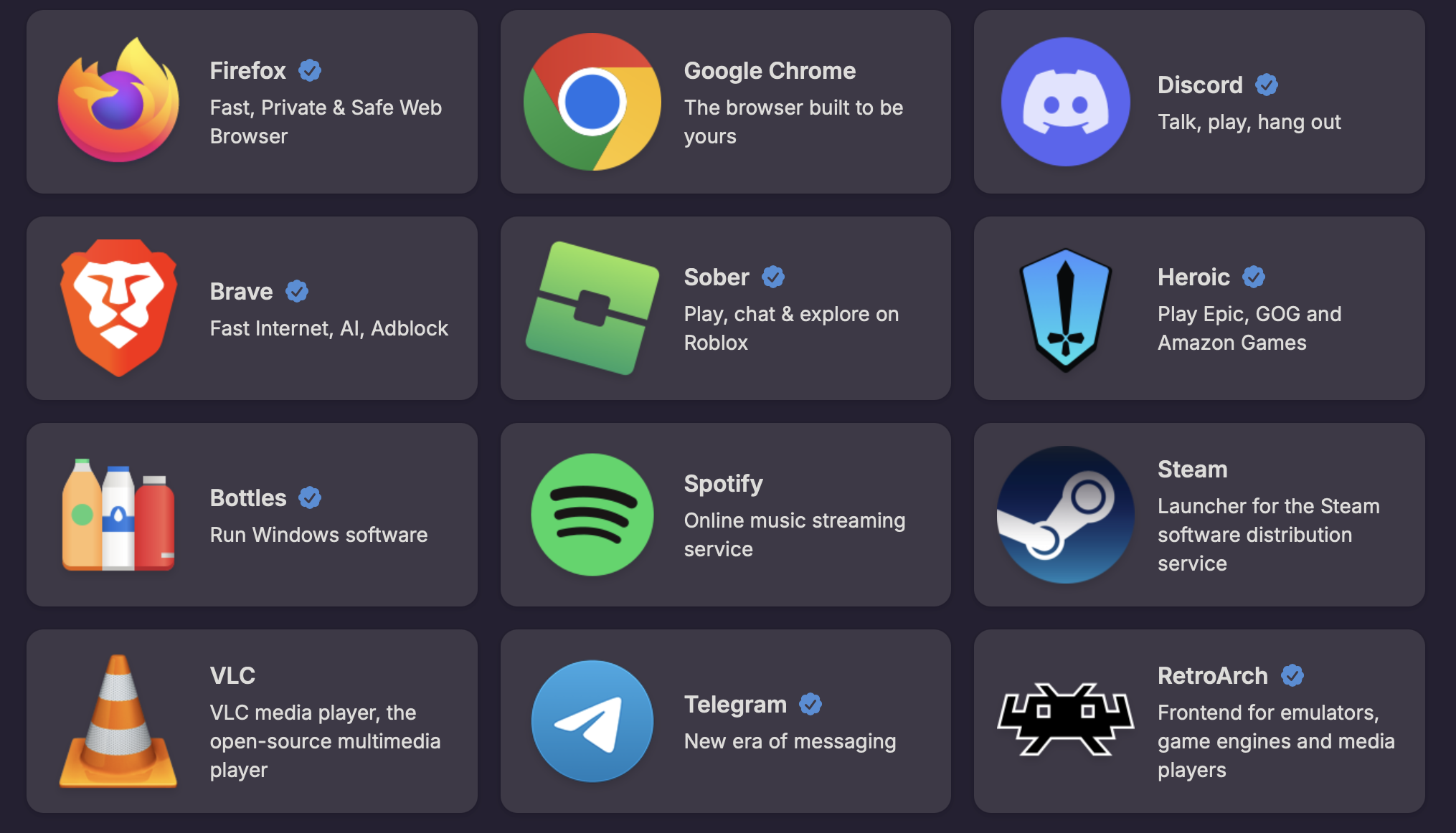 Popular Apps on Flathub for January 2026.
The important point here is that you can expect to install more things on your Steam Frame headset using Linux directly on your first day than you did in four days using Android XR. And I expect to be able to install more features across the headset than I’ve been able to do in the years I’ve owned the Vision Pro and Quest. Are you going to install your own operating system? Probably not. But am I personally going to mess up my Linux installation so much that the system needs to be reset to factory settings? I’ve been tinkering with computers for years, so that’s probably my goal, and I’m going to enjoy it.
Decades after the events of Windows in the 1990s, when I was explaining to teenagers what the Mac and Steam Deck could do, I found myself swamping them. My efforts to make personal computing seem less difficult than my ancestors were unsuccessful. I told my oldest son that he would be impressed if he broke his Steam deck by installing too many games or modifying the system with software.
Back in 2019, Facebook set up a conference call with me to discuss a “console-like curation strategy” for the Quest ecosystem, but now with so many developers struggling for sales within an ecosystem full of low-quality projects, Meta’s leadership has completely abandoned that strategy in favor of a policy of openness. It seems like the meta was meant for Horizon Worlds to be the floor of the quest ecosystem, but requiring meta accounts and giving developers a piece of the subscription doesn’t provide stable footing for developers to float, nor does it provide a mandatory reason to put on a headset.
Now consider the games Valve is playing versus the space Valve engineers are creating for experimentation. Valve funded a group of faceless developers around the world to work on a series of important open source projects over the past decade that formed the basis of SteamOS, seeking to make it easier to play games on your computer.
“Much of what you’re experiencing here when you play games while wearing this is powered by a tremendous amount of open source work we’ve done over the last decade or so, from the first version of SteamOS in 2013 all the way back to SteamOS itself,” a Valve representative explained. “The way you run desktop games on it, the way you do things like graphics drivers, it’s all open source. Proton is all open source. We’ve had hundreds of people working on it for 10 years. And, of course, SteamOS is based on Arch Linux. The desktop here is powered by Plasma, so it’s KDE Plasma, one of the two main desktops available on Linux.10 For the better part of a year, we’ve actually been working directly with Plasma developers to help them improve their desktops with just the gaming use case in mind. ”
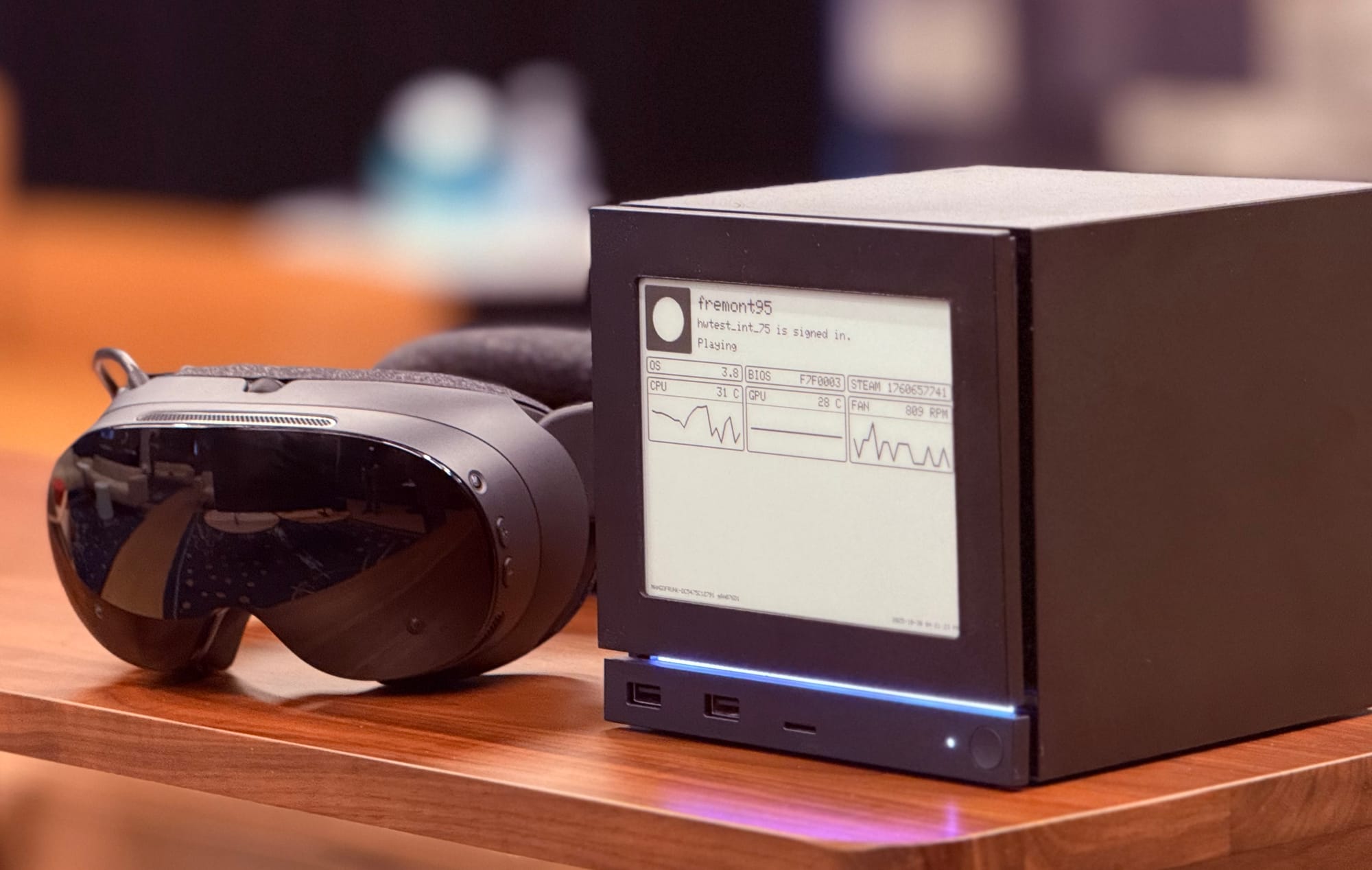
“If people who are having a more selective, more closed-off experience are having a good experience, that’s fine. But in general, we’re seeing people trying to experience different games in different ways. There’s a ton of things that they want to do that we haven’t thought of,” a Valve representative said. “And what we always observe is that typically within a community, a large amount of value is distributed laterally, where users share things that improve the experience with each other. We don’t want all the values within such a platform to be passed around among us, and we therefore need to decide on behalf of all users with different opinions and different aspirations what is a good experience and what is not. It’s very important that you keep it up. Also, creating effects like this will ultimately give you a better experience. We’re also excited to see that anyone who uses this product can contribute to it by contributing patches, so we can make it even better.”
“In fact, many of the developers who work on open source are users, and they just want to improve certain aspects, and they go deep into it. The lines between users and developers have always been very blurry for us. We’ve always come from a world where some of the most popular game properties actually started out as mods, and we’ve seen mods on PC. It was always like a powerful thing that we were trying to support because if you look at the history of video games, there were so many different genres, different ways to experience games, different peripherals, and the PC was an open platform where different companies could innovate in different ways, and then the PC would eventually freeze them. Because we’re open and we deserve all this. We’re just applying PC to VR, so this isn’t new to us. We’ve always applied PC to VR, and some people want to branch it out in a different direction, but I think we’re just doing the same thing we’ve always done.”
