

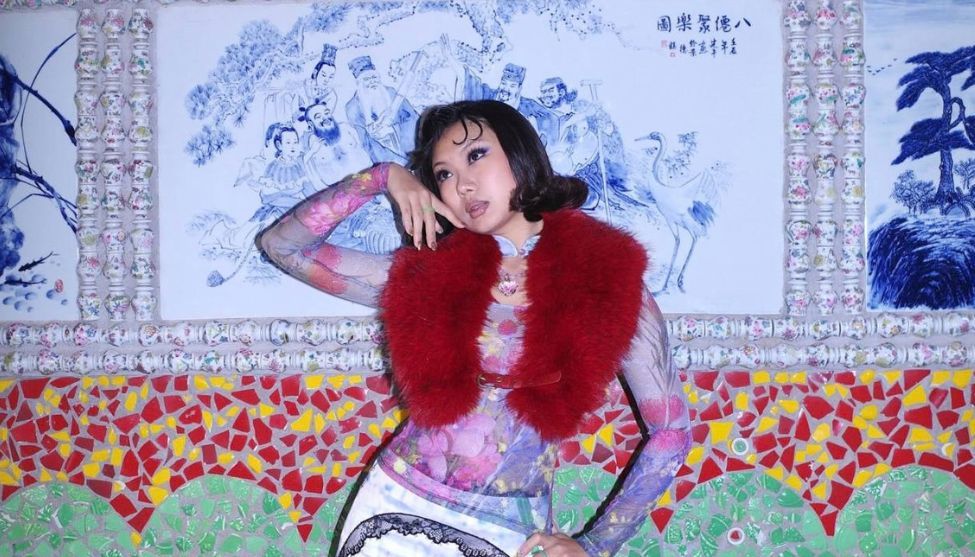
Quiet luxury styles dominated consumption trends to such an extent Pantone named Cloud Dancer its 2026 Color of the Year in December 2025. In response to a global fashion zeitgeist obsessed with minimalist leather goods, neutral shades, and non-logo investment pieces, Chinese Gen Z has fallen back in love with tacky cool aesthetics known as “tuku” (土酷).
The first character, “tu” (土), literally means soil and is common slang for rustic or unsophisticated. The second, ku (酷), is borrowed from the English “cool.” Read aloud, the term also sounds like “too cool,” the English name the style often goes by.
“Tuku” has 142.1 million impressions on its Xiaohongshu (also known as RedNote) hashtag. It encompasses “cheesy, tacky, rustic, or out-of-fashion” looks, and is also defined as “style that missed the trends by a decade and owns it loudly.”
Based on ironically out-of-date taste, it’s a take on kitsch cool that’s steeped in Chinese nostalgia, from clashing pastel Chinoiserie prints, to high-saturation 20th century pop art capitalism.
“I love this style. Art education in China got off to a relatively late start,” London College of Fashion student Tiajun Shen said. “The visual styles we grew up with felt quite tacky like PowerPoint-style fonts and garish, high-contrast color schemes.
“We thought foreign designs looked far better, while our older local styles were cheesy. But as time went by, we realized this is actually a cultural trait unique to us. It embodies the culture of China.”
Much of the look recalls Chinese advertising of the 1990s, which marked an important shift in the country’s visual and popular culture. As the country opened to global markets, commercial design developed rapidly, embracing bright neon colors, Western-inspired consumer imagery, and bold, crowded compositions. Over time, this distinctive combination of exaggerated color and commercial styling contributed to the development of the internet aesthetic now associated with “tuku.”
Earlier this year, Japanese magazine Sabakuru described how there are two layers to the “China Too Cool” style: part sincere admiration, and part post-internet communication via memes and digital remixing, challenging the notion of who decides what is cool. The magazine wrote in a Xiaohongshu post, “It shows how China’s rapid urbanization and economic growth have left their mark on our culture. Plus, it reminds us of our digital connections to our childhood, small towns, and even our elders.”
Today in China, national pride is driven by the global rise of Chinese exports across social media, technology, e-commerce, automotives, fashion, art, and culture.
“Our attitude towards this visual style has shifted from insecurity to self-assurance,” said Shen.
Independent Gen Z-focused labels are capitalizing on that shift. Among them: Hudiegongzhu (蝴蝶公主), the brand from Butterfly Minmin’s brand Hudiegongzhu; Nφdress; Yvmin; and smaller independents like peace888butterfly. South Korean label Sculptor, which pairs low-fi pixels with garish colors, has become a Xiaohongshu fixture — #sculptor has, in fact, racked up 53.5 million impressions, illustrating the hype.
Laura Darmon, buying director at Chinese concept store ENG and founder of retail concept Envision, put the success down to output. “One of the main reasons these brands are performing so well is their relentless focus on content creation,” she said. “Traditional brands typically launch one or two campaigns per year, followed by editorial placements, whereas these newer brands maintain a constant stream of social media content that keeps the conversation alive.”
User-generated content and visuals that photograph well have propelled these maximalist, print-heavy collections to the forefront of Gen Z feeds in China.
Renowned for its bold Y2K prints and novelty meme fashion, Ashley Williams’ rise in China has everything to do with the rise of Gen Z kitsch cool in the market. While the brand does not operate standalone flagship brand stores in China, it maintains a retail presence through wholesale stockists and high-profile experiential pop-ups. It has become a viral favorite on local social media, garnering 14.4 million impressions on Xiaohongshu.
From their chunky toilet paper bracelets in collaboration with Chinese jewelry brand Yvmin, to the viral “I heart me” printed hoodies circulating online, Ashley Williams is the antidote to quiet luxury.
Gen Z fashion in China is increasingly embracing this playful form of kitsch maximalism. Rhinestones and crystal embellishments are being used to personalize everyday objects and clothing, turning ordinary bags, shoes, phone cases and accessories into deliberately flashy statement pieces.
Alongside this, lotus-inspired imagery — including softly overexposed photographs of lotus flowers, glowing Buddha statues and dreamlike spiritual imagery — can be understood within a wider interest among young Chinese consumers in lucky accessories, crystals and Zen-inspired aesthetics.
Another prominent example is the rise of “jellycore,” with translucent jelly shoes and bags bringing back the colorful, nostalgic plastic aesthetics associated with childhood and Y2K fashion. Both Chloe’s and Skims’ jelly shoe designs made the latest Lyst Index of hottest products and went viral on Xiaoghongshu.
Baseball caps are similarly being treated as humorous canvases for self-expression, with wearers adding trinkets, plastic toys, charms and colorful clips to create deliberately over-the-top looks that photograph well.
Together, these trends suggest a broader rejection of minimalism in favor of nostalgia, decoration, humor and individuality. The appeal lies in making an outfit look excessive, playful, and whimsically “too much.”

9 Comments
Pingback: VALORANT x Pop Mart collectibles: Jett confirmed, more TBD - Comic Vibe
Pingback: In brief: 'Slow Horses' renewed for season 8 and more - Comic Vibe
Pingback: ‘RHOA’ Star Angela Oakley Marks 10-Year Wedding Anniversary With One Question - Comic Vibe
Pingback: Surveillant ! on Disney+ : Audrey Lamy and Jean - Comic Vibe
Pingback: CLARITY Act fails Senate vote, crypto blame game begins - Comic Vibe
Pingback: Lena Dunham Welcomes First Baby with Husband Luis Felber - Comic Vibe
Pingback: Apple Watch Series 12 has subtle design change that Apple didn’t mention - Comic Vibe
Pingback: Sandbox VR Continues to Expand in North Carolina with a New Venue in Charlotte, Opening September 18 - Comic Vibe
Pingback: Carrefour Plays Its Way Into the Future of Food Careers with Immersive Fortnite Experience - Comic Vibe