


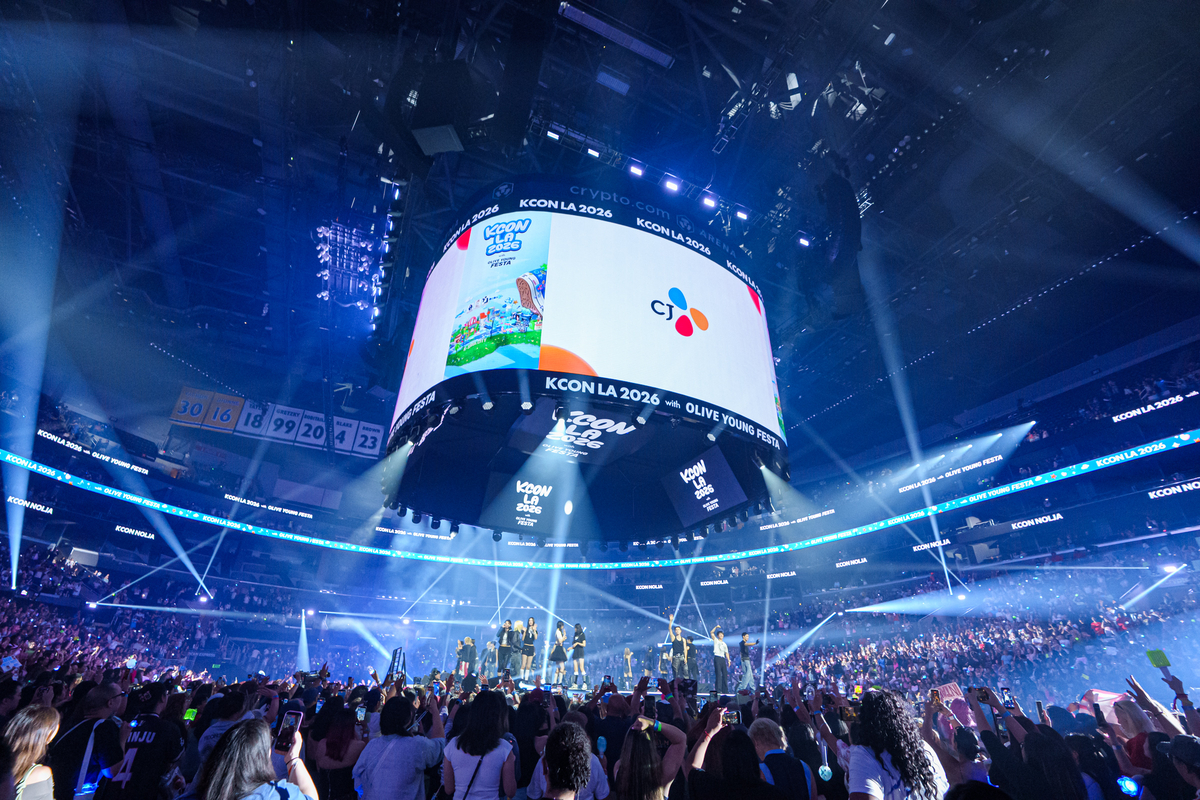
LOS ANGELES — At KCON LA 2026, a K-pop concert hosted by CJ Group in Los Angeles on the 16th local time, Amelia, 16, a high school student from Visalia, California, said she came with her parents because she is a fan of the K-pop girl group ILLIT. She said she had also visited the Olive Young Festa set up near the venue. “I first came across K-beauty through B.READY MUD, a brand sponsored by the idol group ATEEZ,” she said. “When I actually tried it, it worked well on my skin, so I looked for the booth at this event too.”
Emma, 23, who runs a 60-member K-pop dance club in Phoenix, Arizona, also came to KCON with club members. Emma, who said she is especially fond of NCT among K-pop groups, said some club members even travel to Seoul to film “real K-pop dance” videos. “Through K-pop, I naturally came across Korean food as well, and now I enjoy eating tteokbokki, kimchi stew and bulgogi,” she said.
Like Amelia and Emma, K-pop fans who flocked from across the United States enjoyed the concert, experienced beauty content at the Olive Young Festa, and sampled Korean street food such as tteokbokki. Interest in Korean culture, which began in the United States with content such as K-pop and dramas, is now expanding into everyday consumption such as K-food and beauty.
Crowds cheer at the M Countdown stage of “KCON LA 2026,” held at Crypto.com Arena in Los Angeles from Aug. 14 to 16 (local time). Photo courtesy of CJ ENM
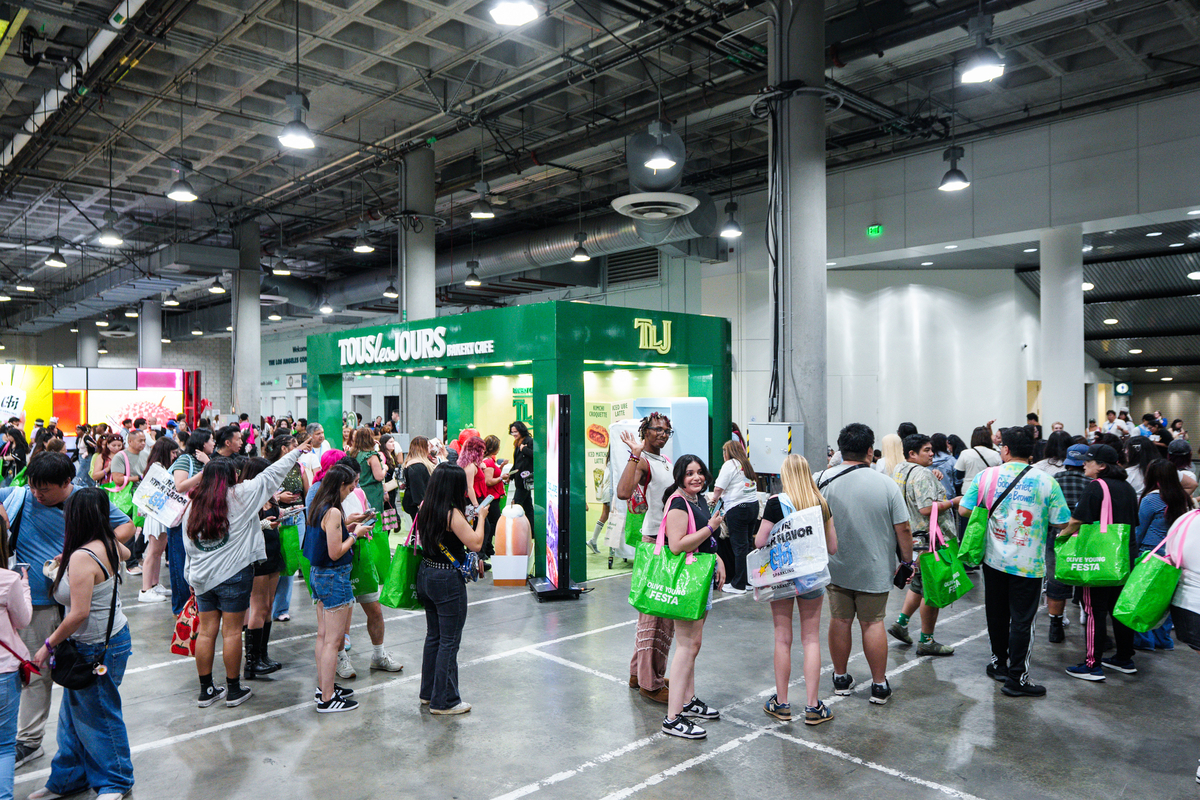
American K-pop fans who visited “KCON LA 2026,” held in Los Angeles from Aug. 14 to 16 (local time), pack the convention center including CJ Foodville’s Tous les Jours booth. Photo courtesy of CJ ENM
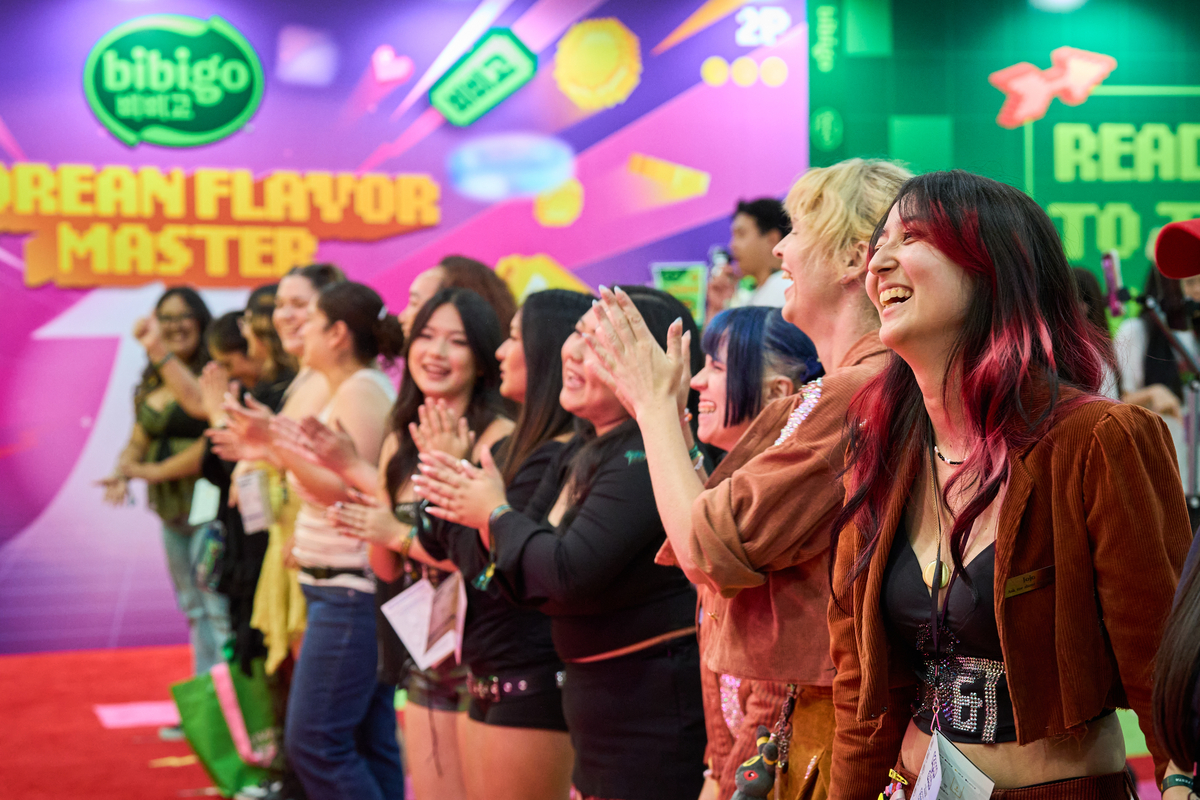
Audience members taking part in the dance stage give a performance at “KCON LA 2026,” held in Los Angeles from Aug. 14 to 16 (local time). Photo courtesy of CJ ENM
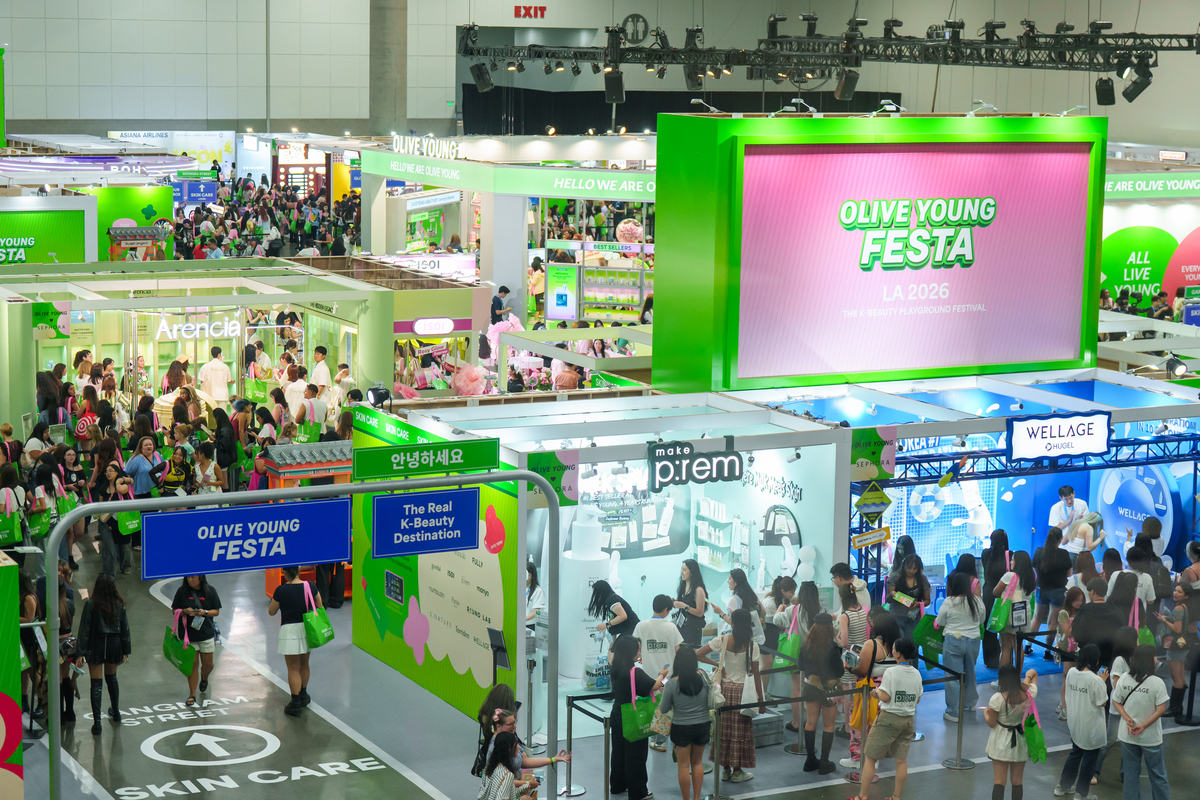
Many visitors attend “Olive Young Festa LA 2026,” held in the U.S. for the first time in conjunction with “KCON LA 2026.” Photo courtesy of CJ ENM
A CJ Group survey of 7,100 people aged 15 to 49 across 24 cities in 12 countries, including the United States, conducted last December, found that 30% of U.S. consumers had experienced every category of Korean culture — food, beauty, pop and content. Consumers who had experienced two or more Korean culture categories reached 75%. By category, the experience rates were 57% for Korean dining out, 56% for Korean content, 55% for K-pop, 46% for Korean food eaten at home, and 46% for K-beauty.
Analysts say the spending habits of Gen Z and Alpha — those born from the late 1990s onward, whose growing influence is reshaping the U.S. consumer market — align closely with how Korean culture spreads. According to Bain & Company, the spending power of Gen Z and Alpha in the United States reaches about $1 trillion (about 1,419 trillion won) this year. It is projected to grow to $55 trillion by 2029.
Kim Sook-young, a professor at UCLA’s School of Theater, Film and Television, said Gen Z and Alpha are generations that enjoy actively co-creating information and knowledge. “They tend to find their identity in platforms and the fandoms they belong to, rather than in nationality,” she said. She added that these generations place more meaning on turning the experiences created in the process into their own stories and sharing them with others than on the act of consuming content itself.
Kim explained that Korean culture appeals to global consumers because it is “familiar yet exotic.” Combining Korean flavors, design and service with breads, chicken and beauty products already familiar to U.S. consumers creates a new experience that is unfamiliar yet easy to embrace, she said. She also cited the service capability of reading rapidly changing consumer demands and offering what is needed ahead of time as a competitive strength of Korean brands.
U.S. consumers are now broadening their consumption beyond established staple K-food products such as ramen and dumplings to items like fermented pastes and sauces. At Tous Les Jours stores in the United States, operated by CJ Foodville, products with Korean touches — such as kimchi twisted doughnuts, salt bread and fresh cream cake — are popular.
A remaining challenge, however, is the need to expand touchpoints where locals can directly experience Korean culture in order to turn interest into actual spending. The CJ survey also cited offline stores and recommendations from acquaintances as key channels influencing U.S. consumers’ purchases of K-beauty and K-food. Los Angeles in particular emerged as a region where direct touchpoints for experiencing Korean culture carry more weight than in New York, Chicago or Dallas.
Accordingly, CJ is putting its weight behind expanding the “K-lifestyle experience” offline. The strategy goes beyond simply marketing Korean products to broadening touchpoints where consumers can directly encounter and consume Korean food, beauty and content. Lee Eun-jung, head of Olive Young’s Brand Creative Center, said this LA Olive Young Festa arranged its stores around the concept of Seoul commercial districts such as Hongdae, Myeongdong, Seongsu and Gangnam, so visitors could experience it as if touring Seoul. “We designed the very process of choosing Korean cosmetics and styles that suit you — through skin scans and personal color diagnoses — as experiential content,” she said.
A CJ Group official said that as consumers who first encountered Korea through K-pop enjoy the music and fandom, experience Korean food and beauty, and then share it again on social media, Korean culture is spreading even faster. “Interest that began with K-pop connecting to consumption of other K-categories through the medium of ‘experience’ is the new face of the K-lifestyle spreading in the United States,” the official said.
#KCON#KculTure#Kbeauty#Kfood#KpopFandom#CJGroup#KLifestyle
Original reporting by Seodaily Staff (Los Angeles) for Seoul Economic Daily.
AI-translated from Korean. Quotes from foreignxact original wording
View Korean originalTranslation Policy
◆ Last week on SIGNAL Plus · Aug 4–10
Plus members read these first.
Read the openings below. Plus members had the full stories hours before they opened to everyone.
Deal / ECM · Plus Aug 10, 14:56
Restaurant-Booking App CatchTable Seeks 70 Billion Won
Wad, the operator of the popular restaurant-booking app CatchTable, is seeking to raise 70 billion won ($50.6 million). Despite continued annual losses, financial investors who see potential for improving performance are expected to supply liquidity.
Deal / M&A · Plus Aug 10, 18:13
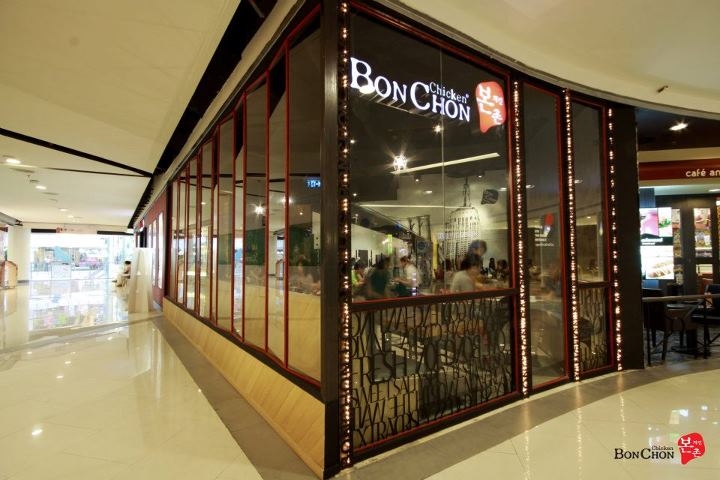
Thailand’s Minor Group to Buy Korean Chicken Chain Bonchon
Minor Group, one of Thailand’s largest restaurant companies, is set to acquire Bonchon, a Korean-founded chicken franchise, giving South Korean private equity firm VIG Partners an exit eight years after its initial investment.
Deal / M&A · Plus Aug 10, 17:02
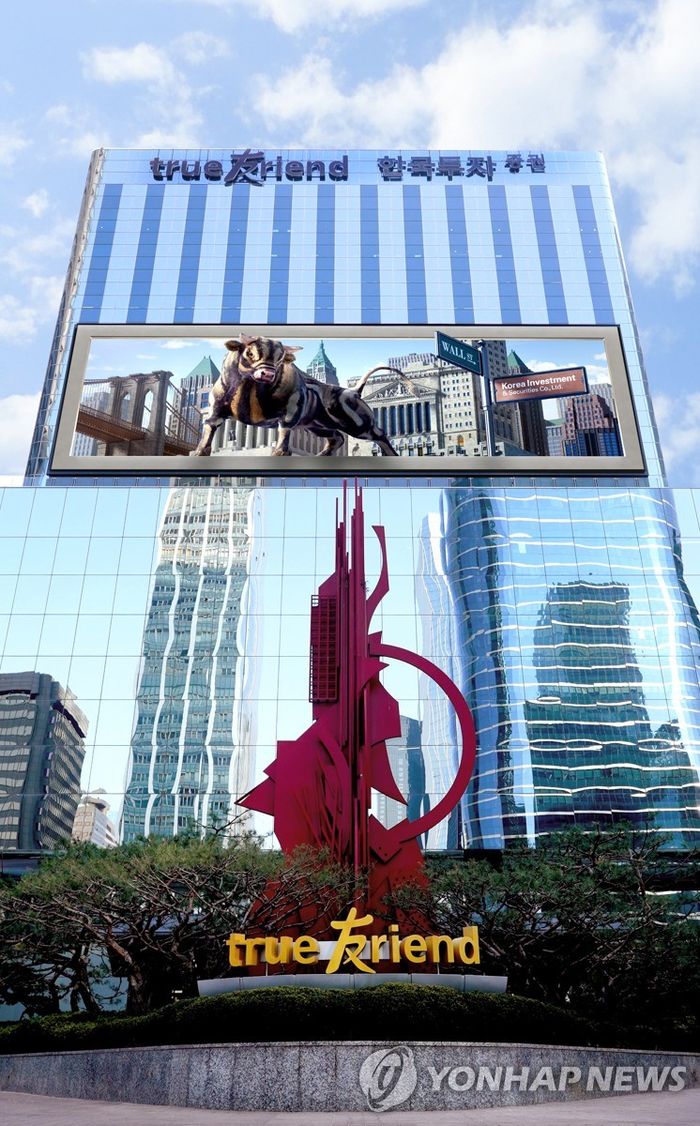
Korea Investment Holdings Nears Deal to Buy BNP Paribas Cardif Life
Korea Investment Holdings appears set to acquire BNP Paribas Cardif Life Insurance. With an insurance license now within reach, the acquisition is expected to complete the final piece of its comprehensive financial group portfolio.
Lead time = Plus release to open release, per article.
Most Read This Week
- 1Bessent Wages War on Bond Yields With Three Tools
- 2China Taps $28 Trillion Markets to Fund AI Race With U.S.
- 3Korea Sees Surge in Online Content Mocking Independence Heroes Before Liberation Day
- 4Iran Mocks Trump With ‘Coward’ Memes After Secret Jet Switch
- 5SK hynix to Boost China NAND Output 50% With Dalian Plant Restart
