

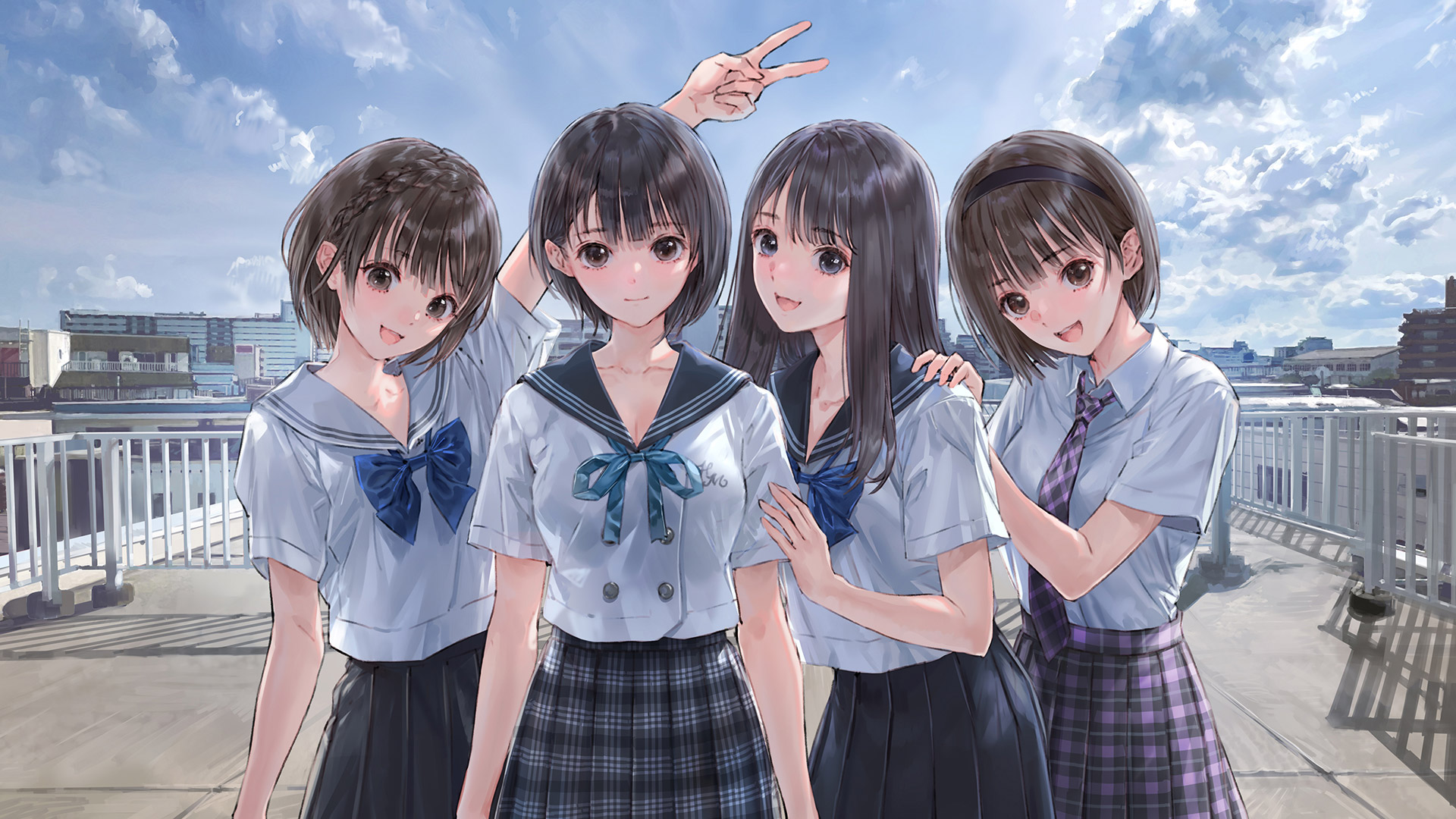
The magical girl theme is painfully underused in JRPGs, which is a massive shame, as it holds so much potential. The mix of monster fighting and an emotionally charged journey of self-discovery fits the genre like a glove. One multimedia franchise that does embrace this theme, though, is Blue Reflection, with all four games now brought together in Blue Reflection Quartet.
Gust is a company that is famous for making some of the most colourful and evolving characters in the game industry. Their stories always hover around personal growth and the ability to turn mundane, everyday concerns into larger-than-life stories. Blue Reflection Quartet is no exception; it even takes that idea to its utmost limit.
The games, with one exception, follow high school girls in what is, for the most part, slice-of-life stories. The conflicts are simple, ranging from petty theft to disputes over who will play the lead in the school play. All of this is paired with a wide variety of characters that players are bound to resonate with, thanks to the huge amount of care that went into fleshing out their personalities. All of this is encompassed by a greater main conflict where the protagonist has to save the world from terrifying monsters that eat fragments of someone’s personality. It creates beautiful stories that harness all of the strengths of the magical girl genre with some truly excellent writing.
One scene that stood out most was with a girl with savant syndrome. She was horrified as she thought she might not have any emotions at all, only to learn that she does, just that she understands and feels them differently from others. It takes one of the most harmful stereotypes and fears autistic people face and shatters it beautifully. All of this is accompanied by a wonderfully colourful and lively art style that seems made to highlight the game’s emotional nature.
However, there is another thing Gust is sadly known for: sprinkling in sometimes quite inappropriate fan service. There are plenty of scenes that just come off as creepy, and the camera has an unfortunate habit of focusing on the chest and butt areas of the high-schoolers. It is not particularly damning, but at times the weird camera creates some dissonance with what is supposed to be a wholesome story about finding oneself.
Three of the four games are not too bad in this regard, but as previously mentioned, there is an exception from the bunch in terms of the protagonist: the unfortunate remake of the gacha mobile game Blue Reflection Sun. For anyone aware of the sexually exploitative nature of gacha games to pull in sales, it isn’t difficult to see where this is heading. In Blue Reflection Sun, the protagonist is a guy who gets sent to become the unit leader in an otherwise all-girls school of super soldiers set up to fight monsters. It just straight up feels like a lolicon power fantasy from start to finish. To make matters worse, the outfits of the girls look like what someone would see at a sadomasochistic BDSM party rather than in a magical girl anime.
Fanservice in itself is not a bad thing, and this reviewer isn’t afraid to indulge in it if done well. However, it does make one feel nauseous when a franchise about young women finding themselves and learning to handle their emotions turns into a pure sexual fantasy for a presumably heterosexual male audience. Even so, good fan service should support the theme of the game, not undermine it, and that balance is where Sun falls short. The worst part is how the protagonist constantly talks about how he will make the young women ”bloom”, which in this context of a harem setting, high-schoolers, and fetish outfits feels icky at best, and straight up predatory at worst.
It is an unfortunate result of the game’s gacha roots, which appeals to a certain crowd, but it does raise many questions. The most important is whether it was truly a good call to include this release in an otherwise somewhat wholesome set of games. The issue, as mentioned before, is that it puts further emphasis on some questionable camera angles and story beats in the other games. Would it be a complete package of the full franchise without it, though? At the end of the day, this reviewer leans toward the idea that it was indeed a wise choice to add this release; however, it is not a part that is recommended to play, and thankfully it isn’t necessary to fully enjoy the other games, as the story of Blue Reflection Sun is self-contained.
While the story part fluctuates between being very emotionally competent and bottom-of-the-barrel fan service, the gameplay loops are wonderful. They vary from game to game in a way that truly makes Blue Reflection Quartet feel like four distinct games, but they always feel solid.
The first game has a traditional turn-based combat system that is very relaxing and encourages the player to sit down and unwind. Ray is a walking simulator/visual novel recap of the anime. Sun and Second Light have a different, freer combat system that is more combo-based and lets the player decide when to take their turns. This gives more control, which is something fans of the genre will easily fall in love with. The freedom serves as a great contrast to the first game’s more traditionally turn-bound system.
There is one slight issue, though: even though the game straight up advises players to play Sun before Second Light, the combat tutorial in Sun is watered down compared to Second Light. This means that Sun can feel confusing and like the game is throwing the player in at the deep end unless they have played Second Light before. It was an odd choice, which can likely be traced back to the mobile-phone nature of Sun, where the focus is on non-stop action.
As a whole package, Blue Reflection Quartet is probably some of the best value JRPG fans can find on the market. It is three good games in one pack, with one poor game thrown in there for completionists’ sake. If one ignores Blue Reflection Sun, it is hard not to fall in love with all that Blue Reflection Quartet has to offer.
Cubed3 Rating
A four-in-one deal of three amazing games and one poor game to drag it down. While Blue Reflection Quartet, for the most part, tells compelling stories about growing up, the unfortunate black sheep makes the uncomfortable camera angles of the other games impossible to write off as flukes. Despite its questionable fan service, it is hard not to fall in love, asBlue Reflection Quartet offers great characters and combat systems that will keep fans of the genre stuck to their Switch 2s through the rest of the summer.
About this Score
Add a Comment
Blue Reflection Quartet
Formats: Nintendo Switch, Nintendo Switch 2, PC, PlayStation 5


Cubed3 is reader-supported. If you buy through banners on our site, we may earn a commission. This does not influence our opinions/reviews.
Comments
Cubed3 is reader-supported. If you buy through banners on our site, we may earn a commission. This does not influence our opinions/reviews.
