


What drives people to visit virtual museums over physical ones? ArtQuest VR may have the answer.
ArtQuest VR is a museum app that allows users to visit life-size art galleries. Explore collections from famous museums around the world, organized by artist, movement, or preset collections.
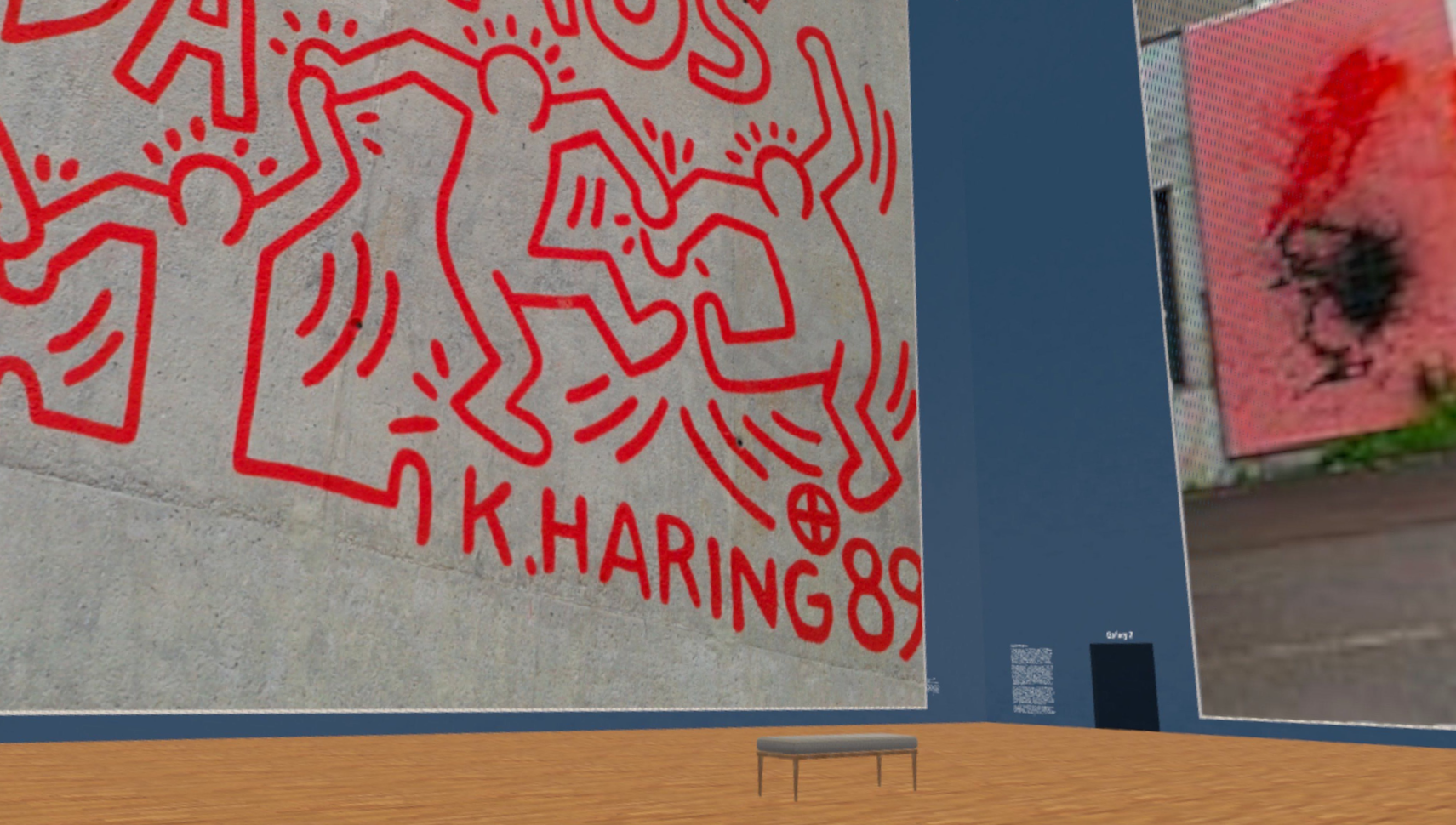 Contemporary Gallery Featuring Keith Haring
Inside the Art Quest Museum
When you open ArtQuest VR, you will be taken to the first gallery and will be presented with a menu for exhibit navigation. Museums have options for choosing the art you want to see, customizing and navigating your galleries.
You can change the color and material of the main wall, floor, and frame of the art you’re looking at. You can adjust the frame thickness using the frame style dropdown menu. There is also a text-to-speech audio option that narrates each painting’s description and information in five different voices.
Customize the gallery
Movement can be done smoothly by pressing the left joystick, or by “flashing” teleporting using the right joystick. Currently, the only turning option is snap turning. You can also readjust the height using the menu so that each painting is placed at eye level.
Connect with art works
I looked up a painting by Wassily Kandinsky called “Painting with a Black Arch.”
ArtQuest’s Height Offset feature allows visitors to position themselves higher, as if they were renting a ladder to view the painting from a higher vantage point. I floated upward along the canvas and examined the painting. “Picture With A Black Arch” is full of quick brushstrokes and geometric patterns. What inspired the artist to draw this? What does the accompanying explanation “musical counterpoint” mean?
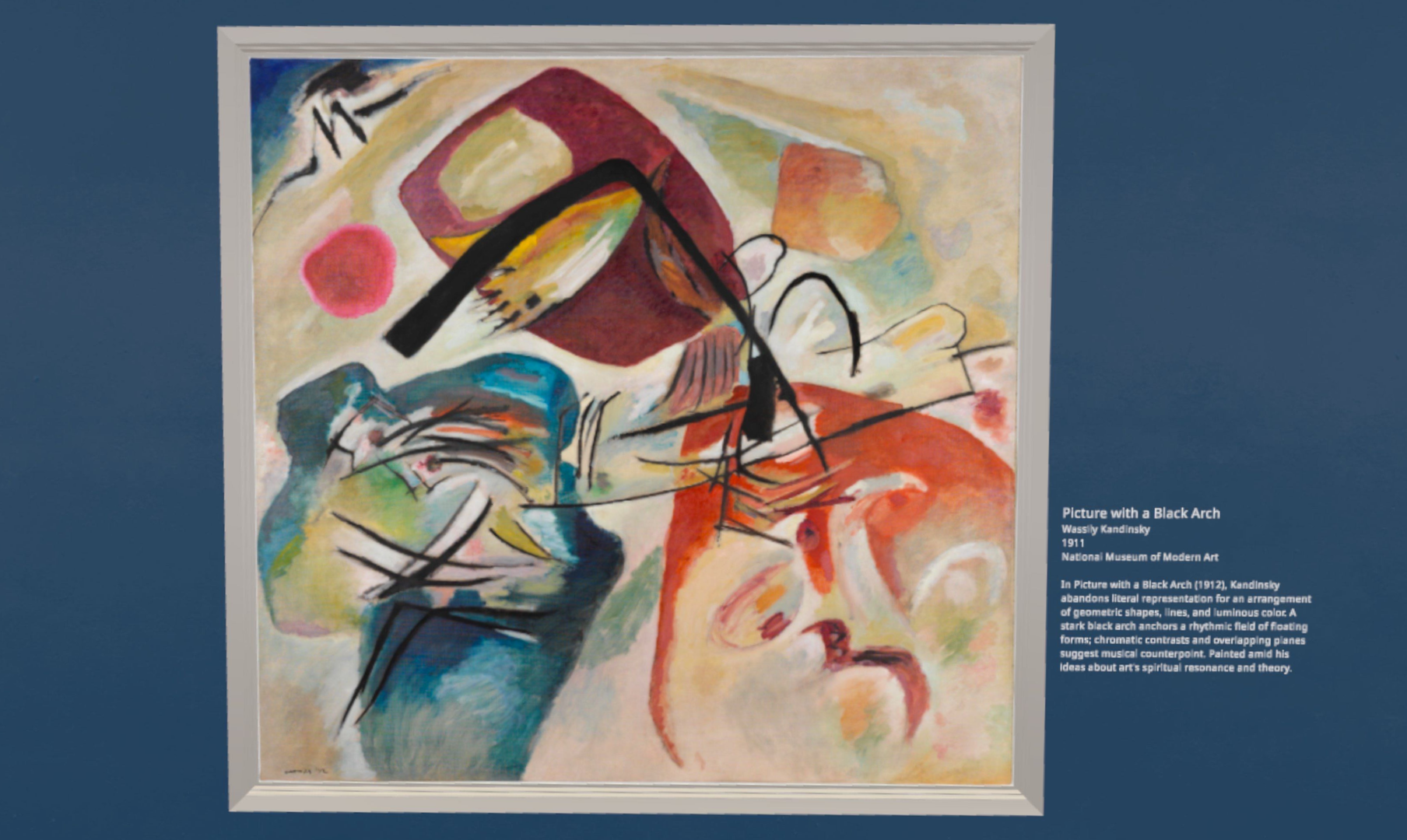 Kandinsky’s “Picture with a Black Arch”
I pantomimed painting in the air with the artist himself, first tracing my hand over the dark outline. Being a painter myself, I knew that thick brushstrokes meant pausing, or putting pressure on the canvas. Thinner strokes mean a more delicate hand. A shorter, tighter line means faster application, especially when applying in multiple groups at once. These particular brushstrokes are all tilted to the left, indicating that Kandinsky painted with his right hand. While listening to my favorite orchestral music, I traced the traces in the air.
What I noticed were hand movements that seemed to be dancing in the air with a deliberate direction. It felt like I was conducting an orchestra while painting on a canvas. Later, when I checked Google’s culture site, I saw more information about this work, and I was convinced that this was what Kandinsky was doing.
What is the appeal of museums?
Building a virtual museum can be difficult. You can immediately see that the architecture surrounding the art is related to the works within it. These digital spaces benefit from thoughtful, immersive design. That means a building that takes into account environmental sounds and the way someone will walk through the space you’ve designed. Why not stop in the lobby and reflect on what you’ve seen? ArtQuest VR doesn’t have ambient audio or lobbies, so I’d love to see them added.
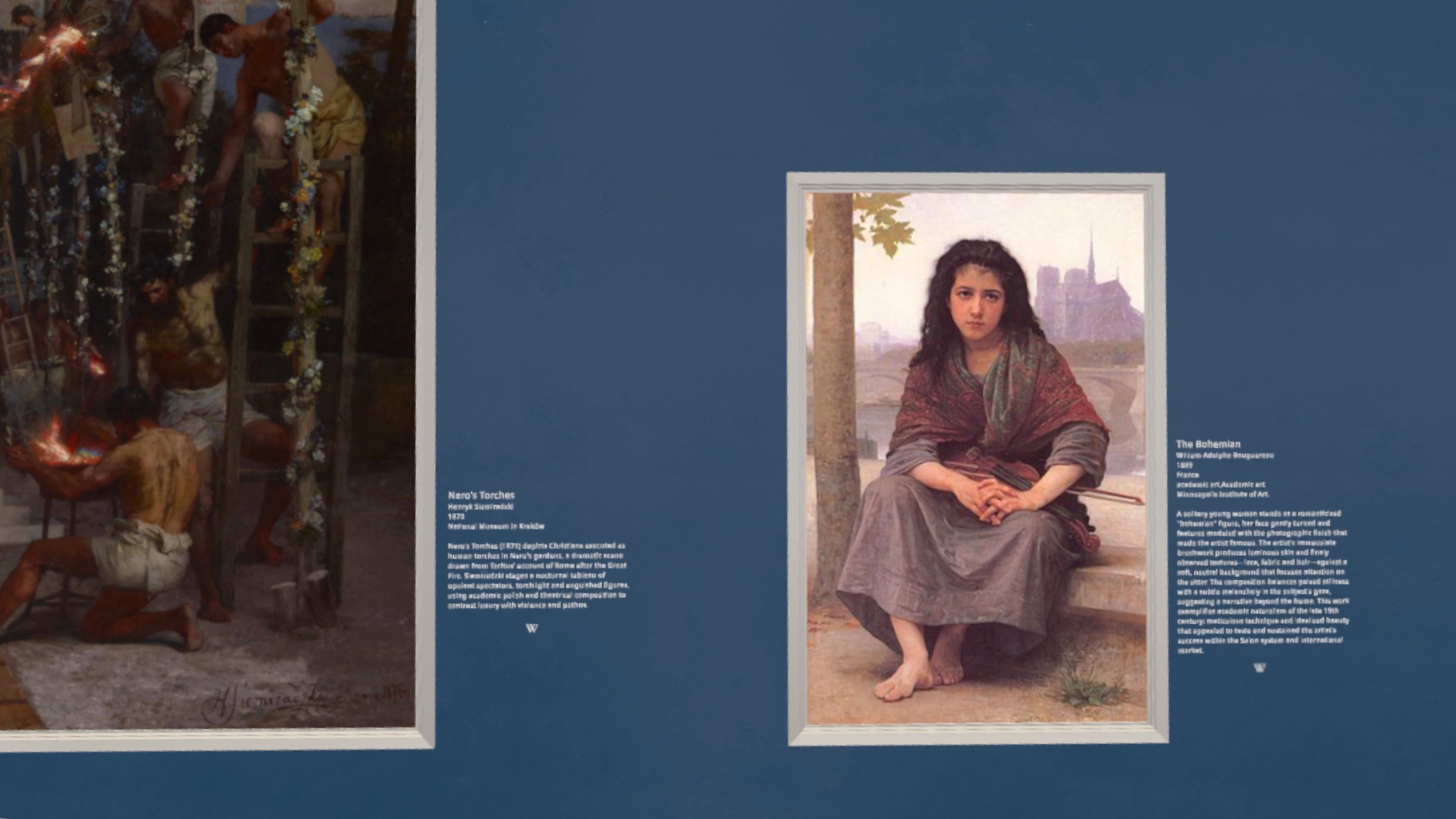 Neoclassical Painting in ArtQuest VR
The advantage of ArtQuest VR is that you can go and see almost the entire Van Gogh or Matisse collection without having to download gigabytes of information or competing with others for the perfect spot, although it’s a little lonely because there are no other visitors and the presentation is sober. The app has the feel of a functional museum, with a spatial website and its own collection of works.
Accessing the collection menu
ArtQuest VR’s architecture is simple, with a slight neoclassical style, and the description seems to be taken from Wikipedia. The neoclassical architecture is consistent with Wikipedia’s site design, but it still feels like something is missing without ambient sounds. Just open the app and access your gallery. At least one art collection contained missing textures. While browsing the Contemporary Art Building, a recent piece by Banksy returned an ugly floating pink square indicating that the original artwork was no longer there. A photo featuring a mural of Shepard Fairey sat facing right for a few seconds, then rotated in the wrong direction.
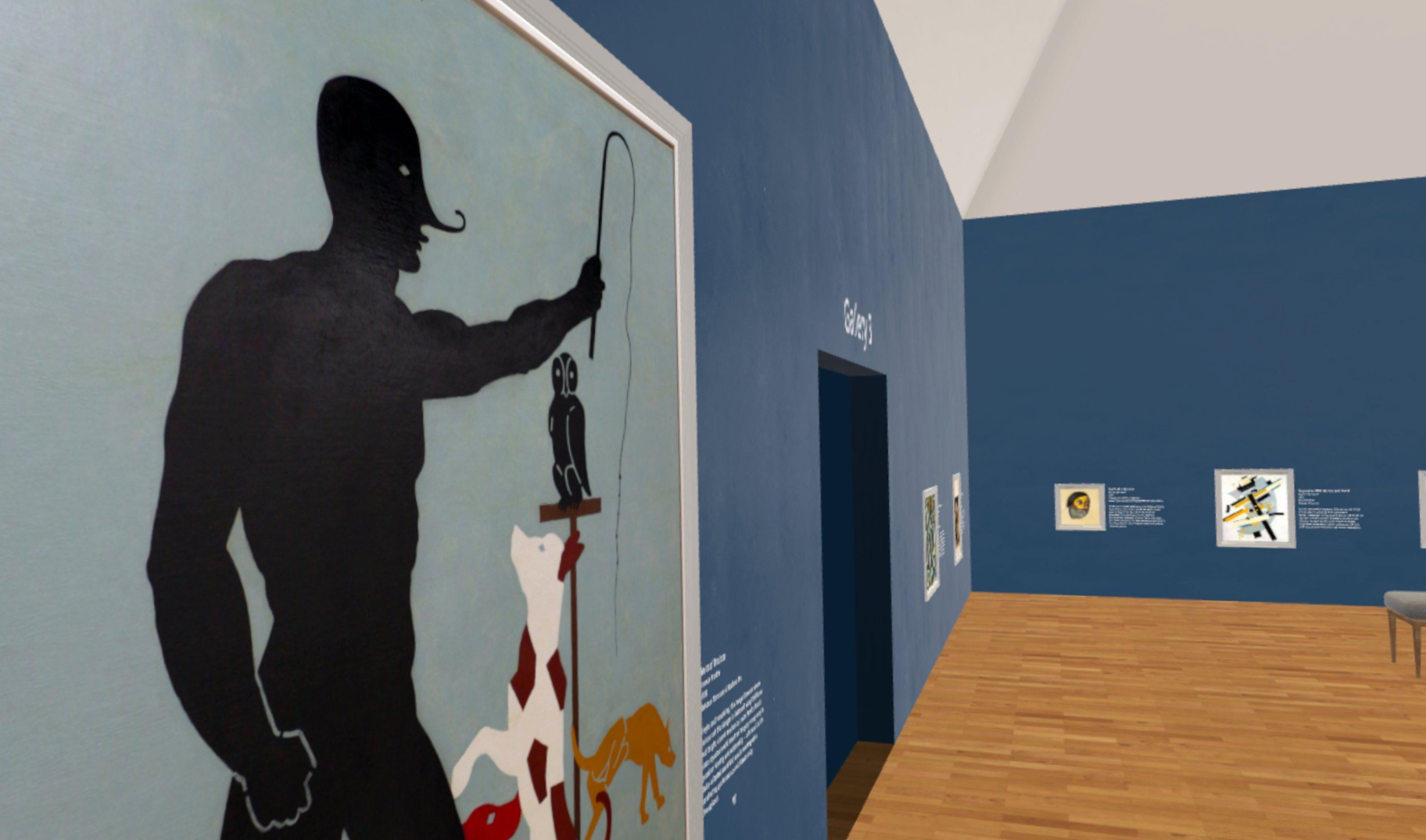 Avant-garde collection
I’ve noticed some bugs being added that would cause players to teleport deep into walls when trying to access the quest menu or moving between galleries. Perhaps the most notable issue is that paintings won’t display in high resolution unless your face is effectively a few centimeters away from the artwork. Also, the gallery may display paintings that have been reproduced without any explanation.
ArtQuest VR Opportunity
It’s a widely held belief that art is about perfection, not the path to getting there. If this were true, museums would not display the early works of the featured artists. Viewing famous paintings chronologically in apps like ArtQuest VR shows that art includes failures as well as successes. Each artist has a unique story that led to their success, and it’s up to each visitor to reflect on it and how to apply these lessons to their own lives.
How can ArtQuest VR continue to build on this?Everyone who visits a museum is looking for something. Can VR give them the very human striving to surpass themselves through practice, improvement, and sudden inspiration that doesn’t always exist in the room we’re in in a physical museum? The ability to see things from new angles is truly the power of VR, and apps like ArtQuest allow you to see more of the surroundings of a particular piece of art every time someone walks through your front door.
