

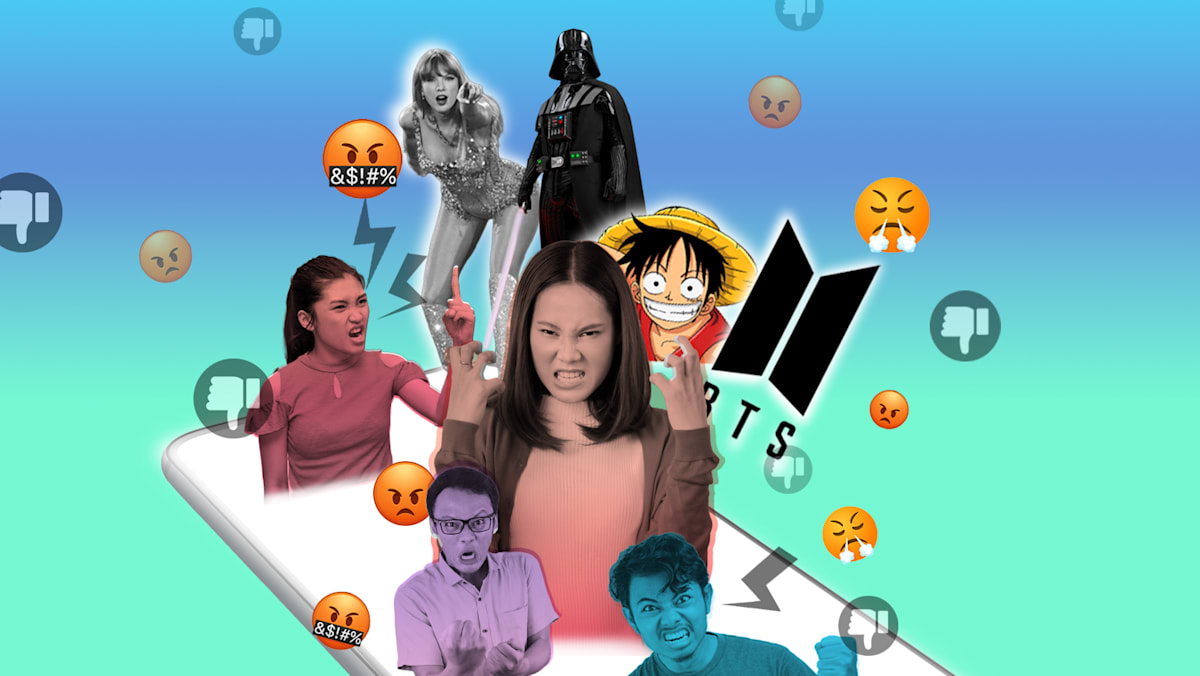
From BTS ARMY to Swifties, some fandoms have become synonymous with toxic behaviour. But fans say their reputations are shaped just as much by competition, social media and internet culture as by the communities themselves.
New: You can now listen to articles.
This audio is generated by an AI tool.
Read a summary of this article on FAST.
Get bite-sized newso FASTTap here to return to FAST
FAST
When it comes to fandoms, loyalty can be remarkably intense: Think <a href="https://www.channelnewsasia.com/today/voices/gen-z-speaks-how-taylor-swift-week-in-singapore-brought-out-<a href="https://comicvibe.com/10-best-tv-shows-like-emmy-rossums-furious/” title=”10 Best TV Shows Like Emmy Rossum's Furious”>best-and-worst-in-all-us-4632011″ rel=”nofollow noopener” target=”_blank”>Swifties rushing to defend Taylor Swift whenever she comes under fire, BTS’ ARMY rallying behind the group when they’re criticised online, or Zack Synder’s fans fiercely championing the director’s creative decisions for the DC Extended Universe movies.
Whether it’s a pop star, a sports team, a television series or a video game, today’s biggest online fandoms have become increasingly associated with fan wars, review bombing, harassment and tribalism.
The stereotype is not entirely unfounded. Back in 2020, BTS fans made headlines after American singer Charlie Puth publicly asked them to stop harassing him over perceived slights against BTS. Anyone remotely critical of Taylor Swift – from former partners Jake Gyllenhaal and John Mayer to journalists with less-than-glowing reviews of her Eras Tour – has spoken about receiving online abuse.
Spend enough time on X, TikTok or Reddit, and it isn’t difficult to find another example of a fandom being divisive or spewing vitriol in their comments.
But ask the fans themselves, and many argue that calling fandoms “toxic” misses what fandom is actually about.
In his papers on fandom culture, Associate Professor Patrick Williams from Nanyang Technological University’s School of Social Sciences, who teaches sociology and specialises in youth subcultures and digital media, said fans are often saddled with an unfair stereotype – that they are obsessive, irrational or incapable of thinking critically.
“But it depends on what kinds of meanings you attach to the word ‘fan’. The way some people use the word makes it sound like, at least implicitly, fans are kind of useless people or that they don’t have brains,” he said in a previous interview with CNA onparasocial relationships.
“But being a fan of something good can be a good thing, just like becoming a fan of something bad can become a bad thing. Good and bad aren’t objectively real, however. They’re defined by social groups.”
Four fans who spoke to CNA Lifestyle – a member of multiple K-pop, gaming and anime fandoms, a BTS ARMY organiser, a Swiftie and a Heated Rivalry fan – echoed the sentiment and agreed on one thing: Toxicity isn’t an inherent feature of fandom.
Instead, they said it emerges from a combination of factors: What the fandom is built around, how fans are encouraged to participate, and the online platforms where those communities gather.
WHY DO FANDOMS BEHAVE THE WAY THEY DO?
Kim, a 28-year-old professional gamer who declined to reveal his last name, said certain fandoms appear more aggressive because of how they express their love and support.
“Some fandoms become more tribal because success feels like something fans can influence,” reckoned the fan of K-pop girl group Twice, as well as games and anime such as Genshin Impact, Pokemon and Osu.
In his view, different fandoms ask different things of their members. Some, particularly in industries like pop music, encourage fans to actively contribute to an artiste’s success by streaming songs, voting in awards and boosting social media engagement.
Over time, that active participation can escalate into behaviour that others perceive as obsessive, as the desire to support an idol gradually becomes intertwined with defending them or making sure they gain the highest number of views at all costs.
Kim, who describes himself as “chronically online”, contrasted his experience in K-pop forums with his experience in gaming and anime communities. While disagreements and aggressive fans certainly exist, he said the latter fandoms are primarily built around enjoying a game rather than helping it outperform competitors.
“There isn’t really much to compete over (when it comes to games),” he said. “People mostly talk about gameplay, characters or new updates.”
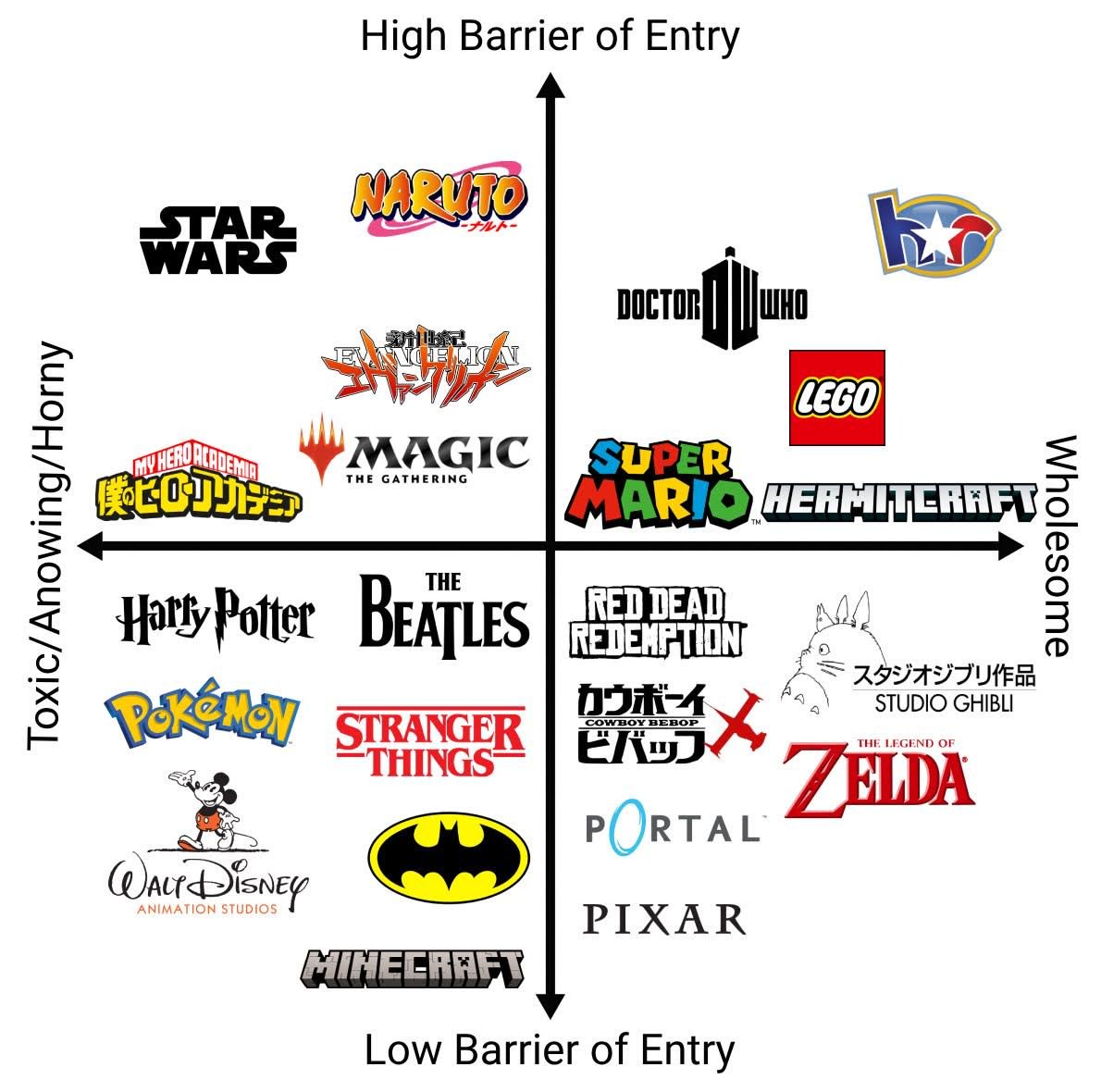
Competition isn’t the only thing that can make fandoms turn hostile, however. To Kim, especially for fictional universes, anotherrivalry
“When people love a story for years, they become protective of it,” Kim said. “Some criticism is warranted. But sometimes disappointment snowballs into much worse just because fans feel the story they love isn’t being taken care of.”
For adaptations, that protectiveness can spill over to verbal harassment and cyberbullying the people bringing the story to life, such as when Star Wars fans harassed actors Ahmed Best and Kelly Marie Tran, as well as creator George Lucas himself, over creative decisions within the franchise.
Jolin, who asked to be identified by her first name only, is a fan of the Canadian hockey romance series Heated Rivalry, based on Rachel Reid’s Game Changers novels. She said discourse surrounding the television adaptation has at times escalated into rumours, personal attacks and accusations directed at cast members.
“There are valid concerns when adapting a beloved story,” she said. “But I think some actions – like spreading rumours that Reid hates some cast members, or the actor Hudson Williams getting hate and accusations surrounding his sexuality – get blown out of proportion.”
HOW SOCIAL MEDIA AMPLIFIES THE TOXICITY
If the nature of a fandom can plant the seed for tribal behaviour, social media often gives it ideal conditions to grow.
Despite being a fan of the show and book series, Jolin is cautious about spending time on online fandoms surrounding Heated Rivalry.
“I don’t have a very good impression of the way some fans behave online,” she said. “I’d rather talk about my love for the story and cast members in-person, like at book clubs.”
She said that in-person gatherings allow opportunities for deeper connection and encourage more sustained friendships. Even if two or more people disagree, they can figure out ways to reach a consensus, and those differences become a
Conversely, major social platforms prioritise attention and engagement.
“Posts that ragebait (provoke anger or outrage), spark arguments or invite thousands of people to comment and give their take are likely to be recommended more than thoughtful and wholesome conversations that take place between different fans,” Kim said.
That can create the impression that online fandoms are defined by their loudest and most combative members, even when those fans represent only a fraction of the wider community.
Jade Hee, a 42-year-old civil servant and community organiser behind local BTS ARMY group The Bora Dot, outlined how social media can at times make fan interactions appear worse than they are.
“There’s a dark side to every fandom – malicious actors, clout chasers and what ARMYs call ‘shooters’,” she said, referring to fans who aggressively jump into fan wars, rumours and criticism involving BTS. “The anonymity of the internet makes that kind of behaviour easier because there’s always a place to hide and no need to take accountability.”
Hee also believes the sheer size of a fandom shapes how it is perceived. In a community numbering in the tens of millions, even a small minority of toxic fans can appear disproportionately large.
That echoes observations by Assoc Prof Williams in his research on sasaeng fans – obsessive individuals who stalk, harass and severely invade the private lives of K-pop idols. He noted that the media can often “take a single case and make it seem like there’s an entire class of people engaged in exactly the same behaviour”, and cautioned against treating the behaviour of a small minority as representative of an entire fandom.
Hee pointed to what fans sometimes call the “1 per cent theory”, an internet theory that states every fandom has the 1 per cent that behaves badly.
“In a fandom as large as ARMY – with over 36 million registered users on Weverse and 81 million followers on Instagram – our 1 per cent is bigger and louder than the 1 per cent of a smaller fandom. I hope people will also look at the other 99 per cent.”
HOW FANS FIND CAMARADERIE AND COMMUNITY
While toxicity explains why fandoms make headlines, it doesn’t explain why millions of people remain part of them.
For many fans, online fandoms aren’t primarily places to defend celebrities or argue with strangers on the internet. They’re where people find others who understand why a song, a book or a fictional universe means so much to them in the first place.
In her book examining the cultural impact of the television series Supernatural, clinical psychologist and West Chester University professor Dr Lynn Zubernis described fandoms as “communities that provide a safe space for fans to express their real selves, feelings, and desires”.
“Fandom is where we find community, support, information and the shared giddy excitement over new content,” Hee added. “They’re people I talk to every day – not as just fellow BTS fans but my own friends.”
A 29-year-old member of Singapore’s Swiftie community, who wished to remain anonymous, said he similarly values being part of the Taylor Swift fandom because of the conversations that happen within it.
“What I like about being a Swiftie is the forensic analysis of Taylor’s lyrics, the lore-building and the Easter egging of it all,” he said. “It feels like you speak a secret language with other people, which is fun.”
That enthusiasm often extends beyond simply consuming the media itself. Fandoms have also mobilised around charitable and social causes, using their collective enthusiasm to raise money and support people in need.
In 2023, Swifties raised more than US$125,000 (S$160,000) for the family of a fan who was killed by a drunk driver while travelling home from one of Taylor Swift’s concerts.
Closer to home, local BTS community The Bora Dot organised an online fundraising campaign in 2025 inspired by BTS member Suga’s charitable work with Severance Hospital Korea. The group raised more than S$15,000 in two weeks.
Stories like these rarely receive the same attention as fan wars or online pile-ons, but they are just as representative of what fandoms can become, Hee said. The same collective organisation that can be used to flood someone’s mentions or attack a negative review can also be directed towards fundraising, mutual aid and community-building.
WHAT FANS DO TO NAVIGATE FANDOMS WITHOUT LOSING THE JOY
While fans can’t control how others behave on the internet, they can choose how they participate. In an interview with the magazine Real Simple, Dr Zubernis recommends curating fan-related feeds to seek out communities that welcome healthy discussion, and encourages fans “not to be afraid to leave when a group feels more upsetting than uplifting”.
For Jolin, enjoying a piece of media also means accepting that other people will experience it differently.
“Everyone has different life experiences, so they’ll interpret the work in their own way, and it then becomes your own,” she said.
Rather than trying to win every disagreement online, she believes fans should remain open to different interpretations while recognising when a discussion is no longer productive. She also believes in being intentional and “protecting her peace” – and it’s why she chooses to spend time with fandoms IRL (in real life), instead of online.
The Swiftie felt fans also benefit from keeping a sense of perspective.
“People need to go outside more and live their lives without pledging allegiance and fighting wars for pop stars,” he said. “It’s not that serious. It would be better if we all remembered this is supposed to be for fun. It’s not supposed to be a real battle that you enter into.”
Kim believes the clearest sign that fandom has stopped being healthy is when it changes how you relate to other people.
“The moment you realise being part of a fandom is making you more hateful, more angry, more defensive or possessive over people who have no idea you exist, that’s when you need to rethink how you’re engaging with others online,” he said.
“Every fan still has a choice about which parts of the internet they want to inhabit. I’d rather spend my time in the corners built on community than the ones angry all the time.”
