

IGN Otaku Update is IGN India’s original column series exclusively dedicated to covering the animanga fandom and market.
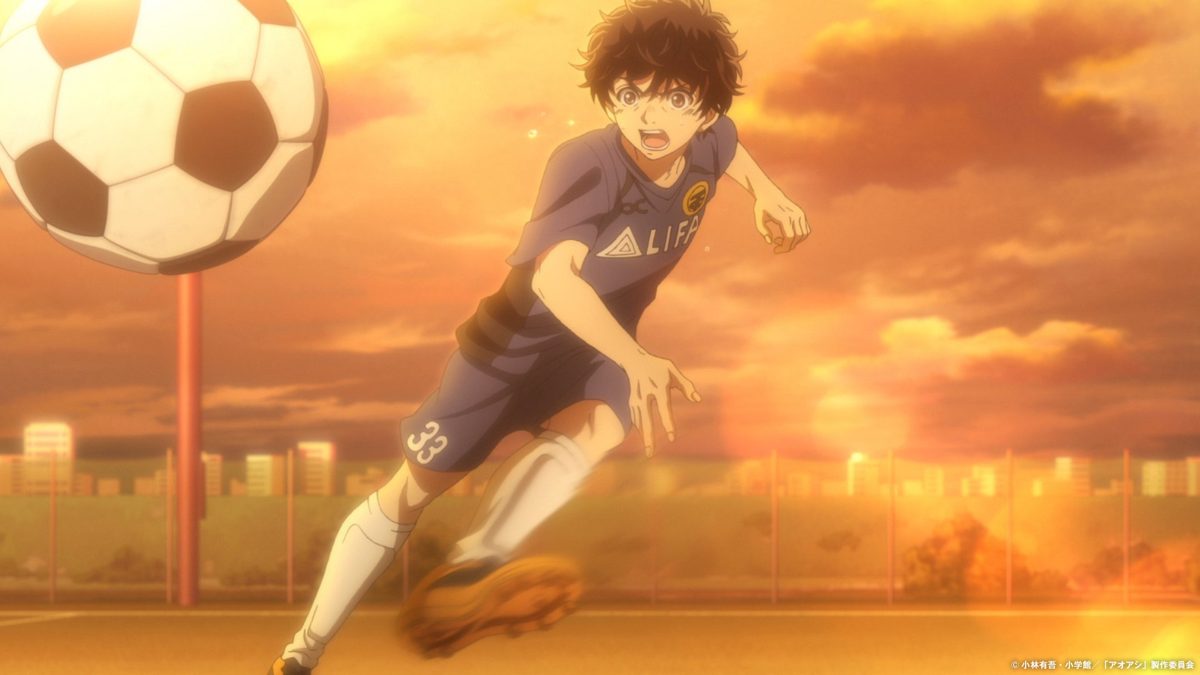
AOASHI is unique among sports anime for treating football as a sport that demands discipline, tactical awareness and constant adaptation. Based on Yugo Kobayashi’s manga, the series follows Ashito Aoi as he enters the demanding world of youth football, where talent alone is not enough to succeed. Season 2 of the anime takes Ashito into an even tougher stage of competition as he adjusts to life as a defender and begins learning how to use his Eagle Eye ability in a new way.
For this edition of IGN India’s Otaku Update, I spoke to Junichi Katsutani, an anime planning producer at ShoPro who played football from childhood through university and personally proposed the anime adaptation of AOASHI. Katsutani discusses what first drew him to the manga, the process of bringing its tactical football to animation, and how real match movement is recreated through simulation, motion capture and hand-drawn animation. He also talks about how his own experience as a player influenced details such as the calls heard during matches, and what viewers can expect from Ashito’s growth in Season 2 which premieres on October 4 on Crunchyroll.
Rayan Sayyed: Please introduce yourself to our readers.
Juinichi Katsutani: Nice to meet you. I’m an anime planning producer at ShoPro (Shogakukan-Shueisha Productions Co., Ltd.). Having played soccer myself from childhood all the way through university, I proposed the anime adaptation of AOASHI, an original manga I’ve always loved.
What was your reaction the first time you read the AOASHI manga? Was it immediately clear to you that it would work as an anime?
The realism of its soccer is one of AOASHI’s great strengths, but what drew me in especially was the human drama. AOASHI carefully depicts so many universal elements that anyone can map onto their own life — the bond between parent and child, a way of living aimed at going pro, and not just success but setbacks and failures as well. I felt that even for people who don’t know soccer, or aren’t especially interested in it, an anime adaptation could move even more people, including both children and adults.
You proposed this anime adaptation yourself because you loved the manga. How rare is that – – a producer championing a specific title from the inside – – and what did it take to get the greenlight?
I don’t think there’s anything particularly unusual about proposing an original work that I love. In the case of AOASHI, I’ve loved the manga and had played soccer myself, so I was able to write the proposal with a great deal of passion. Sports titles, and soccer in particular, involve intense movement, so as I took the project forward inside and outside the company, I focused on what creative plan we would use to produce it, and what media plan would get it in front of a wide audience.
Season 2 is picking up right as Ashito moves into a much tougher tier of competition. Without spoiling specifics, what’s the one challenge, whether it’s tactical, personal, or emotional, that defines this season for him in a way Season 1 didn’t touch?
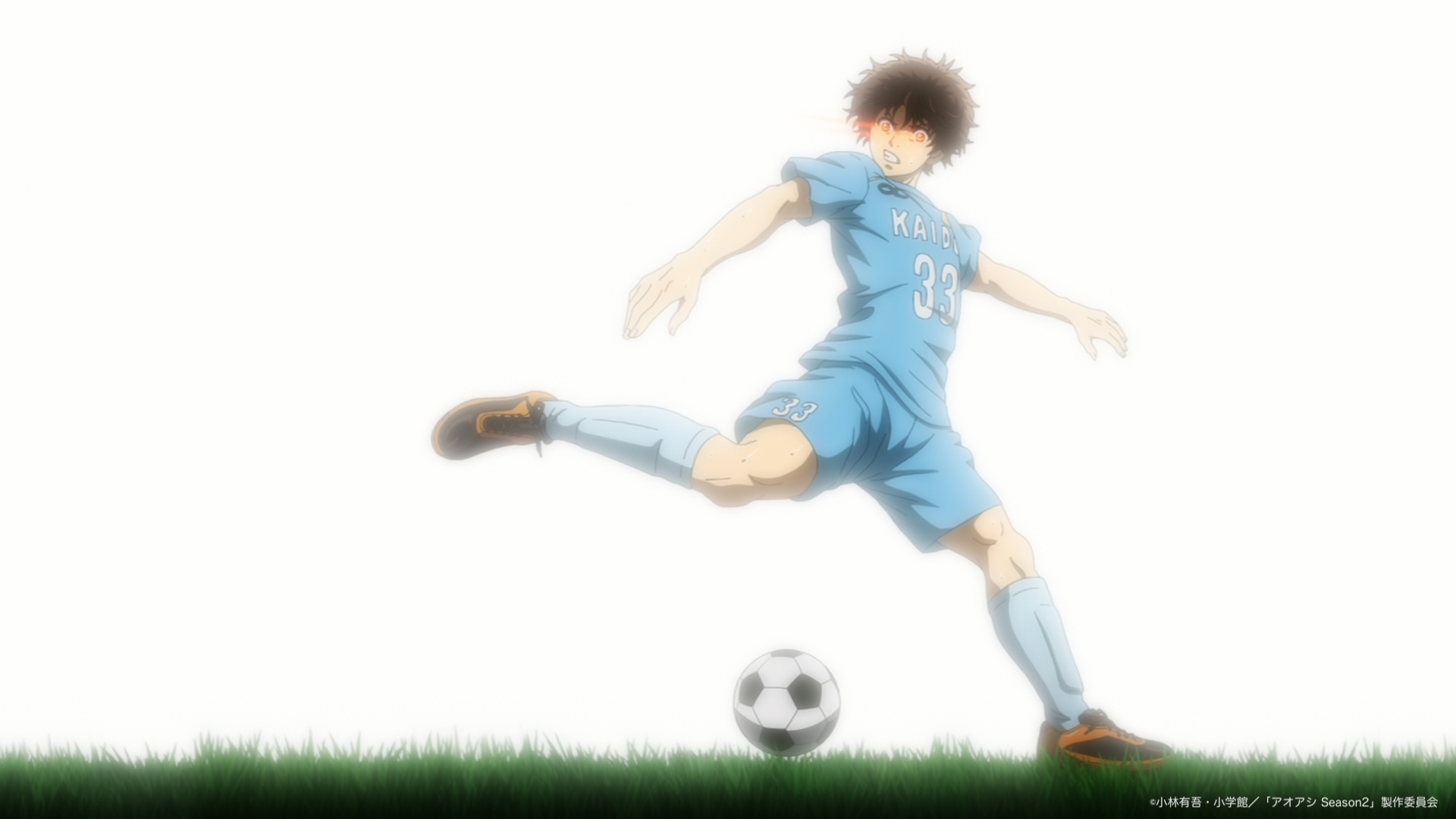
Ashito transitioned to defender in Season 1, but in Season 2 the level around him rises dramatically and the competition grows fierce. While learning how difficult defending is, he begins a new challenge: making the most of Eagle Eye, his greatest ability, to become a new kind of full-back that only he could be — one who “completes” both attack and defense. Please look out for Ashito’s growth as he accelerates toward becoming a pro.
Sports anime live or die on whether the action reads as physically real. What’s actually involved in achieving that for AOASHI specifically? Are there professional players, coaches, or motion-capture data feeding into how the matches are built?
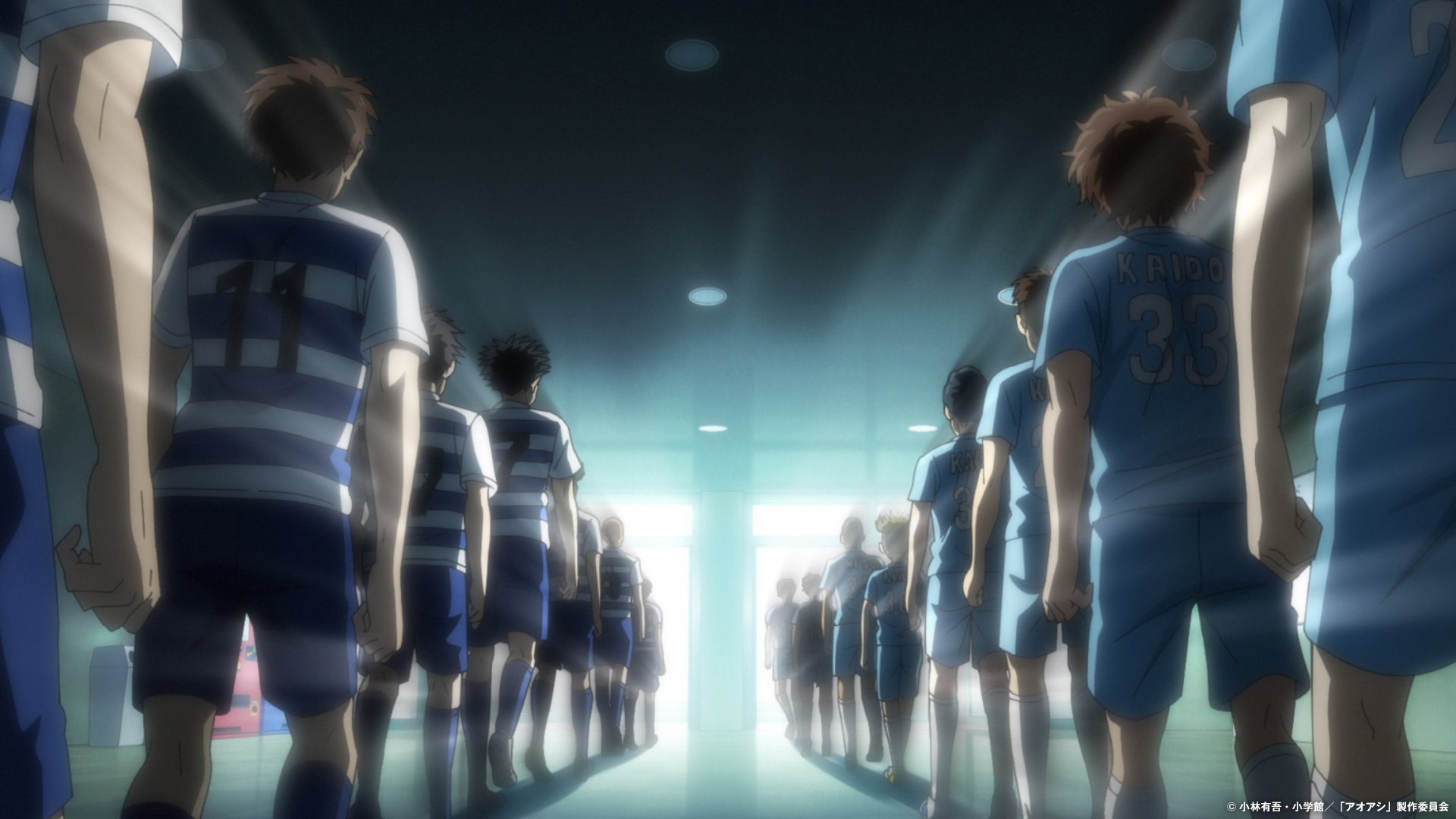
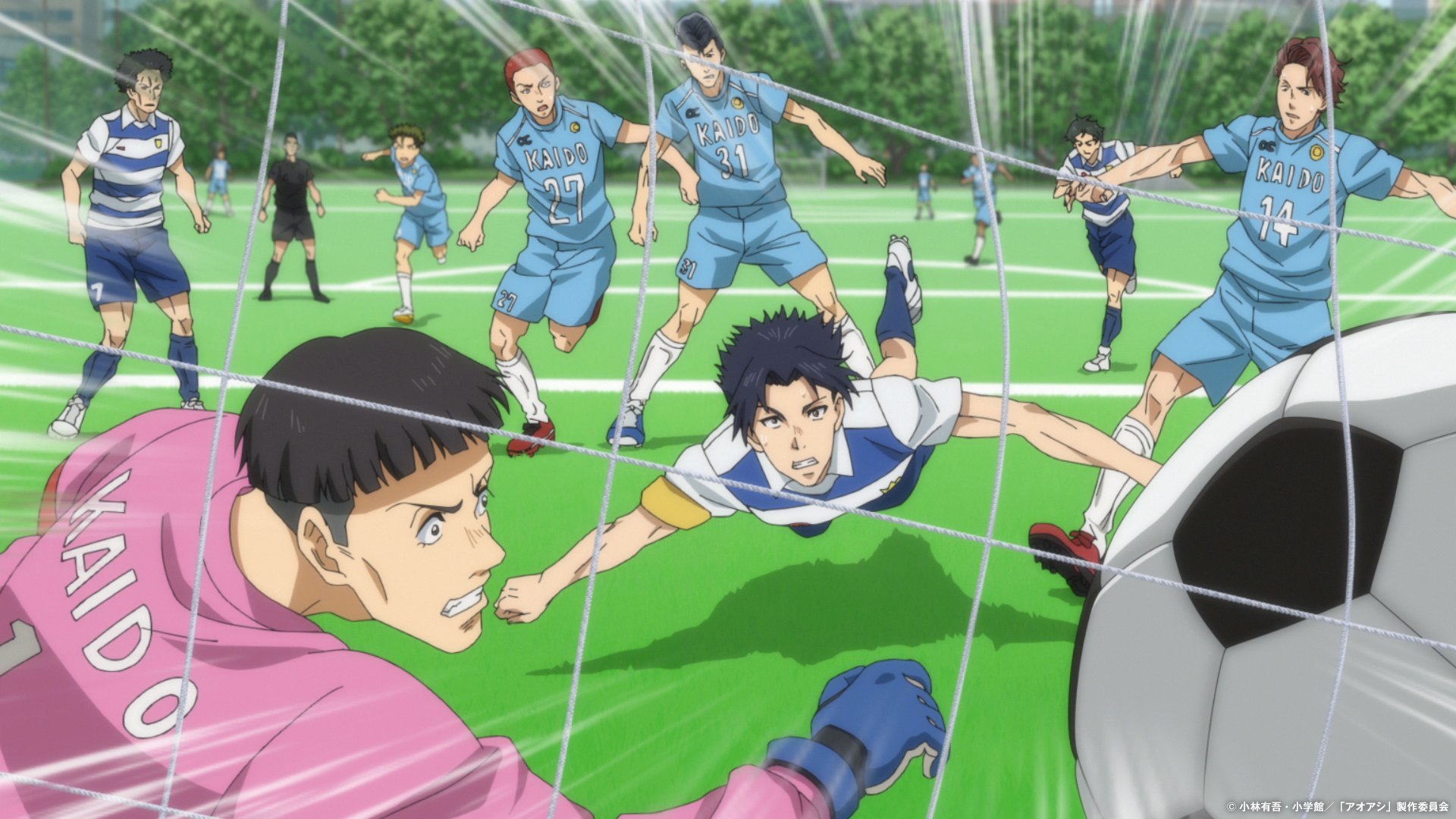
To begin with, the original manga is built on the meticulous research Yugo Kobayashi puts into it, so we place great importance on deeply understanding the source material and recreating it faithfully. Building on that, the anime also has to fill in player movements the manga doesn’t show and construct the kind of continuous motion that only moving images can convey. Specifically, we make simulation movies that work out how all 22 players move in a match scene, then use those as a reference to capture realistic play through motion capture. By layering the drawn animation over that CG footage as a guide, we aim for visuals that keep the authenticity of real soccer while still delivering impact and a sense of flair.
AOASHI is built on tactical realism rather than the flashier, more exaggerated style a lot of sports anime lean on. For someone who’s never watched a soccer anime because they assume it’s all dramatic slow-motion shots and impossible plays, what’s the actual pitch for why Season 2 (and 1) why should they check this anime out?
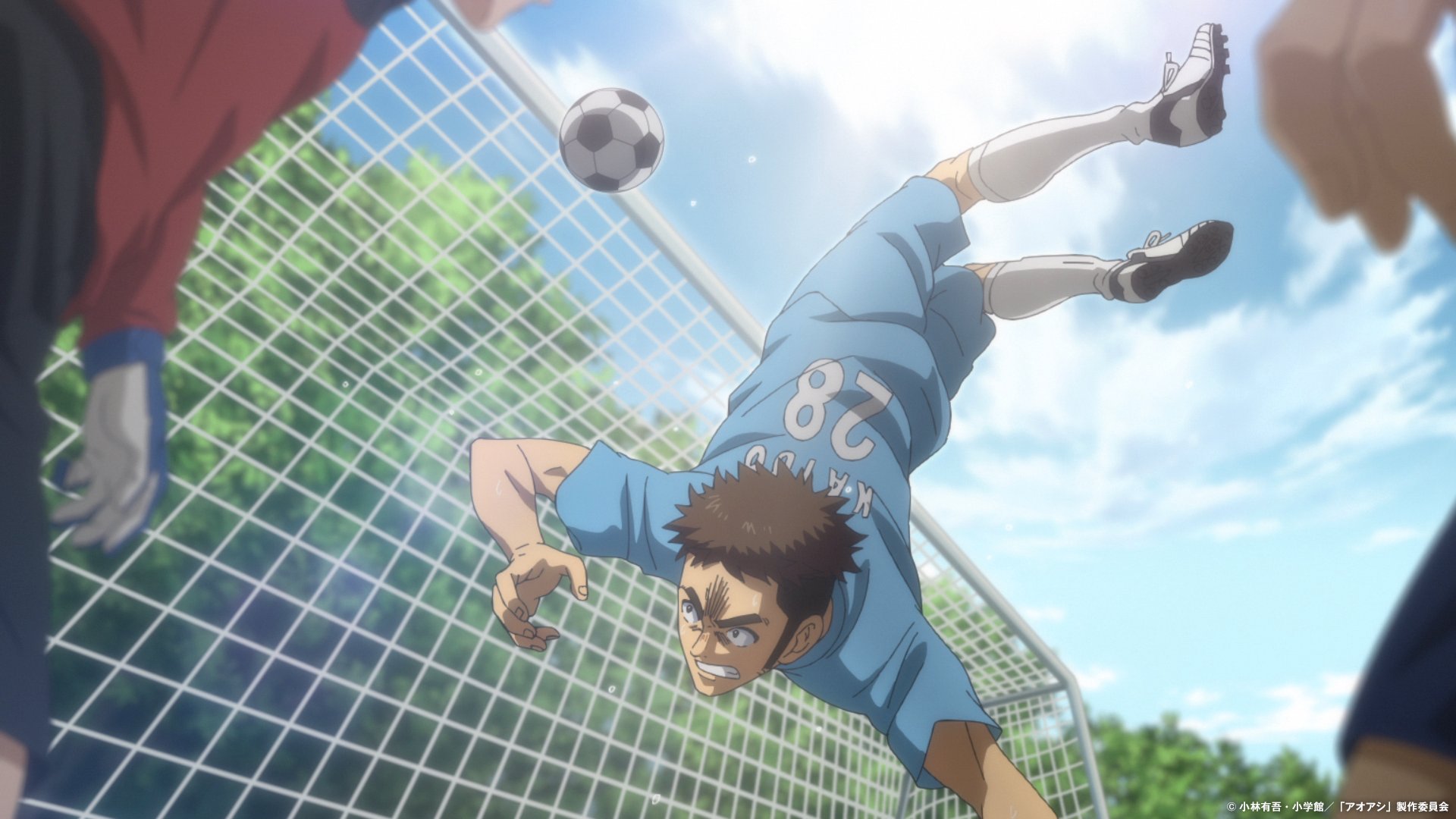
I think the real appeal of AOASHI is that, beyond the realism of soccer itself, it portrays a grounded, deeply human drama — the struggles and growth of boys chasing their dreams of going pro, along with the families, managers, and coaches who support them. Even if you don’t know a thing about soccer, I believe it’s a work that anyone who has ever seriously pursued something can connect with on a deep level, so I’d be truly happy if you gave it a watch.
You mentioned you played soccer yourself from childhood through university. Did your own experience as a player ever directly influence a specific decision you made on the production, something you pushed for because you knew from personal experience it had to feel a certain way?
My soccer experience comes into play in things like the motion capture sessions and checking the storyboards, but if I had to pick one example from Season 2, it would be that we record the calls the players shout off-screen individually and mix them into the audio of the match scenes. In a real match, the calls change depending on the situation, so judging what kind of instruction fits a given scene is where my own playing experience really helps. It’s an area we’ve been particular about in order to bring authenticity and a sense of being there to the soccer scenes, so I really hope people will pay attention to it.
Who is your favourite character in AOASHI? Has working on the anime changed how you see them compared to reading the manga?
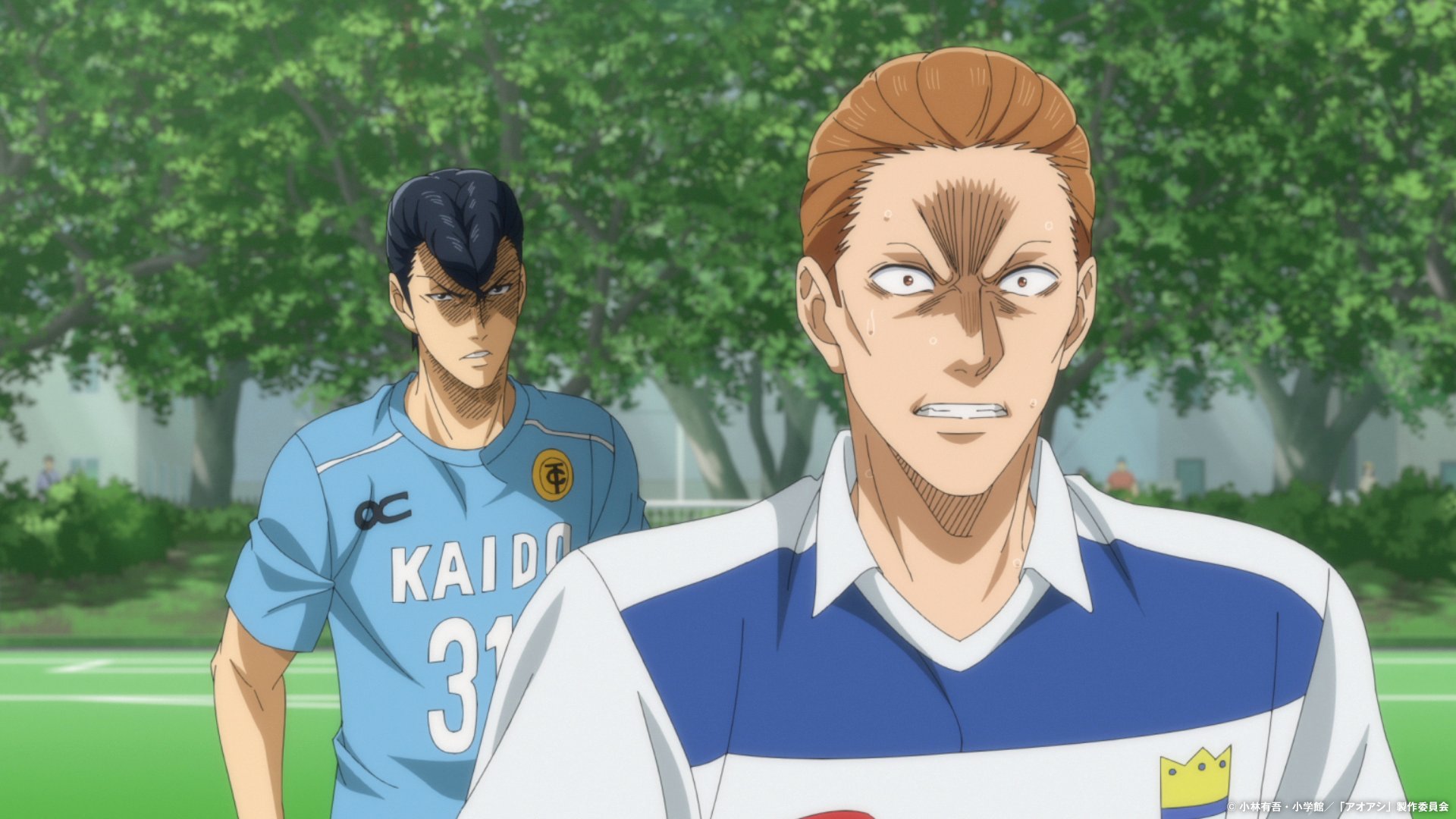
Of the characters Season 1 focused on, I like Tachibana. I admire Ashito too, always looking up and breaking down the walls in front of him, but I think the characters most people relate to are the ones carrying realistic worries. Tachibana was an elite player through junior high, but after joining the youth team he hit a wall, and it’s Ashito’s focus and the trust placed in him by Date, the head coach, that give him the courage to break out of his shell. I love his line, “You’re the first player I’ve ever looked up to, Ashito,” and I feel that Seiichiro Yamashita’s sincere performance really embodied the character. The fact that the drama of supporting characters like Tachibana gets the spotlight too, and moves you, is one of the things I love about AOASHI.
How long does it take to build one match sequence from scratch, from the simulation movie stage through motion capture through final animation? Can you walk us through the rough timeline?
The specific timeframe and steps vary depending on the episode and its content, so it’s hard to give a single answer, but it takes an enormous amount of time. For the simulation movies, we use the manga as a reference to build out both teams’ formations and the players’ movements. Then, using those formation movies and the storyboards as a guide, we shoot the motion capture — booking out the studio for the whole day and recording over several passes, testing as we go. Based on what we capture, we decide which cuts will use CG, and then layer the character animation and background art over it in compositing. As you can imagine, it takes a great many steps, with a large number of specialist staff involved in each section to create the soccer scenes.
Rayan Sayyed is the deputy editor for IGN India who writes and speaks on pop culture, spanning from games, anime, manga to films and everything in between. You can reach out to him at rayan_sayyed@ign.com, or find him on Instagram @rayansayyed and Twitter/X @rayanaver
Got any news tips, or want to discuss a possible story? Email us at ign_india@ign.com (to reach out with confidential tips, click here). For the latest on gaming, entertainment, pop culture, anime/manga, follow IGN India on Instagram, X, Facebook, and WhatsApp. For the latest videos, subscribe to us on YouTube.
Related reads:AOASHI Season 2 Returns Ahead of October Premiere With New Trailer, and Fresh Look at Ashito’s Biggest Challenge Yet
