

Elias Virtanen
August 20, 2026
11 min read
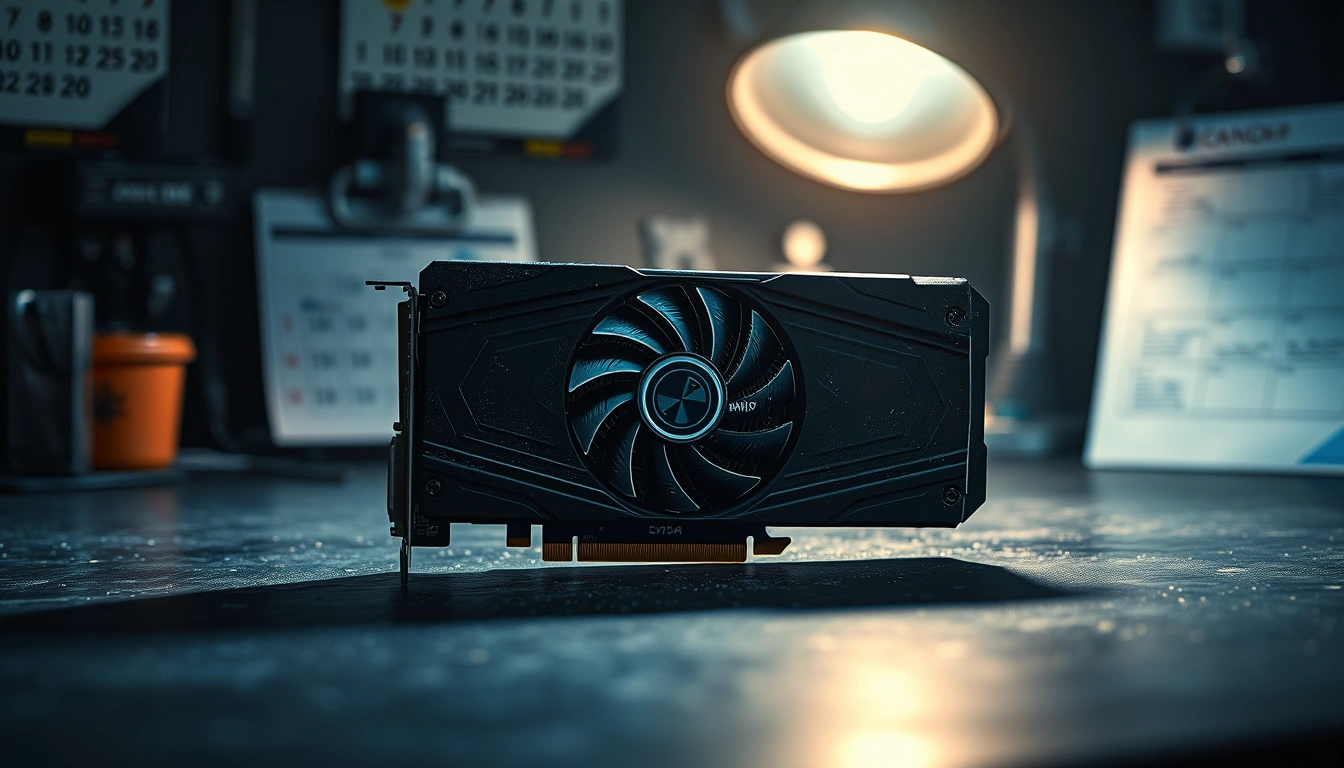
Nvidia will not ship a single new gaming GPU in 2026. Not a refresh, not a Super variant, not a budget card. It’s the first calendar year without a new GeForce launch since the original GeForce 256 shipped in October 1999, according to industry reporting tracking Nvidia’s release cadence. The RTX 50 series, which launched across 2025, remains the current lineup with no successor in sight until at least late 2027.
That gap has turned “rtx 60 series release date” into one of the more searched GPU queries of August 2026, pulling roughly 880 monthly searches in the US alone. Gamers who assumed a new architecture would land on the usual two-year cycle are instead watching Nvidia pour its engineering resources into an entirely different product: the RTX Spark, an AI PC superchip announced with Microsoft that has nothing to do with gaming frame rates. This piece breaks down what’s actually happening, why it’s happening now, and what it means for anyone shopping for a graphics card before 2027.
Don’t miss new tech stories on Google
Add Tech Insider once in the Google app and our stories appear in your news suggestions.
Why Nvidia Skipped Gaming GPUs Entirely in 2026
Nvidia’s gaming GPU release pattern has held for nearly three decades: a new architecture roughly every 18 to 24 months, usually accompanied by a mid-cycle Super or Ti refresh. The RTX 40 series launched in 2022, the RTX 50 series followed in January 2025, and under the historical cadence a Super refresh or an early RTX 60 tease should have landed sometime in 2026. Neither happened.
The reporting from Digital Foundry and other outlets covering Computex 2026 in early June points to a schedule slip rather than a cancellation. Nvidia’s next true gaming architecture, code-named Rubin, isn’t expected before the second half of 2027 at the earliest, with some leakers pushing that timeline into 2028. The reason isn’t a design failure or manufacturing hiccup at TSMC. It’s that Nvidia’s engineering and wafer allocation are being funneled into data center AI accelerators and, more recently, into a new category of AI-first PC hardware that competes for the same 3nm and advanced packaging capacity that would otherwise go to a gaming die.
Wafer capacity at TSMC’s leading nodes is the real constraint. Every Blackwell-class die Nvidia builds for a gaming card is a die it isn’t building for a data center customer paying substantially more per unit. With AI infrastructure demand still outstripping supply through 2026, Nvidia’s own incentives point toward filling data center and now consumer AI-PC orders first, leaving gaming as the segment that waits.
RTX Spark: The Superchip That Replaced the Gaming Roadmap Headlines
Instead of a new GeForce card, Nvidia used its Computex 2026 keynote to introduce RTX Spark, a dual-die “superchip” built for Windows AI PCs and announced jointly with Microsoft. According to Nvidia’s official announcement from late May 2026, RTX Spark pairs a 20-core Grace CPU (Arm-based) with a Blackwell-class RTX GPU carrying 6,144 CUDA cores and fifth-generation Tensor Cores with FP4 precision support. The two dies communicate over Nvidia’s NVLink-C2C chip-to-chip interconnect rather than a traditional PCIe bus, and the package ships with 128GB of LPDDR5x memory delivering roughly 300GB/s of bandwidth.
None of that spec sheet is aimed at gaming benchmarks. RTX Spark is built to run local AI agents, large language model inference, and Copilot-style workloads directly on a desktop or laptop without round-tripping to the cloud. Nvidia’s framing, according to its own press materials, is “reinventing Windows PCs for the age of AI” — a strategic pivot that treats the PC as an AI inference endpoint first and a gaming rig second. Coverage from Tom’s Hardware’s Computex day-zero wrap-up described RTX Spark as an “assault on laptop and desktop markets,” positioning it against Intel’s incoming Xeon 6-based AI PC chips and Qualcomm’s Snapdragon X lineup, not against AMD’s Radeon gaming cards.
The bigger picture: this is the same Blackwell architecture family that powers Nvidia’s data center GPUs. The company also confirmed at GTC 2026 that an RTX PRO 4500 Blackwell Server Edition GPU is headed to Amazon EC2, according to Nvidia’s GTC 2026 live blog. Blackwell silicon is being sliced up for servers, AI PCs, and workstations — everywhere except a new gaming card.
What Gamers Actually Get in 2026: DLSS 4.5, Not New Silicon
The one gaming-relevant update Nvidia shipped this year is software, not hardware. DLSS 4.5 Ray Reconstruction rolled out in August 2026 to existing RTX GPUs, introducing a second-generation transformer model that unifies denoising and Super Resolution into a single AI network instead of running them as separate passes. We covered the technical rollout in detail in our DLSS 4.5 Ray Reconstruction breakdown, but the strategic read is simple: Nvidia is extending the useful life of RTX 40 and RTX 50 series cards through driver and AI-model updates rather than pushing buyers toward new hardware that doesn’t exist yet.
That’s a deliberate move. If there’s no new gaming GPU to sell, keeping current-generation cards competitive through software is the only lever left. It also buys goodwill with the installed base of RTX 40 and RTX 50 owners who would otherwise feel stranded on hardware that’s a full generation removed from Nvidia’s marketing spotlight for the entirety of 2026.
The RTX 5090 SE Rumor That Nvidia Never Confirmed
Speculation filled part of the vacuum. Leaks pointed to a cut-down RTX 5090 SE built on the same GB202 silicon as the retail RTX 5090, but scaled back to 110 streaming multiprocessors (roughly 14,080 CUDA cores) against the full 170 SM count on the standard 5090, paired with 32GB of GDDR7 on a 384-bit bus and a 500W TGP. As of mid-July 2026, Nvidia had made no official announcement, and at least one outlet, Club386, published a direct denial that any RTX 5090 SE was in the pipeline. Treat this one as unconfirmed until Nvidia says otherwise; it illustrates the appetite for any scrap of new-hardware news during a year when the actual roadmap has gone quiet.
How AMD and Intel Are Responding
Nvidia’s gap year should, in theory, be AMD’s moment. It hasn’t quite worked out that way. AMD’s next consumer architecture, RDNA 5 (sometimes referred to under the UDNA branding as the company unifies its gaming and compute lines), is also tracking to mid-2027 or later rather than a 2026 launch. Computex 2026 hardware showcases, including an ASrock prototype Phantom Gaming card, were still built around the existing RDNA 4 flagship, the RX 9070 XT, dressed up with new cooling and a 12V-2×6 power connector rather than new silicon underneath.
AMD did make one real move this year: the global launch of the Radeon RX 9070 GRE, a trimmed-VRAM variant that we covered in our RX 9070 GRE global launch report. That’s a market-expansion play, not a new-generation launch, and it underscores that both major GPU vendors are managing the current generation for another year rather than racing to replace it.
Intel, meanwhile, is chasing a different opportunity. Leaks point to a budget Panther Lake-based chip with eight CPU cores and four Xe3 graphics cores aimed squarely at gaming handheld manufacturers looking for a cheaper alternative to flagship silicon — a segment Intel already has a foothold in through cards like the Arc B580, which we compared directly against Nvidia and AMD’s budget options in our Arc B580 vs RTX 5060 vs RX 9060 XT comparison.
Nvidia’s 2026 Gaming GPU Roadmap vs Prior Generations
| Generation | Launch Year | Flagship Card | Months Since Prior Gen |
|---|---|---|---|
| RTX 20 series (Turing) | 2018 | RTX 2080 Ti | ~24 months (from GTX 10) |
| RTX 30 series (Ampere) | 2020 | RTX 3090 | ~24 months |
| RTX 40 series (Ada Lovelace) | 2022 | RTX 4090 | ~24 months |
| RTX 50 series (Blackwell) | 2025 | RTX 5090 | ~28 months |
| RTX 60 series (Rubin, expected) | Late 2027 (est.) | Unconfirmed | ~32+ months |
The gap between RTX 50 and the still-unnamed next generation is already tracking to be the longest in the RTX era, and it could stretch further if Rubin slips into 2028 as some leakers now suggest.
Market Impact: What Zero New GPUs Means for Prices
A generation-length pause in new gaming GPU launches has ripple effects well beyond enthusiast forums. With no successor pressuring prices downward, RTX 50 series cards have held value far longer than any recent generation. We documented this directly in our RTX 4090 vs RTX 5080 used-market analysis, where used RTX 4090 pricing actually climbed relative to the newer RTX 5080 rather than depreciating on the usual curve, because buyers have no reason to wait for a replacement that isn’t coming.
That pricing dynamic is compounding with a separate problem: the 2026 DRAM and memory shortage that’s already pushed component and device prices up across the board. We covered how that shortage forced Apple to raise iPad and Mac prices by as much as 29% in our DRAM shortage report, and GDDR7 memory used in GPUs isn’t insulated from the same supply crunch. With no new architecture to reset pricing expectations and memory costs rising independently, RTX 40 and RTX 50 series cards are proving unusually sticky at current price points well into their third year on shelves.
Nvidia’s Financial Incentive: Data Center Over Desktop
None of this is happening by accident. Nvidia’s data center segment has dwarfed gaming revenue for several years running, and every wafer allocated to a GeForce die is a wafer not sold to a hyperscaler at data-center margins. The RTX Spark launch with Microsoft extends that same math into the consumer PC market: an AI PC superchip carries software and platform strategy value (tying Windows Copilot features to Nvidia silicon) that a traditional gaming refresh doesn’t. From a purely financial standpoint, 2026 wafer capacity spent on RTX Spark and data center Blackwell parts likely generates more revenue per wafer than the same capacity spent on a GeForce refresh aimed at a gaming market that isn’t demanding one as urgently as AI buyers are.
Historical Context: Has This Happened Before?
Nvidia has stretched a generation before — the RTX 20 to RTX 30 gap ran close to two years, and RTX 30 to RTX 40 also landed near the 24-month mark — but a full calendar year with zero new gaming GPU SKUs of any kind, not even a Super refresh or a rebadge, has no precedent since the GeForce 256 debuted in 1999 and kicked off the branded GPU category. Even during the 2020-2022 chip shortage, when Ampere cards were nearly impossible to buy at MSRP, Nvidia still launched new SKUs; it just couldn’t supply them in volume. 2026 is different: supply isn’t the blocker, allocation is.
Competitive Landscape: RTX 50 vs Radeon RX 9000 in Mid-2026
| Card | Vendor | Architecture | Status in August 2026 |
|---|---|---|---|
| RTX 5090 | Nvidia | Blackwell | Current flagship, no successor announced |
| RTX 5080 | Nvidia | Blackwell | Current high-end, holding price per our RTX 5080 vs RX 9070 XT comparison |
| RX 9070 XT | AMD | RDNA 4 | Still AMD’s flagship gaming card, no RDNA 5 in 2026 |
| RX 9070 GRE | AMD | RDNA 4 | New global SKU, trimmed VRAM, not a new generation |
| Arc B580 | Intel | Battlemage (Xe2) | Budget tier, no successor confirmed for 2026 |
Every major GPU vendor is effectively frozen on its current generation through the rest of 2026. That’s an unusual moment of competitive stasis across the entire discrete GPU market simultaneously, not just at Nvidia.
What This Means for GeForce NOW and Cloud Gaming
Nvidia’s cloud gaming arm hasn’t slowed down even as the desktop GPU roadmap stalled. GeForce NOW continued its RTX 5080-tier rollout through 2026, and we detailed the pricing and server upgrade path in our GeForce NOW RTX 5080 rollout coverage. That’s a meaningful signal: Nvidia can keep upgrading the silicon that powers its subscription streaming service on its own schedule, decoupled from the retail GPU cadence that gamers buying physical cards are stuck waiting on. If you want RTX 5080-class rendering today without buying a card that won’t be replaced until 2027 at the earliest, cloud gaming is arguably the more current option right now.
Should You Buy a GPU Now or Wait?
For anyone shopping for a graphics card in August 2026, the calculus has shifted from the usual “wait for the next generation” advice. With Rubin-based RTX 60 series cards not expected before late 2027 — and possibly 2028 given how leaker timelines have already slipped once this year — waiting an entire generation cycle for a card that doesn’t exist yet is a much bigger ask than the usual few-month wait before a refresh. Current RTX 50 and RX 9000 series cards are the real current generation for at least another 12 to 18 months, not a soon-to-be-outdated stopgap.
The one caveat is the unconfirmed RTX 5090 SE rumor. If Nvidia does release a cut-down high-VRAM variant later in 2026, it would land as a mid-cycle SKU rather than a new architecture, similar in spirit to a Super refresh. It’s worth watching, but it shouldn’t be the reason to delay a purchase given Nvidia hasn’t confirmed the product exists.
5 Predictions for the GPU Market Through 2027
- Rubin slips to early 2028 for mainstream desktop cards. Data center Rubin parts will likely arrive first in late 2027, with consumer GeForce variants trailing by two to four months, mirroring the Blackwell rollout pattern.
- DLSS updates become Nvidia’s primary 2027 gaming announcement cadence. Expect at least one more DLSS point release (DLSS 4.6 or similar) before any new silicon, continuing the software-first strategy that extended RTX 40/50 series relevance through 2026.
- AMD narrows the RDNA 5 gap rather than beating Nvidia to market. With both vendors tracking mid-to-late 2027, AMD’s real opportunity is matching Nvidia’s launch window rather than exploiting a first-mover advantage it hasn’t seized in 2026.
- Used RTX 40 series pricing stays elevated through at least Q2 2027. As long as no successor architecture ships, secondhand Ada Lovelace cards will keep holding value abnormally well compared to historical depreciation curves.
- AI PC chips like RTX Spark expand into more OEM laptops before any new gaming die ships. Expect Nvidia to prioritize additional Grace-Blackwell AI PC partnerships with OEMs beyond Microsoft before allocating meaningful wafer capacity back to gaming-only silicon.
Frequently Asked Questions
Is Nvidia really not releasing any new gaming GPUs in 2026?
Correct. As of August 2026, Nvidia has not announced any new gaming GPU architecture, Super refresh, or new SKU beyond variants of the existing RTX 50 series. The RTX Spark superchip announced at Computex 2026 is an AI PC product, not a gaming card.
When will the RTX 60 series release?
No official date exists. Industry leakers and outlets like Digital Foundry point to Nvidia’s next gaming architecture, Rubin, arriving no earlier than the second half of 2027, with some estimates extending into 2028.
What is the RTX 5090 SE and is it real?
The RTX 5090 SE is an unconfirmed rumored variant using cut-down GB202 silicon (110 SM, roughly 14,080 CUDA cores) with 32GB of GDDR7. Nvidia has not confirmed the product, and at least one outlet has published a direct denial that it’s launching.
What is RTX Spark used for?
RTX Spark is a superchip combining a 20-core Grace CPU with a Blackwell-class RTX GPU, built for running local AI agents and inference workloads on Windows PCs. It’s announced through a Microsoft partnership and isn’t marketed as a gaming product.
Should I buy an RTX 5090 or RTX 5080 now, or wait for the next generation?
With no new gaming architecture expected before late 2027 at the earliest, current RTX 50 series cards remain the practical top-tier choice for at least the next 12 to 18 months. Waiting for RTX 60 series in 2026 is not a realistic strategy.
Is AMD launching new gaming GPUs in 2026 either?
No. AMD’s RDNA 5 architecture is also tracking to mid-2027 or later. AMD’s only 2026 moves have been SKU expansions like the RX 9070 GRE, not a new generation.
Does DLSS 4.5 make older RTX cards feel new again?
DLSS 4.5 Ray Reconstruction, which rolled out in August 2026, brings a unified transformer model for denoising and upscaling to all existing RTX GPUs. It’s a meaningful image-quality and performance upgrade, but it’s a software update, not new hardware.
Has Nvidia ever skipped a full year of gaming GPU launches before?
Not since the GeForce brand launched in 1999. Even during the 2020-2022 chip shortage, when cards were scarce, Nvidia still launched new SKUs; supply was the constraint, not the roadmap. 2026 marks the first time allocation, not supply, has paused new launches entirely.
Related Coverage
- RTX 5090 vs RTX 4090: 23% Faster, $673 Price Gap [2026]
- RTX 4090 vs RTX 5080: Used 4090 Costs 57% More [2026]
- RTX 5080 vs RX 9070 XT: 25% RT Gap, $400 Price Divide [2026]
- DLSS 4.5 Ray Reconstruction Ships to RTX GPUs [2026]
- AMD RX 9070 GRE Goes Global at $549, Cuts 4GB VRAM [2026]
- GeForce NOW’s RTX 5080 Rollout Holds Price at $19.99 [2026]
- Arc B580 vs RTX 5060 vs RX 9060 XT: 43% FPS Gap [2026]
For more GPU and AI chip coverage, visit our AI chips and GPU pricing hub.

1 Comment
Pingback: Skyesports partners with The GIANT Hunt to power a global anime movement from India - Comic Vibe