

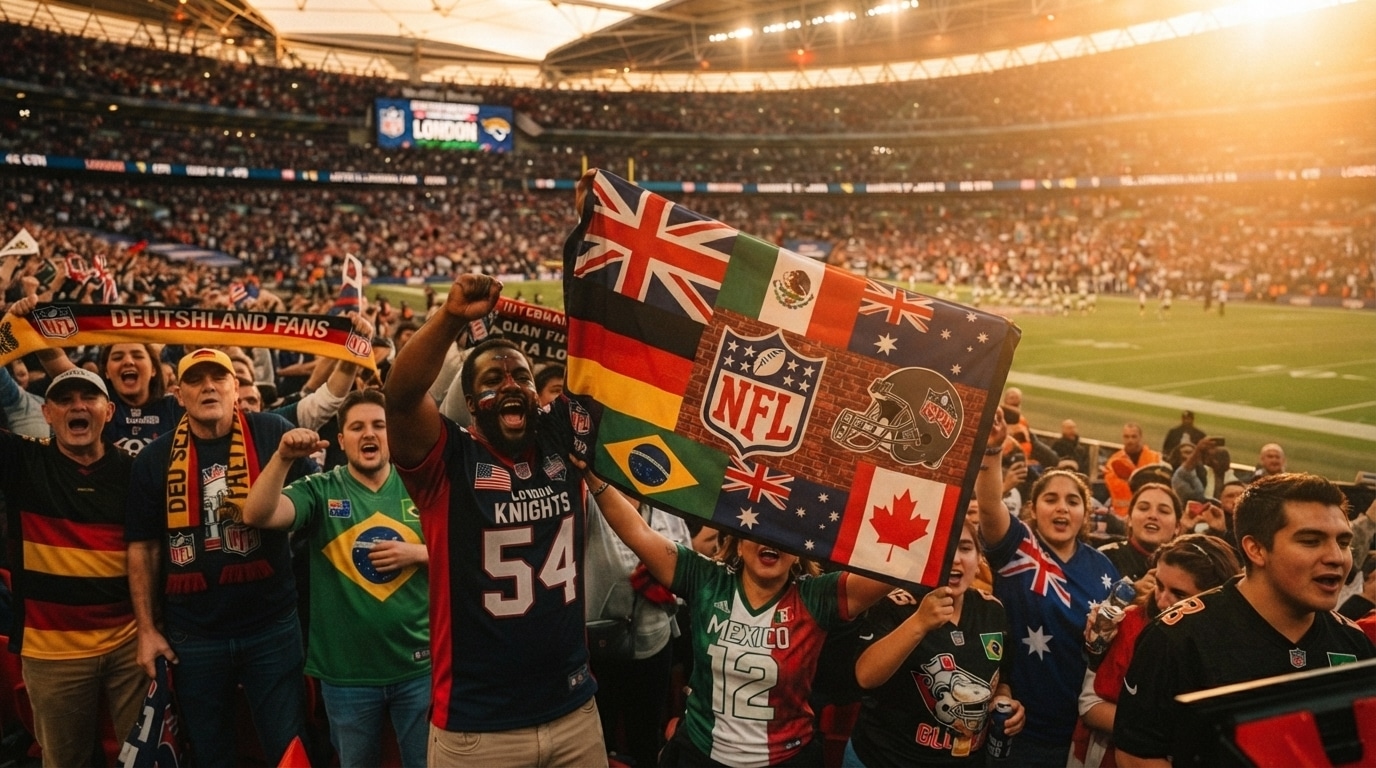
For years, American football looked like the one sport that would stay American. Its rules seemed too intricate. Its season ran too short. Its culture stayed too tied to college towns and Thanksgiving traditions to travel. Yet that assumption has quietly collapsed. Today, from São Paulo to Munich to Melbourne, the NFL commands passionate audiences who have never set foot in a U.S. stadium. Better still, several franchises have learned how to turn that curiosity into genuine, durable loyalty.
The league stopped waiting for fans to find it
For decades, international interest in the NFL grew by accident. A curious viewer would stumble onto a broadcast, get hooked, then turn into an evangelist in a country where nobody else understood the stop-start chaos. Meanwhile, the league did little to help. Now that passivity is gone. Instead, the NFL stages regular-season games in London and Germany. It signs streaming deals tuned to local time zones. It also produces social content that explains the basics to new audiences. Together, these moves replace the old hope that fandom would spread on its own.
This shift matters because it changed who gets to be a fan. Previously, a 2 a.m. kickoff and zero context meant that only the obsessive survived. Lower that barrier, however, and the audience broadens instantly. As a result, the very people that inconvenience once shut out now fill seats at international fixtures. They also drive jersey sales in markets the league barely acknowledged a decade ago.
Your subscription could not be saved. Please try again.
Your subscription has been successful.
Some franchises adopted the world, and the world adopted them back
Not every team pursued this equally. For that reason, global fandom looks lumpy rather than uniform. Still, a handful of franchises leaned in early through the league’s Global Markets Program, which assigns clubs specific international territories. Over time, their results compounded. After all, a team that shows up in a country, plays there, runs youth clinics, and speaks to fans in their language builds something a distant TV signal never could. That groundwork explains a lot. Indeed, certain clubs now have supporters’ groups in cities their front offices could not have found on a map 10 years ago.
For newcomers, a team’s appeal often depends on how accessible it feels. Typically, international fans follow the odds and the storylines together. So checking the NFL betting odds becomes one way they learn which teams contend and which rebuild. Those numbers tell a story that transcends language. For a new fan picking a side, then, a team’s trajectory can feel as magnetic as its history.
Why the underdog stories translate so well
Global audiences often gravitate toward franchises that sit outside the traditional American powerhouses, and for good reason. The dynasties that dominate domestic conversation can feel like inherited allegiances, closed to outsiders. By contrast, a rising team with a young roster and an open future offers something a new fan can claim. Moreover, adopting a struggling franchise and watching it climb builds the kind of emotional investment that lasts through losing seasons.
Here, the league’s expanding footprint starts to reshape long-held assumptions about which markets matter. Consider a quarterback who becomes a folk hero in Frankfurt, or a defense that draws a cult following in Sydney. Either one can lift a franchise’s global standing, even without a single change in its domestic performance. In fact, fans who track the college pipeline often pick a side long before a player turns professional. Ultimately, the story a team tells abroad, and how deliberately it tells it, shapes the size of its worldwide base.
The infrastructure of caring from far away
Once, supporting a team 8,000 miles away meant a lonely, logistically punishing hobby. Now it means a community. Discord servers group fans by country. Sports bars open at dawn for kickoff. Creators translate coaching decisions into local slang. Together, these pieces form a support structure that keeps distant fandom sustainable.
That infrastructure feeds on itself. Each new fan lowers the barrier for the next one. After all, someone can now explain the rules, share the heartbreak, and celebrate at an early hour. Smart teams recognize this. So they invest in the community layer directly. They seed official fan clubs, and they show up where international supporters already gather rather than expecting a migration to American platforms.
What global fans bring back to the game
The influence runs in both directions. International audiences do not consume the sport passively; instead, they reshape it. Their preferences affect scheduling. Their markets influence where the league plays future games. Their enthusiasm now weighs on long-term planning too. Meanwhile, the culture around the game evolves, because global fans bring their own traditions to a sport that once treated its rituals as fixed.
You can see the ripple effects in unexpected corners of the ecosystem. For example, brands now design merchandise for specific markets. Likewise, the wider industry around athletes, including top sports nutrition brands, now markets to a genuinely worldwide audience. In short, a sport with global fans becomes a global business, and that scale changes what the sport can afford to become.
The followings that will define the next decade
Right now, the teams building the deepest international loyalty are not necessarily the ones winning championships. Rather, they treat global fans as participants instead of spectators. They show up in person. They speak local languages. They offer a narrative that outsiders can step into without feeling like intruders. Granted, that approach moves slower than buying attention. Even so, it produces the kind of allegiance that survives losing records and coaching changes.
American football is still writing its global chapter. Therefore, the franchises that take it seriously now will own audiences that rivals then chase for the next 20 years. The world was always going to find this sport. Still, the teams that went to find the world first will reap the loyalty once everyone else finally arrives.
MORE STORIES
Don’t miss out on the latest news and information.
TAGS: gp
