

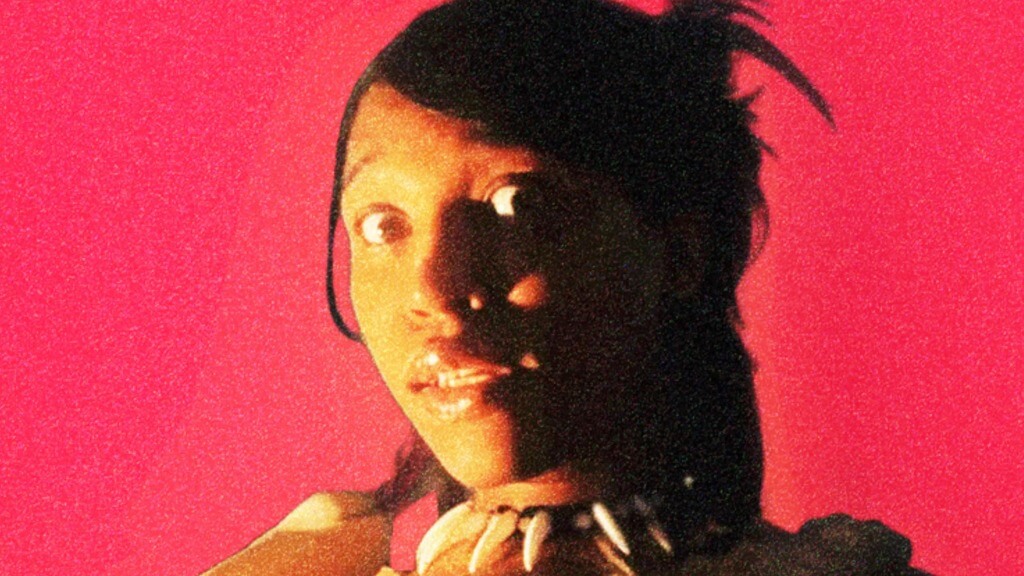
One of the biggest paradoxes of pop culture exposure in the 2020s is the limitless availability of decades’ worth of recorded media alongside the absence of a monoculture. What constitutes “mainstream” is up for debate, and the points of entry for accidental exposure to subcultural or up-and-coming music are fewer and less visible. A side effect (or perhaps a cause) of the delineations between pop culture and subculture breaking down is that it’s harder than ever to predict what audiences a song or album might reach. Shortly after Tracy Geneviève Amare, who performs as Portraits of Tracy, went semi-viral for “The Party,” a track off her 2023 mixtapeDrive Homethat samples Beach House by way of the Weeknd, she discovered that a neo-Nazi influencer had added her music to his public playlist and was sharing it in an alt-right group chat.
This became the catalyst for Amare’s unsubtly titled song “This Song May Or May Not Be About An Alt-Right Influencer.” She couldn’t control who listened to her music, but she could control the message it conveyed. In this case, that message is “You sit now upon your throne / While we yearn for the day / We can throw the dogs your bones,” and she spits it through thick sheets of electric guitar distortion. The name of the influencer she shouts out at the beginning of the track is bleeped, as is the location on him and “any other copycat” where she’d like to put a bullet. “This Song…” closes with Amare screaming “I want my MTV!”—a moment perhaps more telling than any other on her new EP, Q: From Where Do Our Primal Instincts Originate? A: MTV!. She’s informed by her affinity for vintage pop cultural influences without being overly reliant on nostalgia or too reverent to poke fun at the objects of her obsession. She understands that uncritical indulgence in bygone aesthetics is itself a fascistic tendency.
In the music video for the EP’s space-odyssey centerpiece, “Caught In A Jam,” a spacesuit-clad Amare dances greenscreened through the streets of a miniature city and fights a giant robot. The intergalactic imagery that reappears throughout her EP fittingly characterizes Amare as an intrepid astronaut exploring the limitless capacities of time and genre.
The EP’s titleis an obvious reference to Devo’sQ: Are We Not Men? A: We Are Devo!, but it’s also a cheeky nod to the odd realities of being a pop culture nerd—the way our music and media obsessions speak for us better than we can speak for ourselves and embed themselves into what feels like the very fiber of our being. Those unfamiliar with Rose Banks’ rendition of “My Life Is Loving You” might think Amare’s closing cover of the ballad is the original. Amare’s cover is a faithful one that channels the grandiosity and breathless abandon of its source material into glitchy, bass-booming synth-pop. This is one of Amare’s greatest tricks: proudly displaying her influences in a case that only she could have built.
“Caught In A Jam” is a cartoonishly bouncy bop built on a relentless bass that ricochets from motormouthed new wave into a key-hammering glam rock breakdown, over which Amare tells the story of a dream or drug trip—it’s hard to tell which—and either way, it ends with the story’s villain getting kicked in the balls. It’s her “Bohemian Rhapsody” compressed and crunched up into just over four minutes, a rock and roll epic in laptop proportions that sounds like it could’ve been uploaded to SoundCloud yesterday as much as it could’ve debuted on120 Minutesforty years ago.
The following “Royal Courts (Great Misfortune)” begins with just acoustic guitar and Amare’s vocals—sweet, girlish, and unadorned but surprisingly sturdy amid a barrage of instrumental curveballs. The track flounces into extravagant psychedelic baroque pop. “Strike your matches / Honey, here I come!” Amare bellows at its shiniest peak, before instantly outdoing herself with a wall of Queen-esque wails. TheLooney Tunescalamity of its outro clips and fuzzes and thrashes against its sonic container, only for Amare to turn up the glitchiness even further on the following “Halli Step / Raider Klan Shit,” which sparkles with Blingee kitsch and stomps like a game of Dance Dance Revolution on expert mode.
Not counting remixes, “…MTV!” is Amare’s first proper release since herDrive Homemixtape, which dropped before she came out as a trans woman. OnDrive Home, she sang and rapped about identity using a character called Junie as an avatar for the female identity she was still coming to terms with as a closeted teenager living in Louisiana. Between these two releases, she transitioned, got kicked out of her childhood home, and relocated to LA.
Amare cites Tyler, the Creator as one of her earliest and most enduring influences, and her shift from moody, narrative rap to danceable pop-rock feels in line with his recent evolution, as seen onDon’t Tap The Glass, a record made with nostalgia for pre-smartphone dance clubs in mind. At twenty-two years old, Amare is an internet native whose raw materials have been culled from decades of preservation, dissemination, and recontextualization. It’s the expansiveness and specificity of her vision that make these borrowed sounds feel brand new when juxtaposed with one another.Q: From Where Do Our Primal Instincts Originate? A: MTV!make objects of nostalgia and artifice sound like pure instinct.[Self-Released]
Grace Robins-Somerville is a writer from Brooklyn. Her work has appeared in Pitchfork, Stereogum, The Alternative, ANTICS, Marvin, Swim Into The Sound, and her “mostly about music” newsletter, Our Band Could Be Your Wife.

Keep scrolling for more great stories.
