

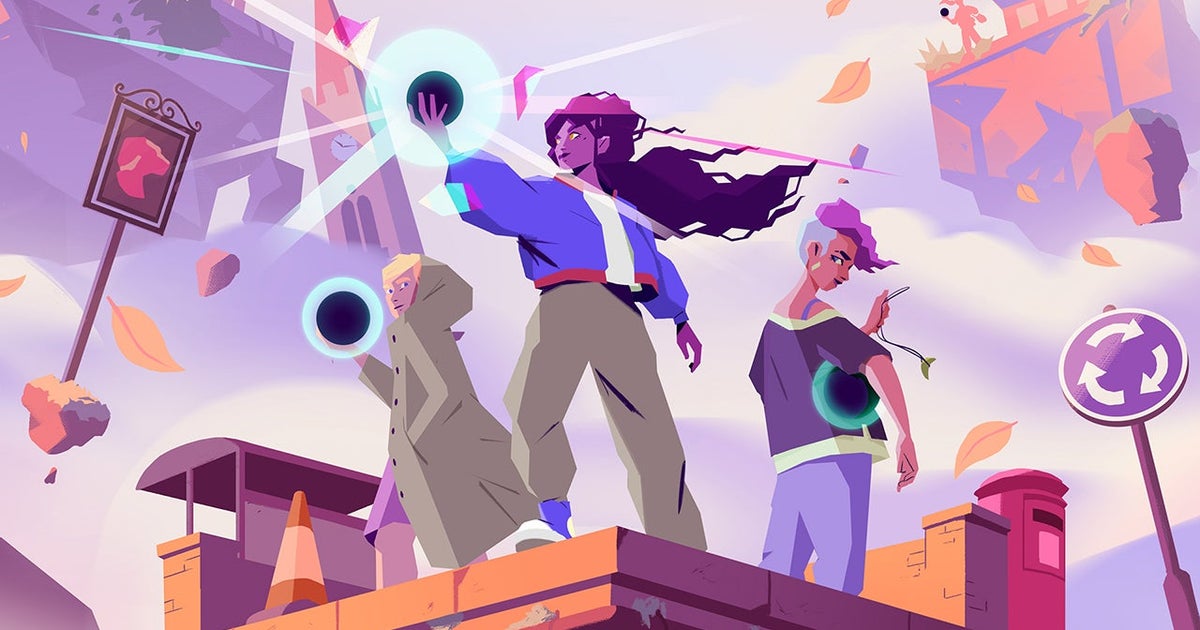
Ustwo Games has always been synonymous with tactile mobile game experiences, chiefly their breakout hit Monument Valley and subsequent releases Assemble With Care and Desta: The Memories Between. Earlier this year it announced plans to change that, and shift to a PC-first strategy.
It’s far from the only mobile-first firm to begin looking for new pastures. Back in 2023 mobile giant FunPlus unveiled a cross-platform strategy, bringing titles like Aniimo to PC and console, while Outfit7, the firm behind the Talking Tom mobile franchise (which has more than 26 billion downloads under its belt), now has its sights set on PC.
During a keynote at this year’s Develop conference, Ustwo Games CEO Maria Sayans said the decision to move to PC should have been made earlier. “Some of our projects that never saw the light of day could’ve been killed sooner,” she said, saying that might have meant the company could have avoided laying off four of its 30 employees earlier this year. “For a team our size and one that has never done redundancies, it was really painful,” said Sayans (who subsequently announced plans to hire more contractors rather than full-time staff to reduce costs). “Inevitably, I look back and think that had we made this decision sooner, we wouldn’t be in that situation.”
At the same time, the studio took some bigger swings that would ultimately help to set it up for the future. “We did three new ideas in different genres that we had not done before,” said Sayans, “which was wonderful because we learned so much and stretched our ability to look at what we could do. If we hadn’t done that, we probably wouldn’t be where we are today.”
This experimentation let Ustwo adapt mobile’s tactile features to other platforms before fully committing to PC.
“We’re still going to have mechanics that are very tactile, quick to understand, and incredibly satisfying,” said Daniel Gray, chief creative officer and game director at Ustwo Games, during the Develop talk. “A lot of what we do transitions over.”
“Another thing that will persist is making the most of the people that are working on the game – the life experiences and interests they have, leaning into them and allowing a game to feel genuine… The philosophy of how we make stuff will transition too.”
Free-to-play dominance
Gray noted that Ustwo always aimed to offer players a meaningful experience on mobile, rather than a simple distraction. But over time, the studio recognised the mobile market was shifting away from this approach.
“[When making Assemble with Care], we really believed in making games a more artistic medium for your average person,” he explained. “Our mission was to have somebody go, ‘You know what? I’m not just going to play match-three games as a distraction on my phone. I’m going to go there for a story, an experience, to feel something, to walk away having changed my mind on the world to some degree’.”
“I was full of positivity then that the mobile industry was going to go, ‘No, people are going to read short stories and play interactive media on their phone as a wholesome form of <a href="https://comicvibe.com/sm-culture-contents-names-former-sbs-entertainment-chief-to-lead-entertainment-division/” title=”SM Culture & Contents names former SBS entertainment chief to lead entertainment division”>entertainment.’ Ten years later, that’s turned out not to be the case.”
Gray said that if Ustwo had remained mobile-first, it would have needed to adopt a free-to-play model, which he was not comfortable with.
“I want to tell stories. I want to do finite things. I want to focus on polish rather than extensive gameplay. I think we need to do the things that we’re personally interested in doing to do a good job of them.”
“Platform holders wanted to make games that had more retention and lasted longer. We’ll never be good at that”
Another motivation, said Sayans, was that Ustwo was being pushed toward a free-to-play model by platform holders.
“They wanted to make games that had more retention and lasted longer. So as a business model, we would become a free-to-play developer. We’ll never be good at that. It’s so against our DNA that it was impossible to even consider, and we didn’t want to do it anyway.
“Later, it became clear that it’s also incredibly difficult, and the barriers are really, really high on free-to-play. So that was never going to be a path for us.”
At the same time, Sayans said that producing premium mobile games had also become financially unsustainable. “We are a company with an average cost per employee similar to an AAA developer. We are an expensive studio making games with sensibilities that were not going to fly on mobile.”
Outsiders
For Ustwo, the idea of transitioning from mobile began with Assemble with Care, the company’s first PC release. But Alba: A Wildlife Adventure was the first time the team felt like they “were making a real video game.”
“It became clear that we needed to actually shift more rapidly towards PC [after that], and to reorganise the company and rethink the future,” said Sayans.
Gray agreed, adding that even when Ustwo focused on mobile development, the team did not feel aligned with the broader mobile industry.
“We’d go to mobile conferences, and everyone would be banging on about retention of active users, whereas our game lasts an hour, and it costs us however many millions to make. We always felt somewhat outside of that sphere – we felt a little bit between that and what people did on PC and console.
The transition to PC was reinforced by Desta, which represented a significant departure from Ustwo’s typical projects. Rather than focusing on tactile puzzle-solving, Desta combined elements of turn-based tactics and sports games. It was an attempt to “make a game that was fully mobile but also for PC,” in the the words of chief development officer Peter Pashley, which Gray admitted “didn’t necessarily work out” given the underwhelming sales.
“We had to accommodate two very different sets of players,” he said. “Being trapped between those two audiences, we started going further down a path of thinking about what it would be like if we built stuff for PC and console from scratch.”
Peter Pashley, chief development officer at Ustwo Games, said the studio’s future was built on deprioritising mobile development. .
“We aren’t thinking about mobile. We need to have a clear vision of the people playing the game and make the game for them”
“People have asked, is this still going to be released on mobile? Surely you’ve got to still put them out on mobile?” Pashley noted. “But we’ve said, no, we need to make sure we have a clear vision of the people playing the game and make the game for them. We’re lucky enough for things to work out and be successful. So maybe we’ll find a way to go back to mobile, but it can’t be something that’s in the back of our head.”
Gray emphasised that maintaining Ustwo’s core identity is a priority during the transition to a PC-first approach, acknowledging that this shift will be “challenging.”
“We’ve not shipped any of these PC-first games yet, even though we’re making three of them,” he said. “We’ve been very fortunate that we’ve been in these payable contracts with platform models. To a certain degree, that’s protected us from the reality of what it’s like to ship games. We were releasing games knowing that development was paid for and that we weren’t going to walk away with 10% of what we’d cost back. And because we’re transitioning to what is now a very normal situation, it’s making us second-guess how we approach things.
“Should we be more audience-led and more specific about what we do? Does that stop us from being as creative? What’s the magic, and what’s the structure? We know we need a combination of those things, and we’ve got plans for how we’re going to do that, but we won’t know until we’ve done it.
Gray concluded: “What remains is the challenge of retaining who we are, but also doing things in a completely different way for a different type of player. It’s something we need to get right and keep assessing, but it’s not going to be solved upfront – it’s going to evolve over the next two years.”
Ultimately, he said, that the studio needs to “continue to take risks.”
“Sometimes it’s going to hit big time, sometimes it’s not. But to make good artistic stuff, you need to be able to put yourself out there a little bit and deal with the vulnerability of getting it wrong now and again.”
A different mindset
Outfit7 is also looking outside the mobile market, but for very different reasons from Ustwo. The company has fit comfortably inside the free-to-play model for years, racking up billions of downloads for Talking Tom, but now it’s looking to expand its reach to new audiences. “We know that if you are setting the trends or you are the first adopter, then you can get something out of it,” Jernej Česen, COO and general manager at Outfit7, tells GamesIndustry.biz.
“I think that for the entire industry, diversification is the key,” he continues. “If you are not exploring, you are standing still.”
Česen says that the push towards PC started with Outfit7 setting up two small cells of developers internally. “And we said to them, ‘Hey, you are the masters of your future: pitch a game and then you get ownership over [it], so you can decide how you’re going to run it’.” The move resulted in the release of Vampirio on Steam in April, which was followed by Liminal Logistics in June.
Česen says that Outfit7’s PC games are subject to the same approach that has become standard in the mobile development world: rigorous early testing with audiences, followed by the rapid rejection of ideas that don’t land (a mode of operation that is now being adopted in the PC and console world by firms like Avalanche Studios). Otherwise, its PC developers are given free rein on how to do things. “We have just the milestones where we validate this,” says Česen, “validate in the sense of, are you reaching those KPIs?”
Ustwo may have moved to PC to escape a world focused on things like “retention of active users”. But at the same time, the mobile way of doing things is slowly seeping into the PC realm.
