

Image via Nazih Fares
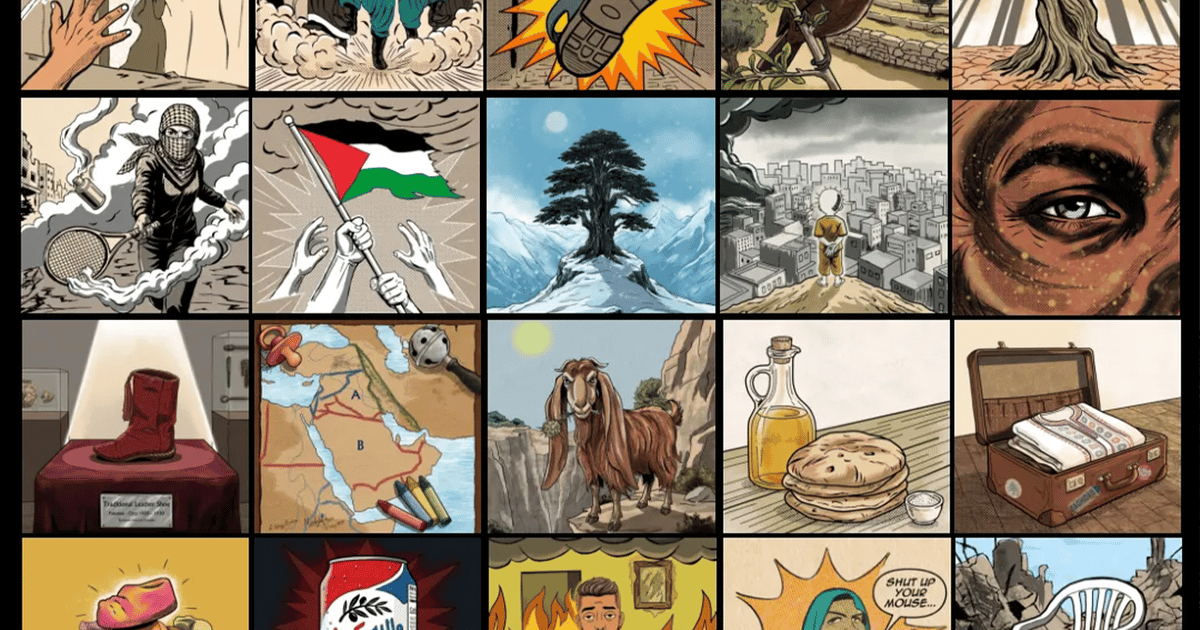
The Arab League of Misfitsis a satirical card game born out of Arabic identity, heritage, and culture. Creative director Nazih Fares assembled a team of roughly 12 people—all Arab developers from across the globe—to build out a prototype of the game
“Everyone had this similar story, where we’re kind of detached from our country because we either got kicked out, or war pushed our parents out at some point, or we’re born abroad or raised abroad,” Fares said. “We all abounded around using humor as an ailment to everything going on. It’s our best way to unify ourselves.”
They said the team has almost a co-op structure, bringing together people from regions that don’t always have the opportunity to work in the industry. Together, they have built out a prototype of the game and started pitching for funding. It is not going well
It’s not that the game isn’t good: Fares said the team have received positive feedback, but a game focused on the Arab world is seen as too much of a risk to those with their hands on the purse strings. Fares estimated the team has pitched nearly 50 different organizations, from regional and national funds to independent publishers and funds
Fares told Game Developer they want to provide a transparent look how that search for financial support unfolded. Right now, it’s something most developers will be struggling with, but they said it presents an even bigger challenge for people from marginalized backgrounds. Fares andThe Arab League of Misfitsdev team commenced their own search by approaching the national and regional arts funds, which require months of paperwork before you can even submit a funding application. They also sought to make contact with publishers and independent funds.
“We got a bunch of fast rejections, and the vibe was mostly, when you read between the lines, that yes, they want to take a risk, but the theme of our game was a bit too spicy,” Fares said
That spiciness is not necessarily in any particular theme, but simply from being an Arab game from Arab developers. It’s considered too risky to take on just by nature of the region—which is often depicted as the enemy in military shooters like Call of Duty, which generally shun realistic portrayals of the region’s people and cultures. Palestinian game developer Rasheed Abueideh came up against a similar hurdle—”too risky”—when financing Dreams on a Pillow, which tells the story of Palestinians displaced during the Arab-Israeli war.
“[Investors and publishers] demand risk to stand out, but they also systematically filter out any project that doesn’t mirror the safe gameplay angle or commonality with another hit or licensed IP,” Fares said
Game developers responding toGDC’s State of the Game Industrysurvey for 2026 expressed the same sentiment: Publishers want to invest in “sure things,” one respondent said. Competition is so fierce that studios often need a full demo before approaching publishers, and those demos are not inexpensive to produce. 35 percent of respondents said they are forced to self-fund—something that is simply not
“There are all this marketing and press releases about diversity initiatives, but then [publishers and funds] just retreat to comfortable, licensed, safe [games,]” Fares said “It’s not just targeting publishers with no connection to the Arab world, but the same things happen in the Arab world as well.”
Fares pointed to the Institut du Monde Arab (IMA), which has a budget of €12 million to fund projects from the Arab world. Fares said, though, that its games projects are focused on the “high-visbility collaborations with Western mega-publishers,”like Ubisoft and Assassin’s Creed Mirage, “rather than funding or nurturing local game development even in its own turf of France.”
The state of the video game industry certainly doesn’t help anyone out. With companies likeMicrosoft shedding studios and laying off 1,600 people in July(with 1,600 more layoffs to come) andFortnitemega-studio Epic Games cutting a slightly lower amountin March, the industry is undergoing massive struggle. The current model is not working. There is little appetite for risk, even as industry leaders acknowledge the current crisis
Everyone wants to hear from “new voices,” Fares said. That is, unless those new voices are considered too big of a risk
FundingTop StoriesFeatures
