

Before finding its footing as a Batman team-up title, The Brave and the Boldwas a place to see unexpected, reader-requested team-ups like Green Arrow and Martian Manhunter, or Metamorpho and the Metal Men. And while reader response to these team-ups was positive, it was nothing compared to the reception Brave and the Bold#54 received. This issue teamed teen sidekicks Robin, Kid Flash, and Aqualad, and its popularity caught DC’s editors completely off-guard. Six issues later, the team-up was revisited, and the team given its own name: the “Teen Titans.” Joining the founding three members would be an all-new character … although DC didn’t advertise her that way. “Wonder-Girl” was presented on the cover as an existing character, same as Robin or Kid Flash. And she was, sort of: “Wonder-Girl” stories had appeared in Wonder Womansince 1959. But “Wonder-Girl” wasn’t a teen sidekick as writer Bob Haney seemed to think. She was an adolescent version of the adult Wonder Woman, and the stories were told in flashback. Suddenly, DC had created a gaping hole in their own continuity, and it would take years to fix.
Videos by ComicBook.com
Sporting easily one of the most convoluted histories in DC Comics, Wonder Girl’s backstory was a source of contention and confusion for almost twenty years after her debut, not cleared up fully until 1984’s The New Teen Titans#38. That confusion has made Brave and the Bold#60 doubly collectible for Teen Titans fans: it’s not only the team’s second appearance and the debut of its name, but has been canonized as Wonder Girl’s first appearance. Sporting a cover from iconic Teen Titans artist Nick Cardy, the issue is one of the major keys in Silver Age Teen Titans collecting, and is sure to prove one of the most popular items in this upcoming Hakes auction. The copy on auction through Hakes is CGC (Certified Guarantee Company) graded at an 8.5, impressive condition given the book’s black cover — notorious for showcasing any damage or wear that a comic accumulates over the decades.
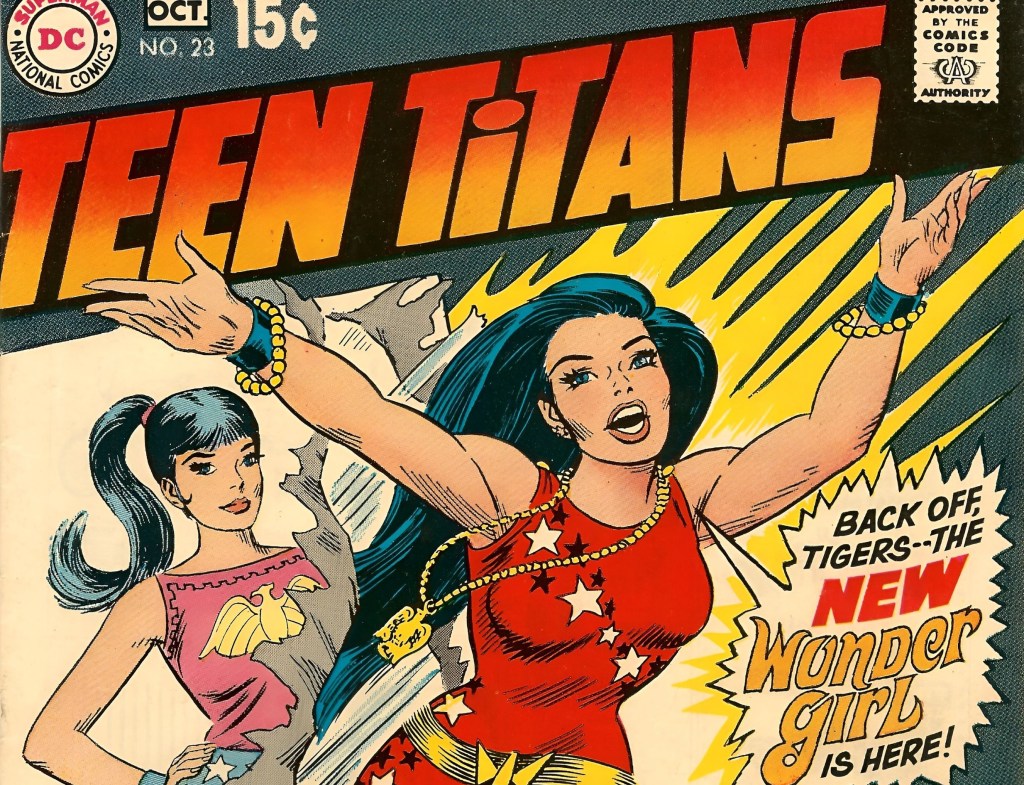
1959’s Wonder Woman#105 featured a story of “Wonder-Girl,” a flashback to a teenaged version of Wonder Woman akin to the Superboy flashback stories in Adventure Comics, Superman, and Superboy. This became muddled in 1961, when several issues featured “Impossible Tales of Wonder Woman,” where the adult super-heroine teamed up with her teen self (Wonder-Girl) and toddler self (Wonder-Tot). Wonder-Girl remained a regular feature in early and mid-sixties Wonder Woman stories, and over the years, writers began to forget (or at least forgot to emphasize) that Wonder-Girl wasWonder Woman, and not a separate character. In Brave and the Bold#60, as well as the Teen Titans’ subsequent early appearances in Showcaseand Teen Titans, Wonder-Girl is presented as just that: a teen sidekick to Wonder Woman, and a separate being. No explanation is provided, as it was misunderstood that none was needed. Comic fans default to referring to Brave and the Bold#60 as Wonder-Girl’s first appearance, as it is the first time she is explicitly treated as her own character.
Wonder-Girl’s backstory remained maddeningly vague until Teen Titans#22, in which writer Marv Wolfman identifies her as a “younger sister” of Wonder Woman and gives her the civilian identity of Donna Troy. The following issue, Wolfman expands on Wonder-Girl’s origins: Donna Troy is an orphan, rescued as a baby from a housefire and subsequently adopted by Wonder Woman. At Wonder Woman’s behest, reformed villainess Paula von Gunther gave Donna Troy her “Wonder-Girl” powers through scientific experimentation. Wolfman revisited Wonder-Girl’s origin story in a New Teen Titansarc fifteen years later, adding layers of tragic detail. Donna Troy’s real mother, Dorothy Hinckley, died in childbirth, and Donna was adopted by Fay and Carl Stacey. After Carl was killed in an industrial accident, Fay was forced to put Donna up for adoption, where she became a victim of an illegal child-selling racket. It was these racketeers whose center of operations burned down, accidentally delivering Donna into the hands of Wonder Woman. With help from Robin, Donna is able to track down Fay Stacey, reuniting with her adoptive mother.
Two years later, company-wide continuity reset Crisis on Infinite Earthsmeant that Wonder-Girl’s origins needed to be rebooted all over again, this time in The New Teen Titans#50-54. Donna Troy’s childhood rescuer becomes Rhea, one of the Titans of Myth, who chose Donna and eleven other children to be given super-human powers so that they could eventually serve as saviors to the Titan race. This changed againin the mid-nineties, and Donna became an artificially-created being made be sorcery to serve as Wonder Woman’s childhood playmate. A few years later, a new Wonder-Girl, Cassie Sandsmark, was introduced without any of this baggage attached. Cassie was simply a teenage sidekick to Wonder Woman, a human girl who gains super-powers through magic and fights alongside Wonder Woman. Cassie Sandsmark replaced Donna Troy as DC’s primary (sole) Wonder-Girl during the New 52, likely motivated by Donna being the poster child for the involved, decade-spanning continuity the New 52 was designed to disentangle DC from.
Why Fans Love Wonder-Girl (Even If Her Backstory’s Never Made Any Sense)
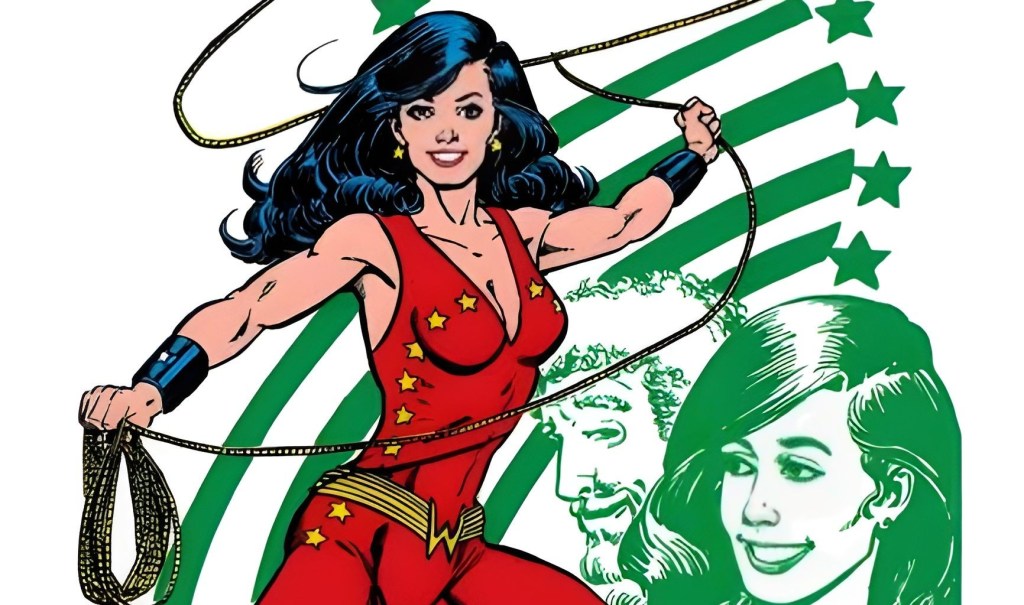
It’s telling that the Wikipedia page for Donna Troy has a lengthy section titled “Origin Retcons.” But despite that, most Teen Titans readers are willing to overlook the haze of retcons, reboots, and rewrites that surround Donna Troy. She’s a fan favorite despite being a fifty-five year long headache for Marv Wolfman, who told Back Issuemagazine that “I would love to say that everything after ‘Who is Donna Troy?’ should be forgotten, but that’s not the way continuity works.” Unfortunately, Donna Troy’s murky origins have made it so that Teen Titansadaptations tend to steer clear of her. Her appearances in series like Young Justice, Teen Titans,and Teen Titans Go!tend to be limited to non-speaking cameos, or indirect allusions to her comic counterpart (as with “Troia” in Young Justice).
Wonder-Girl is an increasingly rare figure in the world of comics, a character who is best known for her appearances inthose comics, rather than through other media. She was a recurring character in the live-action Titansseries, her first and only appearance as a major character in a non-comics medium. It’s the strength of Marv Wolfman’s storytelling (especially with artist and co-plotter George Perez) that has endeared Donna Troy to generations of comic book fans, and it looks as if those Wolfman-Perez Teen Titans stories will continue to serve as the definitive portrayal of the character. Both sides of that history begin, properly, with the cover of Brave and the Bold#60, announcing the beginnings of an iconic super-hero team, and accidentally introducing an iconic super-heroine.
Who’s your favorite Teen Titan? Leave a comment below and join the conversation now in the ComicBook Forum!
A Forgotten X-Men First Appearance Is Suddenly Worth A Small Fortune (But There’s A Catch)
More Collectibles
-

Collectibles
2 days agoThis Vintage Star Wars Luke Skywalker Figure Got A Bizarre Makeover (And Fans Can’t Stop Roasting Him)
-

Courtesy of AMC Collectibles
3 days agoThe Walking Dead Fans Can Buy Negan’s Iconic Props (But Lucille Won’t Come Cheap for Long)
-
Courtesy of The Walt Disney Company Collectibles
3 days agoOne-of-a-Kind Real-Life Marvel Infinity Gauntlet Is Heading to Auction but It Will Cost You Everything to Own It
-

Collectibles
4 days agoThis Massive Vintage Boba Fett Figure Has a Working Grappling Hook (And a Price Tag Worthy of a Bounty Hunter)
-
Images Courtesy The Pokémon Company and Fanatics Collect Collectibles
4 days ago30th Celebration Hype Train Continues, Aquapolis Lugia Ties Record Sale With $360k at Auction
-

Courtesy of United Artists Collectibles
4 days agoClint Eastwood’s Greatest Western Just Beat Star Wars in the Most Unexpected Way
-

Image Courtesy The Pokémon Company International Collectibles
5 days ago3 PSA 10 Legendary Collection Pokémon Card Bangers Pull In Nearly $1.4 Million at Auction
