

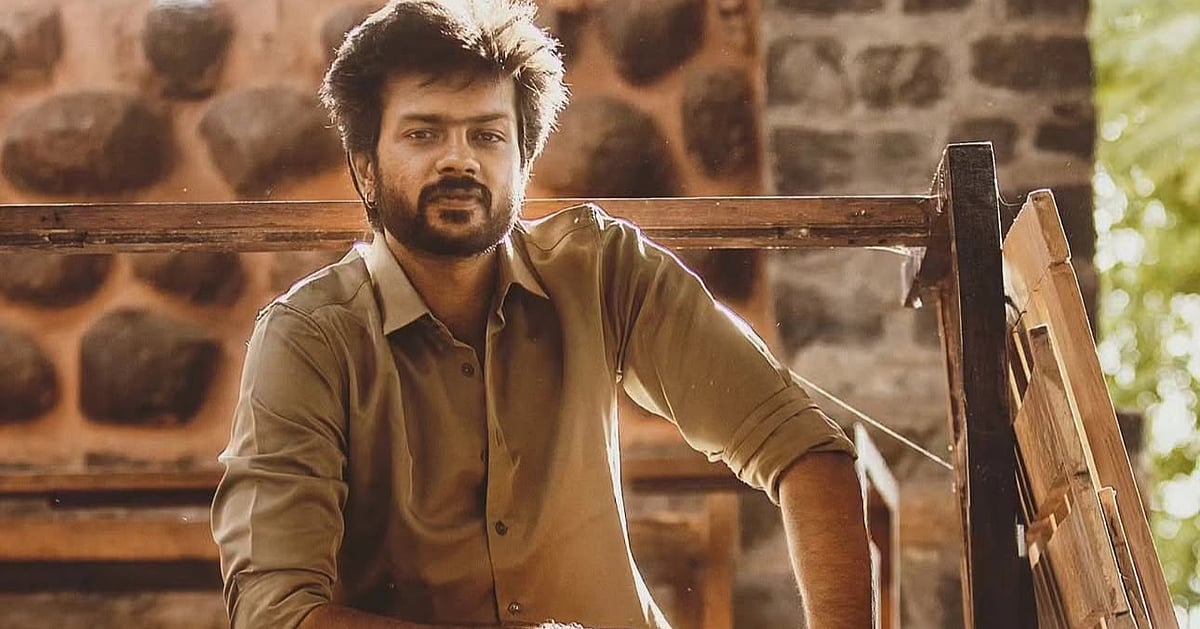
RishikanthShiva Ojas, Instagram
Published on: 19 Oct 2026, 11:36 am
It has been nearly two months since Modha Rathri and 25 days since Dorothy were released. For actor Rishikanth, who starred in both, life hasn’t been the same. It has swung from online and offline adoration to what can well be termed harassment in the public space.
Rishi’s screen presence as Marudhu and Karthi in the two films has brought in comparisons with Rajinikanth. There’s joy that a Tamil-looking hero is making it big on screen, and he’s receiving overwhelming love from female audiences. However, his boundaries have been quashed, and he’s being seen as a commodity – squished, scratched, hugged forcibly, so much so that on occasions, the team handling him had to pull him up from the thronging crowd and peel female fans off him.
Quite a few social media posts border on insensitivity and sexual innuendo. Close-ups have been posted of his stretch marks and shoulder scar and of his ‘bedroom eyes’.
This all sounds eerily similar to how heroines have, for decades, been objectified in print and now online — from morphed images to insensitive AI-generated videos (the latest involved Janhvi Kapoor from the Dasarasong ‘Chuttamalle’) — and sometimes seen it spill over to real life, with stalking, chasing and break-ins.
So, when we raise our voices against those perpetrators, must we not do the same when the victim happens to be a male?
The last time girls and women in Tamil Nadu went crazy about an actor was in 1992, after Roja was released and actor Arvind Swami happened. There was no social media, and all people depended on were news clippings and the rare song on TV to spot an actor who was unlike anything they’d seen before, in films or real life.
He spoke perfect English and played a collector and an IT guy in two of his movies… He was an aspiration of what several women wanted their perfect man to be. It was the kind of fandom some might dream of.
But Arvind has often spoken about how all that attention made him feel very uncomfortable, and he wanted people to see his film but leave him alone. “If I came out and saw 100 people standing, it would make some people happy and proud or make some people run back to their house. I belong to the second category,” he was quoted as saying by PTI in 2016.
Some years later, when Alaipayutheywas released in 2000, Madhavan became the buzzword among a set of the female film-going crowd. The catchy tune for ‘Maddy, Maddy Oho Maddy’ certainly helped. But they knew he was not ‘available’. Madhavan openly spoke about the fact that he was married to his love, Sarita.
Arvindh and Madhavan were seen as ‘perfect’ based on how they looked, spoke and behaved with the women in Thalapathy, Roja and Alaipayudhey. It helped that they were also aspirational, doing things heroes were not doing often in Tamil cinema — a collector and a young man in the field of IT, then emerging. And, most importantly, they were not strugglers and evidently came from privilege.
Tamil women are used to toxic male characters being celebrated, and Rishikanth’s characters were different. Usually, violent boy-men are taken on as “projects that need to be redeemed” by the girlfriend/wife, and patriarchy is an accepted motif in the fabric of a movie.
One of the main reasons the Rishikanth female fandom began is his character in Modha Rathri —it was not just a green flag but an entire forest. All that love for Marudhu and his ability to understand and listen transferred to Rishikanth. Understandable, up to a point. For it is not often that you have male characters that don’t mansplain and are sensitive.
The question is whether his empathetic roles, alongside his boy-next-door look, dark skin and the social background of his characters, have transcended conversations about Rishikanth beyond relatability to the entitlement of objectification.
None of this would have mattered if Rishikanth had played roles that sexualised him. He did not, and considering he comes across as very conscious and shy, what the actor is facing is not a result of sexual liberation but a simple inversion of power.
And here’s the catch: there is no question that we must talk to women about respecting consent. But how can we do that when society doesn’t even acknowledge that female desire exists in the first place?
For too long, women have had to express desire, particularly for celebrities, covertly. Posters and photos secreted away, only to be looked at in zealous privacy; anonymous blog posts where fan fiction wars are fought — these have been the confidential expressions of female desire.
Women largely only have had toxic masculinity as a frame of reference for open expression of desire. And you get half-baked defences such as “simping for Rishi is feminist liberation” because acknowledgement as well as respectful conversations on consent are missing.
What also makes Rishikanth’s case unique is that no one knows his relationship status, and he’s been seen as ‘available’. It does not help that, because this success is the result of 15 years of struggle, he’s yet to learn the fine art of being present yet distant, something most stars have perfected. That only adds to the feeling of accessibility, and this is also why the 50th day celebrations of Modha Rathri turned into a near-stampede.
But many boundaries have been crossed since, and none for the better. This even prompted Modha Rathridirector Raja Karuppasamy to write that obsession did no one any good.
But the response to Raja was sickening. It went along the lines of, “You made him look so good/hot in your movie, and you don’t want us to desire him?”
Having covered cinema for so many years, rarely has one seen this kind of mob behaviour by women for a male actor. They used to write letters using blood, put up the hero’s posters on walls, and want the men in their lives to dress up like their favourite hero. It stopped there, mainly due to lack of access and the fact that women never knew they were allowed to desire something.
In the case of heroines, they’ve been at the receiving end pretty often.
The fear of fans turning into a mob was always an issue on sets and off them. Some men have chased them to the hotel, and each time, it has been called out. It did not help that for some decades in between, women were mostly portrayed as objects of desire and people without any agency.
So, women are used to being portrayed as victims and, occasionally, survivors on screen. That spilt over into real life. So, why would anyone want to put any man through harassment, especially someone who has given them such joy on screen?
When I posted this thought on X.com
, some of the responses were surreal. They equated this to an expression of desire, and the typical, ‘What did you do when men did this?’ Oh, kind lady, just because many men make women uncomfortable, some women do not have to return the favour. You’ve been a victim before; do not become the perpetrator.
Some reactions have been preposterous.
A user said, ‘Rishikanth simping is a feminist movement…and liberating’. In which world is making the object of your affection uncomfortable a good thing? In recent events, the actor, who has seen dizzying success after more than a decade on the sidelines, looks distinctly uncomfortable when treated this way in public spaces.
Recently, he was similarly accosted in Chennai, and many X.com
users flagged it. User @Vaayaaaaadi wrote: “You came to share your hard work…and deserved to be welcomed with respect…and boundary-mindful appreciation. Being a fan is a privilege, not a license to cross lines in the name of devotion… We have a social responsibility to …ensure that our admiration does not become someone else’s distress… If the genders were reversed, would we be reacting to this incident the same way?… Consent and personal boundaries should never depend on someone’s gender.”
#DOROTHY
@DhammamFilms and whomever are incharge of the promotions, we the promotions are almost done but still we request you to provide the team with proper security for future public events. https://t.co/VadMvpavPv— Vaayaaaaadi (@Vaayaaaaadi) October 15, 2026
What is heartening is that most women have called out this boundary-less behaviour. Like another user, Edukudaa said:
“Why would you do anything that when done to you will leave you with lasting trauma?”
What makes all this disappointing is that it began well enough, before the unsavoury behaviour made an appearance. In the promotions for Dorothy, both Rishikanth, Sananth and director Karthik Subbaraj have been very mindful of boundaries when hugging those who run up to them in tears, occasionally even wiping tears off their faces. Trans women have been embracing them with warmth and affection, and it was all very wholesome to see.
But what’s happening now is nauseating. I wish the actor in question spoke up, but I doubt he will. Frank talk is not appreciated in the world of cinema. The minute he expresses displeasure, you can be certain this fandom will look the other way. The saddest part is that he plays two characters who are/become sensitive and receive the worst of behaviour passed down from patriarchy.
That said, one must admit that female desire has long been suppressed — in real life, and, in consequence, on the big screen. No one in their right mind will disagree with this. The fact that someone wrote a character that has triggered female desire and got a Tamil boy who looks like the boy next door to play it is endearing.
It is liberating that, at least on social media, they can express their desire for an actor ‘because’ of his performance.
But Marudhu is a character. He knows grief, can weep, can allow others to weep, can listen, and is adorable. Karthik is a character. He can eat a ‘half-boil’ in one movement, can care intensely for Subbu, be rough, and finally find love. They are characters, not Rishikanth himself.
He’s someone on the cusp of something big, probably wracked with stress about how to choose his next film, how to avoid comparisons, and how to hold on to something won after so much struggle.
To love and desire the artiste who played those roles is perfectly acceptable, but to reduce him to individual body parts and someone you wish to possess a piece of is plain horrifying. Sexual harassment is awful, irrespective of the perpetrator’s gender.
Views expressed are the author’s own.
Follow TNM’s WhatsApp
channel for news updates and story links.
