

1975 was a pivotal turning point in history — President Gerald Ford announced the end of the Vietnam War, “Chicago” opened on Broadway, “Jaws” made $260 million in the box office, and the following five songs would go on to define pop history.
Whether it was through inspiring future pop icons or establishing counterculture within popular culture, all of these tracks managed to leave a lasting impact on the music industry (as well as topping the charts of their time). Although several hits, such as the Captain and Tennille’s “Love Will Keep Us Together,” managed to dominate the summer and year of 1975, they lacked the same staying power and influence as these other tracks. For this reason, key indicators such as eventual samples, historical milestones, and notable musical innovations take precedence over singles sales or weeks at No. 1.
Pop as a genre has never quite stuck to a single sound or vibe (take these classic bubblegum pop albums from the decade prior as an example), and for the sake of this list, charting will only be used insofar as these tracks found their place high up on the Billboard Hot 100 — effectively turning them into pop classics. Whether you want to relive the glory days or are looking for some ’70s musical inspiration, these tracks set the tone for the rest of the decade and beyond.
Fight the Power Part 1
Brothers Rudolph, Ronald, and O’Kelly Isley had already made their presence in the music industry known back in the ’50s and ’60s, making waves in 1959 with their hit single “Shout!” However, the Isley Brothers’ 1975 single “Fight the Power Part 1” did more than just take over the fall of that year — it provided audiences with the language it needed to resist.
Protest songs have always had their place in music, and by 1975, the Jim Crow era had only ended a decade prior. Societal reformation and integration followed, but it was a rocky transition. The Isley Brothers’ battlecry, “We got to fight the powers that be,” was an assertion that pointed to their institutional enemies, as well as the social. The song peaked at No. 4 on the Billboard Hot 100, and it stayed on the charts 18 consecutive weeks. “Fight the Power Part 1” embodied the counterculture and revolutionary spirit of the times, finding massive commercial success despite its provocative swear word, “bulls**t”.
Lyrics such as “I tried to play my music, they say my music’s too loud / I tried talking about it, I got the big runaround” especially resonated with the youth, and Chuck D of the rap group Public Enemy cited it as a song that changed his life. It would inspire his own 1989 song, “Fight the Power,” which is the iconic theme blasting from the boombox during the climax of Spike Lee’s “Do the Right Thing.” Its message is eternal, with the Isley Brothers’ influence still being heard in contemporary protest songs and movements.
Lovin’ You
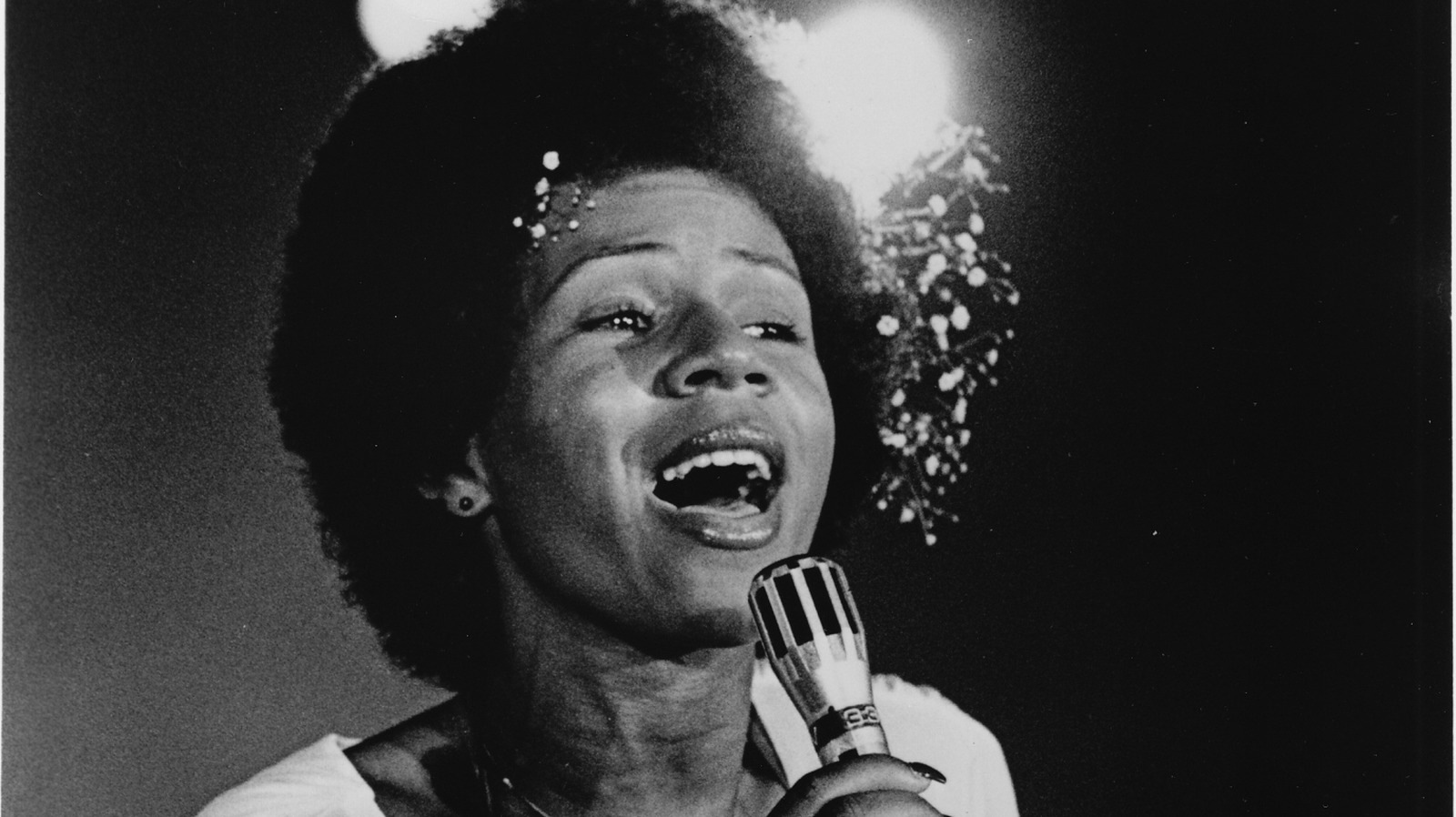
It’s crazy to think that, had it not been for Stevie Wonder’s faith in vocalist Minnie Riperton, we may never have gotten the timeless 1975 hit, “Lovin’ You.” She always had a beautiful voice, spending the ’60s and early ’70s recording backing vocals for the likes of Etta Jones, the Dells, and eventually Wonder himself.
He co-produced her 1974 album, “Perfect Angel,” featuring the sweet and springy track, “Lovin’ You.” In an interview with Japanese broadcasting company BS-TBS, Riperton’s husband Richard Rudolph shared the years-long process of writing the track. A producer and songwriter by trade, he came up with the chord progression while the couple was still living in Chicago. After years of touring and moving through the country, their daughter Maya (former SNL star and comedian) was born in Gainesville, Florida. Riperton came up with the lyrics one day in the kitchen, vocalizing and musing on the love she had for her blooming family. The first recording of the song was actually played on a loop in order to keep their baby girl asleep — Maya’s name is repeated multiple times towards the end of the track.
While “Lovin’ You” first entered the charts in early 1975, it would snowball to No. 1 on the Billboard Hot 100 by April –– maintaining its run across the chart for 18 consecutive weeks. Her vocal range and whistle register at key points of the song made her a pioneer of the technique, inspiring pop divas such as Mariah Carey and Ariana Grande. This one song made pop history by raising the bar for talent and range anticipated from pop stars, invigorated by a determined mother’s love.
Bohemian Rhapsody
Another groundbreaking vocal performance that’s defined pop history has got to be Queen’s 1975 hit, “Bohemian Rhapsody.” Much like “Lovin’ You,” the track was developed over several years (almost not getting released at all) before the band finally recorded the piece in August of 1975.
Like the title suggests, the rhapsody twists and turns through operatic swells, rock riffs, and melodramatic piano. The lyrics of Freddie Mercury’s “mock opera” swayed from soft, defeatist lines such as “Nothing really matters, anyone can see/ Nothing really matters” to pure gibberish with “I see a little silhouetto of a man/ Scaramouche, Scaramouche, will you do the Fandango?” Relative to other hits’ more tangible messaging and narratives, “Bohemian Rhapsody” can be read in a variety of ways depending on your own mood –– a downward spiral or surrender to the uncontrollable. It’s no surprise, then, that its dynamic form managed to capture audiences and maintain its replayability even with its over five minute runtime.
The track maintained its No. 1 position on the U.K. charts for nine consecutive weeks, only being dethroned by fellow pop royalty, ABBA. It went to No. 2 in the U.S. but not until early 1976. “Bohemian Rhapsody” was featured in the 1992 comedy “Wayne’s World,” got its own version alongside the Muppets in 2009, is routinely performed by Panic! At the Disco’s Brendon Urie during live performances, and was used as the title of Mercury’s 2018 biopic. The influence of the song on pop culture is certainly a force to be reckoned with, and its historical music achievement completely transformed the anticipated profile of a ’70s number one hit.
Why Can’t We Be Friends?
While it may seem antithetical to their band name, “War,” the group’s 1975 single “Why Can’t We Be Friends?” served as an earnest plea for peace and unity in the world. Of course, War as a band name had always been a subversion of the very real war in Vietnam, which only came to an end in ’75. With a diverse group of musicians coming together in Long Beach, California, the Latin, funk, jazz, and rock music influences played a big part in their blended and multicultural sound.
In an interview with Songfacts, drummer Harold Brown explained how the group’s trip to Japan and experiencing other cultures helped to inspire “Why Can’t We Be Friends?,” explaining how even when our cultures are different, we’re all still informed and bound together by the same sense of humanity. Each verse of the song is sung by a different member of the group, touching on each of their varying experiences and points of view. For example, “Sometimes I don’t speak right / But yet, I know what I’m talking about,” was sung by their Danish harmonica player, Lee Oskar, who spoke English as a second language.
Humorous, heartfelt, and full of fun, it’s no surprise that the summer of ’75 held “Why Can’t We Be Friends?” firmly in the Billboard Hot 100’s top 10 for four consecutive weeks. Billboard also ranked it as No. 24 in its songs of the year, showcasing the track’s lasting impact on the spirit of pop music. War’s request remains as relevant as ever, with the track finding its way onto film soundtracks such as 1993’s “Dazed and Confused,” and acting as an early examples of the magic that comes from multicultural groups.
The Hustle — Van McCoy & the Soul City Symphony
Van McCoy and the Soul City Symphony may not have invented “The Hustle,” but it certainly changed the trajectory of disco forever. Originally a type of partnered line-dance developed in 1973 by Puerto Rican communities in the Bronx, it was quickly gaining traction in the underground disco scene in New York.
In an interview with Essence magazine (via Billboard), McCoy recalled how his friend had shown him the dance after witnessing it at a nightclub, striking the producer and arranger as “… something completely different from the you-do-your-thing-and-I-do-mine dances; it was people dancing together again. The hustle reminded me of ballroom dancing, and I love graceful dancing.” Unaware of how popular the synthy, orchestral sounds of disco had gotten nationwide, he was initially skeptical of including his arrangement of “The Hustle” on his most recent project. However, its minimal repeating lyrics and catchy flute tune are now credited by sources such as History as the song that kickstarted the disco era. It reached No. 1 on the Billboard Hot 100 and Soul Singles charts at the same time, bringing the underground dance to a nationwide audience.
Thanks to the track’s mainstream success, the Hustle dance was even performed by John Travolta in his iconic role for 1977’s “Saturday Night Fever.” It’s catchy instrumentals have been sampled in 44 songs to date, including Justin Timberlake’s 2002 song “Last Night.” The impact that this song had on radio stations and rock acts at the time cannot be emphasized enough, influencing fashion for the latter half of the ’70s. We can still hear “The Hustle” in contemporary pop music, with Dua Lipa, Jessie Ware, and Doja Cat keeping the genre of disco alive in the 2020s.
