

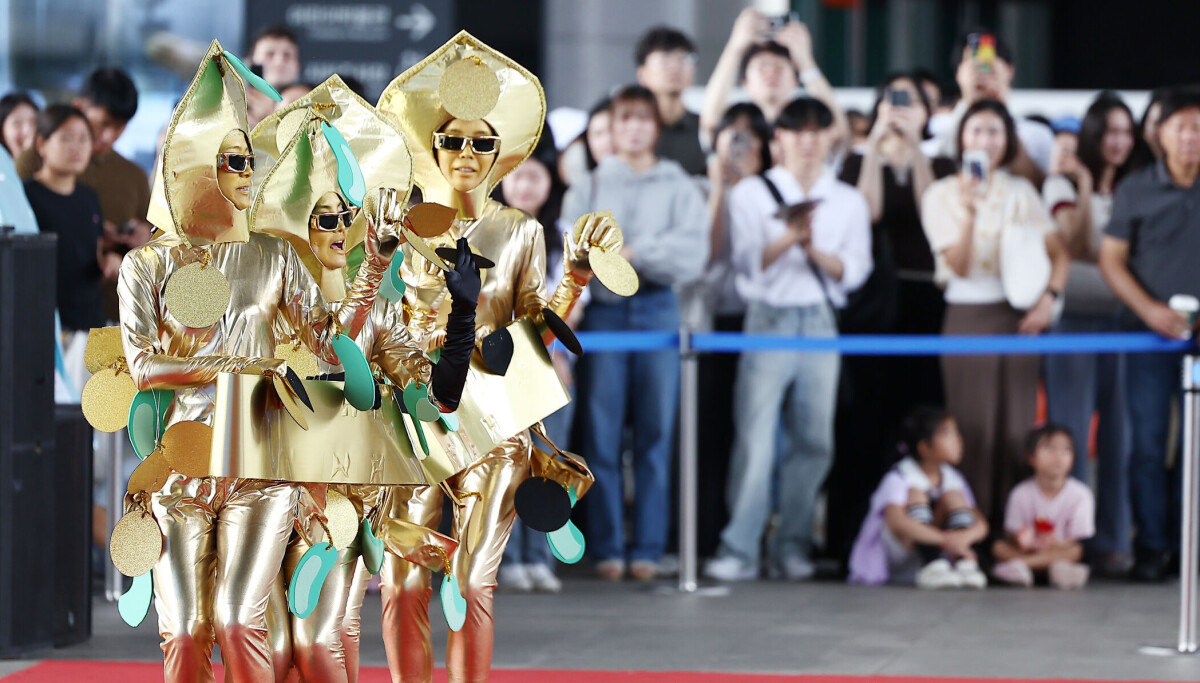
The National Museum of Korea’s “Dress Like a Museum Exhibit” competition runs on the theory that the quickest way to make somebody care about a national treasure is to hand them the job of building one — quite literally.
This summer, it tested that on a webtoon artist, a special-effects makeup professional, a choreographer, a few office workers and several groups of friends looking to close out their college years with a bang, among a total of 643 people comprising 275 teams.
Called bunjang-nori, which means “dress-up play” in Korean, the event, which ran for the first time last year at the National Museum of Korea in Seoul, went mega-viral among young people and has expanded into a nationwide event, with the museum’s 13 regional branches participating this year.
The 275 teams recently competed in preliminary rounds of the competition, and 50 teams advanced to the finals, which were held in four regions: Seoul-Chuncheon, Gongju, Daegu, and Jeonju. Regional rounds ran through September in the four areas; the last 20 runners-up will go head-to-head on Sept. 19 in the National Museum of Korea’s open plaza at Yongsan, with five receiving prizes of 3 million won ($2,200).
Last year’s winners of the inaugural competition, a team that dressed up as a pair of gold earrings excavated in Gyeongju, ended up on national television; this year’s contestants posted reels of their own, some reaching hundreds of thousands of views and a few reaching millions.
The Korea JoongAng Daily spoke to seven of the 50 teams that made it to the main competition in the regional rounds to hear what drives their passion for cosplay, what techniques they used and what they’ve taken away from the experience.
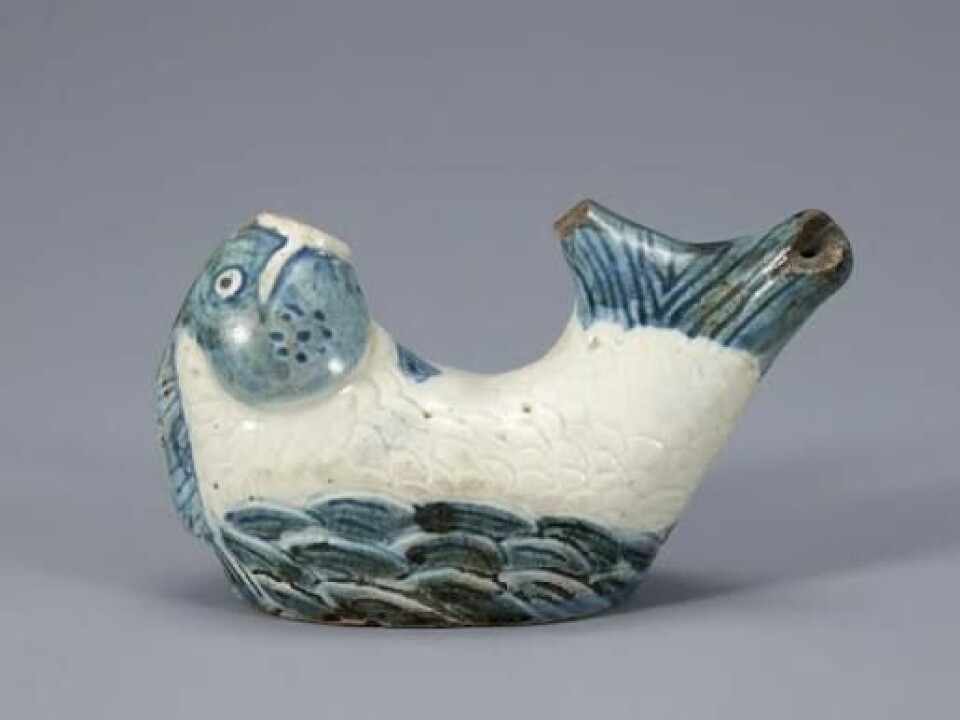
The seven contestants interviewed included individuals entering on their own and those in teams. Of the one-person teams, Dr. Ber, a webtoon artist, dressed as the gilt-bronze Pensive Bodhisattva that sits in the Room of Quiet Contemplation at the National Museum of Korea. Jeon Eun-seul, a nursing student in Daejeon, came as a blue-and-white porcelain water dropper shaped like a fish.
Other teams came in pairs, with Hong Seung-yeon and Na Dong-chan, a set of friends, dressed as the royal seal cast for King Danjong. Jang Eun-seo and Lee Gyeong-min competed as smiling Silla roof tiles.
What are the artifacts the interviewees dressed as?
Gilt-bronze Pensive Bodhisattva:This seventh-century gilt-bronze figurefrom the Three Kingdoms Period sits with one ankle resting on the opposite knee and two fingers near the cheek. It shares the Room of Quiet Contemplation at the National Museum of Korea with a second, earlier pensive bodhisattva and has become one of the most visited spaces.
Divine Bell of King Seongdeok:Cast in 771 in memory of King Seongdeok, the largest surviving Korean bell is now at the Gyeongju National Museum. Legend says a child was thrown into the molten bronze to make it ring, and that its sound carries the cry emille — mother — which is why it is popularly called the Emille Bell. Analysis of the alloy has found no trace of human remains.
Bronze ritual bells: This octagonal bronze disc with eight arms, a bell on the end of each and a pellet inside every bell was made around the third century BC and found nowhere outside the Korean Peninsula. They turn up in pairs, buried with mirrors and daggers in the grave of someone who was probably both chief and shaman.
Roof-end tile with a human face:The tile, from a Silla temple site in Gyeongju, was shaped by hand rather than pressed in a mold, which is why no second example exists and why the face on it is slightly lopsided; it is known as the Smile of Silla.
Royal seal of King Danjong:King Danjong (1441-57) took the throne of the Joseon Dynasty (1392-1910) at age 11, was deposed by his uncle in 1455 and killed two years later at 16. The seal was made in 1698, when he was posthumously restored to the royal line and returned to the ancestral shrine, more than two centuries after his death. The unfortunate story of King Danjong was made into a movie, “The King’s Warden,” which became the first film to surpass 100 million admissions in 2026.
Blue-and-white porcelain water dropper:A water dropper held the water a scholar poured onto an inkstone to grind ink and sat on the desk beside the brush and paper. Joseon potters made them in shapes — peaches, frogs, houses, fish — with the fish an auspicious one, since a carp leaping the dragon gate stood for passing the civil service examination.
Bronze votive pagoda:A miniature pagoda made as a Buddhist offering, cast in a single pour and small enough to hold in two hands, with guardian figures and a seated Buddha on its face. Objects like it were placed on altars or sealed inside full-sized stone pagodas.
The rest of the teams come in groups, with three design graduates of Ewha Womans University gathering after graduation to build the Divine Bell of King Seongdeok between them. Kim Chae-eun is the bell itself, Ji Su-bin is the bell-strike, and Kim Ha-neul is the monk who does the striking.
In the fifth team, Yu Ji-won, Kim Mi-hyun, Lee Jeong-eun and Park Soo-jin — friends from a university theater club, all with day jobs — divided into two pairs and became two bronze rattle bells. The last group, comprising makeup artist Park Han-sol, studio artist Luce and choreographer Yoon Su-bin, dressed up as the Goryeo bronze votive pagoda.
Related Article
-
National Museum of Korea becomes No. 3 most-visited museum worldwide in 2025
-
The National Museum of Korea never sleeps, and neither do the people who guard it
-
National Museum’s renovated Korean Empire Gallery reclaims forgotten history of maligned kingdom
Q. What made you enter the competition?
Dr. Ber: I’ve been cosplaying since high school, dressing up as characters from “Evangelion,” “Full Metal Panic,” most recently Nick Wilde at the Gyeonggi Comics Festival. Last year’s poster for the museum’s competition had the Pensive Bodhisattva in silhouette, and I thought that would be fun.
Jeon:Friends told me about the competition, but I let it go at first. Then the vacation was all about studying, job applications and more studying, which was meaningful, but I started wondering whether I’d really finish four years of university with no pizzazz at all.
Park Han-sol: I built the gilt-bronze bodhisattva that went viral last year and came in second place, and I was too busy on the day to feel any of the atmosphere. So I promised myself to compete in the next one the moment the first one ended, and I signed up a year later, the day the notice went up.
Na: My friend and I both saw the notice, but neither of us said anything about it. Then my friend sent me the poster and asked if I wanted to enter, and I didn’t need a minute to decide.
Kim Chae-eun:I watched last year’s winners, the Hwango-dong gold earrings, on television and had no idea a competition like this existed. Three of my friends had time, so I talked the others into it to refresh.
Ji: I resisted when Chae-eun first suggested competing together — partly because I was worried about whether we could place at all after how strong last year’s entries were, partly because I didn’t want to look ridiculous. We once opened a noodle restaurant in front of our school, so we’d done odd things together before, but after graduation we scattered. I decided it was a memory you only get to create once.
Q. Why did you choose the artifact you chose to dress up as?
Hong: My company’s head office is in Chuncheon, and one evening after work, I went to the museum there. The Danjong film “The King’s Warden” was everywhere at the time, and the two turtles on the seal looked terribly lonely to me. When the notice went up, I thought: this is a way to turn the meaning over again, not just copy the outward shape.
Yu, Kim Mi-hyun, Lee and Park Soo-jin:When we chose our artifact, we took no references from anything else. We wanted to express the rattle with our bodies, so we studied yoga positions and acrobatics to work out what shapes four people could make. The radiating form and the eight bells produced the method for us: people becoming the artifact rather than resembling it.
Park Han-sol: I fell for Goryeo Buddhist material at Jeongsu Temple on Ganghwa and went looking for something unusual and little known. Nobody has determined when the pagoda was made, so I worked from other Goryeo Buddhist objects and from the period when single-pour casting was fashionable — which is how I determined that the figures on the front are Vajra guardians and a seated Buddha.
Jeon:I like oddball characters — Patrick Star, Psyduck from “Pokémon.” I searched the museum’s collections, wondering whether artifacts came with that odd quality, and the water dropper has bulging eyes. This one has character.
Q. How long did it take for you to dress in the costumes, and what was hardest?
Yu, Kim Mi-hyun, Lee and Park Soo-jin: We all have day jobs, so it went in slivers, and the build alone took a month. We hunted for fabric and paint that read as real bronze and tested makeup that could pass for oxidation — two hours of it on shoot day. But we spent as long on the movement, asking how to look like a rattle moving rather than a person in a rattle costume.
Jeon:The time I spend is embarrassing compared to everyone else. Five days from deciding to finishing, two of them building; most of it was waiting for deliveries. The scales of the fish porcelain were the stress — on the real thing, they’re cut into the surface and throw a shadow, and painted ones look obviously fake.
Park Han-sol: We spent three weeks on the costume alone. It’s a small, single-pour object, so a lot of detail is left out, and at human scale you piece it back together from Goryeo dress and other Buddhist objects. I worked as if possessed by whoever made it.
Kim Chae-eun, Ji and Kim Ha-neul: We spent a whole month on the bell: the wire frame, layers of paper tape, clay patterns on top, everything but the monk’s robe by hand. The apsaras (Buddhist nymphs) and strike-plate reliefs are the strength of our costume. The bald cap came later, once it turned out that was what the reels drew comments about.
Dr. Ber: Ten days on the first version, in the evenings, with my wife on the sewing machine. I finished it thinking I had room to spare and would certainly make the final. Then the other entries were published, and I’ve been upgrading in a panic.
Q. What changes when you stop looking at an object and actually become one?
Park Han-sol: Just looking ends at “Wow, an object, impressive.” When you make it and wear it, you study it enormously, because you want to put respect into it — the casting method, what the figures mean, why the thing was made at all. It lodged in my head far more deeply than anything I memorized for exams as a student.
Kim Chae-eun, Ji and Kim Ha-neul: They say the best way to learn something is to teach it, and we were making a video explaining what the rattle was for. Drawing the incised patterns over and over, we started thinking about the person who left those marks 3,000 years ago. At some point, you get slightly dizzy and feel like you’ll look up and be in the Bronze Age.
Dr. Ber: The museum provides a 3-D scan on its website, so I kept rotating it — the feet, the chair, the three-peaked crown. There was far more hidden detail than I expected, and I ended up thinking hard about the beauty of the proportions. Standing in front of the original in the Room of Quiet Contemplation now, it will hit much harder than the first time.
Jang: At the museum, you look with your eyes and enjoy it. Once you’re drawing the pattern and cutting and gluing and fixing, you can’t help thinking about how they made something that large back then.
Yoon: An artifact isn’t alive, so expressing stone, or a dead thing, or a divine thing, was the difficulty and the fun of it. Also, it was the middle of summer, and we were in armor and turtlenecks and boots. Thinking about doing it again outdoors makes my vision go dark.
Q. Does an event like this actually bring people closer to a museum?
Dr. Ber: There’s something of the Met Gala about it, and something of the Red Bull Flugtag, where the official point is human-powered flight and what you get is people diving into a river inside something shaped like a chicken, with no embarrassment at all. This museum competition walks a tightrope somewhere in between, and walks it well. If it were strictly rigorous, only the rigorous would turn up, and it would be a private club. Korea’s history is long, so the material is inexhaustible.
Park Han-sol:Korea went through a war and joined the ranks of developed countries, and it leads global trends with K-culture, but at home there were so few events that were actually Korean. This year, there are suddenly a lot. And the National Museum of Korea got into the world rankings without a single looted artifact, so watching it run something like this, I feel proud as a Korean.
Hong: Korea is known for K-pop and K-beauty right now, but inside the country there’s a history with lots of oppression and internal conflict — an extremely dynamic history. If people take an interest in that part too, it’s a chance to see a Korea they didn’t know, in three dimensions — fitting together the pieces that made the present.
Kim Chae-eun, Ji and Kim Ha-neul: After researching it, we found that the human-sacrifice legend behind the bell has no basis. Our analysis found no bone content at all, and it’s a rumor that spread and was sensationalized during the colonial period. We’d like the bell to be remembered as a cheerful national treasure, where three young people’s performance comes to mind before a distorted legend does.
Na:If this had ended at dress-up, it would be an ordinary event. The people taking part leave understanding the history behind these objects, and everyone watching has a reason to be curious about them.
Lee: Preparing for this sent me to a museum to observe and research in person, and that alone means something, because it brings in people who never went. An object you’ve grown familiar with through dress-up feels much closer when you run into it in a gallery.
Yu, Kim Mi-hyun, Lee and Park Soo-jin: An artifact doesn’t have to be approached as something difficult and serious. Somebody looks at it, somebody wears it, somebody plays with it and remembers it that way.
