

Those who are familiar with Tatsuki Fujimoto’s popular Japanese manga Look Back or its award-winning 2024 anime version by Kiyotaka Oshiyama might have a different initial reaction to Hirokazu Kore-eda’s new adaptation, which is premiering at this year’s Venice Film Festival. I was not very familiar with the original comic or the first movie, so for me, Look Back played like a classic Kore-eda film about disparate characters who find and bring out different qualities in each other. (It actually bears a passing resemblance to Monster, his haunting and underseen 2023 film about two mismatched young boys who become inseparable friends.) But as far as I can tell, Kore-eda has remained resolutely faithful to Fujimoto’s original, adopting its imagery and color palette as well as its narrative and structure. The material just happens to be perfect for his sensibilities.
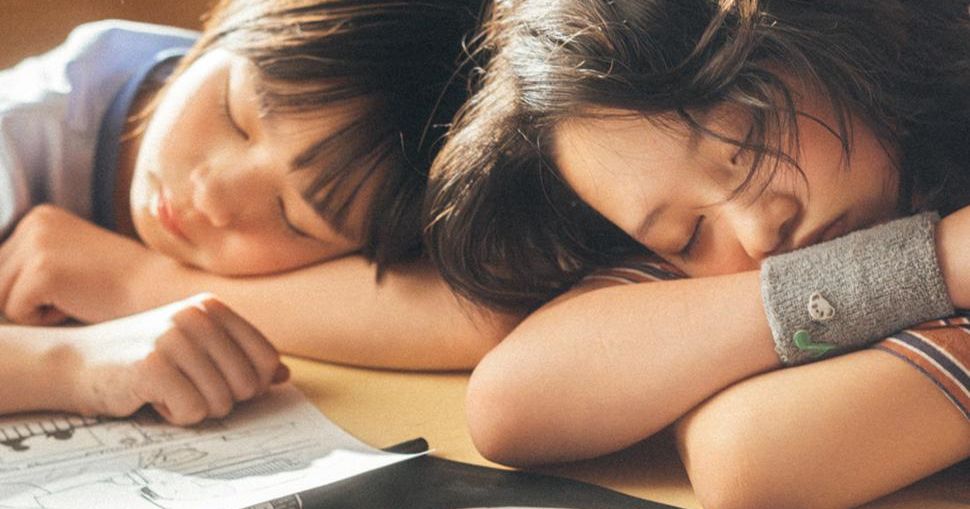
Look Back follows two girls through childhood and early adulthood. Ayumu Fujino (played by Furi Nanase as a child) is a popular artist and athlete, well-liked by her elementary-school friends and also committed to the little comics she draws for the school paper. One day, another comic appears alongside hers, drawn by Kyomoto (Rokka Okada), a reclusive student who won’t come to school due to social anxiety. Stunned at how much better this mysterious shut-in’s work is than hers, Fujino’s competitive spirit kicks in, and she becomes obsessed with studying harder at her craft. She even briefly gives up drawing out of frustration. (Maybe that’s the athlete in her: If you can’t be the best, why bother?) On graduation day, Fujino is tasked with taking Kyomoto’s diploma to the girl’s home, and the two finally meet. It turns out that Kyomoto idolizes Fujino’s work, going so far as to call her “Sensei Fujino.” She even asks for the girl’s autograph.
They become close friends and collaborators, entering a manga competition and winning honorable mention, despite still just being middle schoolers. (In later years, Fujino and Kyomoto are played by, respectively, Natsuki Deguchi and Aju Makita.) Fujino takes photos of the world outside — of fields and roads and birds and trains — so that Kyomoto knows what to draw. This process, we suspect, also helps Fujino see the world anew; Kore-eda shoots these rural landscapes and still-life compositions with his matter-of-fact mastery, never overtly aestheticizing them but still imbuing them with wonder. (I’m not sure there’s a filmmaker alive who uses the flattening effect of long lenses better than he does.) Fujino also shows her still painfully shy friend the pleasures of the outside world by accompanying her to the city, going out to eat, and helping her contend with her fear of crowds, of noise, of the blinding brightness of daylight. The two girls walk in snowy fields, visit temples and aquariums, and study sharks and other sea creatures for a new manga. They go to the movies and watch Nosferatu. Somewhere along the way, your heart explodes.
Look Back is a movie about collaboration and influence and friendship, but it’s also a movie about silence and patience. The film begins with the gentle scratch of a pen drawing, and throughout, Kore-eda remains attuned to the sounds of the world around these girls. The cocooned Kyomoto is more attuned to what we hear in the quiet. Her drawings, however, have an asymmetric power. (When Fujino first sees one of Kyomoto’s panels, I’m pretty sure I heard a snatch of Dvořák’s “New World” Symphony play briefly on the soundtrack.) The busy Fujino has ambition and drive and talent but sometimes needs to settle down, step back, and see things with a fresh eye.
The film isn’t all sweetness and light; it eventually goes to some grisly places. If Kore-eda falters at all, it’s in some of the structural and stylistic gambits of the film’s finale, which also come straight from the manga and involve a journey through an alternate timeline where these girls didn’t quite meet. Narratively, it’s intriguing and occasionally moving, but Kore-eda’s unadorned style doesn’t always handle abstraction well. Some of the symbolism of the film’s final scenes (and yes, I am being purposefully vague) can feel like the director struggling to convey something that remains just outside his grasp. But that’s such a minor quibble. With Look Back, Kore-eda reminds us why he’s one of modern cinema’s great humanists.
- The Biggest Tearjerker at Venice Is … the Oasis Documentary?
- Could This Be the Best Film at Venice This Year?
- Primetime Might Be Robert Pattinson’s First Real Shot at an Oscar
Look Back Might Make Your Heart Explode

1 Comment
Pingback: Bebe Rexha Addresses Comments About Her "Massive" Breasts - Comic Vibe