

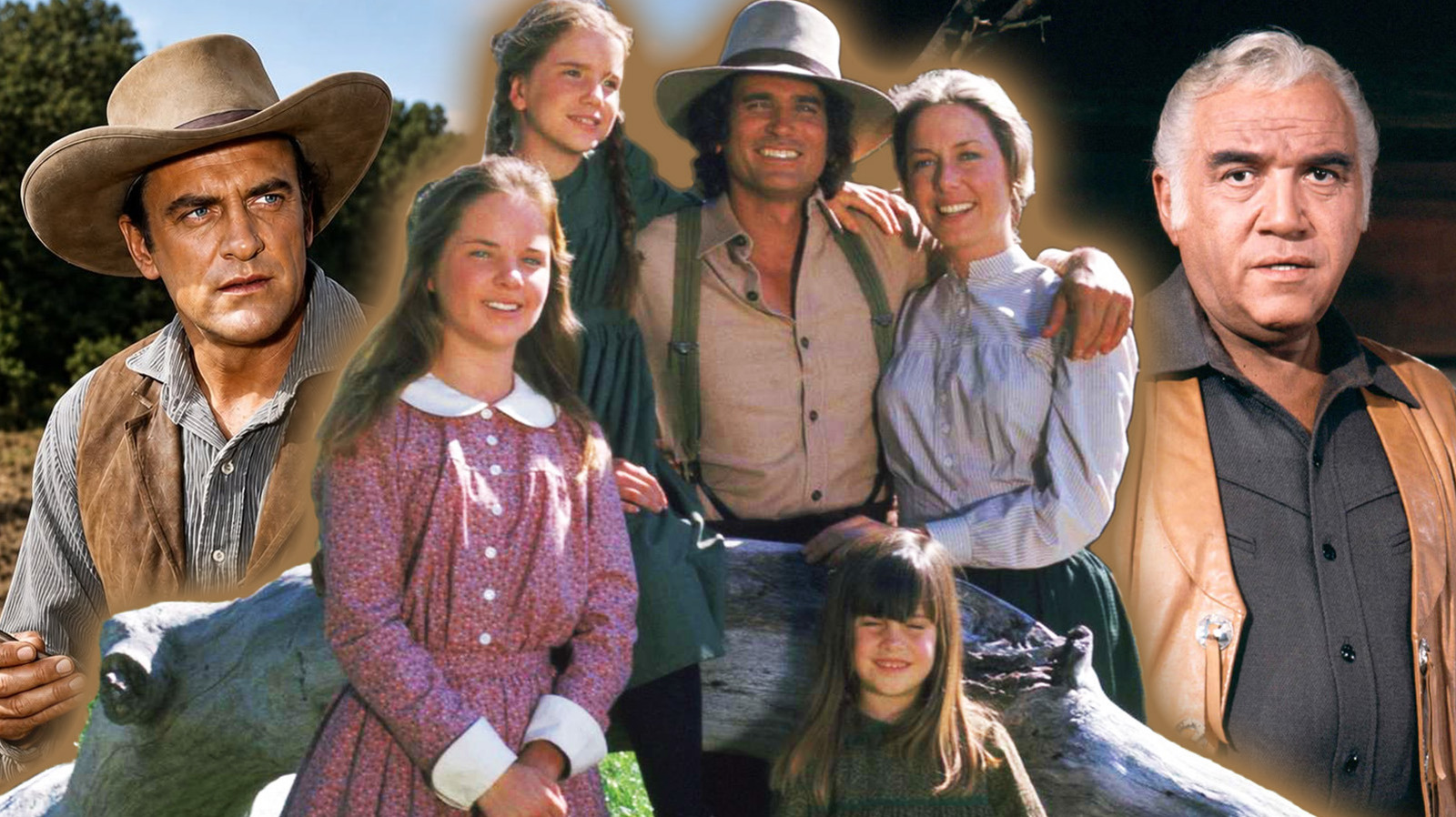
After dominating cinemas and television for much of the ’50s and ’60s, the Western genre began to gradually decline throughout the 1970s. Shows that had been on the air for over a dozen seasons ended their runs during the decade, with few to replace them. But television Westerns hadn’t entirely gone the way of the dodo in the ’70s, with the decade still producing quality shows. These shows reflected changing attitudes about the genre overall, some deconstructing familiar archetypes while others going in a completely different direction.
With all that in mind, we’re highlighting the best Western series produced during the ’70s, bringing a fresh quality to the genre in their own way. A noticeable trend in ’70s television Westerns, with at least one notable exception, is that many of these shows had relatively brief runs, underscoring the genre’s diminishing popularity. Some of the shows that we’re including here are also holdovers from the preceding decade, but they still maintained an impressive level of quality as they continued into the ’70s.
These are the 10 best ’70s Western TV shows ranked, keeping the genre alive on television throughout the decade.
10. Bonanza
Several series from the ’50s managed to carry on into the ’70s, with one of the most prominent to make the transition was “Bonanza.” The show centers on Ponderosa Ranch in the 19th century, following Ben Cartwright (Lorne Greene) and his adult sons. The show’s last 3.5 seasons ran during the ’70s, retaining Ben and his youngest biological son Joe (Michael Landon) for the remainder of its run. Replacing the older Cartwright boys are Ben’s adopted son Jamie Hunter Cartwright (Mitch Vogel) and former outlaw Griff King (Tim Matheson), who comes to the ranch looking for redemption.
“Bonanza” doesn’t make it as highly on the list because its best years were in the ’60s, back before Pernell Roberts left the series. But the show bringing in Vogel and Matheson did mix things up adequately, providing new twists to its family focus premise. “Bonanza” always was powered by more prominent familial dynamics, something Landon took with him after the show concluded for its future projects. A holdover from previous decades that stuck in the landing in its final years, “Bonanza” marked the transition between genre sensibilities as it progressed into the ’70s.
9. The Men from Shiloh
Going into the ’70s, “The Virginian” retooled itself to better appeal to contemporary audiences, complete with retitling itself “The Men from Shiloh” for its final season. More than just a title change, the show began to reflect the growing popularity of spaghetti Westerns in the United States. The change in aesthetics extends to a new opening title sequence, including a theme song provided by the iconic Ennio Morricone. The show largely moved away from its ranch setting in this season while bringing in new main characters Alan MacKenzie (Stewart Granger) and Roy Tate (Lee Majors).
Though “The Men from Shiloh” rebranding only kept the show formerly known as “The Virginian” on the air for an additional season, it wasn’t for lack of trying. With its change in lead actors and the approach to the established premise, the series offered a strong repositioning to adapt with the times. Lee Majors is a magnetic screen presence, even before he would headline “The Six Million Dollar Man” two years later, and injects fresh energy into the show. It would’ve been interesting to see where “The Men of Shiloh” would’ve gone had it continued, but the one season we got was entertaining enough to earn a place here.
8. Little House on the Prairie (1974)
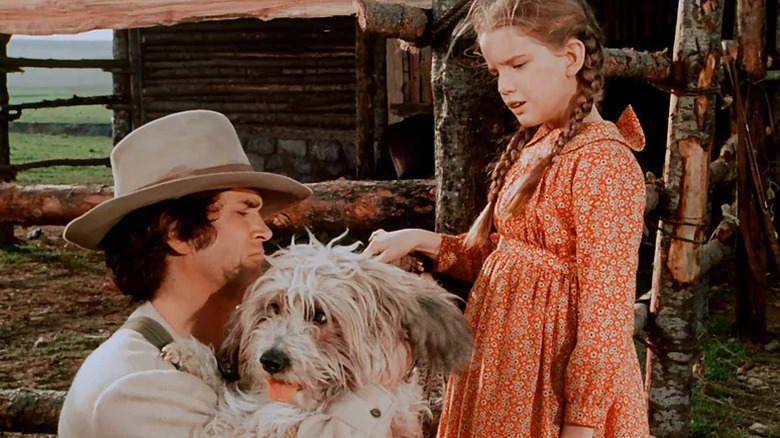
Fresh off of “Bonanza,” Michael Landon went on to star, executive produce, and occasionally direct the subsequent Western show “Little House on the Prairie.” Loosely adapting the memoirs of Laura Ingalls Wilder, the show takes place in the small frontier town of Walnut Grove, Minnesota in the 19th century. Landon plays Charles Ingalls who, along with his wife Caroline (Karen Grassle), raises a growing family on their farm. Premiering in 1974, the series ran for nine seasons, truly charting the Ingalls children growing up across the picturesque “Little House on the Prairie” filming locations.
While “Bonanza” also had a strong focus on family, “Little House on the Prairie” took that distinction to the next level. Under Landon’s guidance, the show is one of the most wholesome Westerns ever made, leaning into the rustic coziness of its setting and premise.
Over 40 years after the original series concluded, “Little House on the Prairie” received a Netflix reboot, heightening the realism while retaining the family-friendly qualities. Cementing Landon’s Western television bonafides, “Little House on the Prairie” took a pleasantly gentle hand with its
7. Hec Ramsey
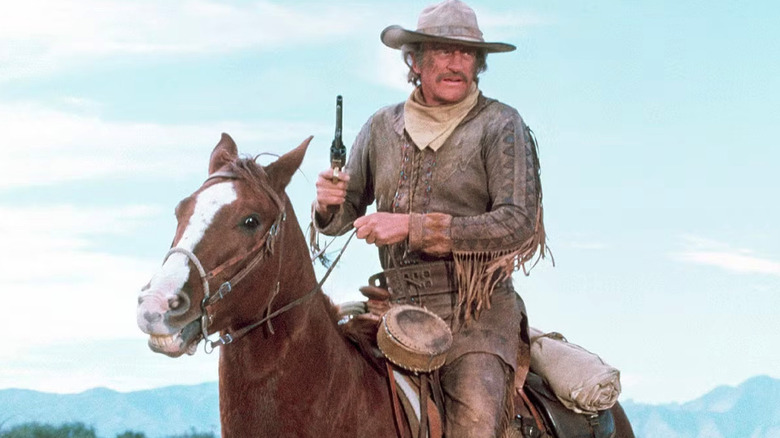
One of the best classic Western TV shows ever was “Have Gun – Will Travel,” which aired for six seasons from 1957 to 1963. The show’s star Richard Boone returned to the genre for a very different television Western, playing the titular protagonist in “Hec Ramsey.” Premiering in 1972, the show is set in the early 20th century with Ramsey as a lawman who uses early forensics to solve cases. Keeping the peace in an Oklahoma frontier town, Ramsey works with a younger partner, Oliver B. Stamp (Rick Lenz), who is initially wary of Ramsey’s methods.
With the show executive produced by “Dragnet” creator Jack Webb, “Hec Ramsey” has a more pronounced procedural crime approach to the genre than most Westerns. Boone, who played a gentleman gunfighter and Renaissance man in “Have Gun – Will Travel,” gets to portray another articulate and intelligent Western hero this time around. The gunslinging action is still very much present, but the advent of forensic criminology is the distinguishing feature here. Though the show didn’t run nearly as long as Boone’s prior series, “Hec Ramsey” offers a distinctly entertaining take on the genre.
6. Gunsmoke
The long-running television Western “Gunsmoke” not only continued into the ’70s, but ran for the first half of the decade. The show retained its core premise of U.S. Marshal Matt Dillon (James Arness) keeping the peace in and around Dodge City in the 19th century. But by its later seasons, the series had evolved into more of an ensemble piece, expanding to explore the adventures of its supporting characters. This was bolstered by a line of impressive guest stars, including Harrison Ford playing two very different characters in the show’s final seasons.
“Gunsmoke” is one of those genre shows that subtly evolved with the times, never losing its initial charm and ethos, but reflecting changing sensibilities. Arness’ performance as Dillion stands as the show’s constant cornerstone, but the types of characters he meets are more nuanced and darker than his initial adversaries. But there’s a reason why “Gunsmoke” survived for two decades, and that appeal can still be seen throughout its final five seasons. A genre gold standard on television, “Gunsmoke” is Western royalty that could roll with the punches.
5. Centennial
One of the most ambitious miniseries of the ’70s, regardless of genre, was the 1978 limited series “Centennial.” The show is named for a Colorado frontier town, with the series chronicling its founding and development from 1795 to present day. This includes the arrival of European traders and trappers in the late 18th century and their interactions with the indigenous populations. In the narrative set in the modern era, rancher Paul Garrett (David Janssen) tries to prevent the land from being exploited by greedy businessmen.
Spanning 12 episodes, “Centennial” features an all-star cast including Raymond Burr, Richard Chamberlain, Andy Griffith, Donald Pleasence, and early roles for Timothy Dalton and Mark Harmon. Compared to the novel by James A. Michener, the miniseries offers a more streamlined version of the story, while making its present day villains a bit more insidious. Along with “Roots” the preceding year, the show upped the bar of quality for television miniseries ahead of other genre masterpieces like “Lonesome Dove.” A sweeping saga that bears more than a passing resemblance to the multi-generational story of the Duttons in “Yellowstone,” “Centennial” is well worth checking out.
4. How the West Was Won
After “Gunsmoke” was abruptly cancelled following its 20-year run, star James Arness remained in the genre with the 1976 series “How the West Was Won.” Based on the 1962 Western movie of the same name, the show opens with Zeb Macahan (Arness) leading his family to the frontier upon the outset of the Civil War. Navigating the perilously divided country, the Macahans eventually found a family ranch in Wyoming, occasionally battling violent rivals along the way. This includes a group of Confederate sympathizers who develop a murderous grudge against the family, tracking and hunting them during the journey.
The gunslinging action that made Arness a household name is present in “How the West Was Won,” while the show leans into Civil War-era intrigue. For example, the show features a more pronounced sense of stakes than Arness’ prior series, underscoring that several of its main characters wouldn’t be safe. Ironically, Arness was joined by Bruce Boxleitner, who guest-starred in the “Gunsmoke” series finale, this time playing his character’s son Luke. While it obviously didn’t enjoy the longevity of “Gunsmoke,” “How the West Was Won” proved Arness was still a Western draw and had more range in the genre than anticipated.
3. Kung Fu (1972)
Let’s get the obvious and justified criticism out surrounding the 1972 “Kung Fu” series out of the way first. The show’s protagonist, Kwai Chang Caine, a half-Chinese man who grew up in 19th century China, is played by fully Caucasian actor David Carradine. This casting was controversial even in 1972, with the Association of Asian Pacific American Artists filing a formal complaint. Beyond the lead actor controversy, the series itself is a syncretic blend of Wild West and martial arts movie elements and themes.
This combination makes “Kung Fu” unlike anything else on television both at the time or since, breathing new life into well-worn tropes. Caine is unlike any other Western hero, bringing a philosophical perspective to the Wild West and plenty of gracefully staged action. Though the series only ran for three seasons, it left an indelible mark on its genres and what both Westerns and martial arts stories could be. Controversy or not, it’s hard to talk about ’70s Westerns and not at least acknowledge the impact that “Kung Fu” delivered during the decade.
2. Nichols
James Garner had become a household name starring as Wild West gambler Bret Maverick in the ’50s series “Maverick.” After enjoying a prolific movie career for much of the ’60s, Garner returned to television Westerns with the short-lived series “Nichols.” Garner stars as the titular protagonist, who returns to his frontier hometown in the early 20th century only to find it under control by a rival family. Coerced into serving as the town’s sheriff, Nichols spends more time trying to find ways to get rich quickly rather than maintaining the peace.
“Nichols” is built around Garner’s considerable everyman charms, playing the role with easygoing charisma rather than as the genre’s usual rugged tough guy archetype. The offbeat Western series stars future “Superman” actor Margot Kidder as Nichols’ girlfriend Ruth, visibly having a good time with the material. Cancelled after a single season, Garner would parlay a lot of his violence-phobic protagonist qualities into his subsequent contemporary detective series “The Rockford Files” to greater effect. But for 24 episodes, Garner’s return to television Westerns on “Nichols” was a lot of freewheeling fun as only he could bring to the screen.
1. Alias Smith and Jones
One of the most intriguing concepts for a Western television series was employed by the 1971 show “Alias Smith and Jones.” The show opens with outlaw cousins Kid Curry (Ben Murphy) and Hannibal Heyes, initially played by Pete Duel, pleading an amnesty deal to repent from their criminal ways. In order to receive a pardon, the two men must keep out of trouble for a full year, though they are still technically both wanted outlaws in the interim. In order to maintain this goal, Curry and Heyes take on aliases, Thaddeus Jones and Joshua Smith, respectively, to keep their noses clean.
The premise behind “Alias Smith and Jones” lends itself well in positioning the show as a comedically subversive take on the genre. The titular pair still find themselves in harrowing situations as they remain on the run, but with an easygoing charm and conscious avoidance of frontier violence. The role of Heyes was recast with Roger Davis after Duel’s untimely death approximately halfway through the series, retaining the complementary rapport between the two main characters. A successful translation of the “Butch Cassidy and the Sundance Kid” dynamic to a breezier television story, “Alias Smith and Jones” is as fun-filled as it is overlooked today.
