

Sports cards are way more complicated than they used to be
Gone are the days where hobbyists could point to a simple and straight-forward base card as the pinnacle for a top player. In 1986, collectors were chasing Jerry Rice’s Topps rookie and that was it. In 1989, the hunt was on for Ken Griffey Jr.’s rookies in Bowman, Donruss, Fleer and Topps Traded, though the Upper Deck Star Rookie was considered the new 401k
Today, the ultra-modern trading card market is nearly unrecognizable. There are still those standard base cards, but now there are also versions of them with a rainbow of different colors and patterns denoting different levels of scarcity. There are cards that are autographed, cards bearing a range of memorabilia (some tied to players and games and others off the rack) inside them, image variations, serial-numbered parallels, inserts, super short-printed case hits and, well, you get the idea. There are more types of cards than ever and some can be important or valuable for different reasons to different people, among a growing sea of cards that are neither to anyone.
Rookie cards used to be the cards to own. Now, it’s not so clear
“For a lot of people, that (ungraded) Topps card that’s $90, or whatever it happens to be, is the option for them if they want to participate in the rookie card market,” said Rob Veres, owner of Burbank Sportscards, one of the country’s top hobby shops. “And a lot of them are under the impression, and they’ll always be under the impression, that the rookie card is the most important card … but there’s a difference between the best rookie card and the most expensive card.”
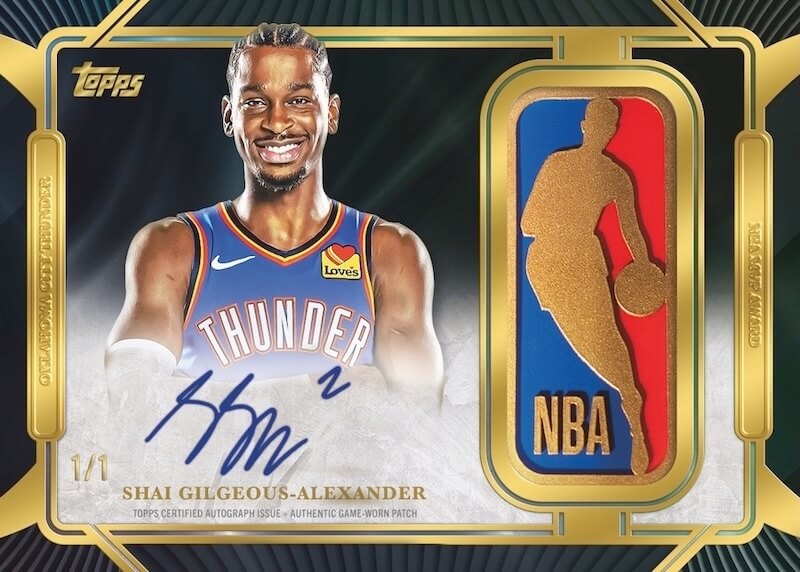
A flurry of auctions in recent months has continued to signal that collector sentiment is changing, especially at the high end of the market. Earlier this month, a one-of-one 2025-26 Topps Chrome Shai Gilgeous-Alexander Gold Logoman Autograph sold for a little more than $1 million at Goldin Auctions to become the most expensive card for the two-time NBA MVP. The card was released during his eighth season but contains a patch worn by the Thunder guard to celebrate winning his first MVP award during the 2024-25 campaign.
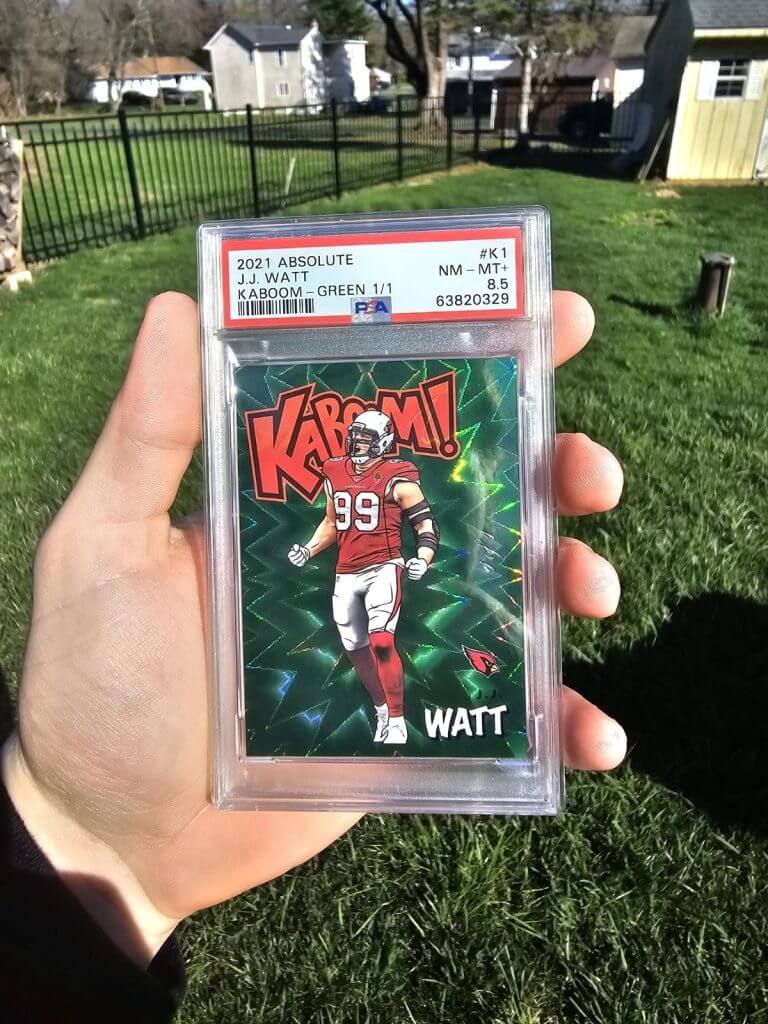
In March, Gilgeous-Alexander’s 2019-20 Panini Flawless Logoman Autograph sold for a then-record $577,306. Released during his second season, the card carried a premium because it featured him in his Thunder uniform rather than the Clippers uniform in which he began his career. Gilgeous-Alexander’s third-most expensive card, the one-of-a-kind Green parallel of his 2024 Panini Revolution Kaboom insert, sold for $432,000 in January because it was the rarest version of arguably the most popular modern insert in sports cards.
It’s not until Gilgeous-Alexander’s fourth-most expensive public sale that you find a rookie card — his 2018 National Treasures Logoman Autograph 1/1 that sold for $228,000 in 2023
A number of factors are always at play for any auction, including timing, market health, player popularity and the item’s scarcity, but exceptionally rare and notable cards from later in his career are floating to the top of Gilgeous-Alexander’s market, eclipsing the previous highs for his best rookie cards. This is a trend that is becoming increasingly common in today’s card market
“There’s nothing that prevents something coming up four years from now for (Gilgeous-Alexander) that people think is actually better (than a rookie card),” Goldin Auctions founder Ken Goldin told The Athletic. “Maybe it hasn’t been invented yet, we don’t know what it is. There used to be set collectors, player collectors, rookie card collectors, and now they are just simply card collectors where they are looking for the best that they can afford
“They’re looking for the grail cards and that may not necessarily be rookie cards for a lot of players. As things get more interesting, more hyped, more promotion, more media, it pushes those cards up.”
One of the most powerful trading card attributes that can outperform the best rookie cards is game-used memorabilia connected to a specific moment. To many collectors, the most significant cards combine those characteristics, such as the Rookie Debut Patch Autograph (RDPA) that was created by Topps and parent company Fanatics in 2023. Those cards feature an autograph and a one-of-a-kind patch created for and worn only during a player’s professional debut. First created for MLB, the RDPA program has since expanded to include the NBA, NFL, MLS, Formula 1, UFC and WWE in various formats.
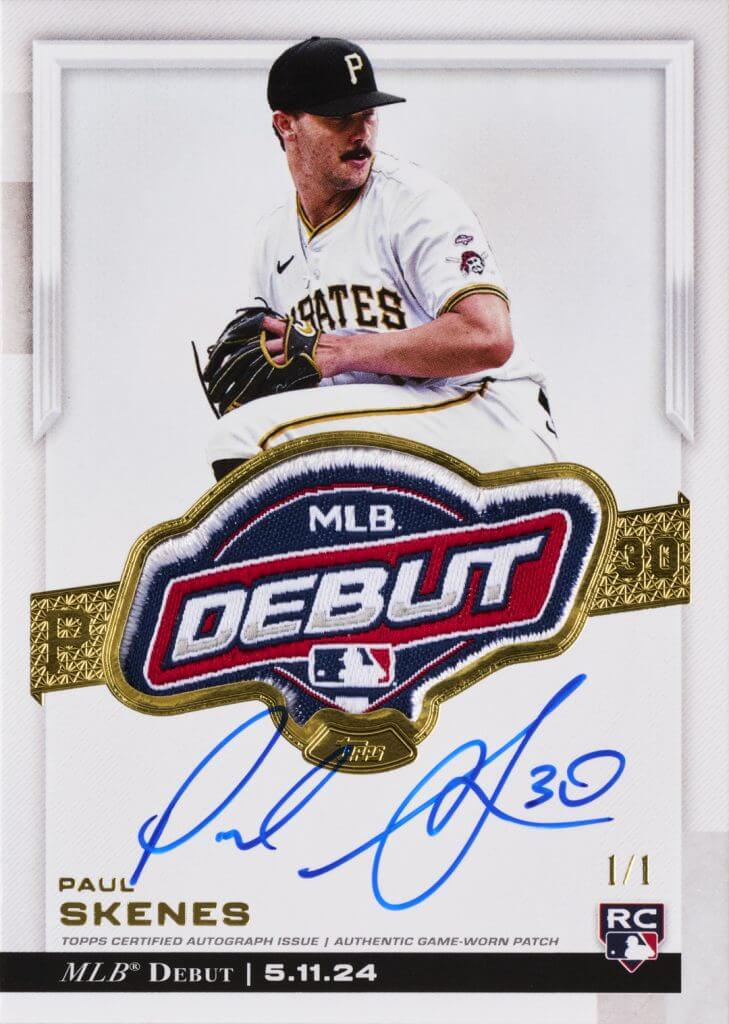
The program’s strength is likely best illustrated by the $1.1 million paid for Paul Skenes’ RDPA in March 2025 by Dick’s Sporting Goods. The second most paid for a Skenes card at public auction is the $123,220 for his one-of-one 2023 Bowman Chrome Draft Prospect Autographs Superfractor — a card that would have been considered his best by many collectors prior to the RDPA program’s existence
For players without RDPAs, high-end collectors have placed a significant premium on some of Topps’ newest patches with direct connections to specific seasons over many of their best rookie cards. The Gold Logoman and Gold Shield programs, which feature patches worn by award winners from MLB, NBA and NFL, have risen to the top
The record for any Josh Allen card at public auction is the $1.35 million paid for his 2025 Topps Chrome MVP Gold NFL Shield 1/1 in May. That card was released during Allen’s eighth NFL season but is linked to his 2024 NFL MVP campaign. Three of the four most expensive sales for Shohei Ohtani to date have been for non-rookie cards, including cards for two Gold Logoman patches used during his 2024 MVP season and a patch worn during the game in which he reached the historic 50 home runs and 50 stolen bases milestone for a single season.
“We’ve kind of seen the preference and desire, especially around patch provenance, evolve significantly,” Fanatics Collect (Topps’ parent company) president Kevin Lenane told The Athletic. “It’s sort of sweeping across sports. The provenance is really important and it starts with the debut patches, but it’s kind of starting to drift across even lesser valuable cards.”
Though Rookie Debut Patch Autographs and Gold Logoman cards are relatively new to the hobby, finding deeper meaning or significance as part of the chase is far from a modern concept. Mickey Mantle’s 1951 Bowman is indisputably his rookie card but his 1952 Topps card sits atop his market in terms of value due to the set’s historical importance to the hobby
What You Should Read Next
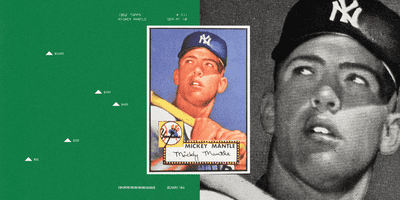
The rise of the rookie card (and the non-rookie card that started it)
Rookie cards have become a focal point of the collecting hobby, but over the years they’ve presented an odd mix of complexity and confusion
Ultra-rare Refractors and inserts from the 1990s have become some of the most expensive cards for many top players of that era due to their scarcity compared to flagship rookie cards. Rice’s most expensive sale is the $201,300 paid for a 1997 SkyBox Metal Universe Precious Metal Gems card numbered to just 150 copies. His highest 1986 Topps rookie card sale is $125,655
Dan Marino has had two public sales top $100,000 or more, both of which are highly-coveted serial-numbered inserts from 1997 and 1998. The highest sale for a 1984 Topps Marino rookie card is $79,015
“I think that what really has changed is the amount of big-time collectors that want to be at the top of the mountain and not everybody can,” Lenane said. “I experience this all the time with our private sales. Someone asks, ‘Where’s this card?’ I’m like, ‘Forget about that card.’ This card’s never coming out of that guy’s collection, but here are these other ones and eventually they move on to another concept.”
“The collectors with the biggest wallets, the things they’re looking for are not so much the best condition base rookie cards,” said trading card expert Adam Gray. “Those big collectors are looking for something that has an element of significance to it that is so rare and clearly at the highest peak of the mountain
The race for the best of the best has resulted in a number of different attributes becoming more desirable in recent years. It’s not enough that simple rookie cards are no longer the most coveted cards — small differences in quality, provenance or other historical context can make cards significantly more important to the hobby’s high rollers
 View Listing
View Listing
View Listing
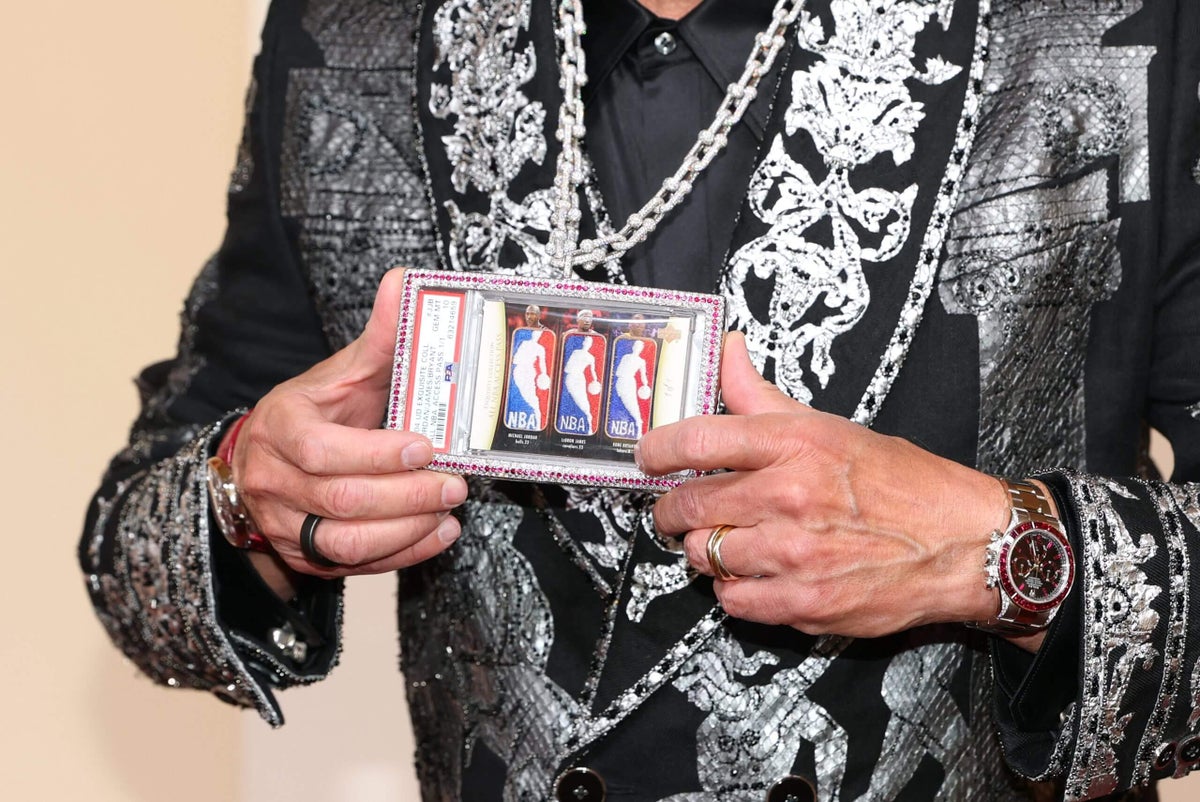
Eye appeal designations, which are used to differentiate a card’s quality from examples with the same overall condition grade, are appearing with increasing regularity at the major auction houses. When game-used memorabilia isn’t specifically noted as being from an exact game, hobbyists are using other clues to narrow the period of use. A defining characteristic of the record-setting Michael Jordan and Kobe Bryant Dual Logoman Autograph 1/1 that sold for $12.9 million to a group including Shark Tank star Kevin O’Leary in August 2025 was a gold NBA patch, which indicated it was worn by Jordan during the 1996-97 season for the league’s 50th anniversary and his penultimate title campaign. Since then, other cards featuring similar gold logo patches from that anniversary season have topped the best rookie cards to set public records for Charles Barkley ($144,000) and John Stockton ($105,000).
In-person autographs have become another popular way to differentiate key rookie cards from each other at the top of the market, Gray says, especially for players that didn’t have autographed cards released by the manufacturers when their rookies were originally produced. A 1986 Fleer Jordan PSA 9 with an in-person signature sold via a private deal in October 2025 for $2.7 million. The most paid publicly for a 1986 Fleer Jordan in a Gem-Mint PSA 10 grade without an autograph is $840,000. Is that autograph worth a nearly $2 million premium? For one big spender hunting for something almost no one else has, it is.
What could come next is hard to predict. Trading card manufacturers have increased their efforts to connect cards directly to athletes and their important moments, and hobbyists will likely start expecting even more. It’s hard to top one-of-one, purposefully made and worn patches, but even those were unthinkable to collectors just a few years ago
“I think it’s something around reliving or living an experience with the athlete,” Lenane said. “Maybe you get your redemption and you go to the card’s signing yourself. That feels to me like it’s probably in the vein of what it could be and then more of what we’re doing now — more on-card (autographs), more game-used (memorabilia) and more specific games.”
As unlikely as it now seems, the hobby could also take a step back and embrace simplicity again at some point. Collectors got along fine for decades with base rookie cards and not much else. A return to that could be desirable for many as collectors are overwhelmed with more and more variations of cards
“I think the beauty of this whole thing is that it was great when there was only Topps, Fleer, Donruss or maybe an Upper Deck base card for somebody,” Veres said. “That’s what everyone was used to, that was the card that was chased because there were no chase cards.”
The Athletic maintains full editorial independence in all our coverage. When you click or make purchases through our links, we may earn a commission
