

Why bother racing?
Car racing is essentially a sport. And it’s also entertainment. But it also serves as an engineering exercise, adjusting the balance of these three elements to varying degrees in each race series. Engineering is why companies like Bosch are involved.
“We get technology from the Bosch side and use it in everyday vehicle engineering,” said Joe Capuano, regional president of Bosch Engineering. “We can bring these components to the race track in different ways, where obviously the requirements are different. It’s really a learning loop, where we can take the base components, apply them in different ways to the needs of race teams, and incorporate feedback from racing to improve the products we have in our automotive portfolio.”
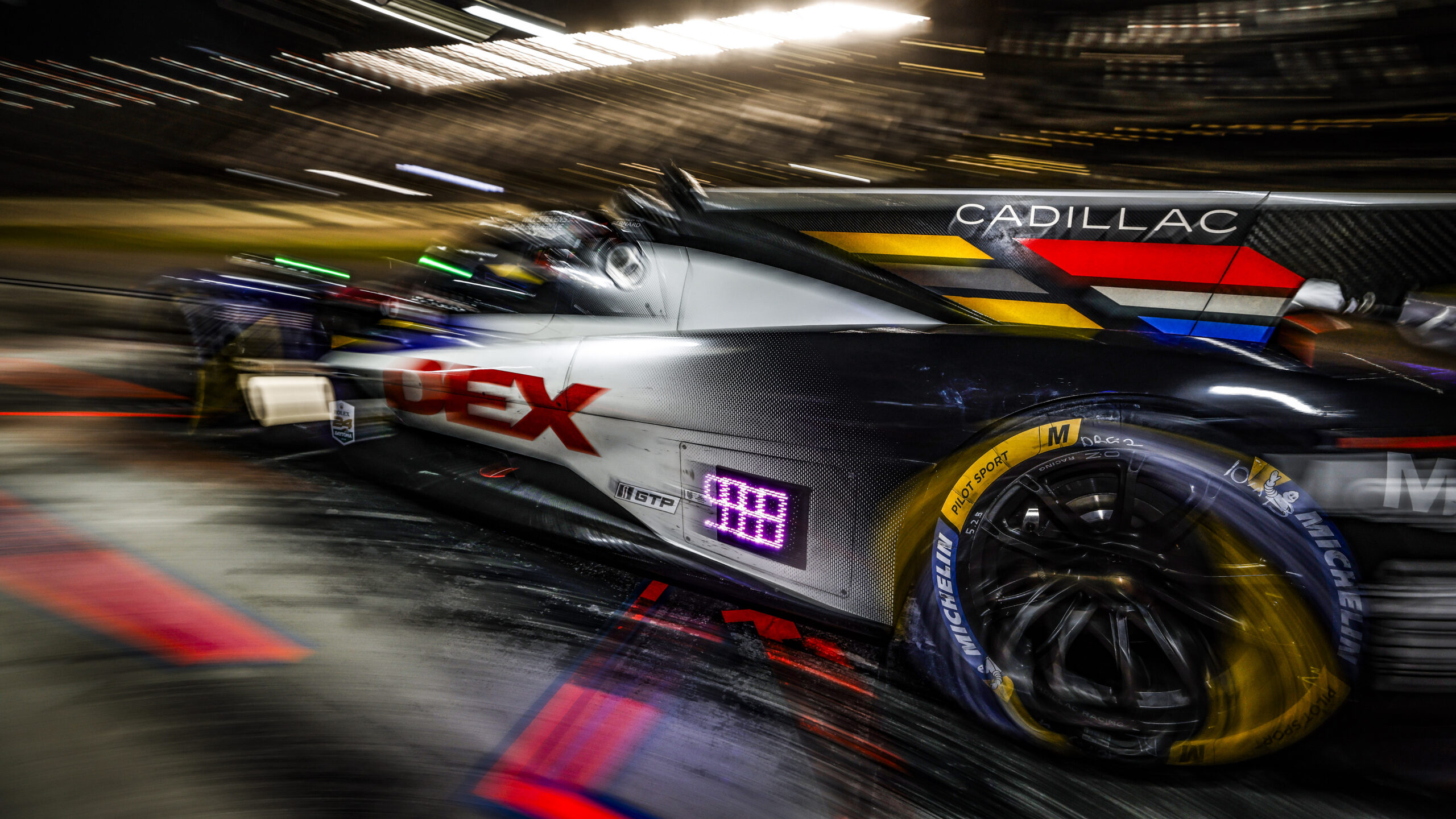
Companies like General Motors, which participates in IMSA with both its Cadillac and Chevrolet brands, are primarily trying to beat other automakers. But that’s not the only reason.
“It really teaches engineers to be able to advance quickly, analyze data, adapt, and throw things away. And within General Motors, it really ties engineering and motorsports directly together,” said Eric Warren, GM’s vice president of global motorsports competition. “Motorsports is really within the engineering group, so when we develop new simulation methods and things, it’s tied directly to the group that’s designing our cars. And not only can we compete from that perspective, which pits this brand against the brand, but it also helps us train our engineers to really relate to those technologies and drive the technologies that end up on the road,” Warren said.
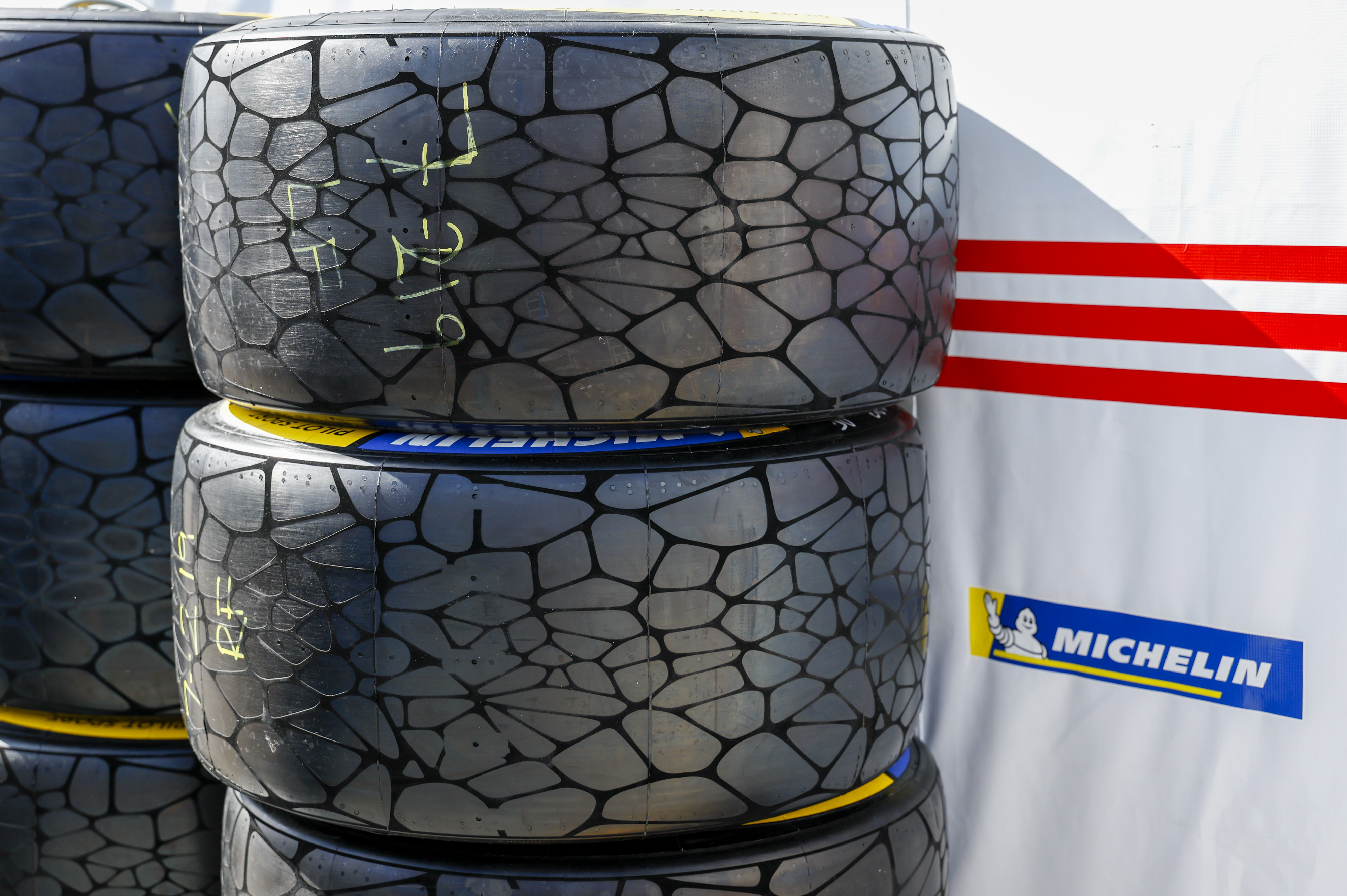
Michelin’s new hypercar tires. The dark web pattern is an appliqué, the same tire compound plus Michelin’s ‘velvet technology’ that the tire manufacturer uses in its sustainable racing tires (not just in MotoGP, but also in IMSA and the World Endurance Championship) as a visual cue to fans.
Credit: David Rosenblum/Icon Sportswire, Getty Images
Michelin’s new hypercar tires. The dark web pattern is an appliqué, the same tire compound plus Michelin’s ‘velvet technology’ that the tire manufacturer uses in its sustainable racing tires (not just in MotoGP, but also in IMSA and the World Endurance Championship) as a visual cue to fans. Credit: David Rosenblum/Icon Sportswire, Getty Images
“Literally what we do is we learn here on the weekend, we go back to the office on Monday morning, and based on what we learned over the weekend, we design a product that we can drive ourselves for the rest of the week,” explained Matthew Cave, president and CEO of Michelin North America.
