

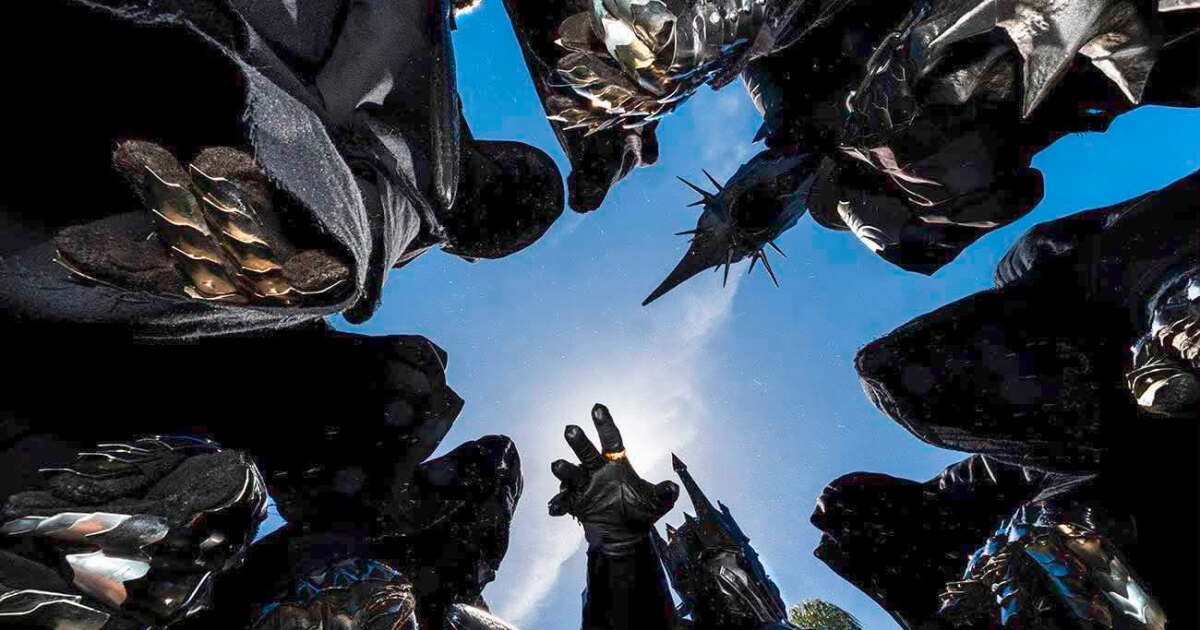
It is 357 days till Comic-Con! Comic-Con 2026 is over and yes I am already counting the days till the next one.
In order to reflect on this year’s show I always need a little recovery time recovery time, not because of physical pain or exhaustion from running a booth, doing panels and filing stories but rather from the post-Con blues that are hard to overcome. But now I am ready to reflect back on why I love this pop culture convention so much.
Advertisement
Become a KPBS sponsor
Yeah, this is not “objective reporting,” but rather a geeky op-ed from someone who has been attending Comic-Con for (gasp!) more than a half-century and loving every minute.
Beth Accomando
/
KPBS
If you are not a geek — and by geek I mean someone who loves something so much that you are willing to suffer ridicule and abuse for defending whatever it is, and who wants to share that passion with others — then you may not understand why Comic-Con is so special.
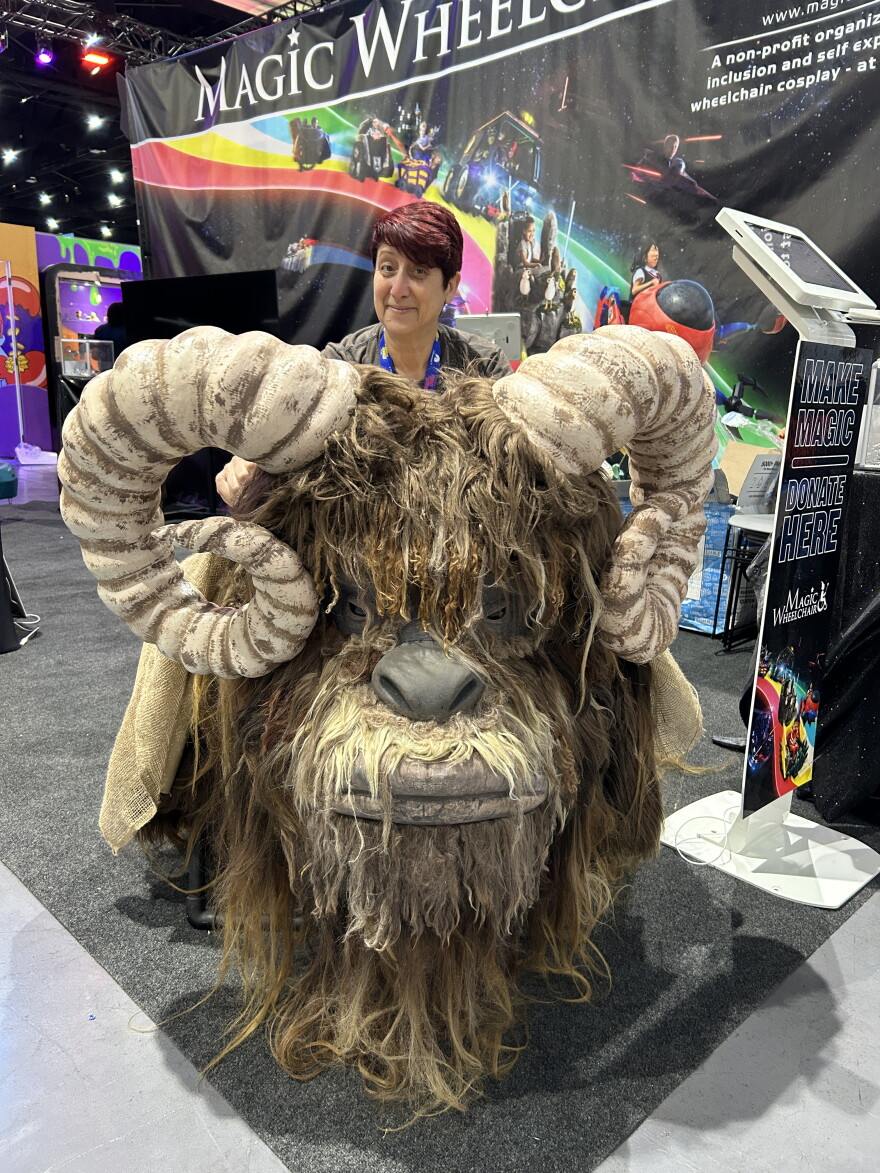
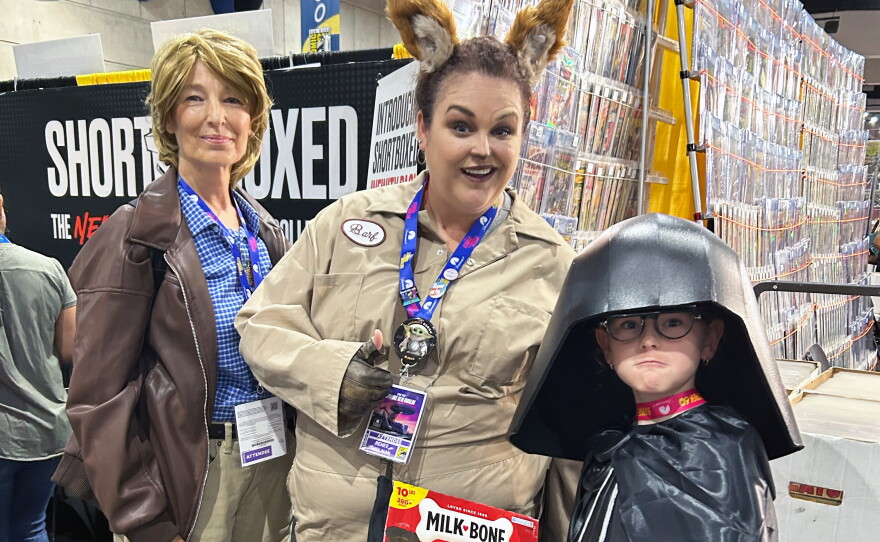
It is the only place I feel normal and at home because I am surrounded by people with similar passions. Multiple times, I chatted with total strangers and got to share favorite Comic-Con memories or discuss something we were excited about seeing or doing. And because I don’t wait in line for Hall H or for Hasbro or Funko exclusives, I tend to meet the kind of attendees whose fandoms and experiences overlap with mine.
Why I keep coming back
Beth Accomando
/
KPBS
I always tell people Comic-Con is what you make it. It can be about panels, art, cosplay, gaming, movies, TV, exclusives, autographs and, yes, comics. And whatever experience you pursue is great so long as that’s what makes you happy. It’s a place to seek out the familiar — the things you love as well as the people you may only see once a year. But it’s also about discovering something brand-new — an artist, comic, film or a new friend made while waiting in line.
Advertisement
Become a KPBS sponsor
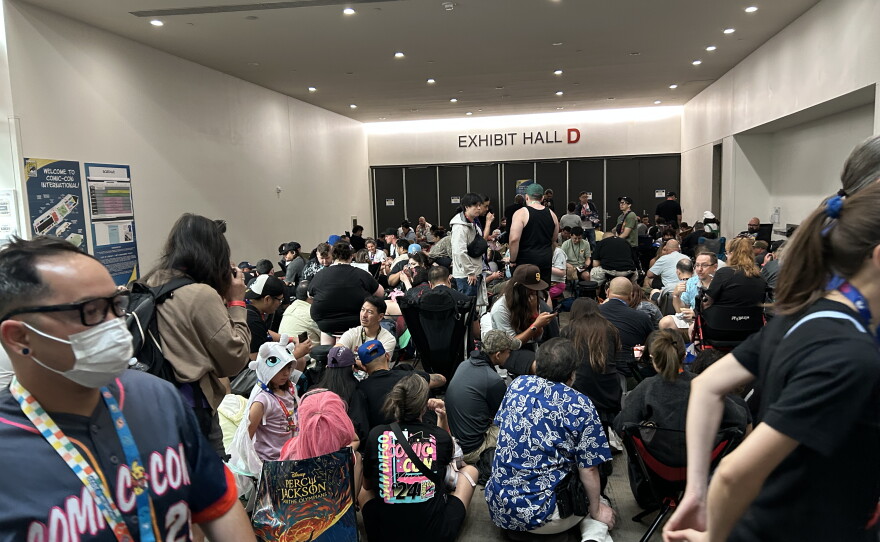
Comic-Con is not perfect. It’s crazy crowded and too big for the convention center. It’s annoying to see people buying exclusives only to flip them, preventing true fans from actually getting the items to keep. Rules and information are not always consistent, depending on who you ask. The AC did not really work in the humidity. But Comic-Con — for better or worse — is run by genuinely geeky fans who just want to put on a show that they themselves would love to see and that’s why I love it. They essentially build a small village in just a few days, providing shuttles, ADA services, programming across multiple buildings and a safe environment for geeks to just be geeks.
Beth Accomando
I know people and the media like to say Comic-Con has sold out to Hollywood, but it has always been about movies along with comics, science fiction and literature. I was attending the Con back in the 1970s because I was a movie buff, and they had one-sheets and guests like Frank Capra, Ray Harryhausen and later Francis Ford Coppola.
Once Hollywood realized Comic-Con held some cachet for its products, Hollywood did make its presence more obvious with splashy Hall H panels and bigger booths on the convention floor. But those Hall H panels are only a fraction of the hundreds of hours of programming available. Plus, Comic-Con still runs the most prestigious comics awards in the world, the Eisners. If you are not finding comics at Comic-Con, it’s your fault.
Beth Accomando
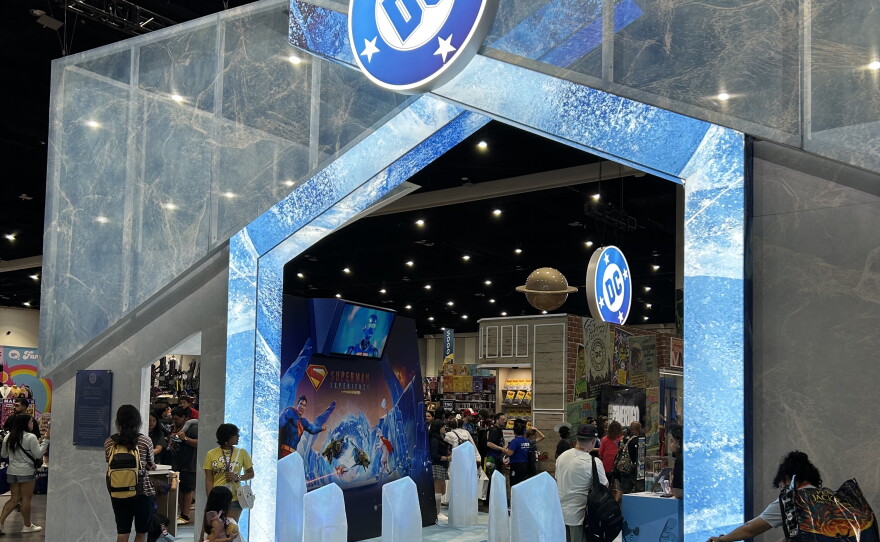
I will agree there are fewer comic book dealers on the exhibit floor and less space devoted to vintage comics. But let’s be real, DC and Marvel are less about comics these days and no longer define themselves as comics publishers but rather as entertainment companies. So Comic-Con reflects the changes in the industry as a whole.
Understanding the assignment
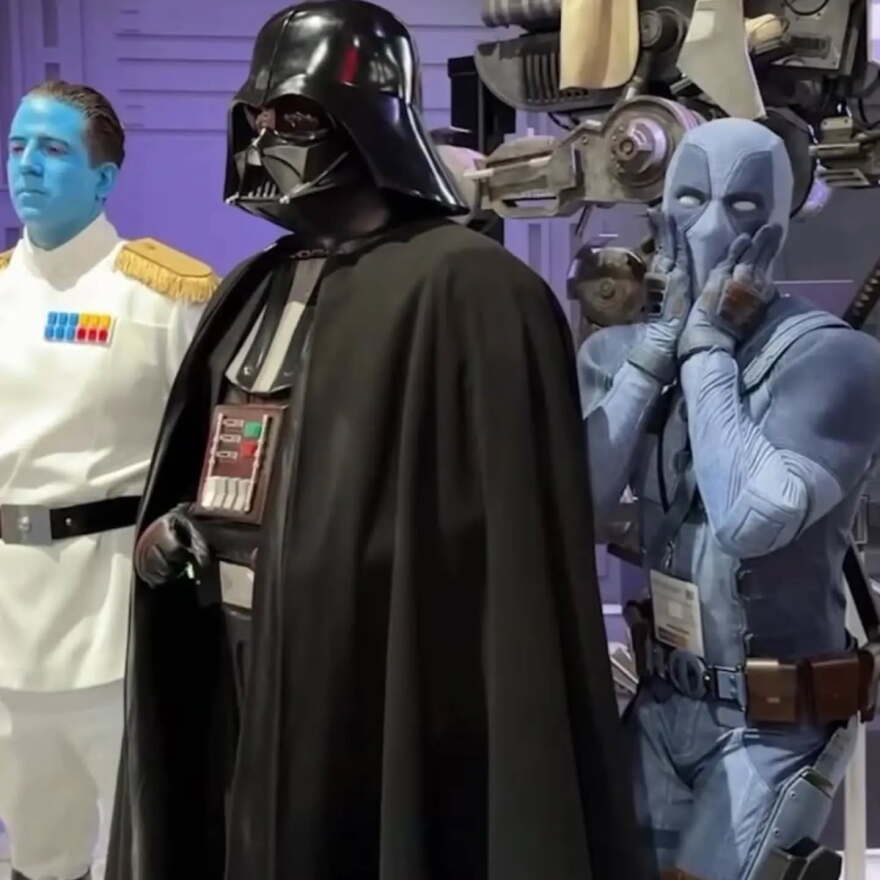
There are some companies and studios that understand the assignment. Marvel not only brought in celebs but handed out Doctor Doom masks and capes. And I am not sure if Ryan Reynolds’ incognito roaming of the convention floor as Jeanpool was part of Marvel’s plan or just something playful the actor wanted to do, but it may be one of the most joyful, fan-service stunts of the year. He stayed in perfect character (according to posts and my friend who got a photo with him), and once revealed, so many people were just thrilled and delighted.
Courtesy of Shane Holly
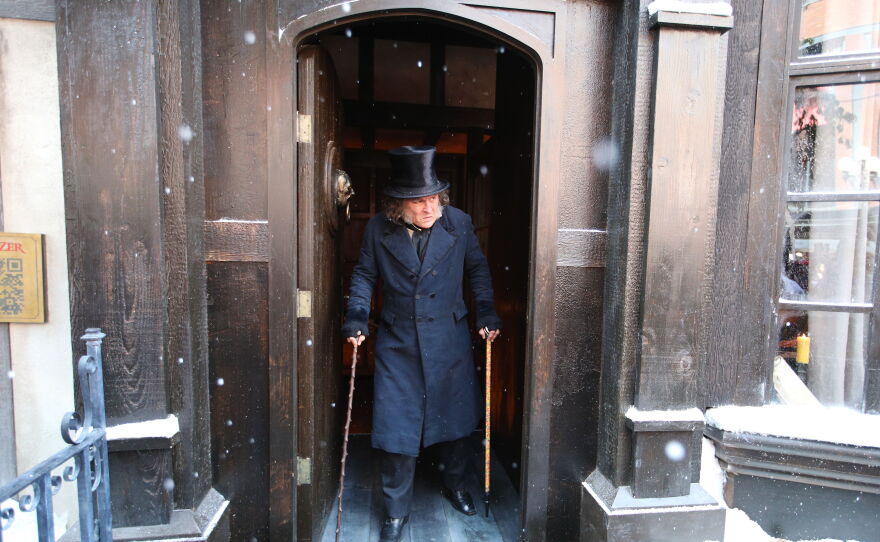
Similarly, Paramount pulled off a surprise visit from Johnny Depp in full costume as Ebenezer Scrooge at the Gaslamp activation. What made this tailored to Comic-Con is that the company in charge of creating the activation, I Heart Comics, reached out to fans who cosplay specifically and in great detail as Depp’s previous screen characters to make sure they would be there for the event.
Daniel Knighton/Getty Images for Paramount Pictures
/
Getty Images North America
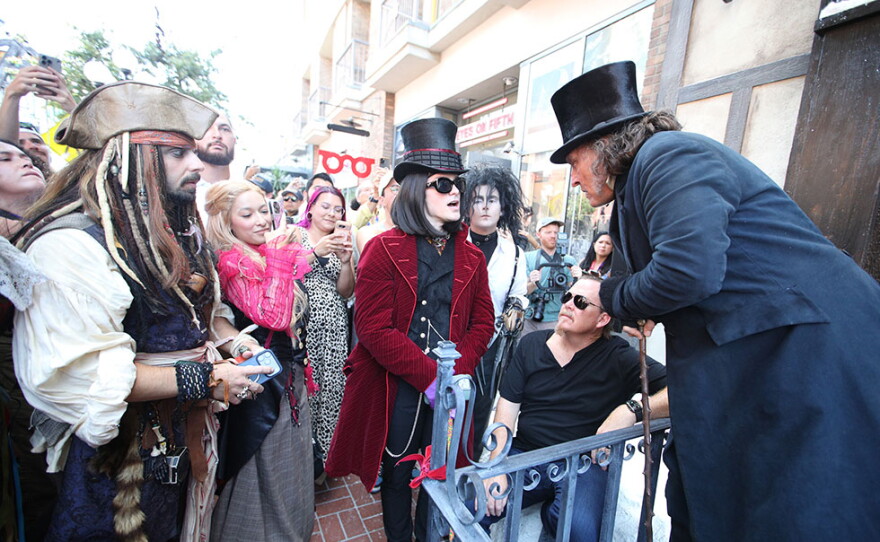
Ashley Aguirre, head of strategy and digital at I Heart Comics, started working on the activation months ago. Even though attendees could not enter the Scrooge and Marley storefront, the company built out the interior set with loving attention to detail, including props from the film, Scrooge’s invoices and even dust. Plus, there were actors, hair and make up people, special effects and audio engineers all running the activation. Depp was not at the activation all four days but made a few appearances, coming out of the building to interact with fans.
Daniel Knighton/Getty Images for Paramount Pictures
Aguirre, who has been staging activations and events at Comic-Con for more than a decade, knows that fans can help drive interest in a film.
“We really wanted to reward his fans, so the people that we invited were Johnny fans and we had a moment that went really viral where you had cosplayers that were dressed as Edward Scissorhands, Mad Hatter, Willy Wonka and Jack Sparrow,” Aguirre said. “Coming to Comic-Con, you know a lot of people are going to see an activation, but we also want to make sure that that actually picks up traction and goes beyond just the attendees that are here and actually creating a moment that travels and that marketing can grow on and leverage on.”
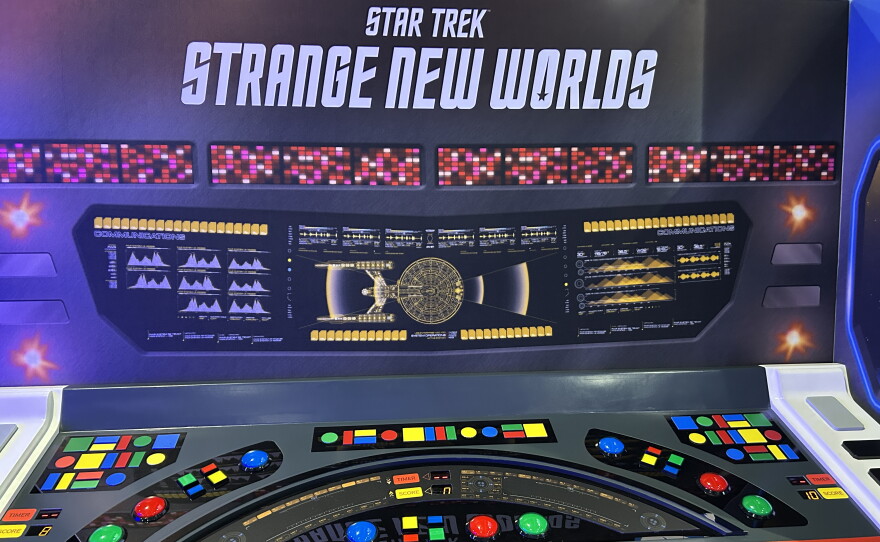
Paramount also nailed it on the exhibit floor with its arcade activation. Attendees got tokens, played “Star Trek,” “South Park” and “Avatar” games, collected tickets and turned them in for prizes.
Beth Accomando
/
KPBS
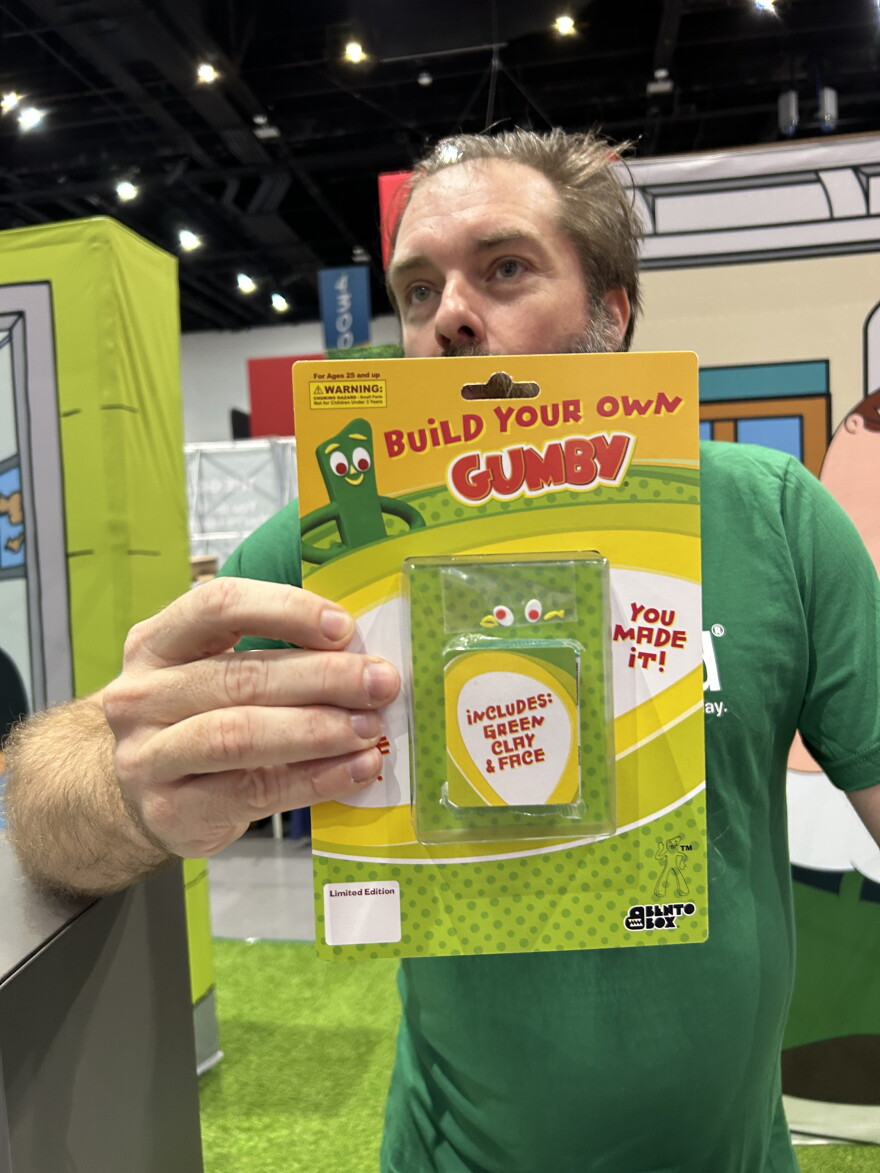
Similarly, toddland, which ran the Hulu animated booths plus a Gumby booth, had the right attitude about what Comic-Con is and should be: fun. I could never get a clear photo of the sign they had where people were lined up, but it basically said: You’re here. Be happy. Be kind to each other. Todd Masters of toddland also created a fun exclusive toy: Build Your Own Gumby.
Beth Accomando
/
KPBS
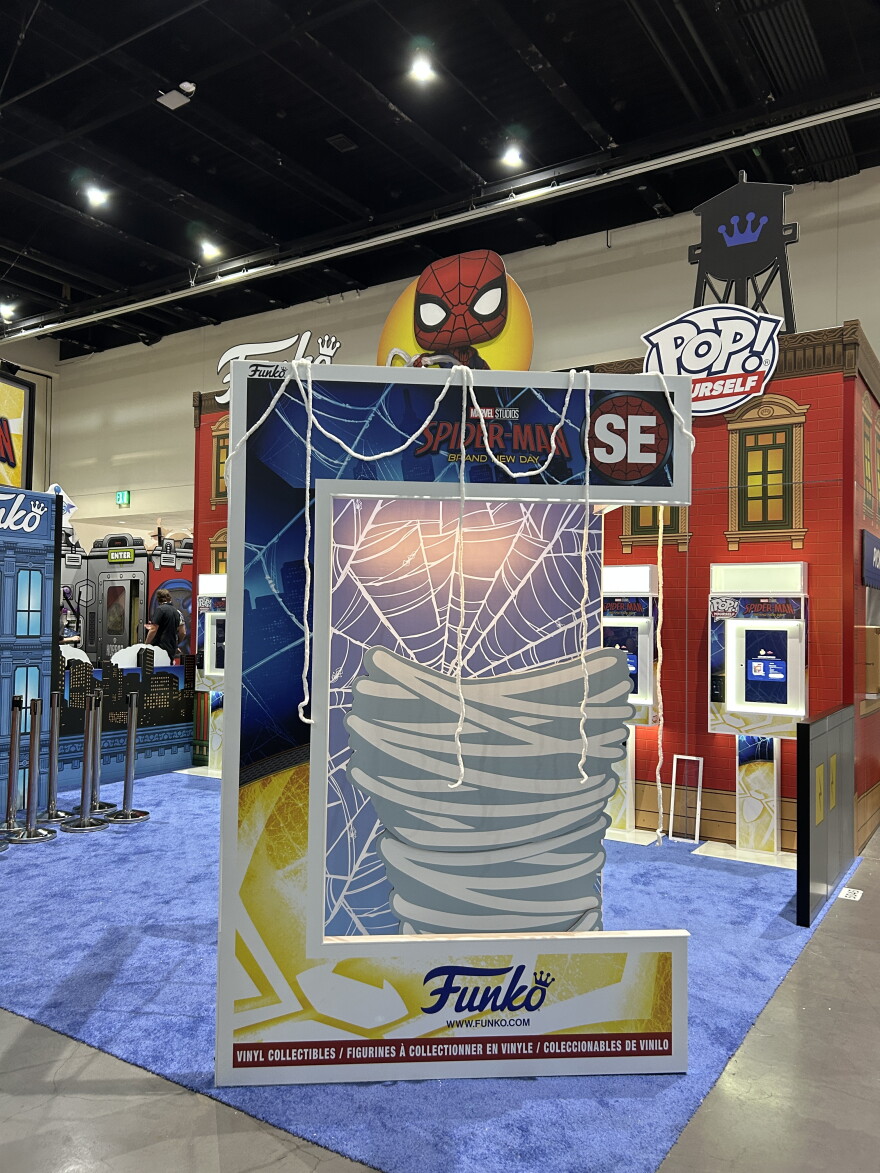
Meanwhile, over at the Funko Pop booth, there were fun photo ops and opportunities to make your own Funko Pops. But the marketing team emphasized a rare Pop that someone could find, and if they did, Funko would offer to buy it back for $10,000. I don’t know, but that seemed weird. It seemed more geared toward people looking to buy exclusives and flip them, essentially encouraging that behavior rather creating something that was more about geeky fun than financial gain. But then maybe that’s why the value of Funko Pops has dropped.
Beth Accomando
I am sure Funko pays a large fee for its massive space and neither they nor Comic-Con may want to change that but it would sure be nice if Funko reduced its footprint to give the cramped and bustling artist alley more much needed space. And if we are rearranging the floor move small press next to artist alley. Just a thought.
Growing pains
Every year people find something to complain about — some justified complaints, some not. (If you don’t do your research on how to line up or how to get exclusives, it is not Comic-Con’s fault).
Beth Accomando
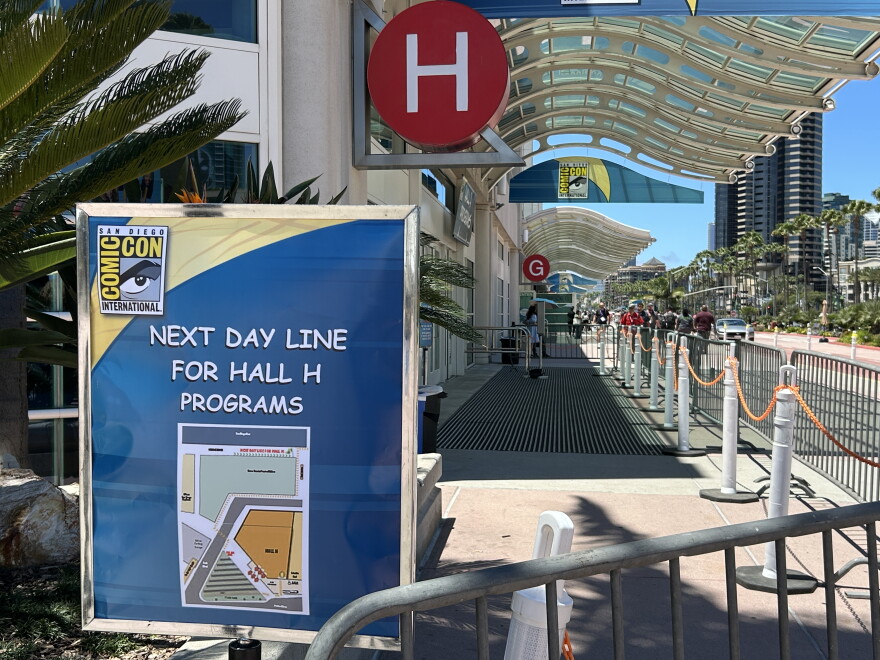
This year, excitement was high over the return of Marvel to Hall H, and consequently, there were a lot of people lining up early — first to get Hall H wristbands and then to wait in line to get in on Saturday. But things did not go as smoothly as planned, and some attendees who thought they had guaranteed entry to Hall H found themselves shut out. There were rumors of forged Hall H wristbands contributing to the problem, and there was a large turnout for the Talk Back panel on Sunday afternoon to complain about all of that. In fact, the Talk Back panel had to turn away people, and some attendees joked it should have been held in Hall H and been a wrist-banded event.
San Diego Comic-Con Chief Communications and Strategy Officer David Glanzer would not confirm or deny that there were forged wristbands, but stated: “We are taking a ground-up approach to address issues that occurred with lines at Hall H this year. The process will take time as we meet with multiple departments and explore all options available.”
Of course, everyone online had opinions on how to fix things. Make it a lottery, but then what if kids and parents or friends get separated? Run the panel twice, but the studios with expensive talent and surprise reveals would never go for it. Move Hall H to Petco Park, but that’s a huge expense with no protection from the weather and no easy way for studios to present clips. Move Hall H to Pechanga Arena, but that’s 20 minutes away and also an expensive rental.
It’s tough because Hall H only fits about 6,400 people, and demand far exceeds that, so many people will likely be disappointed no matter what. The panels do get replayed on video in the evening, but that is not the experience most people want. Nowadays, studios practically simulcast their panels, with the full videos often posted almost before the panel wraps. My friend was watching the “Spaceballs 2” panel before I even realized it had ended.
Glanzer also had to deal with a report that the Eisner winners had been leaked online on Thursday before the awards were given out. Glanzer released this statement to the press: “Whether or not this is true, we will obviously investigate what happened, but more importantly, I would hope that no one would mar the spotlight for those deserving nominees and recipients. Tomorrow evening is for them, and it would be awful if this took away from the meaningful and celebratory experience they richly deserve.”
It would have been a shame if winners were leaked, but that does not take away from the value of the awards or of the creative work they honor.
The heart of Comic-Con
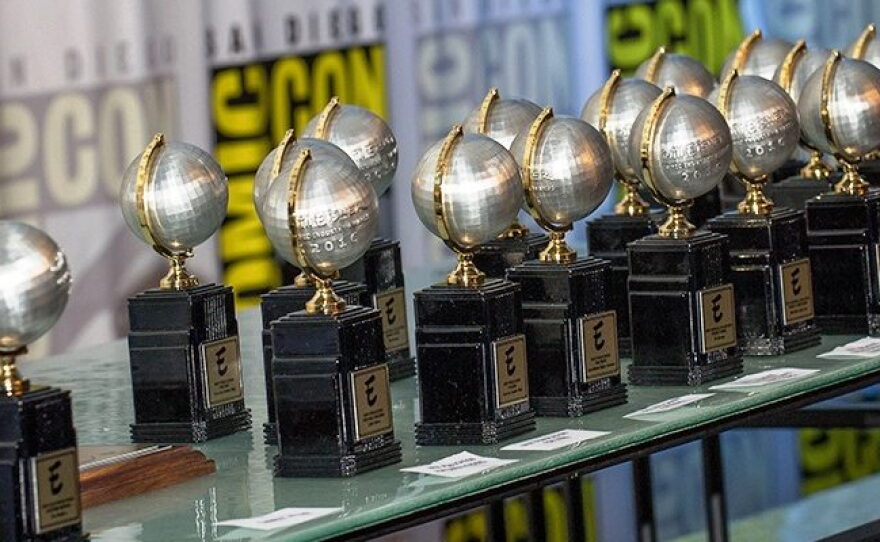
Courtesy of Comic-Con International
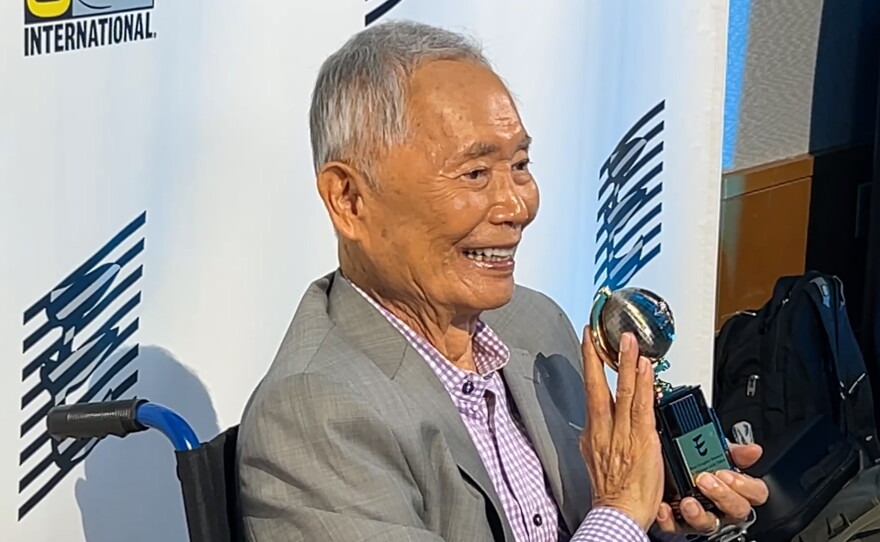
The Eisners are called the Oscars of the comics industry, and for the first time, Comic-Con tried running a preshow press line they dubbed the “blue carpet.” Press lines are always insane because journalists hate to follow rules, and with the influx of social media and YouTubers, more people want to be on camera with the talent rather than just getting a sound bite. But the blue carpet did afford me an opportunity to speak with George Takei about his new graphic novel, “It Rhymes with Takei.” Previously, he had won an Eisner for his graphic novel “They Called Us Enemy.”
“Both deal with discrimination,” Takei said. “If we can deal with people to understand hate has no place in a civilized society. We got to know each other, enjoy each other, benefit from people’s talents and what they have to contribute, and it becomes a better society and a stronger society. And that’s the message of this book.” Takei, who is probably best known as Sulu on “Star Trek,” wrote his first graphic novel about his years as a child in internment camps, where he was cut off from the rest of the world and from all pop culture because, as he described it, “it was a prison.” But when he was finally released, he found comics and fell in love.
“To a 9-year-old kid, it was a wonderful discovery, to tell stories with pictures. And so I decided to use that method because I’m aiming this at young people. I would want to get to young people early so that their minds not close, and that’s why it’s in the form of a graphic novel.”
Beth Accomando
/
KPBS
In accepting the award, Takei said, “You all make me feel so ‘Takei.’ Takei means happy. And that’s how I feel.”
It was an emotional moment in the Indigo Ballroom on Friday night, with Takei taking the stage in a wheelchair. But there were quite a few emotional moments throughout the awards. The Eisners are called the Oscars of the comics industry, but it is interesting to see how much more diverse the nominees and the winners have become. That diversity arises from the creators themselves — women, trans, BIPOC, LGBTQ+ creators telling stories about themselves and their communities and being recognized for them.
Leslie Gonzalez
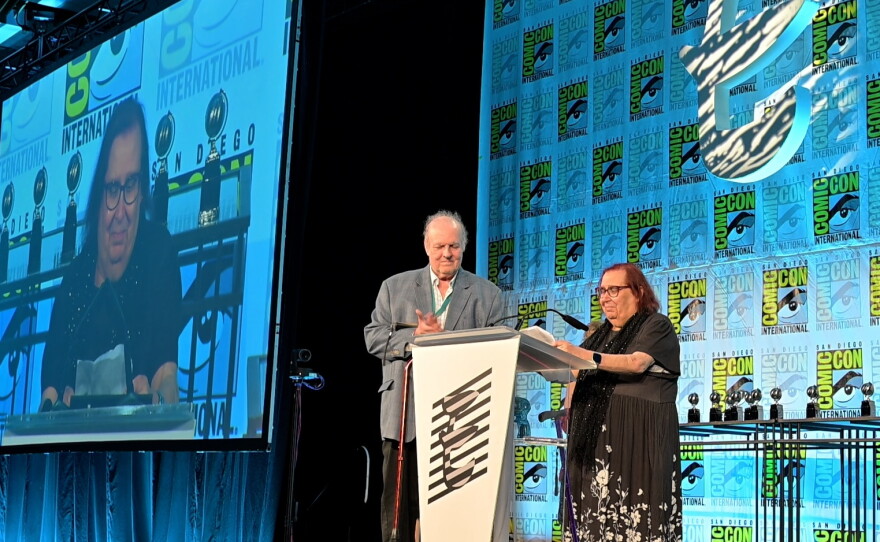
Jenny Blake Isabella, a trans woman, received the Bill Finger Award for Excellence in Comic Book Writing. Here’s an excerpt from her acceptance speech:
“I love all kinds of comics. I love writing stories celebrating courage, diversity, and inclusion,” Blake Isabella said. “I love it when those stories entertain, inform, and even inspire readers. I want to thank all the people who’ve been so kind to me in my more than half century in comic books. Stan Lee, Roy Thomas, Sol Brodsky, Neal Adams and so many others. I even want to thank all the people who have been dishonest and unkind to me. That helped make me who I am today, and I very much like who I am today. I’m here for the comics I and others have done, and I’m here to represent. My trans agenda is basically: Be brave, be kind, be your true self, and always, always support your community. Thank you.”
Politics also tinged many acceptance speeches, often drawing loud applause.
Leslie Gonzalez
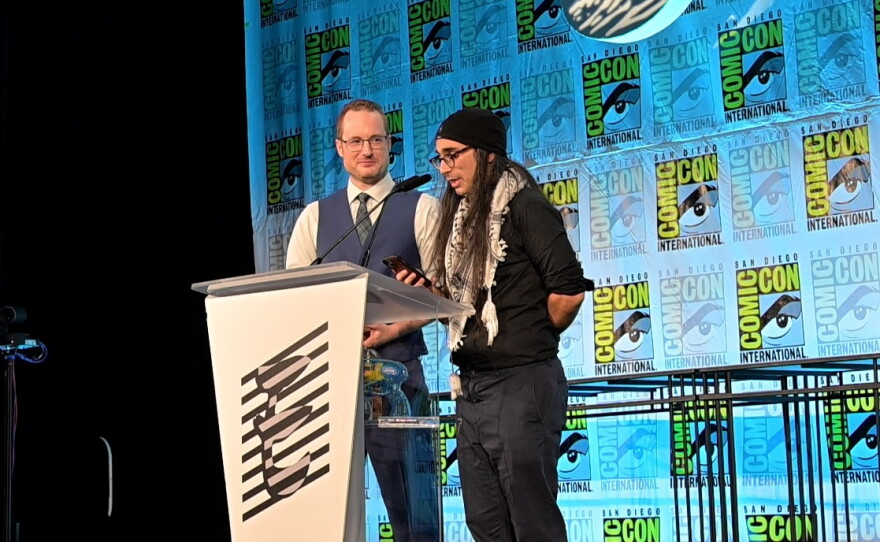
Deniz Camp fired up the audience after winning Best New Series for “Assorted Crisis Events.”
“In this book we talk about xenophobia, institutional failure, racism, disability and injustice,” Camp said from the stage. “As we accept this honor for our fictional crisis, it’s important to acknowledge the real world crisis going on all around us. That is the genocide in Palestine, the dehumanization of trans people, the targeting and criminalization of minorities and immigrants, the rising tide of fascism and much more. As artists and as human beings, it is incumbent upon us all to call these things what they are and stand against them in whatever ways we can. Freedom of speech is a right, not a privilege, and right comes with responsibility. Abolish ICE, free Palestine and crush fascists.”
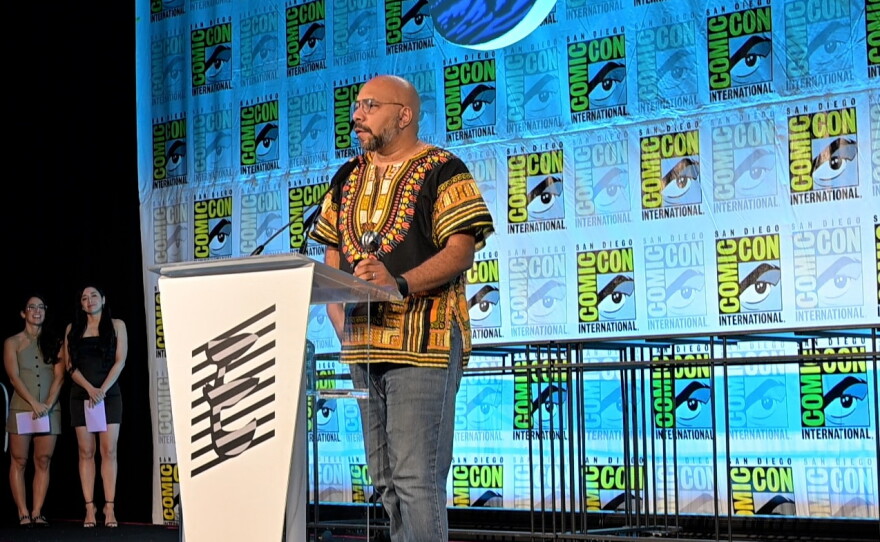
In accepting the award for Best Reality-Based Work on behalf of Ben Passmore for “Black Arms to Hold You Up: A History of Black Resistance,” John Jennings read from Passmore’s acceptance speech.
Leslie Gonzalez
“Let me say that in a time of open fascism and white supremacy, it has been a blessing to share a story about our elders and how he split his wig. I hope we can keep that same energy. I am deeply grateful for the support in this work. In closing, free the land, free Palestine, free the homies. And about us, I say, and I’ll end with, apathy is the enemy. Thank you.”
Comic Book Legal Defense Fund
Jeff Trexler, the interim director of the Comic Book Legal Defense Fund, also served as a presenter, and his presence was a reminder of the ongoing battles over free expression in comics. The Comic Book Legal Defense Fund was founded in 1986 to protect the legal rights of the comics community, particularly freedom of expression.
Before the awards, Trexler discussed navigating today’s political climate. “From people being arrested for possessing comics, for selling comics, buying comics, to people being debanked, losing their ability to collect money on the internet, being deplatformed, taken off Facebook, Instagram, other social network sites. The list of the range of threats, it’s like the full spectrum. Anything that can go wrong is going wrong when it comes to censorship.”
During Comic-Con, Trexler also appeared on a panel about censorship in schools and libraries. “I’ve actually done training for librarians in multiple counties, and I’ve worked with libraries across the country on dealing with censorship. People think of it often as it’s a Deep South problem. No, it’s actually from Maine to California, Washington to Florida. It is cross-country.”
His advice to the average person fighting censorship was surprisingly simple: Be a voice for comics.
“You don’t have to be an activist,” Trexler said. “You don’t even have to go speak at a meeting of the town council — just having conversations with people who make a difference. Talk to your mayor, talk to your town council members outside of those meetings and just share how important comics are to you, how important comics are to your children, how important comics are to people’s careers. Let them know about the comics creators in their neighborhood who are not villains and evil people who are trying to corrupt people, but are just people like anybody else. They have a creative vision, they want to build something meaningful and they make a real difference in the community.”
Finding my people
Beth Accomando
/
KPBS
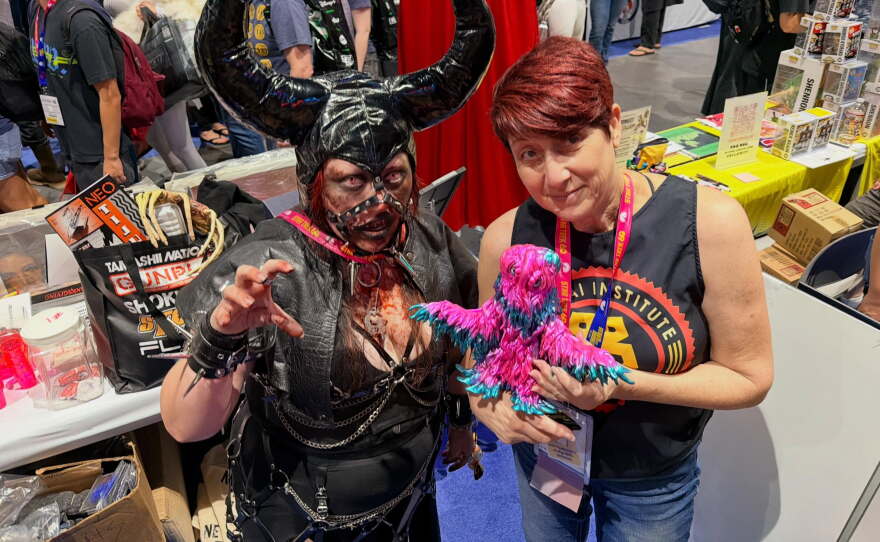
I saw people online complain about a lot of things — programming was lackluster, line management was a mess, too few freebies and swag — and I wish those folks would just stay home. Maybe this convention is just not for you. But the people I randomly met, worked with in my booth and interviewed all shared my geeky joy of being someplace that felt welcoming and supportive.
Where else can I have a great discussion about the intersection of luchadores and film noir; discover a cosplay inspired by a single episode of an anime; meet a dozen women scientists in one room; speak with the founder of Wētā; buy a Japanese Golden Bat toy, or hear a debate about the value of camp sparked by a Susan Sontag quote? Comic-Con is a wonderful oasis where, for four and a half days, you can forget about the real world and its problems and just immerse yourself in geekdom.
I will end with what is always a highlight for me: the late-night Troma panel on Saturday. Lloyd Kaufman has been running Troma for more than half a century. It’s a rebel outpost of unhinged, uncensored and unfiltered creativity. Troma created “The Toxic Avenger,” “Poultrygeist,” “Surf Nazis Must Die” and “Sgt. Kabukiman N.Y.P.D.” Kaufman likes to brag that Troma has been “disrupting media” for more than 50 years. Not only are the films made outside the studio system, but the ideas and politics challenge the mainstream and the status quo.

Troma
Kaufman is a dizzying mix of low and highbrow, he turned Shakespeare’s “The Tempest” into “Shakespeare’s Shitstorm,” and is currently adapting Dostoyevsky’s “Crime and Punishment” as “The Power of Positive Murder.” Troma has also seen the likes of James Gunn (“Guardians of the Galaxy”), Trey Parker and Matt Stone (“South Park”), J.J. Abrams (“Lost”), Darren Lynn Bousman (“Saw II”) and Samuel L. Jackson pass through its doors. It may not have launched those careers but it let those young talents play in the Troma sandbox.
Kaufman, now 80, is still bursting with energy and readily available to his fans. At the panel he talked about what defined Troma.
“It’s fan-fueled,” Kaufman said. “We wouldn’t be here without you. We’ve never had any money to advertise, and it’s really been the fans who spread the word. For example, ‘Terror Firmer,’ we made it, we shot it in 1999, but it broke into profit last year. It was a $400,000 movie. Thanks to you! But also Stan Lee, John Avildsen, Roger Corman were the three horsemen who really helped Troma, and Stan was always in the trenches. And I get great ideas from fans. The fans are key to it. It’s totally fan-fueled. The longest-running independent movie studio in history.”
Troma’s Megan Silver added that Tromaville embraces everyone, no matter how weird or outside the mainstream. People may arrive as fans, aspiring filmmakers or teenagers hoping to break into movies, but they stay because they become part of the Troma family.
And that’s a microcosm of Comic-Con. And that’s why I love it.
Tony Kim
