

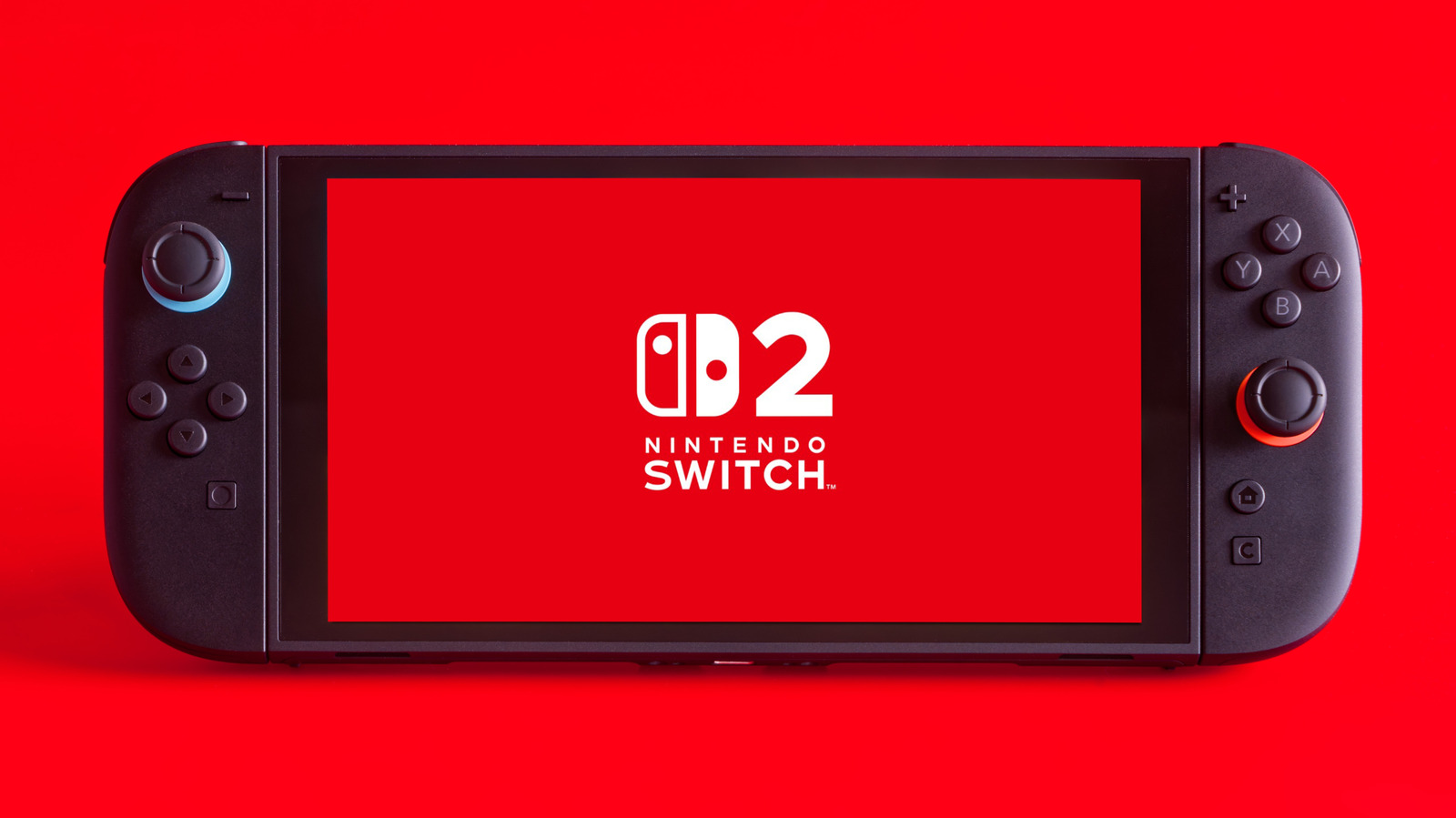
Since its arrival last year, the Nintendo Switch 2 has delivered a major hardware upgrade over the original Switch. That is because Nvidia built a custom GPU on the Ampere architecture, which is the same generation that powers RTX 30-series cards, and then fit it inside a portable console.
In practice, it is hard to find an equivalent AMD GPU, since they use a different architecture. However, in terms of raw power, you can say that the custom Nintendo Switch 2 chip comes close to an RX 570 Mobile in handheld mode or to a conventional RX 560 when the console is docked. However, both GPUs use the Polaris architecture, which launched in 2016, while Nintendo’s console model uses a more recent one.
There’s also a generational difference that makes raw GPU comparisons a bit more complicated. The Switch 2’s specifications look comparable to these older Radeon cards on paper, but actual gaming performance can vary depending on the game and how developers make use of the console’s hardware.
The closest AMD GPUs to the Nintendo Switch 2
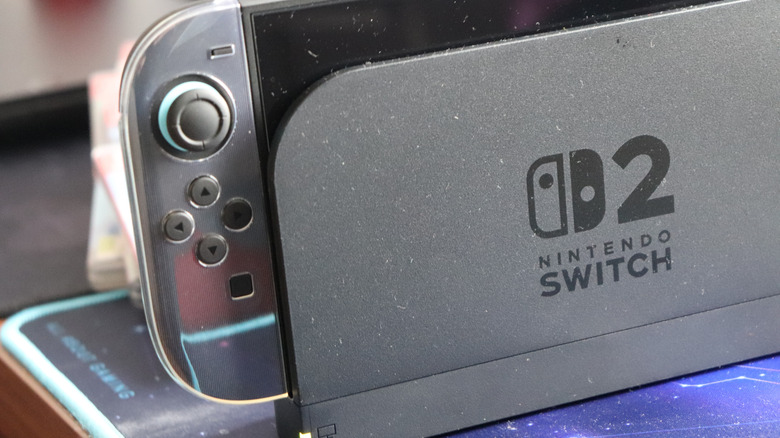
The Switch 2 is a hybrid console and uses different GPU clock speeds depending on whether you play handheld or docked. As a result, no single AMD GPU is a perfect equivalent. In handheld mode, the console delivers around 1.7 TFLOPs of theoretical GPU performance, putting it in roughly the same territory as some mobile variants of the RX 560.
When compared with an AMD graphics card made for desktops, the RX 560 is arguably a closer match to the docked Switch 2. This card has around 2.6 TFLOPs with 112 GB/s of memory bandwidth, while the Switch 2 reaches around 3.07 TFLOPs and 102 GB/s when docked. However, these numbers still don’t make the RX 560 equivalent to the Switch 2, since architecture, memory configuration, and power limits differ significantly.
In addition, looking only at the graphics chip helps explain one of the Nintendo Switch 2’s disadvantages. Today, other portable consoles have higher performance than it does, capable of running games like “Cyberpunk 2077” or “Resident Evil 7” better.
Why Switch 2 performs better than its raw specs
The main reason why the Nintendo Switch 2 can achieve better results than its specifications suggest is the technology available through the Ampere architecture, especially DLSS. The console has Tensor Cores dedicated to image reconstruction, allowing it to render games at a lower internal resolution and deliver a higher-resolution image on the screen, something these Radeon cards cannot do in the same way.
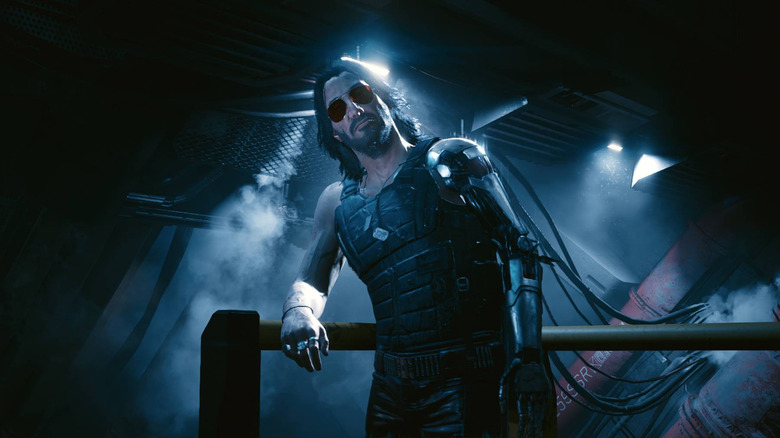
In “Cyberpunk 2077,” for example, one of the Switch 2’s launch games, you can play the game at 40 FPS in its performance mode, while using DLSS to reach a 1080p resolution when docked. At the same time, the internal resolution can range from 540p to 1080p, helping the console maintain performance without rendering every frame natively at the output resolution. The RX 560, on the other hand, runs below 30 fps at 1080p on low settings.
“Resident Evil Requiem” shows the importance of this technology even better. In docked mode, the Switch 2 can render the game internally at only 540p, then use DLSS to produce a 1080p image while targeting 60 fps. Efficiency is also impressive: the RX 560 has a TDP of around 60 to 80W, while the whole Switch 2 consumes less than 20W during games in the dock, so the console extracts strong performance while using much less power.

6 Comments
Pingback: How Investors Are Reacting To Tencent Music (TME) Partnering With SM Entertainment On New China JV - Comic Vibe
Pingback: Mega Man: Dual Override dev wants to make a new Mega Man X game - Comic Vibe
Pingback: Press Release: Pablo José Hernández Rivera backs bill to support gaming and virtual reality jobs - Comic Vibe
Pingback: Vishal Mishra vows to help flood victims with concerts in Assam and Nepal - Comic Vibe
Pingback: First Michigan Retro Game Expo draws big turnout in Kalamazoo - Comic Vibe
Pingback: Lenovo launches new budget LOQ gaming PC with up to Intel Core 7, 32GB RAM, and Nvidia RTX GPUs - Comic Vibe