

Recently, Meta announced plans todiscontinue its flagship metaverse venture, Horizon Worlds, on Meta Quest virtual reality (VR) headsets.Though the decision has been temporarily delayed due to user backlash, it signals the broader stagnation of the consumer-facing metaverse. At the same time,industrial metaverses are estimated to growto $543 billion by 2033 at a compounded annual growth rate of 42.4%.Herewe’ll understand the concept of the metaverse and its future outlook to evaluate whether the projected figures are truly justified.
What Is the Metaverse?
A metaverse is ashared 3D digital spacewhere you canplay, socialize, create, and shopas an avatar.An avatar is your personalized virtual representationthat enables you to express yourself, explore places, and attend events in the metaverse
Often referred to asmesmerizing “phygital” environments,where the physical and digital worlds blend, metaverses were considered the internet’s next iteration. They arepowered by multiple technologies,including AI, blockchain, VR, augmented reality (AR), and mixed reality (MR).
Though the technologies behind metaverses are relatively new, the concept itself isn’t. In 1992,acclaimed author Neal Stephenson coined the term “metaverse”in his science fiction novel titled “Snow Crash”.
While these immersive realms have yet to match Stephenson’s grand vision, they already let youbuy, sell, and create digital items.From virtual real estate to non-fungible tokens (NFTs) and event tickets, you can trade or collect cool stuff in metaverses. Additionally, many metaverses host play-to-earn (P2E) games, enabling you to win cryptocurrencies, utility tokens, or unique collectibles as rewards.
Beyond gameplay and rewards,metaverses differ in how they’re built and governed.Some metaverses, such as Roblox and Fortnite, are operated by a single company and run on centralized servers. Others, like Decentraland and Solice, reside ondecentralized blockchain networksand are community-driven. They also have their own native cryptocurrencies, which serve as the primary medium of exchange within these virtual economies
To access these enchanting, parallel universes, youneed specialized VR headsets or eyewear. You may also need additional accessories, such as solo knit bands, trackpads, and wrist straps, for a more enjoyable virtual experience.
Is the Metaverse Dead in 2026?
Heavily promoted as the next phase of the internet, the metaverseattracted major investment from technology (tech) giants around 2021–22
However, consumer adoption of the metaverse remained low, especially due tothe high cost of VR equipment.These specialized wearables alsocaused physical discomfortwhen worn for prolonged periods
Moreover, many metaverse platformshad clunky interfaces and provided unengaging content,failing to deliver compelling experiences. VR-only and non-gaming metaverses remained relatively niche and struggled to gain mainstream adoption, simply because they didn’t offer games.
On decentralized, blockchain-based metaverses, cryptocurrencies were used as a means of payment. Consequently,crypto market fluctuations and security breaches on digital asset exchangesfurther weakened retail metaverse adoption
However,industrial metaverses are growing.By leveraging extended reality (XR), AI, blockchains, spatial computing, and other potent technologies, they createdigital twins of various real-world elements.These include buildings, transportation systems, supply chains, factories, and cities. They alsofoster collaboration among remote teams, host corporate events, and showcase productsin immersive environments. Similarly,gaming metaverse companiessuch as Roblox and Minecraftcontinue to thrive
Overall, the metaverse today isn’t completely dead.But itdidn’t live up to its initial buzz,especially in the retail space. It alsocouldn’t generate high returnsto justify the massive investments made by top tech companies
How Many People Actually Use the Metaverse?
Based on industry estimates,around 400 million usersactively use the metaverse monthly. Global user penetration in the metaverse market isprojected to be at 21.2% in 2026andtouch 39.7% by 2030.Among metaverse use cases,e-commerce has the highest market penetration, followed by gaming
How Does the Metaverse Work? The 7-Layer Infrastructure
1. Immersive Interfaces (VR, AR, mobile 3D)
Immersive interfaces are a key component of metaverses. They enable you toseamlessly interact with 3D realmsusing VR headsets and smart glasses. They are alsointuitive and optimized for varying screen sizes.
WhileVR creates realistic, fully digital simulations of the real world,AR overlays virtual objects on top of real environments.AR also enhances physical spaces by adding new elements, creating novel perceptions of reality.MR fuses the two (VR and AR)to generate anenvironment where physical and digital elements convergeand interact with each other.It means you can view, modify, or move lifelike objects in virtual environments using your hands, eyes, judgement, and sensory perception
Mobile 3D technologies bringimmersive and spatial computing capabilities to your smartphonesand tablets. Mobile-first virtual worlds and AR games such as Highrise and Pokémon Go are accessible on the move. Theyeliminate the need for bulky, specialized hardware,as mobile touchscreen displays let you play, move, and socialize with your fingers.
2. Real-Time 3D Engines and Asset Pipelines
Real-time 3D engines such as Unitycanrender complex 3D environments instantly. Theycontinuously generate and update scenes as conditions change,enabling you to view the modifications immediately. They also have embedded tools for accurate physics and acoustic simulations, including collisions, gravity, echoes, and other audiovisual effects.
Foremulating real-world light behaviour,most 3D engines userasterization. It is an ultra-fast technique for transforming mathematical, vector-based graphics like 3D shapes into a two-dimensional (2D) grid of colored pixels.
Some engines, such as D5 Render, haveray-tracing capabilities.They producemore accurate simulations of lighting,including shadows, reflections, refractions, and illuminations. Since it traces the path of light with precision,the outputs are sharper and more realistic.
Though real-time 3D engines can render and simulate immersive worlds, theycan’t create such worlds on their own.They depend on digital content like 3D objects, which are developed and managed through asset pipelines
An asset pipeline is theprocess used to create, optimize, move, and layer 3D objectsfrom the design software into metaverses. It entails the following steps:
- Creation:Digital artistssculpt 3D objectslike avatars, houses, and vehicles using design software like Blender. As the object ishighly detailed and visually rich,it’s a large file.
- Optimization:This step involvesretopology,a 3D modelling process thatremoves unnecessary details from the sculpted object.Without distorting the model’s visual appearance, it refines its topology, making it ready for real-time rendering.
- Conversion:Fine details from the model areconverted into texture maps.The simplified model is exported into standard file formats likeUniversal Scene Description (USD) and graphic library transition format (gITF).
- Integration:Developersimport the optimized assets into 3D engineslike Unity to add animations, physics, lighting, and sounds. Once configured, you can use the asset in video games or metaverses.
3. Web-Based Delivery
Advanced technologies likeWebXR and cloud streaminghave enabled the development of metaverses that can beaccessed directly through web browsers. Most metaverses are alsodesigned to be device-agnostic,making visual experiences accessible across laptops, desktops, smartphones, and tablets. Therefore, you don’t need to download large applications to explore 3D environments.
4. Digital Identity and Wallets
Before you traverse immersive environments, you need tocreate your avatar,an embodiment of your digital identity and personal profile.They’reusually customizable,enabling you to alter their apparel, styling, and accessories based on the context. Manydigital identity systems also allow avatar portability,meaning you can carry and maintain your virtual persona across metaverses.
On the other hand,digital wallets facilitate smooth transactions in metaverse ecosystems.You can use them to send, receive, and store your digital currencies, NFTs, and other metaverse assets. Some cryptocurrency wallets such as Metamask and Phantom allow you to bridge assets across blockchains
5. Artificial Intelligence (AI Agents and Automated World Generation)
With therise of generative and agentic AI,you canexpect metaverses to be repurposed, reimagined, and revolutionized.The spatial infrastructure originally built for humans to fully migrate into immersive universes is now being used to train AI systems.
Whilegenerative AI tools can produce 3D worlds from natural language prompts,agentic AI takes it a step further.AI agents can autonomouslywrite programs, debug code, andbuild 3D realms with minimal inputs.Whether you want to create picturesque landscapes, digital twins, or virtual cities, AI agents handle technical scripting independently. They also enablesmart workflow automations,reducing your manual effort, and transform static 3D objects into dynamic immersive worlds almost instantly.
As per some industry experts,metaverses may soon turn into environments inhabited by AI agents.Since they encompass the spatial, semantic, and mathematical representations of the real world, AI agents can navigate them naturally. They can also potentially serve asbreeding grounds for agent-to-agent machine economies.Moreover, the agents will become more contextually aware and capable of executing transactions without direct human intervention.
6. Decentralized Economies and Blockchain Smart Contracts
Blockchain technology acts as the backbone for decentralized metaverse economies.It provides the infrastructure needed for utility-based tokenization, transparency, and auditability within online environments. From verifying users’ credentials and maintaining immutable transaction records to enhancing data security, blockchains perform multiple functions. Furthermore,blockchain-backed cryptocurrencies and NFTshelpestablish digital asset ownership.
You can alsodeploy smart contracts or self-executing lines of codeon blockchain networks toautomate transactions and agreements.They manage payments, royalties, subscriptions, asset transfers, and usage rights by executing pre-defined rules when the specified conditions are met. Byeliminating middlemen, paperwork, and manual intervention,theyboost transaction speed, transparency, and verifiability
7. Creator Economy and Virtual Experiences
If you want to build and monetize your digital creations through sales, event tickets, subscriptions, or royalties, you’ll find metaverses valuable. For example,Sandbox Studiois an end-to-end creation environment designed for AI-native workflows. Itworks insideagentic tools like Claude Code, enabling you to develop and ship games. You can publish your games on multiple destinations, including the web and mobile channels, to expand your audience reach and revenues.
Overall,metaverses nurture the creator economy,which supplies the content that brings these digital arenas to life. AI-driven creation tools have lowered development barriers, enabling even those with limited technical know-how to create virtual experiences.
Major Metaverse Companies Shaping the Future
Meta and Microsoft
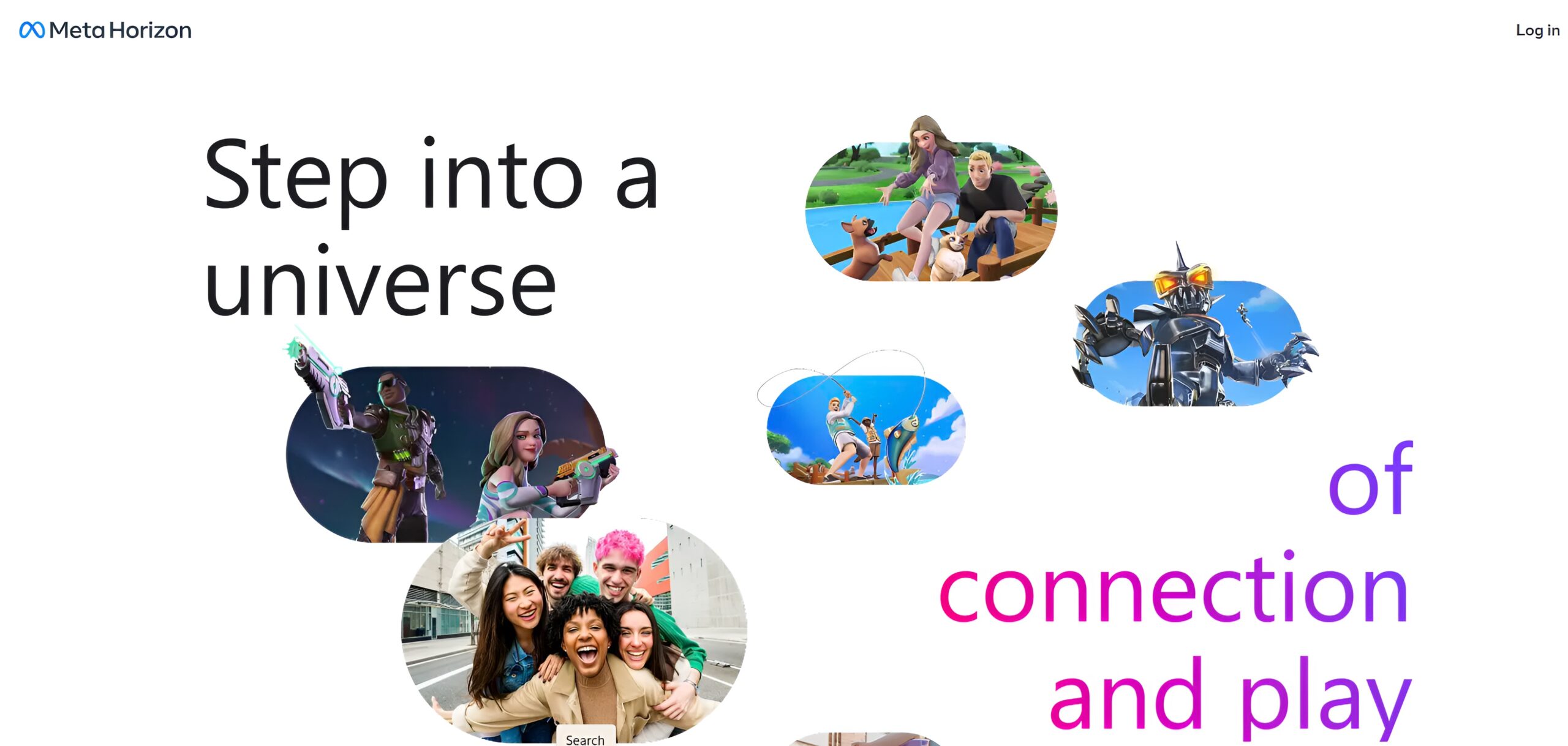
On October 28, 2021, Facebook wasofficially rebranded as Meta. It reflected the organization’stransition from amedia platform to a social technology firm focused on building metaverses.As part of its revamped business strategy,Meta founded Reality Labs and Horizon Worlds. While Reality Labs was Meta’s dedicated arm for developing VR wearables, Horizon Worlds was a social VR environment hosting user-generated content.
Fast forward to July 2026.Meta has scrapped its ambitious $80 billion metaverse project, pivoting its focus towards AI.This move was triggered by Reality Labs’ massive year-on-year losses as the hype surrounding immersive digital spaces slowly faded. Instead of shutting Horizon Worlds outright,Meta will phase out its VR operations gradually.However, it will exist as a standalone mobile app.
Conversely,Microsoft was the second technology behemoth to jump on the metaverse bandwagonfollowing Meta’s rebranding. By leveraging its first-mover advantage in building alternate universes, Microsoft intended to develop enterprise metaverses.
To foster smoother collaborations among remote employees,Microsoft launched Mesh for Microsoft Teams. The company had also unveiled HoloLens 2, an enterprise-focused version of its HoloLens MR headset in 2019.
However, as the metaverse craze waned,Microsoft ceased HoloLens 2 production in 2024and will discontinue support in 2027. It alsoretired Microsoft Mesh as a standalone platform
Nvidia and AWS

From consumer-facing virtual worlds, Nvidia has strategically shifted its focus to the development ofNvidia Omniverse-powered enterprise metaverses.It now positions Omniverse as a platform for generating industrial digital twins. Companies can use Omniverse tocreate photorealistic, 3D simulationsof factories, machines, warehouses, etc.
Omniverse combines real-life physics, AI, andthe USD frameworkfor explaining, composing, collaborating, and simulating in 3D arenas. In addition,robotics software can be seamlessly integrated with Omniverse’s librariesto drive industrial automation. To further enhance its capabilities, NVIDIA hasembedded a suite of generative AI toolsinto Omniverse
Meanwhile,Amazon Web Services (AWS) plays a key role in metaverse development.Itprovides the cloud infrastructureneeded to build, deploy, scale, and operate immersive experiences. Developers often leverage AWS for edge computing, networking, AI, spatial data management, machine learning (ML), and storage. It alsosupports multiplayer games,XR applications, and digital twin technologies. Additionally, AWS integrates with gaming engines such as Unreal Engine and Unity
Apple and Epic Games
Apple’s major contribution to the metaverse space is itsApple Vision Pro MR headset,designed toenhance spatial computing experiences.It ispowered by advanced technologies and comes with user-friendly featuressuch as a dual-knit band and a light-seal cushion. Its built-in speakers deliver rich immersive audio experiences, while the battery supports up to three hours of video playback. However, it is expensive, priced at US$3,699.
Its other key offerings includeARKit and RealityKit.ARKit aids developers increating AR applications and gamesusing accurate device motion tracking, customizable display options, and scene comprehension. Contrarily, RealityKitfacilitates 3D rendering, physics simulations, animations, and spatial audio synchronization
As far as Epic Games is concerned, it haspartnered with Disneyto create new games and a persistent digital universe.This initiative will be driven by Epic’s Unreal Engine softwareandwill interoperate with Fortnite,its most popular online video game. Through this partnership, fans will be able to engage with Disney’s characters, brands, stories, and franchises.
Real-World Applications: Beyond Gaming
The Consumer Space: Roblox, Fortnite, and VRChat
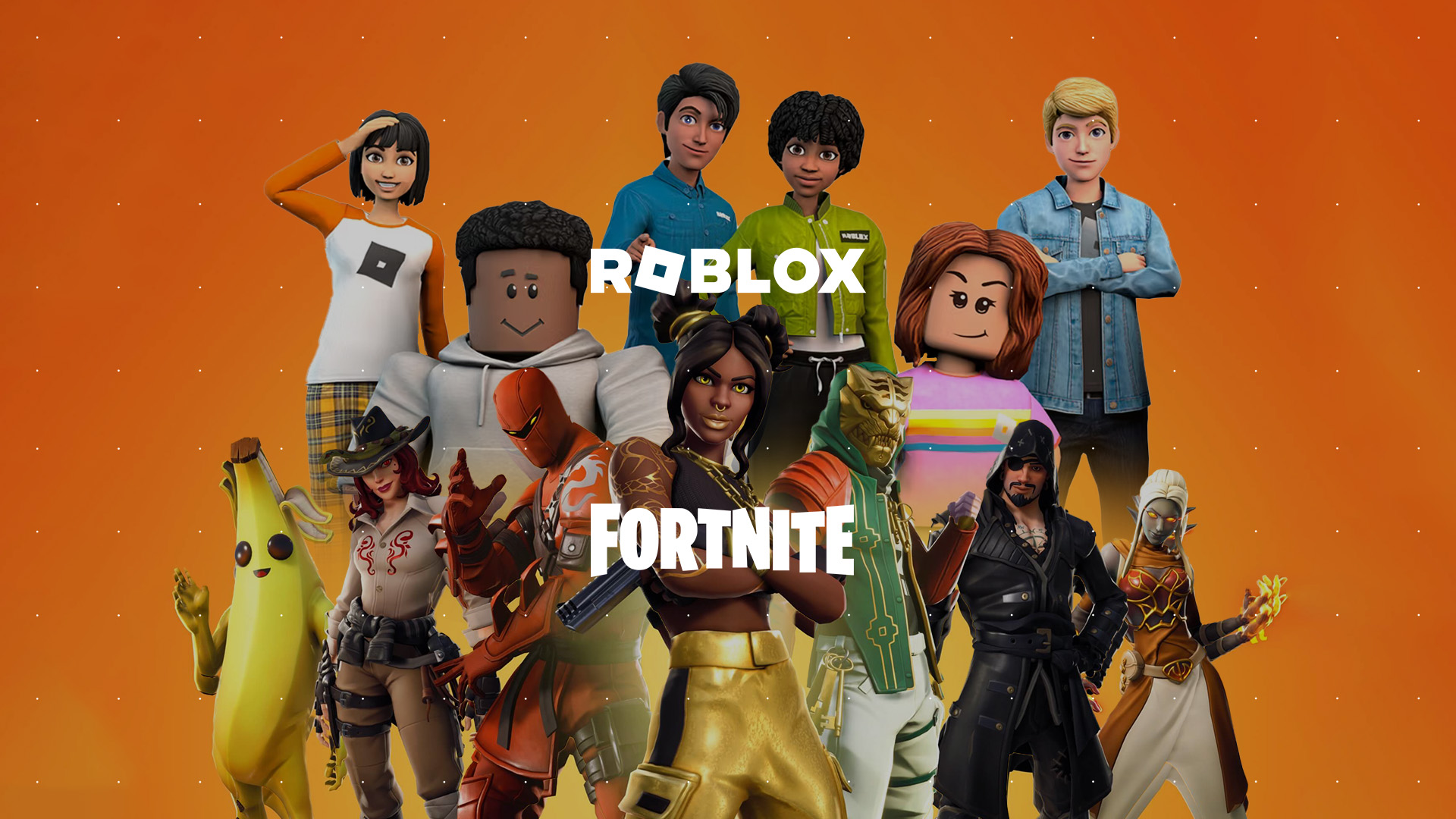
Roblox:It is apopular gaming platform and a user-generated metaversethat allows players to create and explore interactive 3D worlds. Recently, it addednew agentic features to Roblox Studioto accelerate the game development and testing processes. Additionally, Roblox regularly hosts creator events, conferences, and educational experiences. It also provides opportunities to turn your content into real income
Fortnite:Launched in 2017 as a competitive battle game, Fortnite hasevolved into a developer economythatoffers powerful creator tools.These include theUnreal Editor for Fortnite and other Unreal Engine toolsfor animations, lighting, cinematic effects, and gameplay mechanics. You also get a chance tocollaborate with established brandslike Squid Game, find an audience, and monetize your creativity.
VRChat:VRChathosts millions of user-generated virtual worlds and avatars,allowing users to be anything they wish and find like-minded communities. Whether you’re using a personal computer, standalone VR headset, or mobile device, the platform enables you to build meaningful social connections. For creators, VRChat offersUnity-powered software development kits (SDKs)to build custom worlds. Eligible creators can also earn money by selling their content andreceive 50% of the sale proceeds.
The Industrial Metaverse: Digital Twins and Manufacturing
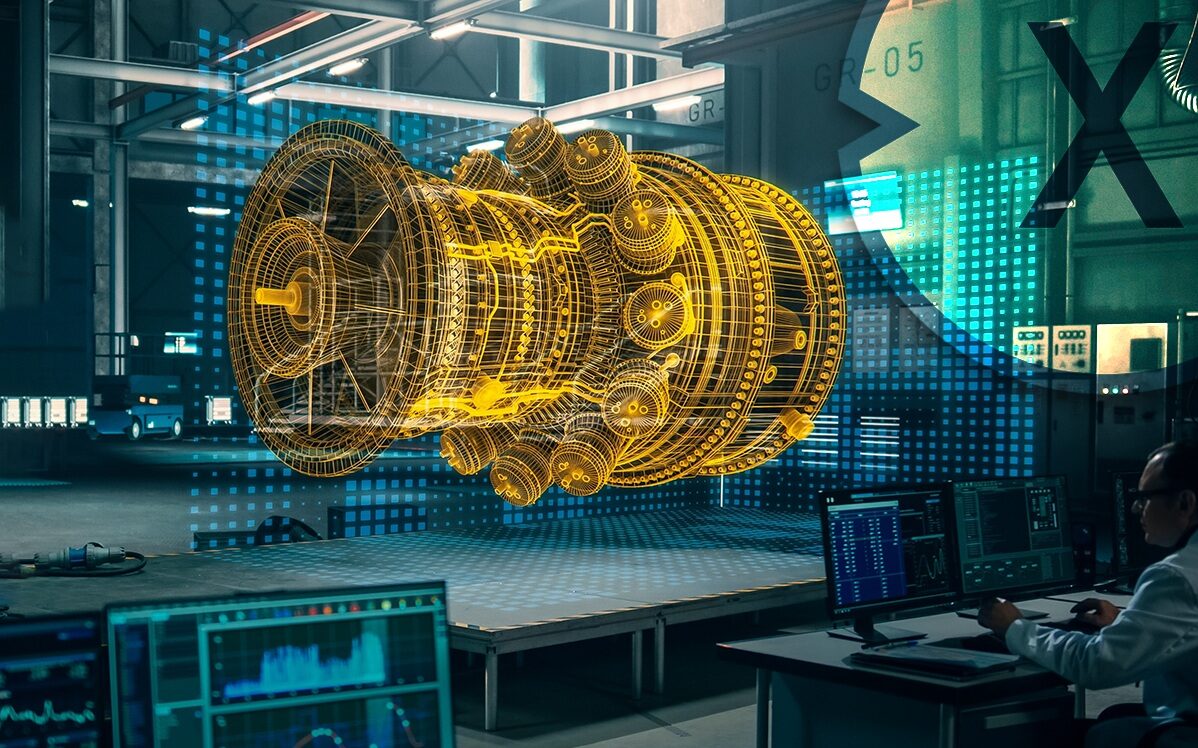
Industrial metaversesuse VR technologies to optimize business operations,including manufacturing and engineering processes. From shop floors and production lines to machines and power grids, they help create digital twins of real-world objects and environments. These virtual replicas are continuously updated in real time based on data received from sensors.
These 3D models enable organizations tomonitor equipment performance, forecast maintenance needs, and detect operational inefficiencies.They also help simulate production processes, assess design modifications, and test new workflowswithout disrupting actual operations. Similarly, entrepreneurs can use industrial metaverses tosimulate products and servicesto identify design flaws, workflow bottlenecks, and potential use cases.
Another key application of enterprise metaverses is usersafety and corporate training. Their immersive and interactive nature makes learning more fun and engaging, increasing course completion rates among learners. Workers canpractice safety protocols and develop new skills in a risk-free environmentbefore applying them to real-world scenarios
Moreover, industrial metaverses enablefaster collaboration among employees, regardless of their geographical locations, boosting productivity.Coupled with AI-powered data analytics, they help accelerate design cycles, minimize downtime, create groundbreaking products, and power sustainable technologies.
Healthcare and Advanced Medical Training

Healthcare in the metaverse is still in its nascent stage. But it has thepotential to create significant value for medical professionals, hospitals, and healthcare organizations.It can enhance patient access to personalized healthcare services, quality of surgeries, and the accuracy of diagnostics. It can also improve the storage, sharing, and access of patient data and health insurance claims. By streamlining operational procedures, the metaverse can curtail healthcare costs and shorten learning curves.
VR can be used for advanced medical trainingto help doctors, nurses, therapists, and surgeons hone specific procedures. It can assist in surgical preparation and execution by providing 3D visualizations of a patient’s anatomy. Beyond training simulations, augmented and virtual reality technologies can be used todesign home-based treatment models and wearable body sensors
Metaverse Challenges
- Ethical concerns:XR, when combined with AI, eye trackers, physiological sensors, or brain-computer interfaces, can detect your cognitive or emotional state. Users’ behavioral and decision-making patterns recorded by XR software can bemisused by firms.For example, your thought patterns may be utilized as open-source training data to develop advanced ML models.
- Data privacy:Metaverses collect vast amounts of background information, including your personal details. They also track your digital footprints, interactions, purchase logs, and activities through your avatar’s movements. Unless the metaverse platforms and the businesses operating within them implement stringent data protection norms,privacy violations are likely.Hackers or third parties may exploit security vulnerabilities totarget minors or steal your confidential information and assets.
- Health problems:Users who spend extended periods inside metaverses may become addicted to immersive virtual environments. In the long run, such addictions canharm their physical well-being,especially their eyesight.Prolonged usage may eventrigger or worsen mental health disorderssuch as social anxiety, delusion, paranoia, and depression. In addition, users may experienceVR motion sicknesswhen the brain receives contradictory signals about their movements in 3D spaces.
- High expenditure:Mostbranded VR wearables are expensive,making participation in immersive virtual spaces a costly affair, particularly for individual users.
Final Verdict: How Should Businesses Prepare for the Metaverse?
Building 3D equivalents of office spaces, workflows, and processes is unlikely to boost productivity unless organizations clearly define appropriate use cases. At present, metaverse applications aresuitable for teleworker collaboration, corporate events, product marketing, and employee training.They may alsoreduce reliance on physical office infrastructure,lowering operational costs and improving profitability. However, these benefits must be weighed against inherent challenges, including health-related risks.
FAQs
What is the metaverse in simple terms?
The metaverse is ashared, 3D online spacewhere youconnect with others through your digital avatar.You can also socialize, play games, attend live concerts, hang out, shop, or work inside it
Does Meta own the metaverse?
Meta doesn’t own the metaverse.It is an umbrella term used to refer to 3D virtual worlds, not a single platform owned by a particular firm
How much did Zuckerberg lose on the metaverse?
Mark Zuckerberglost over $80 billionon the metaverse, of which $19 billion was burned in 2025 alone.
How do I get into the metaverse?
To get into a metaverse,you need a laptop, desktop, or mobile device.Most digital realms areaccessible directlyahigh-resolution AR headset or smart VR goggles with good haptic feedback.If you plan to buy or sell real estate and other virtual assets, you also need adigital wallet.
