

There’s nothing quite like punching the face of a grandfather clock, winding its arms back, and pursuing an old magazine to balk at how quaint life used to be. I recently got an ample helping of bittersweet nostalgia with a choice find from my local bookstore: $8-a-piece copies of Animerica Magazine.
Animerica Magazine was the closest thing the West had to a Reader’s Digest for otaku, by otaku. The monthly magazine, published by Viz Media, by and large did everything I strive to do in covering anime and manga: write explainers for universe readers, elucidate why a show or its creators matter through easy-to-read columns, exclusive interviews with voice actors and animators, and put folks on to when the new hotness will drop and where they can check it out. The issues I copped had one major difference—and one that hit me as a bit saddening to read in retrospect. Animerica Magazine is the last vestige of an industry for that kind of neuron-firing bliss you can get from scrolling through a webpage. You can only get this visual splendor by flipping through its pages.
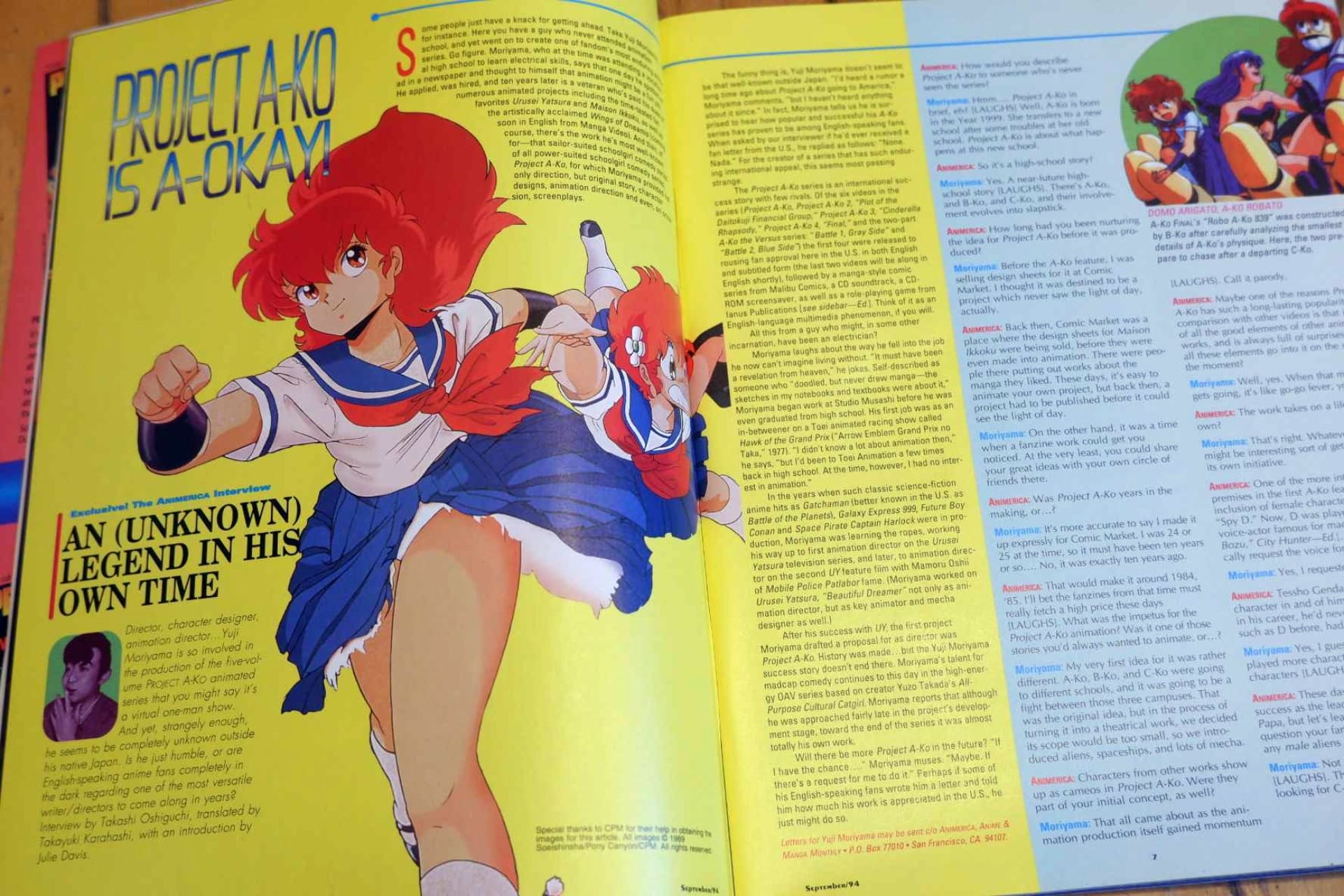
Each issue of Animerica Magazine followed a format that’s equal parts pleasantly archaic and entirely backward compared with how online publications prioritize anime and manga. Instead of anime and manga (if they’re lucky) existing as a tucked-away vertical covered by one person in a staff filled with writers and content geared elsewhere, anime and manga are the magazine’s centerpiece. Duh, it’s in the name. It’s both humbling and heartening to flip through a magazine and see how much work and interest was put into a medium compared to how today feels like we’re still catching up to covering the medium in earnest. Much of my wistful nostalgia is encapsulated by Animanga’s layout.
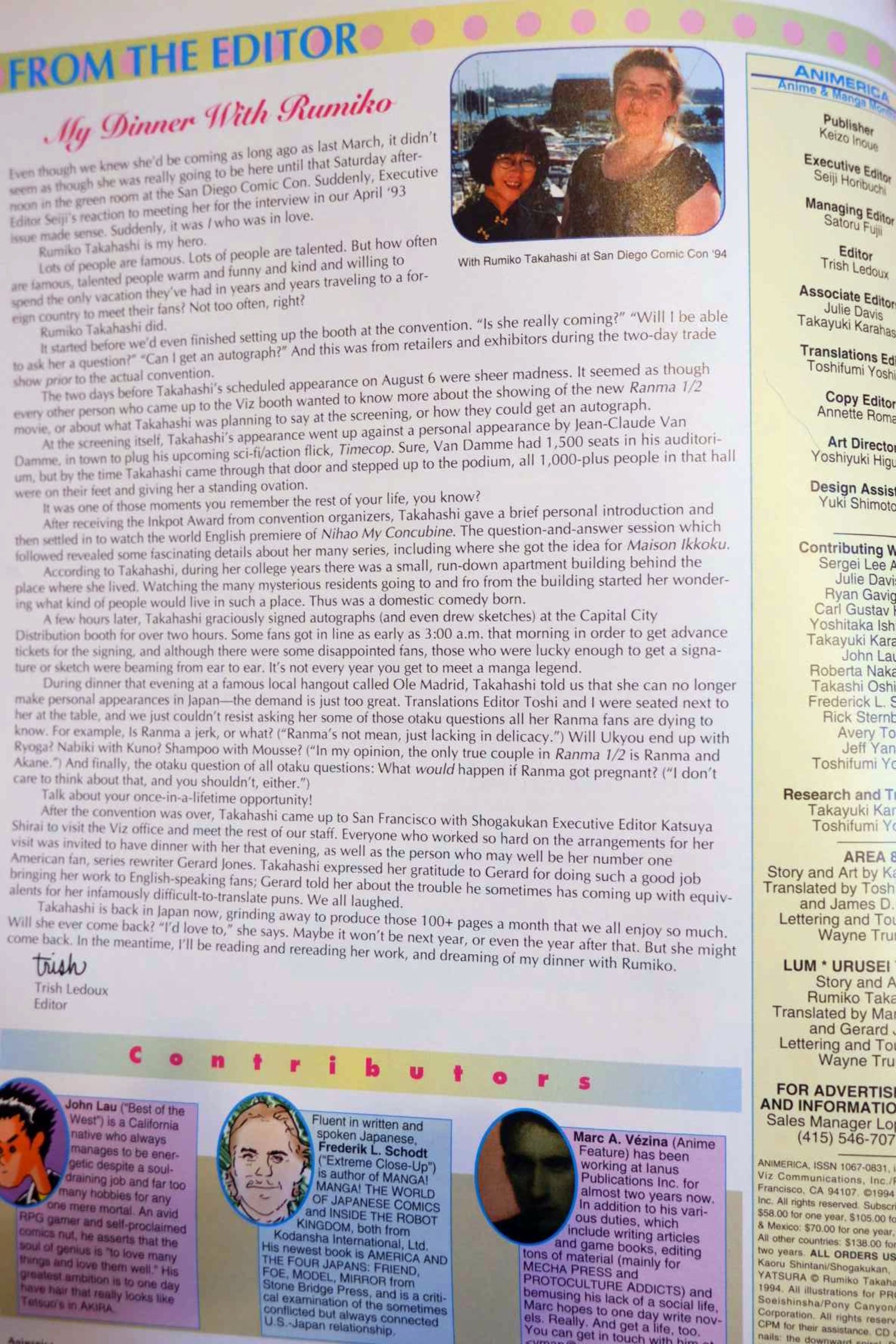
The front of the magazine featured a blurb from an editor—flanked by a masthead page crowded by today’s skeleton-crew standards. My favorite of these was one from Editor Trish Ledoux, who reminisced over her star-struck dinner with Rumiko Takahashi at San Diego Comic Con ‘94, and how the Ranma ½ creator’s celebrity far eclipsed that of Jean-Claude Van Damme’s convention appearance for TimeCop to the thousand-plus anime fans on their feet giving Takahashi a standing ovation.
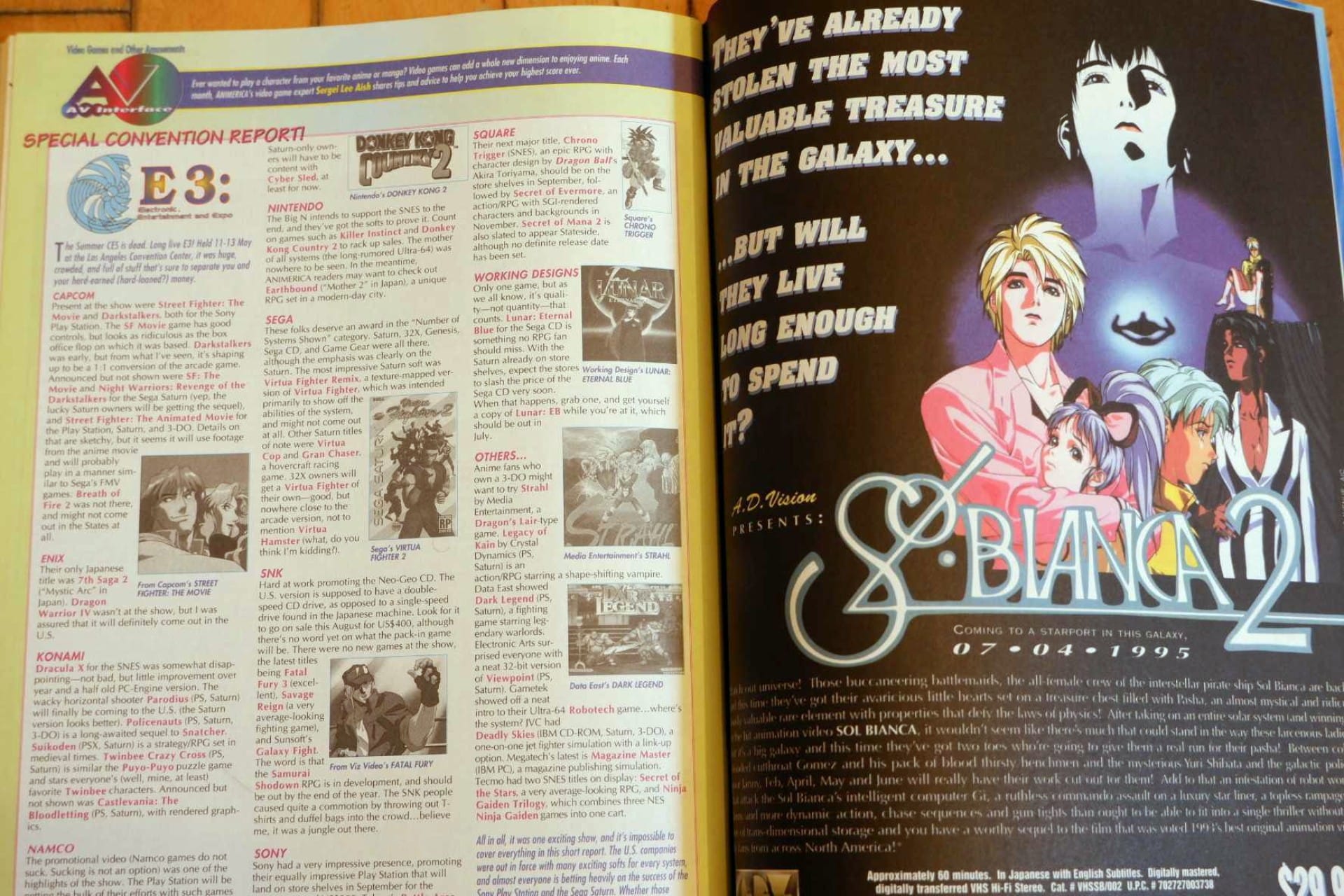
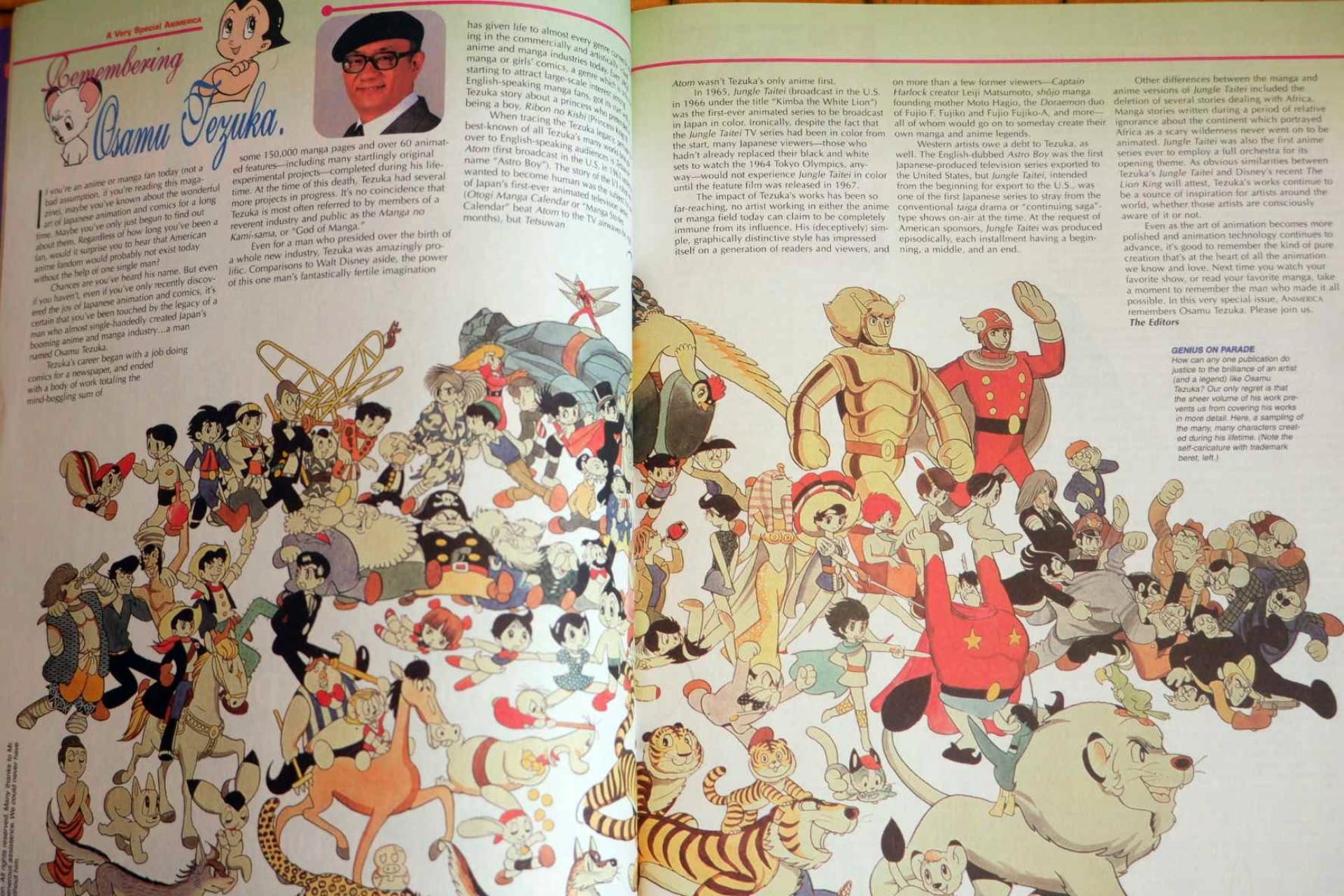
After a couple of flashy full-page ads for video games and physical anime releases coming to VHS and LaserDisc, Animerica’s following pages include its cover story, an import list, a video game vertical, reader mail, and a fan art gallery. The copies I copped from my bookstore featured exclusive interviews with Project A-Ko character designer and animation director Yuji Moriyama and Galaxy Express 99 creator Leiji Matsumoto, a memorial for Osamu Tezuka, and an explainer priming readers for this new anime series hitting the States: Dragon Ball Z.
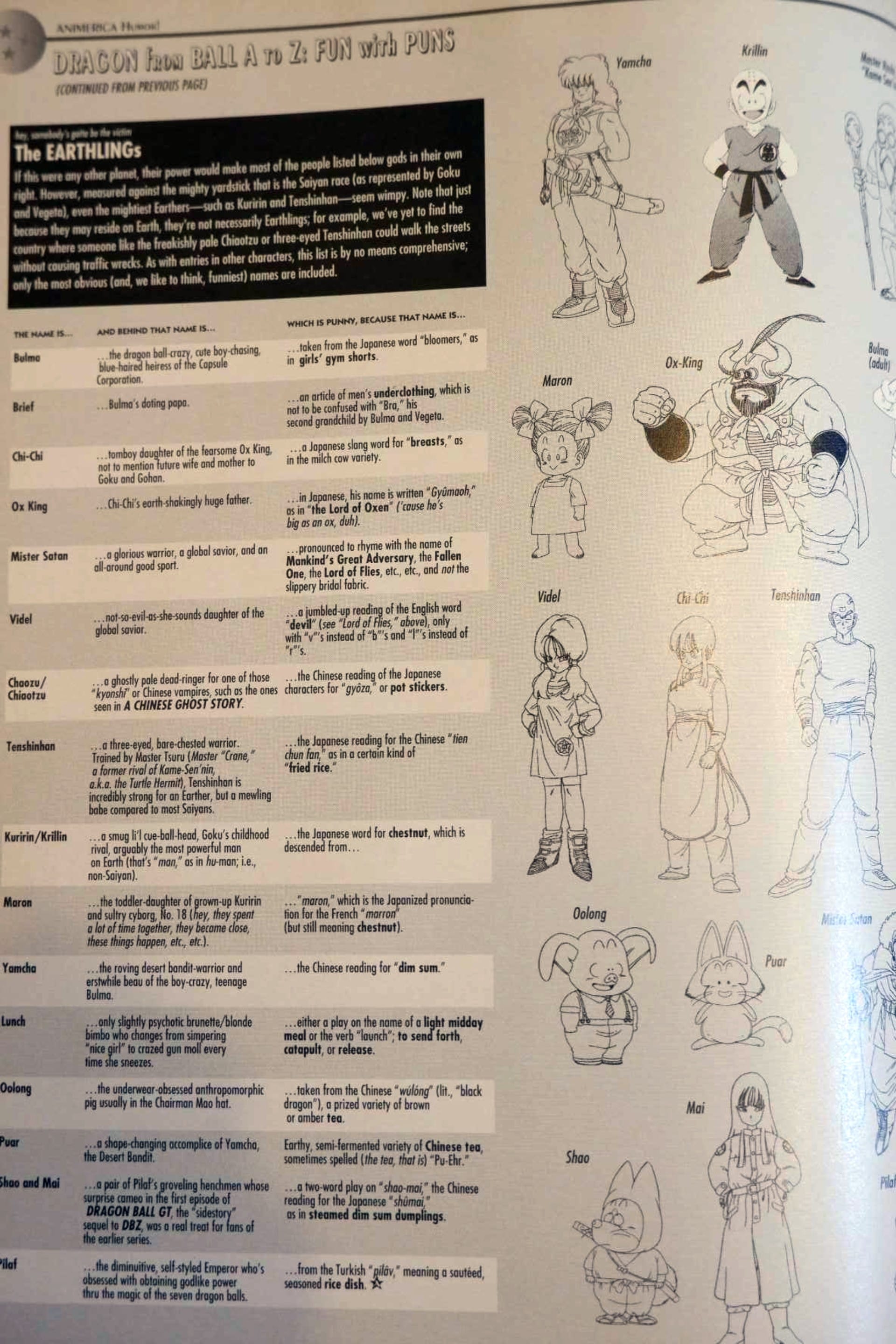
Even with the hindsight I have as an anime journalist, I found myself learning new information from a magazine two years older than myself. Chief among them was learning whyDragon Ball Z came to the U.S. before Dragon Ball (tldr: more action), the initial episode order (26), and how the Saban version of the show was marketed to 8- to 10-year-olds, hence the censorship. Hearing all this insider information from Gen and Cindy Fukunaga, the husband-and-wife duo who led its U.S. production in the halcyon days of Funimation, felt like an archaeologist brushing dust off a T. Rex tooth. The magazine had the wherewithal to dedicate four pages to illuminate readers on the many puns in its characters’ names and a mini-history of its video games back, a testament to the forward-thinking Animerica had in its coverage of a series that’d become synonymous with the genre.
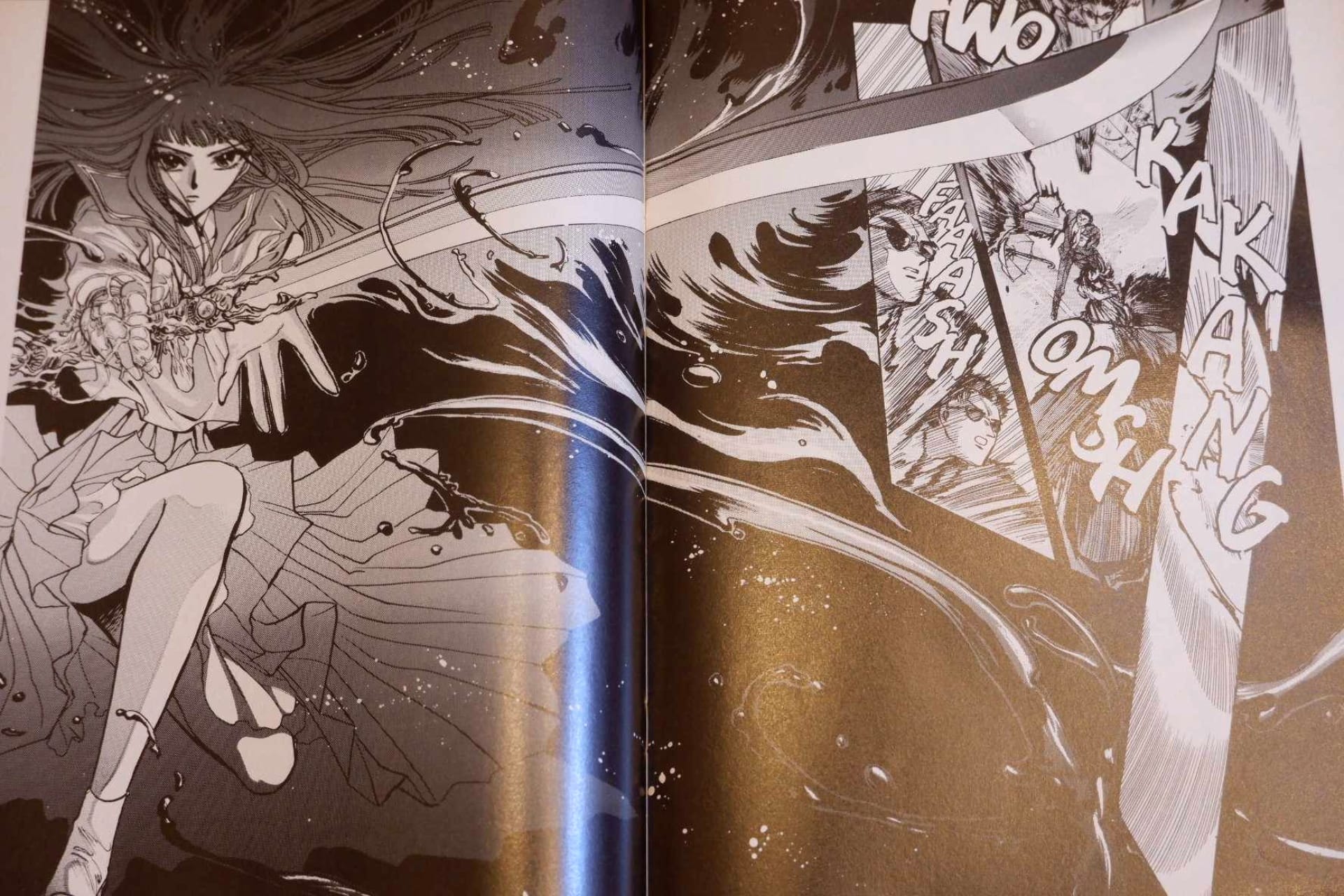
I was especially giddy reading old issues of Animerica because of its infectious “on the cutting edge” sense of responsibility and gleefulness in preparing the world for the mainstream wave of anime and manga, as well as its role as a mecca for fans to engage with their passions at length. Reader mail saw fans ask questions about what lukewarm water would do to Ranma Saotome and why he and Akane Tendo don’t just admit their feelings for each other; the desire for more shojo coverage in the magazine of series likeSailor Moon—a struggle that persists to this day; and pedantic arguments where folks took umbrage with a Dominion II article likening the anime to “the original Tank Girl.” Deep cuts and classic manga, by today’s standards, got their limelight in the most comical way possible. Taking a page out of Weekly Shonen Jump’s playbook, Animerica’s middle section featured excerpts from series like Clamp’s X/1999 and Urusei Yatsura. Animerica describing X/1999 as a series whose “destiny was foreordained” on its cover page and letting me flip to the manga for myself to see what they were talkin’ ’bout was a one-two punch that doesn’t hit the same as an exclusive excerpt behind a screen.
Knowing that such a magazine existed honestly kinda bummed me out. Immediately following moments of being seen as a writer in a story chronicling Tezuka’s life came a pang of feeling like I was born in the wrong era. Mostly, I was jealous of how writers and contributors had an entire machine behind them to cover the industry for print media. Games media still has vestiges of print magazines like Game Informer, but knowing that anime and manga used to have their own humble, bustling industry that wedded the genre to Western audiences is kind of mind-blowing. And I write this as someone who remembers flipping through a stray issue of the magazine when I was five and griefing my mother about getting me a Super Saiyan 3 Goku action figure listed in its print catalog.
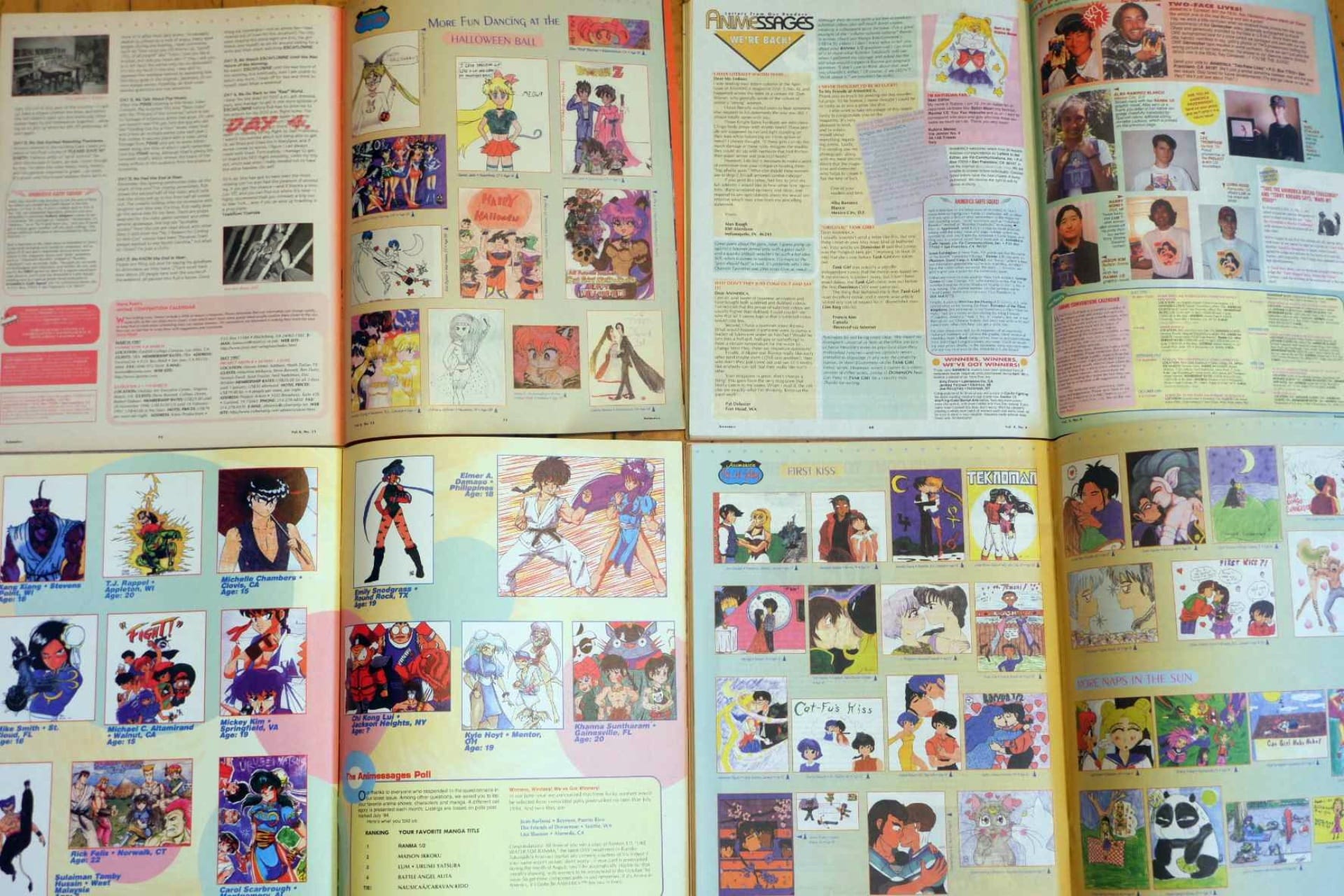
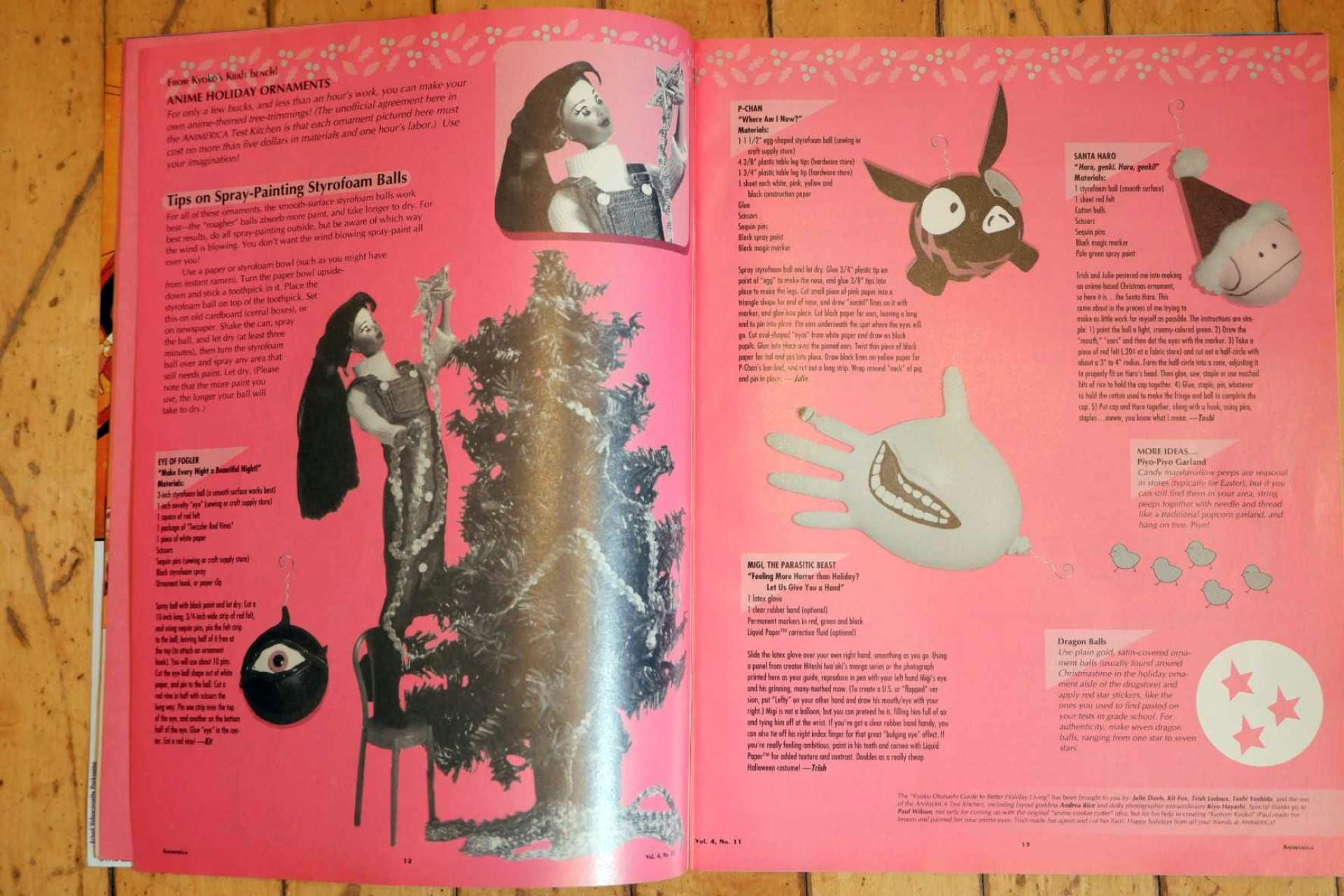
Save for Anime News Network and AnimeCorner, major pop culture coverage of anime exists only through one writer and a few lucky contributors fighting to make space in online magazines. And even when coverage does happen, it’s funneled through an SEO glut that gamifies anime and manga like DraftKings sports bets, covering series only by comparing weekly readership and sales with clickbait headlines about them being “dethroned.” That shit sucks. I’d rather look at fan art submissions from readers depicting the tricky anatomical nightmare of an anime kiss or Animerica’s knock-off Dear Abby-style advice column, where Maison Ikkoku’s Kyoko Otonashi dishes out the perfect makeshift anime cosplay and merch-crafting kits.
Somewhere along the way, we lost recipes. Animerica felt like finding chicken scratch in my mom’s cookbook, where she listed lemon zest as the secret ingredient for her sweet potato pies. We might never return to the days when Animerica served as the harbinger of anime in the mainstream, but we should damn sure aspire to it.
‘For free. For everyone. Wherever you are.’
AftermathLuke Plunkett

2 Comments
Pingback: Hayden Panettiere’s Ex Wladimir Klitschko Files for Temporary Guardianship of Daughter Kaya - Comic Vibe
Pingback: A Different World cast then and now: Where are the original stars today and who returned for the Netflix sequel? - Comic Vibe