

Since artificial intelligence apparently is influencing every decision we now make and, in turn, dominating sport industry discussions (by supposedly making us smarter and faster), we both flew to Europe this summer to learn more.
One of us attended the Middle East Sport and Investment Forum (MESIF) in London in early June at Tottenham Hotspur Stadium, where industry attendees explored the growing sport ecosystem currently under construction in the Middle East.
The other visited the AI and Sport Marketing conference at the ICN Business School in Paris before attending the Center for Sport & Business annual meeting at the Stockholm School of Economics. There, too, AI was top of mind.
The quality of each event’s content and corresponding technology focus was not only clear, but obvious. AI sat front and center, but there’s so much more tech coming into view, and some of it will greatly influence our industry.
To paraphrase any number of science fiction movies, we all need to be aware. Very aware.
For instance, one presentation and exhibit in London featured the work (and vision) of Fjolla Holzleithner, the female founder and CEO of Austrian-based virtual reality company Dayholi. Holzleithner is enthusiastic for VR and believes there is an advanced evolutionary stage still to be built into the future ways sports fans consume content.
As anyone who’s ever read our columns knows, we’re big believers in VR and frequently sprinkle in glowing references to this immersive technology when talking about the future digital transformation of sport. We have been adamant that VR and AR consumption is going to increase as avid spectators demand — from their cheap seats, homes and portable devices — closer proximity to the field, pitch, rink and court … as well as intimacy with their favorite players, coaches, GMs and game analytics experts.
We’ve carried the torch for VR, but in the last 18 months, we’ve also heard the whispers and expert proclamations that VR isn’t happening. Tech titan Mark Zuckerberg, who famously changed Facebook’s name to Meta (because he had decided to bet heavily on the metaverse), seems to have dramatically, if not drastically, pivoted away from VR, deciding to invest instead in AI, AR and other tech developments.
Why pull away from VR? Some experts would suggest “heavy” wearables (think Meta’s Quest II headset) simply didn’t catch on, and the market corrected (is still correcting) toward lightweight “glass” technology (i.e., the Ray-Ban Meta Wayfarer glasses).
This despite Per Ola Kristensson writing in The Conversation in January, “After decades of research and development, VR technology is unquestionably a real product serving real needs. State-of-the-art headsets [can] provide users with impressive immersive 3D environments along with integrated robust hand and eye tracking.”
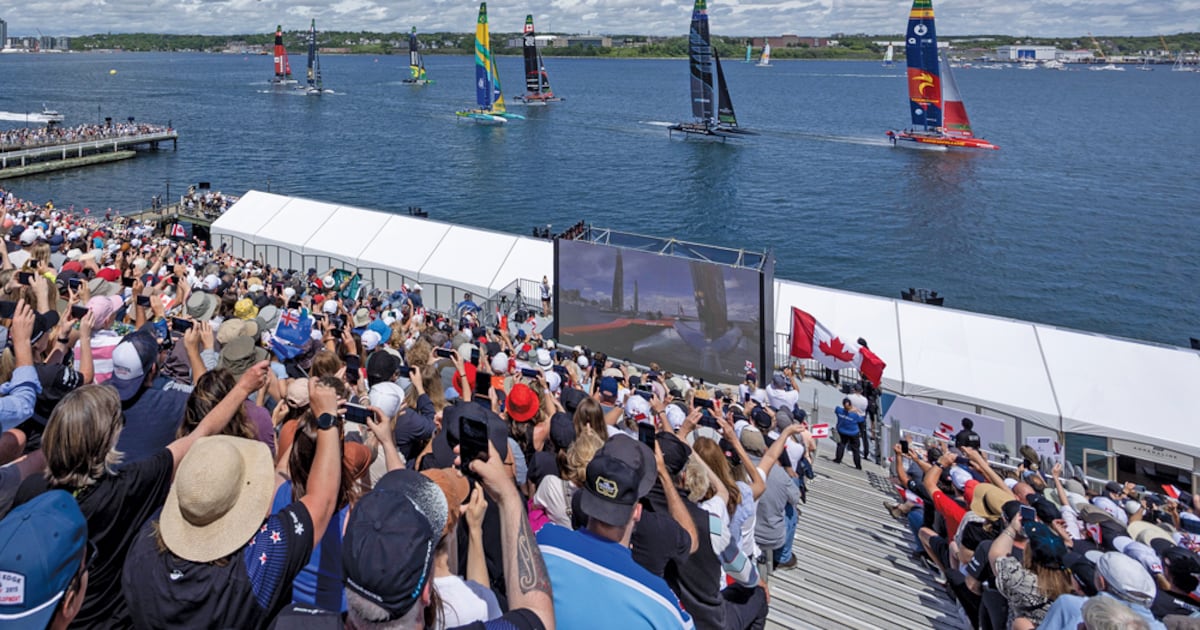
Evidently, the consumer market supposedly isn’t there yet, despite a handful of exceptions. Take the NBA’s early efforts in VR, or the Rolex SailGP Championship, the successful league launched by Oracle’s Larry Ellison that is turning competitive sailing into a technology-driven, spectator-friendly spectacle, one in which VR enhances every race second.
That SailGP reality made a chance meeting with Holzleithner highly intriguing. Why did she believe VR sport consumption/viewership was still a wave worth surfing?
“VR isn’t dead,” Holzleithner said firmly, “it’s just finally approaching the moment the industry has been waiting for. Affordable headsets have solved one major barrier; now the challenge is delivering content that creates real value for mainstream audiences.”
That sounds logical coming from someone investing in VR, but will the coming decade reward that confidence?
“We believe the future of VR is not about escaping reality, but accessing experiences that would otherwise be unavailable,” Holzleithner added. “Through live immersive sports, concerts, travel experiences and our multisensory dome technology, Dayholi is transforming VR into a form of teleportation. After introducing more than 70,000 people to immersive experiences, we’ve seen firsthand that when people experience compelling content, skepticism quickly turns into excitement.”
That word — “teleportation” — may possibly represent the conceptual idiom that seduces future sports fans the way the “Star Trek” transporter captivated baby boomers. When Captain Kirk, Spock, Dr. McCoy and, later, Lt. Commander Worf jumped across time and space, they were “beamed” into new settings.
Historically, print accounts , radio (live audio) and then TV (live video and audio) provided access to sport content and early one-dimensional teleportation. They were revolutionary in their time and drove fan avidity. North American media facilitated growing leagues such as MLB and the NFL. In turn, sport served media’s capitalistic agenda
So … if widespread purchase and consumption of TV sets took place in the 1950s, logic might suggest the next great jump in media teleportation is imminent. Is it VR with haptic vests, air machines (think “The Wizard of Oz” experience at the Sphere) and hydraulic seats?
Maybe.
Skeptics, and they abound with great glee, will remain unmoved. But leagues such as SailGP may have nothing but upside in teaching their fans how to use new technology when it comes to consuming sport.
As others have previously noted, when science fiction gets turned into science fact, the sports industry generally jumps in quickly. Maybe VR, with some coming tweaks, will provide those facts.
Rick Burton is the David B. Falk Emeritus Professor of Sport Management at Syracuse University and co-host of“The NIL Clubhouse”podcast. Norm O’Reilly is the dean of the University of New England’s College of Business and partner with the T1 Agency. They are co-authors of numerous sports business books including “Business the NHL Way” (UTP/Aevo) and “The Rise of Major League Soccer” (Lyons Press).
