

Those three facts belong in the same paragraph. We almost never put them there.
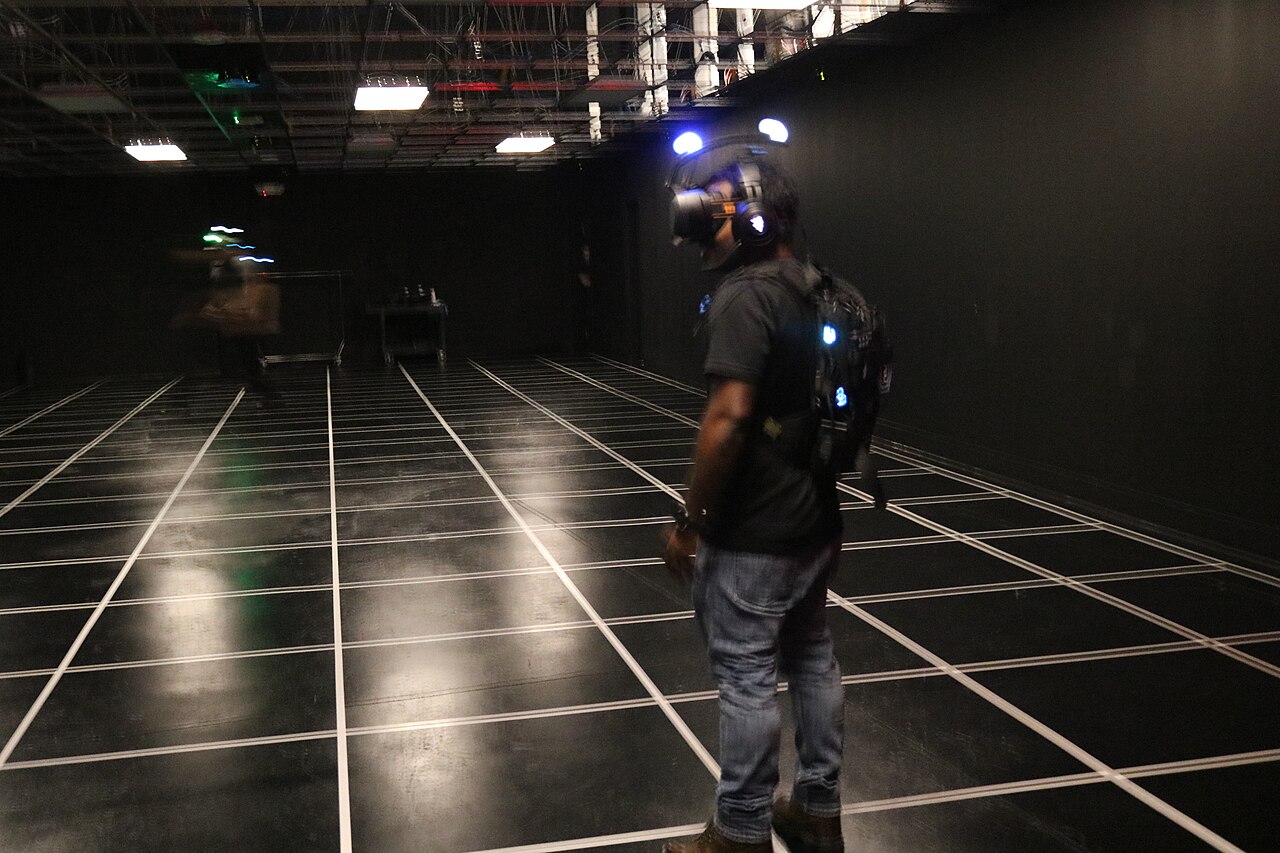
The company is Zero Latency, and on December 4 it launches Jumanji: The Lost Levels, built with Sony Pictures, across that network. Free-roam VR: a warehouse-sized room, a headset, a backpack PC, no cables and no guardian, you and up to seven other people physically walking through a world. We covered Zero Latency back in April when it announced a Cyberpunk 2077 experience with CD Projekt Red, and I wrote then that location-based VR had quietly become one of the most compelling ways to experience this medium. I still think that. What I did not appreciate was how much healthier the business underneath it is than the one I actually participate in.
The detail that should embarrass the rest of us
The Lost Levels is the first Zero Latency title with full hand tracking. No controllers. Nothing to hand a stranger and explain.
Think about what that quietly solves. The hardest ninety seconds in consumer VR, the ones every single person reading this has lived through in a living room, are the ones where you strap a headset onto somebody who has never worn one and then try to describe a trigger, a grip button, a thumbstick and a menu button to a person who is standing there blind and slightly alarmed and already deciding they do not like this. Zero Latency’s answer is to delete those ninety seconds. Their customers walk in off the street. They cannot afford a learning curve, so they removed the thing that requires one.
And the customers are not who you would guess. The company surveyed 2,386 adults across Australia, the US, Canada, France and Spain in June and published the findings alongside the launch date. Nearly 46 percent of its visitors are between 35 and 44. Sixty percent come with family. Tim Ruse, the CEO, said in the announcement that what the research shows is that people want something they can truly do together as a social experience.
Parents in their late thirties, bringing their kids. That is the exact demographic that home VR has spent ten years and several billion dollars trying and failing to hold onto, the one that buys a headset at Christmas and stops opening the case by March, and it turns out they will happily give up an entire Saturday afternoon and a chunk of money for the same activity as long as somebody else owns the hardware, cleans the facepads and stands there to help them put it on. They just will not do it at home. Nobody wants to be the IT department for their own weekend.
Everyone else is doing it too
Sandbox VR now runs on licensed IP the way a cinema does. Its lineup includes Squid Game Virtuals, Stranger Things: Catalyst and Rebel Moon: The Descent, all three from Netflix, sitting alongside originals like Deadwood Valley and Curse of Davy Jones. Its location list runs across the US and Canada into Britain, Ireland, Germany, Austria and Italy, then Hong Kong, Macau, Shanghai, Singapore, Australia and Riyadh, with Manhattan, Charlotte, Barcelona and Cologne listed as coming.
Netflix does not license Stranger Things into a format it thinks is dying.
In Tokyo right now, and only until September 6, there is a Dragon Quest fortieth anniversary exhibition at Tokyu Plaza Harajuku called Dragon Quest the DIVE, run by Tohokushinsha with Square Enix. The centrepiece is a VR ride on a Quest 3 bolted to a motion seat where you gallop across a field on a Killer Panther, duck monsters, and get thrown around by the chair with wind in your face. There is a non-VR version for children under ten. Square Enix marked forty years of its biggest franchise partly with a VR attraction, and then put an expiry date on it, because that is what attractions are.
Kevin Williams, who has covered this sector for far longer than most of us have been paying attention to VR at all, laid out the current slate in a column for Road to VR yesterday. The list is genuinely long: Zero Latency, Sandbox VR, HADO’s competitive AR sport, a Black Mirror experience, a Wizards Way attraction running on Quest 3s. It reads nothing like the mood in consumer VR.
