

The icon indicates free access to the linked research on JSTOR.
When I taught high school English, I affectionately referred to William Blake as the first graphic novelist. I certainly wasn’t the first to do so, given Blake’s intricate engravings, typeface, and fanfiction-y take on the Bible, but that aspect of his work was often glossed over by scholars who insisted on separating word from image. Mike Goode locates the complexities of deconstructing Blake in relation to the possibility of a more encompassing aesthetic read:
Blake’s unique integration of words and pictures can be seen as a medium for challenging its audiences to make both disintegrate before their very eyes—for challenging them notto see the words or the pictures—and the success of that disintegrative activity of looking through the two constitutes the promised improvement of sensual enjoyment and revelation of the infinite to the imagination.
The Yale National Initiative and The Getty Museum both offer lessons on the visual and poetic mash-up of Blake’s Songs of Innocenceand Songs of Experience, further demonstrating how visual elements might be read with and against the text in meaningful ways. But Blake isn’t the only author-artist featured in high school classes. I’ve seen excerpts from Art Spiegelman’s Maus and Will Eisner’s A Contract with God used in both social studies and religion courses, and entire literature units have been dedicated to Marjane Satrapi’s Persepolis.Comics have been used in the classroom for decades, not only as a way to engage students but to emphasize the importance of the connections between the visual and the literary.
Accessing interest and prior knowledge through the image is a well-known strategy of classroom teachers. Richard Murata writes of his success in pairing the content in art courses with writing courses in a high school classroom with a focus on “wholeness,” noting: “We wanted learning to derive from English and art and to loop from one subject to the other in a continuous flow.” Murata shares reactions from the students and emphasizes the overall success of the integrated curriculum implemented over two years, writing:
In both years in which students were surveyed at semester’s end, more than 80% stated that approaching material through both verbal and visual modes reinforced one another and thus made mastering the subject matter less difficult. Students clearly appreciated the use of two learning styles and were very cognizant of their own style and their own limitations.
Integrating art into a text-based curriculum comes naturally to many teachers, but the move can also lead to uncertainty. What’s a worthwhile visual text? If it’s not been declared a work of art by the art-police, is it really worth analyzing? That hard-line distinction is unproductive for most texts and doesn’t have to be a deal-breaker in classrooms. Roland Barthes championed all kinds of “bad objects” that were beloved by the masses and passed over by critics (his Mythologies opens with a read of heroes and heels in wrestling).
Many comics and graphic novels might be viewed with a similar scrutiny. Neil Gaiman’s The Sandman, for example, has found a way to both keep its cult status, its “bad object” cool, while slipping onto syllabi and into classrooms as a text that signifies. Of course, evaluations of pairing The Sandman and Shakespeare in the classroom will reveal that it can be troublesome to have it both ways; even while Gaiman’s work is ubiquitous and The Sandman was indeed awarded (and invited through the gate) in 1991 with A World Fantasy Award, it continues to be the focus of book bans.
Nevertheless, The Sandman is often taught in humanities classrooms, where many teachers are consummate lit fans, adept at remixing ideas, sources, and approaches at will. In many ways, the project and process of The Sandman represents the English class project par excellence for a study of Shakespeare, its source material; the same questions that a classroom teacher might pose to encourage discussion are there in the deconstruction of Gaiman’s work: What is (insert Shakespeare play) about? What does its content and style say about the time period? The author? The process of creating art? If you were the artist, how would you imagine the story going or changing? What would that look like? Depending on when a teacher entered the classroom, they might associate the line of reasoning with the Socratic Seminar, Bloom’s Taxonomy, Understanding by Design—and all of them would fit to describe what’s happening with The Sandman. The practice that Gaiman models in his adaptation is the same that students work through when they think critically about literature. It’s also the same praxis that fans engage in.
The JSTOR Daily freelance writers have been thinking about and through comics for years and provide examples of how comics and graphic novels feature in our everyday lives; how they reflect our cultural consciousness; and how comics and animation might be deconstructed. This syllabus contextualizes the ways in which we understand comics and offers a history of the art form, notable artists and characters, and meditations on how the medium continues to evolve. The articles might be understood as openings for discussions that start with often familiar and quickly registering images that may lead to more thoughtful consideration in a classroom.
Comic Books and History
<img src="https://daily.jstor.org/wp-content/uploads/2021/07/the_propaganda_of_world_war_ii_comic_books_1050x700.jpg" alt="An illustration from the cover of America's Best Comics #11, November 1944″>
The Propaganda of World War II Comic Books
July 3, 2021
A government-funded group called the Writers’ War Board got writers and illustrators to portray the United States positively—and its enemies as evil.

Remembering the Civil Rights Movement…With Comics
August 18, 2016
Congressman John Lewis’s graphic autobiography March: Book Two draws on the richly textured oral history of the Civil Rights Movement.

A Cultural History of Satirical Cartoons and Censorship
January 20, 2015
Articles in JSTOR illuminate the long history of satirical cartoons and censorship.

Why Adults Love Comic Books
May 25, 2018
There’s more to comic books than bright colors, gratiutious violence, and whimsy. Comics tells stories that are deeply significant to their readers.

Why Art Historians Still Ignore Comics
July 5, 2017
In recent history comic art has crossed boundaries to enter other mediums. So why aren’t art historians paying more attention?
Comic Book Creators and Artists
The Groundbreaking Work of Jackie Ormes
April 17, 2022
The first Black woman to have a regularly published comic strip, Ormes gave form to the political and social concerns of Black Americans.

The Enduring Humor of New Yorker Cartoons
January 27, 2017
With 90 years of New Yorker cartoons, readers learn much about changing trends in political and social history, all while celebrating through laughter.

Cartoonist and Memoirist Alison Bechdel Changed How We Talk About Women in Pop Culture
September 17, 2014
With one comic, artist and brand-new MacArthur Fellow Alison Bechdel transformed how we talk about women in pop culture.

Five of the Best R. Cobb Drawings in the Underground Press
June 27, 2021
The artist turned a critical eye toward American society, but he didn’t want to be called a political cartoonist.
Comic Book Characters

Batman: A Hero or a New ‘Mr. Hyde’?
March 6, 2022
The parallels between Bruce Wayne/Batman and Dr. Jekyll/Mr. Hyde are examined through the lenses of Gothic literature and psychological symbolism.

Captain America and Wonder Woman, Anti-Fascist Heroes
November 11, 2020
Who needs black clothing to fight fascism when red, white, and blue will do quite nicely?

The Self-Styled Sci-Fi Supermen of the 1940s
October 19, 2020
Way before there were stans, there were slans. Too bad about their fascist utopian daydreams!
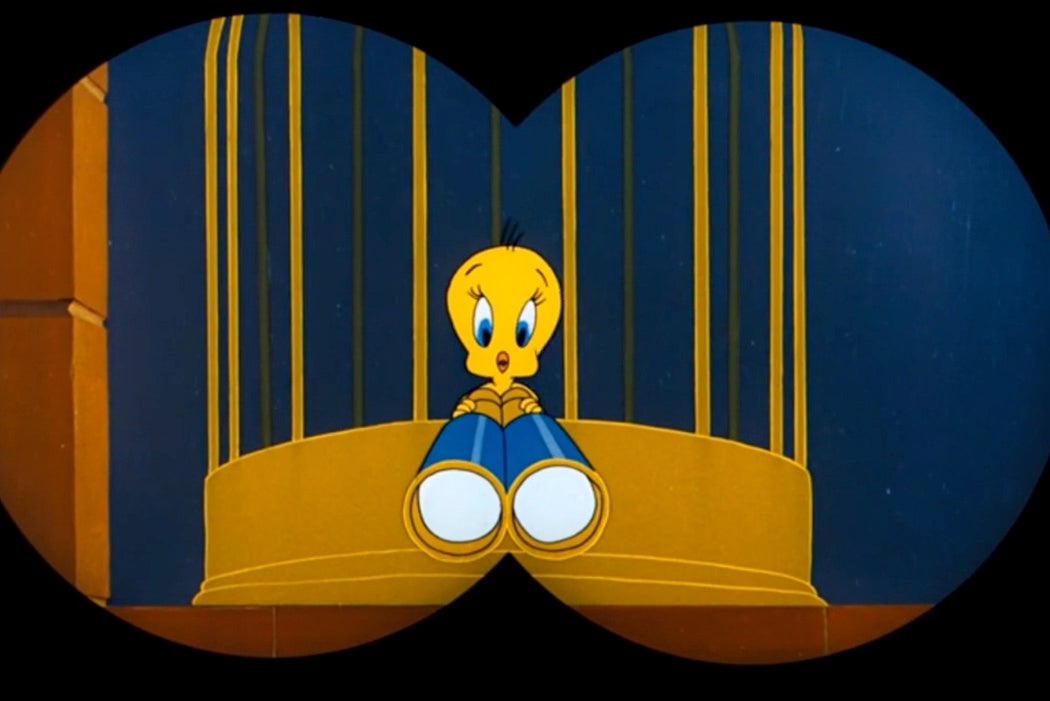
The Tweety Bird Test
October 9, 2019
How a classic Tweety Bird cartoon became a mainstay in linguistics research.

The Assimilationist Mythology of the X-Men
November 20, 2018
Stan Lee’s X-Men comics explored themes of prejudice and bigotry. So why weren’t the original comics that diverse?

Krazy Kat’s Complex Relationship with Race
October 12, 2018
Behind the slapstick antics in this beloved comic strip simmered ambivalence about color and race.
The Most Controversial Comic Strip
September 8, 2018
In the 1950s, Walt Kelly’s comic strip about a cute opossum named Pogo was syndicated by over 450 newspapers. It was also frequently censored.
How Mad Magazine Informed America’s Cultural Critique
July 21, 2017
When Tales Calculated to Drive You MAD—Humor in a Jugular Vein first erupted onto the streets in 1952, it was like nothing ever seen before.

Choose Your Own Adventure: The Marvel Universe and Our Cultural Values
April 30, 2015
A postmodern view of the Marvel comics and cinematic franchise,
Comic Book Adaptations
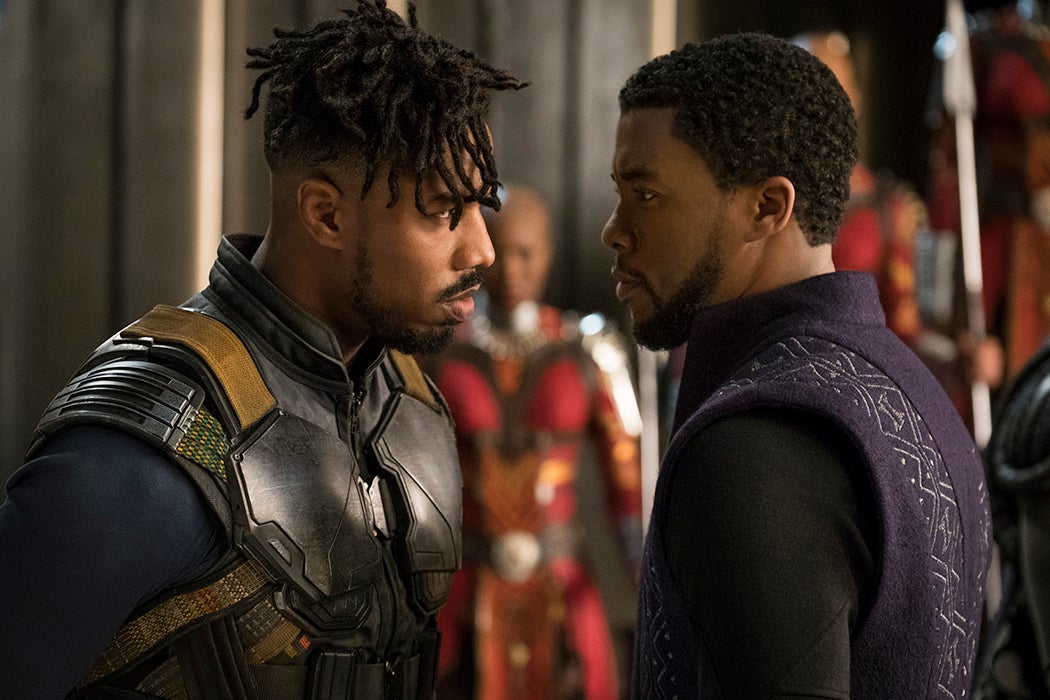
Black Panther and Double-Consciousness
March 28, 2018
Double identity, present in both Marvel’s Black Panther and in the critical race theory of double-consciousness, enables black American viewers to see their two identities played out on screen.
How Archie Got His Groove Back
March 7, 2018
The setup of Archie Comics was straightforward, as was its protagonist. But the success of Riverdale speaks to the Archieverse’s surprising fluidity.

Marvel’s Agent Carter and the Women of WWII
January 13, 2015
Marvel has introduced Agent Peggy Carter into the lexicon about women’s status in the military during and post-WWII.
Animation and the Comics

Remaking Betty Boop in the Image of a Housewife
August 29, 2019
Betty Boop was literally designed to be a bombshell, but around 1935, her creators decided to change her appearance.
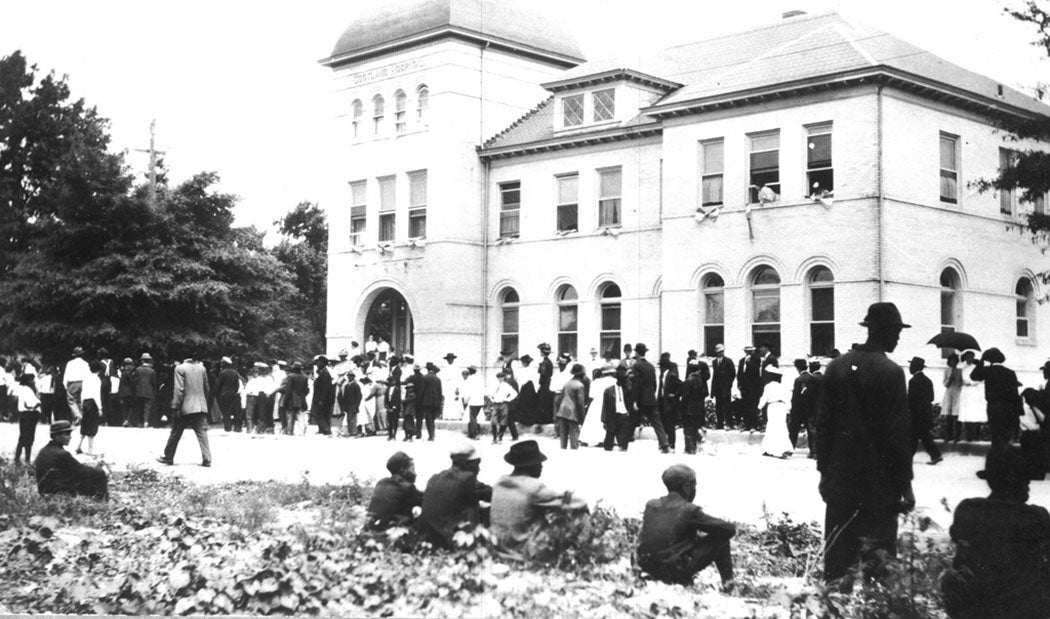
How Racist Cartoons Helped Ignite a Massacre
February 12, 2021
In 1898, a North Carolina newspaper cartoonist weaponized white fears and tropes of Black predation to stoke a coup d’etat.
“The Simpsons”: More Than Just a Cartoon
November 25, 2016
“The Simpsons” is the longest-running scripted series in television history, full of canny satire and the occasional prophecy.

How Second-Wave Feminists Saw Saturday Morning Cartoons
July 8, 2015
Before the Bechdel test, second-wave feminists looked at sexist portrayals in Saturday Morning cartoons

There’s a Mascot for That? Cute COVID-19 Education
April 6, 2020
How to get people to stay healthy during a quarantine? Some countries have taken to a new communications strategy, and it’s super cute.

The Great Animation Strike
January 2, 2020
Animation workers took to the streets, carrying signs with bleakly humorous slogans. One read: “I make millions laugh but the real joke is our salaries.”
Have a correction or comment about this article?
Please contact us.

Resources
JSTOR is a digital library for scholars, researchers, and students. JSTOR Daily readers can access the original research behind our articles for free on JSTOR.
The Joy of Looking: What Blake’s Pictures Want
Representations, Vol. 119, No. 1 (Summer 2012), pp. 1–36
University of California Press
Connecting the Visual and Verbal: English and Art for High School Sophomores
The English Journal, Vol. 86, No. 7, Interdisciplinary English (November 1997), pp. 44–48
National Council of Teachers of English
Reviewed Work: Mythologies by Roland Barthes
Books Abroad, Vol. 31, No. 4 (Autumn, 1957), p. 387
Board of Regents of the University of Oklahoma

1 Comment
Pingback: Master Key's Moscow Mission in Dynamic Comics #9, at Auction - Comic Vibe