


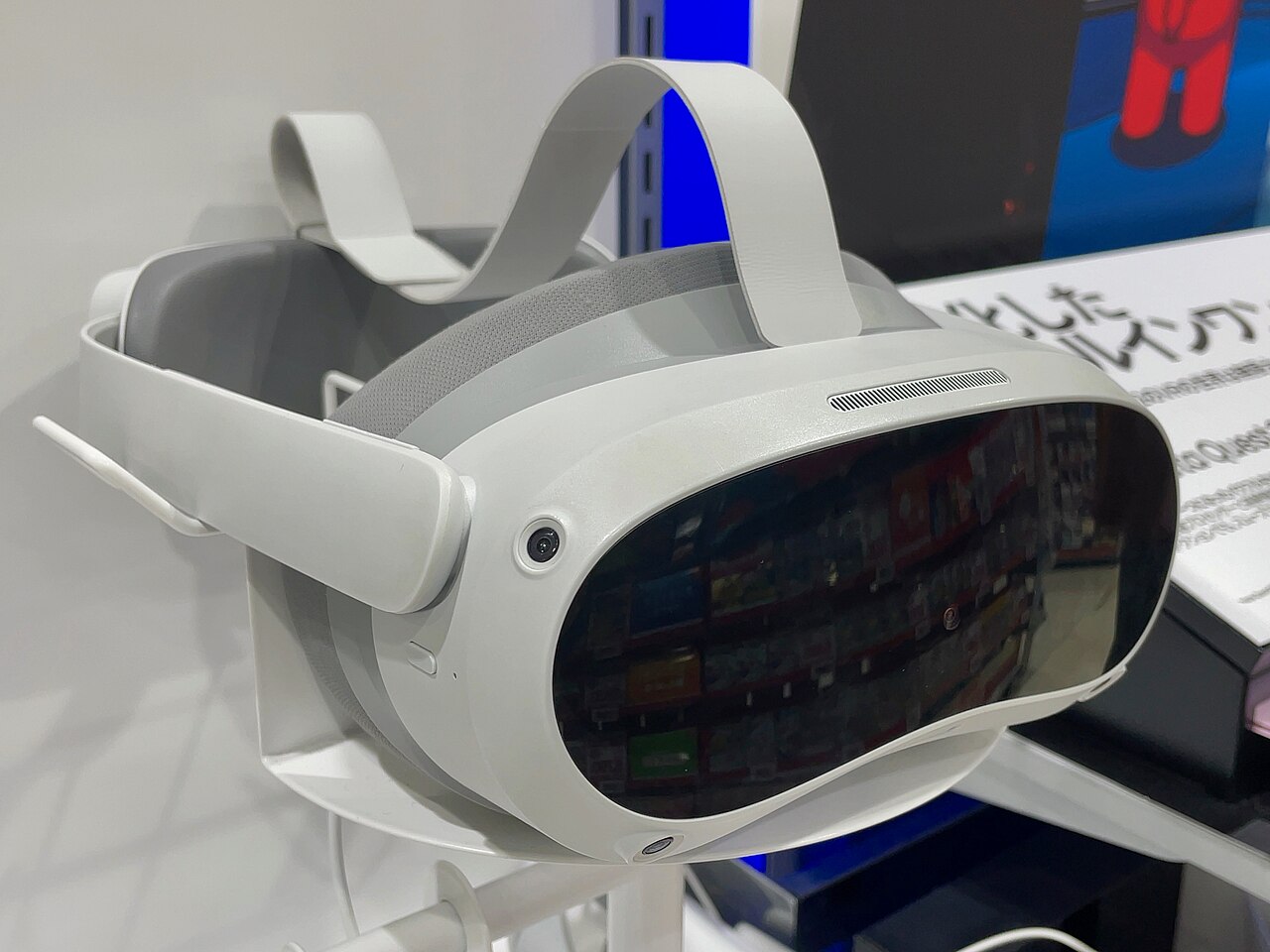
Grantee code 2A5NV belongs to Qingdao Chuangjian Weilai Technology Co., Ltd, on Songling Road in the Laoshan District of Qingdao, registered with the Commission in March 2022. Thirteen applications sit under it, including VR All-In-One Headsets granted in July 2022, April 2023, May 2023 and August 2024. Both September grants name Sheng Han as technical contact at a bytedance.com address, and Wenle Xu of PICO IMMERSIVE US INC. as non-technical contact, also at bytedance.com. Nobody has to guess whose hardware this is. It is on the form.
Which one is the headset
The filings call both products Mixed Reality Computer, which settles nothing. The exhibits do. The label and location document filed under FCC ID 2A5NV-AA1Z0 is titled HMD, for head-mounted display, and the application is flagged as a composite device: no. The matching document under FCC ID 2A5NV-B3110 is titled BOX, and that one is flagged composite device: yes. UploadVR read the two nameplates on September 5 and reports that the printed labels call them a Mixed Reality Headset and a Mixed Reality Main Unit, both carrying the model number B3110, and that the main unit’s label lists a 7,000 mAh battery rated at 54.32 Wh.
So this is one product filed as two authorizations, not two products. That distinction is the whole story.
The radio split
B3110 holds four equipment classes. Part 15 Spread Spectrum Transmitter at 2402 to 2480 MHz. Unlicensed National Information Infrastructure TX running from 5180 through 5885 MHz across the usual U-NII blocks. Digital Transmission System on 2.4 GHz. And a 15E 6 GHz Low Power Indoor Client covering 5955 to 7095 MHz. The exhibit list backs each one: Bluetooth Classic, Bluetooth Low Energy, 2.4 GHz WLAN, U-NII-1 through U-NII-4, dynamic frequency selection, and a stack of SAR appendices.
AA1Z0 holds one equipment class and one range. Digital Transmission System, 2402 to 2480 MHz. Its radio test report is named for an nRF part, which is Nordic Semiconductor’s short-range 2.4 GHz family, the kind of link a controller talks over. Its exposure filing is an MPE report rather than SAR.
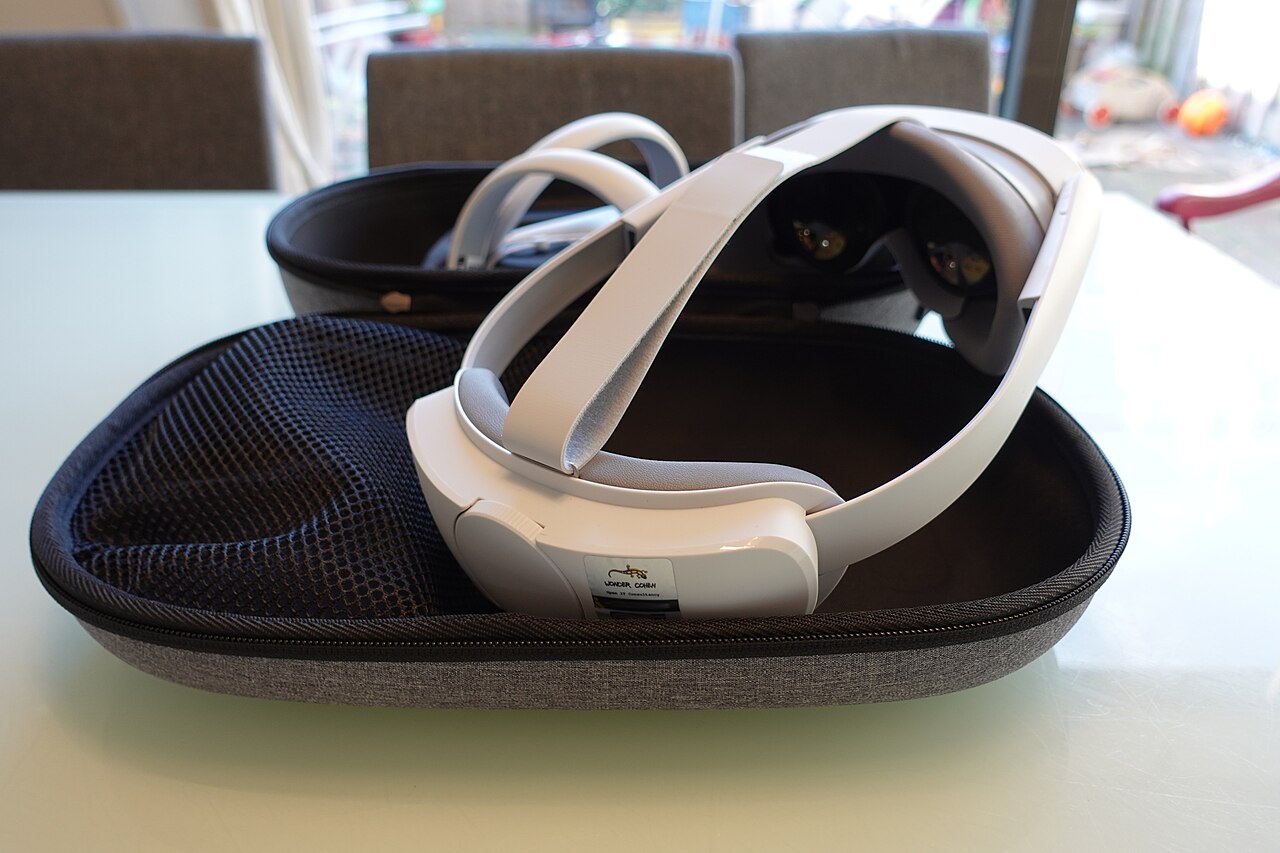
Read the two grants side by side and the tether stops being a power cable. Wi-Fi, in this design, is somewhere other than your face. VR.org reported on August 20, from Pico’s teaser art and leaked SDK footage, that the battery and possibly the compute had moved into a puck. The certification record goes further than the art did. The networking moved too.

1 Comment
Pingback: Steam Frame Games: What You Can Actually Play on It - Comic Vibe